
Load Planning Guide: How to Reduce Transportation Costs

Transportation costs account for roughly 8.7% of U.S. GDP, and a meaningful share of that spend moves partially empty vehicles. According to a recent Shipper Research Study, 58% of truckloads shipped partially empty in 2024.
For a mid-sized shipper, the gap between what they pay and what they should can run into millions annually. The problem is simple: the most expensive thing you can ship is air.
Every truck that leaves a dock with unused cube or weight capacity drives cost per unit up, carbon per unit up, and margin per unit down. Yet most transportation cost reduction programs never touch this. Teams renegotiate carrier contracts and chase spot market deals, targeting the rate while ignoring the load.
The load is where the real waste lives.
This article breaks down how load planning in transportation works, covering the five specific cost levers it moves, the operational workflow behind efficient load plans, and what it takes to implement without derailing your dock operations.
What Is Load Planning? Definition and Common Misconceptions

Load planning is the process of determining the optimal arrangement of cargo inside a vehicle or container to maximize space, respect weight limits, maintain stability, and sequence deliveries correctly. In logistics and transportation management, it’s how shippers turn partially empty trucks into fully utilized assets.
That definition matters because some teams confuse it with simpler activities.
- Load planning isn't "cubing" a shipment in a spreadsheet.
- It's not relying on a veteran dock worker's eye to judge whether a pallet fits.
- It’s not just stacking the cargo tighter.
A truly optimized load should satisfy five constraints at once: volume, weight distribution across axles, crushability rules, delivery stop sequencing and regulatory compliance. Miss any one of them and the load costs more than it should.
That's the problem with cubing in a spreadsheet, eyeballing pallet fit, or just stacking tighter. Each approach addresses one or two constraints at most. The rest get ignored. And the money you leave on the table lives in that gap between what was considered and what wasn't.
How Load Planning Works: Three Layers That Drive Decisions
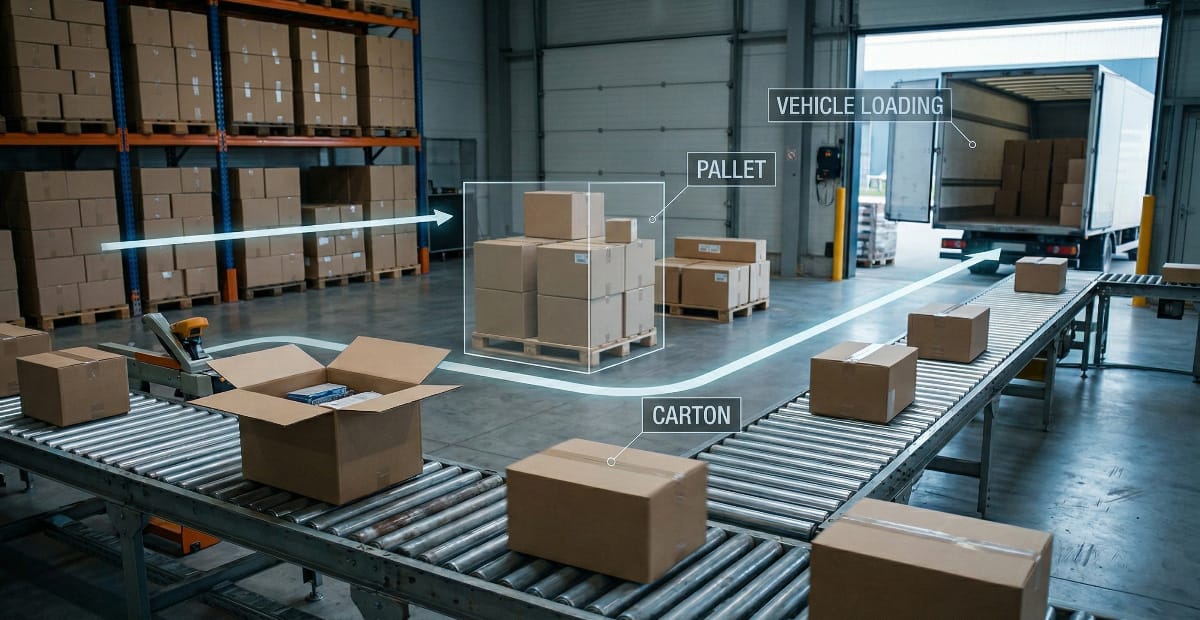
Every load planning decision flows through three layers. Each one builds on the one before it.
Get the first layer wrong and the errors compound upward.
Get all three right and the savings compound too.
Layer 1: Cartonization
Every order needs a box. Most operations use standard sizes, which means small items ship in oversized boxes filled with air. That air isn't free.
Carriers bill based on whichever is greater: actual weight or volumetric weight. Which limit you reach first depends on the mode of transport. In air freight, weight is typically the primary constraint; in ocean freight, volume usually becomes the limiting factor; and in road transport, it can vary depending on the specific shipment.
Ensuring accurate carton dimensions helps prevent unnecessary charges by avoiding a shift into a higher pricing tier when it isn’t warranted. Cartonization algorithms pick the smallest box that safely fits the items. Smaller boxes mean more of them per pallet. More boxes per pallet mean fewer pallets per truck. The gains cascade.
Layer 2: Palletization
Right-sized cartons now need to be arranged on pallets. Instead of defaulting to column stacking (unstable, poor space usage), algorithms build mixed-pallet configurations that maximize the pallet footprint while respecting which items can bear weight and which can’t. Better cartons from Layer 1 mean denser, more stable pallets here.
Layer 3: Truck Load Planning and Vehicle Loading
This is where truck load planning becomes most visible and most constrained. It is the 3D arrangement of unit loads inside a trailer or container, arranged for delivery order, balanced for axle compliance, and stabilized to prevent damage in transit.
Truck load planning software handles this by testing thousands of loading configurations in seconds, something manual planners can’t replicate. But the output is only as good as the pallets that go into it, which is why Layer 2 matters so much.
Neurored TMS & SCM supports cargo loading optimization based on delivery sequence, weight, load-carrying capacity, and orientation recommendations, so the load plan is designed for how freight actually moves, not just how it fits in theory.
Because this sits inside a multimodal TMS, the load plan can stay connected to dispatch, booking, and downstream shipment control instead of breaking apart after the planning step.
‣ See the features that define a modern TMS and how they connect planning to execution
5 Ways Load Planning Reduces Costs
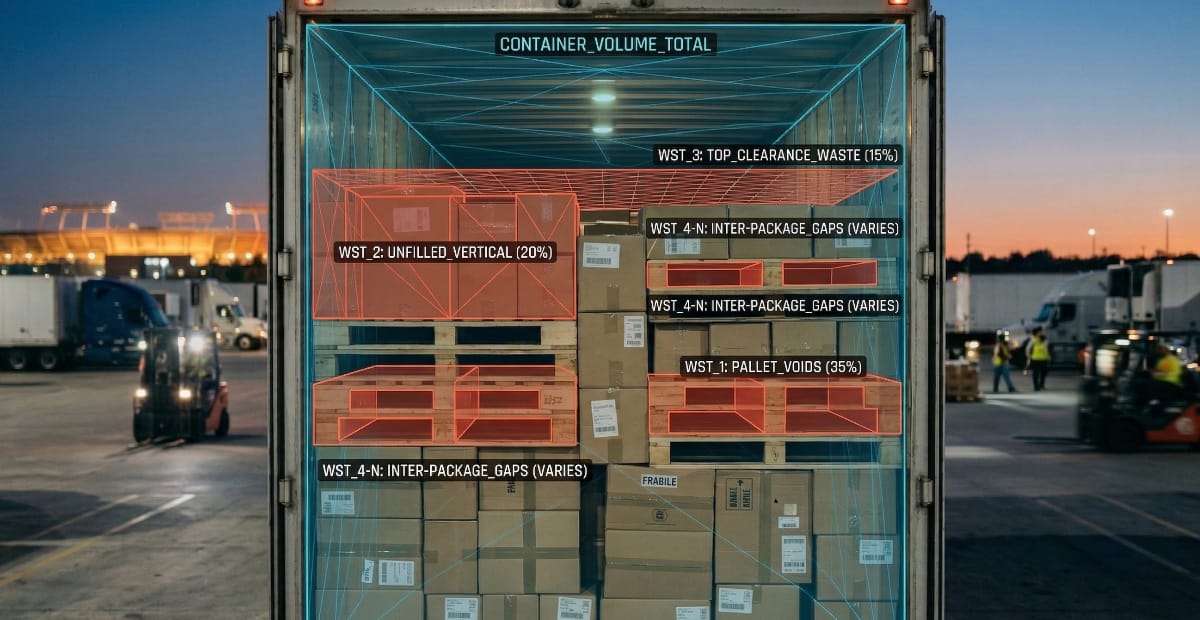
Efficient load planning lowers spending by reducing trips and upgrading modes. The savings are structural. Here are the five cost levers that matter most. Each one compounds on the next.
1. Higher Cube Usage For Fewer Loads
Every vehicle has two physical limits: volume and weight. Light, bulky items like paper towels "cube out," filling the trailer before hitting the weight limit. Dense items like beverages "weigh out," maxing weight with space left over. Either way, you're paying for capacity you didn't use.
Optimization attacks this at every layer:
- At the carton level, right-sizing packaging eliminates void fill and reduces DIM weight. Small changes compound. Reducing box height by half an inch can compound enough to fit an extra pallet layer, adding more units per truck.
- At the vehicle level, load plan optimization software typically unlocks more capacity from existing assets. It does this by finding loading patterns manual planners miss: turning pallets sideways, using trailer noses, or mixing stackable and non-stackable freight.
Better cubing can help you cut freight costs, especially for light, bulky products that fill the trailer before they hit the weight limit. Fewer trips means lower costs. And for large shippers, even small density improvements compound into serious savings. It also means fewer trucks on the road, which directly reduces emissions.
2. LTL Consolidated Into Multi-stop FTL
Sending smaller shipments individually is expensive. Each one gets priced based on its size and weight class, and every time your freight passes through a sorting facility, there's another chance for damage and delay.
The smarter move is combining those smaller shipments into full truckloads. Full trucks ship at simpler, flat rates. More product per truck means a lower cost per unit. A single consolidated truckload can replace an average of 34 less-than-truckload shipments, and suppliers realize 20 to 30% in cost savings, according to Supply Chain Management Review.
You can’t do this with a spreadsheet. Modern load planning software looks at pending orders within a consolidation window and builds a loading plan that groups shipments heading to nearby destinations onto the same truck. It weighs the savings against the added cost of extra stops and longer routes, while keeping drivers within their legal hours.
Neurored TMS & SCM helps planners consolidate orders across destinations, available capacity, delivery windows, and route economics in one workflow. Its Multimodal Transportation Optimization Software helps teams to evaluate whether combining shipments into multi-stop full truckloads actually improves cost-to-serve instead of just filling a trailer.
‣ If routing is a bottleneck in your operation, read our guide on implementing freight routing systems
3. Fewer Damage Claims and Returns
Freight damage is a hidden transportation cost. It rarely shows up in the freight budget. Instead it appears in product costs or returns, making it invisible to the team that caused it.
Replacing a damaged item means double the transportation cost (shipping the replacement) plus handling the return of the damaged goods. You're paying twice because of how the truck was loaded once.
Smart load planning reduces damage by design.
The load planning software places heavy items on the bottom and lighter items on top. It packs items tightly so nothing shifts during turns and braking. And it gives dock workers clear, visual, step-by-step loading instructions that reduce human error.
The software builds the plan. The visual guide makes it easy to execute. Damage rates drop.
4. Weight Compliance Without the Safety Margin Tax
Weight compliance is more complex than staying under 80,000 lbs gross vehicle weight.
For example, In the U.S., the Federal Bridge Formula governs how weight must be spread across a truck's axles to protect roads. A truck can be well under the total weight limit and still be illegal if too much weight sits over one set of wheels.
So what do manual planners usually do? They leave a 2,000 to 3,000 lb safety margin on every load. That buffer avoids fines. But it compounds into massive lost capacity across thousands of shipments. It's an efficiency tax paid for lack of precision.
Load planning software solves this differently. It maps the weight of every item in a virtual model of the trailer, calculates how that weight presses down on each axle group and recommends exactly where to position the axles for the best distribution.
The result: loading safely within a few hundred pounds of the legal limit. Reclaiming thousands of pounds of capacity per trip that manual planning leaves behind.
With Neurored’s Multimodal Transportation Optimization Software, planners can optimize loads using weight-based stacking and loading logic inside the same transportation workflow used for execution. That makes it easier to reduce manual safety buffers while still operating within real transport constraints and documentation requirements.
5. Stronger Carrier Rates Through Better Load Data
Your shipping volume and lane consistency get you a seat at the table with carriers. But detailed load data is what wins you better rates.
Carriers set prices based on how well your freight fits their network, how profitable it is and how much risk it creates for them. Becoming a preferred shipper means proving that your trucks get loaded and out the door in under two hours, and providing accurate size and weight details upfront when you bid for capacity.
For complex or multi-stop shipments, sharing precise load plans reduces the carrier's risk by preventing weigh station delays and damage claims.
This kind of precision also changes how transportation shows up on the balance sheet. It stops being just a cost line and starts protecting your margins. When planners can see load capacity, freight routing and costs in one system, they fill trucks more efficiently and avoid surprise charges.
But none of this works if your dock scheduling and load planning live in disconnected spreadsheets. It requires a single platform where the commercial side and the physical operations are working from the same data.
‣ Learn how a connected platform helps in protecting against supply chain disruption
The Load Planning Process: How to Reduce Transportation Costs Step by Step

The cost levers above only pay off if the load plan survives contact with the dock.That requires a workflow designed around how warehouses actually operate.
Step 1: Fix Your Master Data First
Load planning is only as good as the measurements it works with.
If the system thinks a box is 12x12x12 inches but the actual box on the warehouse shelf measures 12.5 inches wide, the plan will physically fail. A half-inch error multiplied by 20 boxes in a row creates a 10-inch gap.
That's enough to prevent a pallet from fitting.
The fix is measuring every product precisely. Leading operations use laser measuring systems to scan every new item on arrival, creating an accurate digital model of their inventory that the planning system can trust.
Step 2: Consolidate Orders With Intent
Effective consolidation means grouping orders by destination, delivery windows, product compatibility and size/weight fit. Not just shipping whatever happens to be picked.
The planning system evaluates combinations across a 48-hour window to find where multiple orders share enough geography and timing to fill a truck together.
The organizational challenge here is real. Consolidation requires coordination between sales (who set delivery promises) and logistics (who know what fits). Without that alignment, orders ship individually that could have traveled together.
‣ For more on fixing this gap, see our guide on improving supply chain communication between commercial and operations teams
Step 3: Run the Plan and Handle Exceptions
The system runs, builds the loads and flags what didn't fit.
Those exceptions are signals. A "doesn't fit" flag usually means one of three things: the product measurements in the system are wrong, a stacking rule blocked a viable arrangement, or the order exceeds the vehicle's capacity and needs to be split.
Here's the mindset shift that separates teams who improve. Planners who treat exceptions as data quality alerts rather than software bugs improve faster. Each resolved exception makes the next run more accurate.
Step 4: Generate Load Documents Dock Teams Can Follow
The output has to be simple enough for a dock worker to follow at speed.
That means:
- 3D load diagrams showing exactly where each pallet goes.
- Loading sequences that match the delivery route (last delivery loaded first, nearest stop loaded last).
- Axle weight checks confirming the load is legal.
Display the 3D load diagrams on tablets or monitors at the dock door. And respect the sequencing. Multi-stop routes planned without "last in, first out" logic create a specific, expensive problem.
The driver arrives at the first delivery and the freight is buried behind every other stop's cargo. Half the truck gets unloaded on the side of the road. That rework kills the efficiency the plan was built to create.
One more thing on execution: expect resistance. Experienced loaders who have been building trucks by eye for 20 years will question software-generated plans.
The most effective response is involving veteran loaders during system setup. When their stacking knowledge gets encoded into the rules, and they see their own logic reflected in the output, trust follows. A 3D visual diagram also helps. It's harder to argue with a picture than a spreadsheet.
Step 5: Close the Loop
Track "doesn't fit" events, loading time per truck and deviations from the plan. Feed every gap back to the data team. Without this feedback loop, data quality degrades silently and savings erode over time.
This is also where integration matters.
Real-time connections between your ERP, warehouse management system and load planning tools prevent stale data from producing invalid plans. If your ERP says 100 units are available but the warehouse system hasn't recorded that 50 were damaged yesterday, the load plan is wrong before it reaches the dock. Real-time beats batch. Every time.
Neurored’s Multimodal Transportation Optimization Software closes the loop between planning and execution by bringing transportation activities into a single multimodal workflow. That gives transportation teams a usable feedback loop for improving data quality, dock execution, and freight cost performance over time.
Stop Shipping Air
Most cost reduction programs focus on the rate. They renegotiate contracts and squeeze carriers for better pricing. That's not where the biggest waste lives.
The biggest waste is the empty space inside trucks that leave your dock every day. Load planning fixes that at the source. Not by negotiating harder, but by loading smarter. Right-sized boxes, fuller trucks, fewer trips, less damage, better carrier data. Each lever compounds on the others.
The most expensive thing you can ship is air. Stop paying for it.
If you want to operationalize this, Neurored TMS & SCM keeps planning, execution, and real-time visibility aligned within a single multimodal transportation and supply chain workflow., and visibility across multimodal transportation and supply chain workflows, all within a single platform. Schedule a demo to see how it works across your operations.
FAQs
What is a load plan?
A load plan is a document or digital output that specifies exactly how cargo should be arranged inside a vehicle. It includes item placement, stacking sequences, weight distribution across axles, and delivery stop order. A good load plan turns into visual 3D instructions that dock workers can follow at speed.
What is the purpose of a load plan?
To stop paying for empty space. A load plan ensures each vehicle is filled efficiently, freight is sequenced for delivery, weight is distributed legally across axles, and fragile items are protected. Fewer trips, lower costs, less wasted fuel.
What are the three types of load?
Full truckload (FTL) means one shipper reserves an entire trailer, typically 48 or 53 feet. The cargo goes directly from origin to destination with no stops in between, which reduces handling and lowers damage risk. FTL generally makes sense for shipments over 10,000 pounds or more than 10 pallets.
Less than truckload (LTL) means your freight shares trailer space with cargo from other shippers. Shipments move through sorting hubs along the way, which adds transit time and extra handling. LTL is the most cost-effective option for smaller, non-time-sensitive shipments, typically between 1 and 6 pallets weighing under 10,000 pounds.
Partial truckload (PTL) falls between the two and is worth considering when you have 6 or more pallets (5,000+ lbs), need faster delivery, and want fewer transfers to reduce damage risk. Unlike LTL, your freight doesn't pass through multiple sorting facilities, which means fewer touchpoints and less chance of cargo damage.
Each load type carries different cost structures, transit timelines, and cargo risk profiles depending on shipment size and urgency.
What software is used for load calculations?
The two main options are standalone optimization tools or planning built into a transportation management system (TMS) like Neurored TMS & SCM, where the plan connects directly to dispatch, tracking and billing. The best systems generate 3D visual loading instructions, calculate axle weights and re-optimize when orders change.
What are the four elements of load planning?
Weight, volume, stability and sequence. Weight determines legal capacity and axle distribution. Volume determines how much space cargo fills. Stability covers stacking rules and how items behave during transit. Sequence ensures freight is loaded in the right order so the first delivery isn't buried behind everything else.
Is LCL the same as LTL?
Similar concept, different mode. LTL (less than truckload) is shared space on a truck for domestic ground shipping. LCL (less than container load) is shared space in a shipping container for ocean freight. Both cost more per unit than full loads due to handling and sorting. Consolidating into full loads cuts costs in either case.
Schedule your demo today!

Ricardo Medem
Share Article



Let’s Get Started
Schedule a Demo Now