
10 Advantages of a Salesforce-Native Transportation Management System (TMS)

For most logistics companies, the real challenge isn’t moving freight. It’s keeping technology aligned with how the business actually runs. When systems can’t adapt to new markets, customer demands, or global operations, efficiency stalls and growth slows.
Many standalone TMS platforms promise visibility and automation, yet they’re built on rigid frameworks that make it difficult to scale or connect with other enterprise systems. Integrations become fragile, workflows stay static, and maintaining data integrity across departments turns into a constant struggle.
A Salesforce-native TMS flips that model. It’s built on the same platform architecture trusted by global enterprises, giving you a system that adapts to your business, not the other way around. You get robust scalability, native security, and fully configurable workflows designed to evolve as you do.
The result is more than a better TMS. It’s a technology foundation that connects your logistics, sales, and analytics in one environment and grows stronger with every change in the market.
Below, we break down the advantages of Salesforce-native transport management system that impacts your bottom line.
What Is a Salesforce-Native TMS?
A Salesforce-native Transportation Management System is logistics software built entirely on the Salesforce platform. It uses Salesforce’s core architecture, security, and data model to manage transportation, sales, billing, and analytics within one connected environment.
Unlike traditional or standalone TMS solutions that depend on multiple integrations, a Salesforce-native TMS operates as part of a single system. This means your data, workflows, and reports all live in one place, improving visibility, reliability, and scalability.
Neurored TMS & SCM is a 100% Salesforce-native solution that brings together freight management, customer collaboration, and real-time analytics on the same platform trusted by global enterprises.
» Learn how to pick a TMS that’s aligned with your business strategy
10 Advantages of a Salesforce-Native TMS
Most discussions about TMS software focus on visibility, automation, and cost savings. The real difference lies in how those benefits are delivered. A Salesforce-native model achieves them through a unified platform that removes the friction of integrations and manual work.
1. Replaces Fragile APIs with a Unified Platform

Traditional TMS solutions operate in silos. Connecting them to ERP, WMS, or CRM systems depends on fragile APIs that are expensive to maintain and often break when one system updates. This slows down innovation and creates unnecessary complexity for IT teams.
A Salesforce-native TMS runs on enterprise platform architecture that powers sales, service, and analytics. Everyone works within the same environment, using the same data language and infrastructure. This makes it far easier to scale, add new capabilities, or connect to other business systems without rebuilding integrations each time.
Neurored TMS & SCM Freight Rates Management follows this exact principle. Carrier rates, shipment data, and customer information all live within Salesforce, instantly available to sales, operations, and finance teams. When a shipment status changes, every related record updates automatically. The result is a connected ecosystem that grows with your business, not against it.
2. One Platform. One Source of Truth
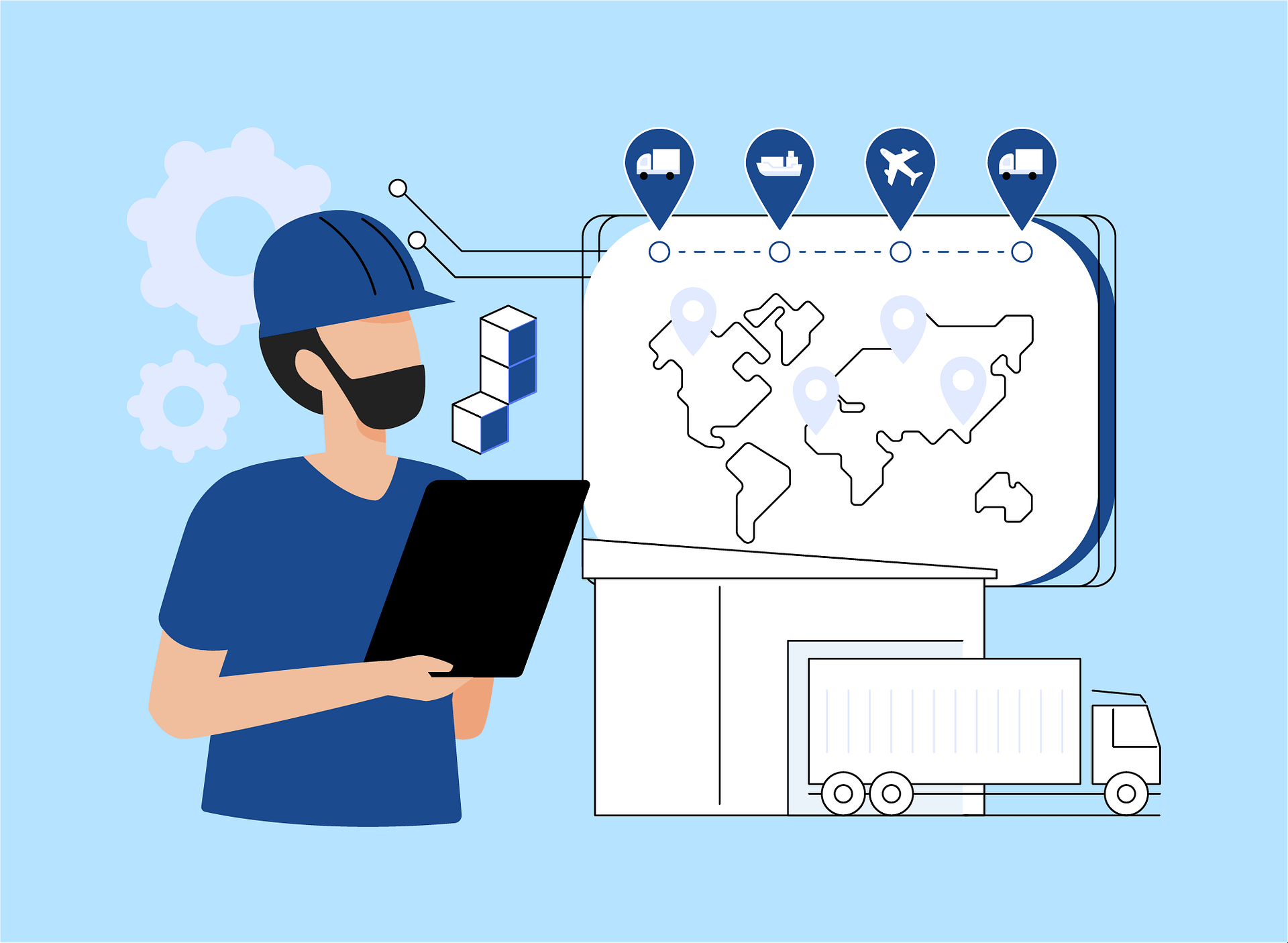
Most logistics companies deal with the same mess: a sales quote in the CRM, a booking in the TMS, an invoice in the ERP. Three versions of one transaction. A Salesforce-native TMS fixes this. Sales, operations, and finance run on the same platform. No duplicate entries, drift, or manual cleanup. One update changes everything, everywhere.
The Neurored TMS & SCM Control Tower makes this real. Every shipment, mode, and carrier lives in one dashboard. Dispatchers, customer service, and finance see the same data at the same time. The results are faster reports, hours saved per employee, better decisions. One system means everyone works from the same facts.
3. 7,000 Ways to Innovate. All in One Marketplace

Integrations look harmless, until you add up the hidden costs. Every API, middleware license, and reconciliation job eats into your budget. Each system update means another audit, another patch, another IT ticket.
With a TMS that’s native to Salesforce AppExchange, you eliminate this overhead because the 7,000+ apps that power the world’s #1 business marketplace all align on the same infrastructure.
Running your business on a single platform, with compliant hosting and without conflicting tools, your business can scale faster, collaborate seamlessly across teams, and innovate safely within a unified digital ecosystem.
When you do need a niche solution that lives out of the platform, you can consider leading tools like Neurored TMS & SCM that pre-integrates all the leading logistics technology solutions so that you have fewer data sources (and headaches) to manage.
Built natively on Salesforce, it consolidates CRM, SRM, rates management, real-time tracking, and supply chain optimization into one environment. The result is faster implementation, lower maintenance, and a system that costs less to own every year.
4. Smarter Workflows, Zero Developer Bottlenecks

In most logistics systems, even small process changes require developer support or custom scripts. That slows innovation and creates dependency on IT teams.
A Salesforce-native TMS eliminates this barrier by embedding low-code automation directly into the platform. Using Salesforce Flows, teams can update workflows, approvals, and alerts in hours instead of weeks, without touching a single line of code.
This flexibility allows businesses to move fast. Operations teams can refine quoting, billing, or exception management processes on their own, adapting quickly as customers, carriers, or market conditions change.
AI then takes this agility further. Einstein AI enhances the automation layer with intelligence that learns from data and streamlines repetitive work. Neurored TMS & SCM applies these tools across daily operations:
- Quote Agent builds customer quotes in minutes using rate and shipment data already in Salesforce.
- Payables Assistant reads freight invoices, extracts line items, and reconciles them automatically.
- Rate Assistant tracks and compares rate files, flagging schema changes before they disrupt workflows.
Together, low-code automation and embedded AI create a system that continuously improves itself. Businesses gain speed, consistency, and control without the drag of constant development cycles.
5. A Platform That Upgrades Itself

In logistics, technology doesn’t stand still, but many companies’ systems do. Traditional and standalone TMS software often evolve through irregular updates or quick fixes, leaving IT teams in constant patchwork mode.
The mindset of “if it isn’t broken, don’t touch it” might save time in the short term, but it leaves businesses lagging behind as technology, regulations, and customer expectations advance.
A Salesforce-native TMS changes that dynamic. Salesforce delivers three major platform upgrades every year, automatically applied across all environments without downtime or disruption.
Each release brings advancements in AI, analytics, security, and performance; ensuring your systems evolve continuously while your teams stay focused on operations. With Salesforce investing over $5.4 billion in R&D in 2025 alone, its commitment to innovation is obvious.
Neurored TMS & SCM builds on this momentum. Our dedicated R&D team actively explores emerging technologies shaping transportation and supply chain management. From predictive analytics to automation and digital collaboration, we ensure our customers are always equipped with the most forward-looking capabilities in the industry.
The result is a system that doesn’t just keep up with change. It stays ahead of it.
» Read our definitive guide on future-proofing your freight forwarding business
6. Connected Portals. Stronger Partnerships. Smarter Operations

As logistics operations grow, keeping customers, carriers, and partners informed becomes a daily challenge. Teams spend hours answering calls, sharing documents, and managing updates across multiple systems. That approach doesn’t scale and often leaves stakeholders working with outdated information.
A Salesforce-native TMS solves this with secure, external collaboration portals built on Salesforce Experience Cloud. These portals give every stakeholder real-time visibility into shipment status, documents, and communication history, all within one connected environment. Customers can track deliveries, vendors can upload documents, and carriers can confirm milestones without relying on emails or manual updates.
Neurored TMS & SCM extends this capability through its Supply Chain Collaboration Portals, helping logistics teams deliver digital transparency and faster response times even during peak operations. The result is a connected network where everyone operates with the same real-time information, improving trust, efficiency, and customer experience.
7. Analytics Built on a Unified Data Model
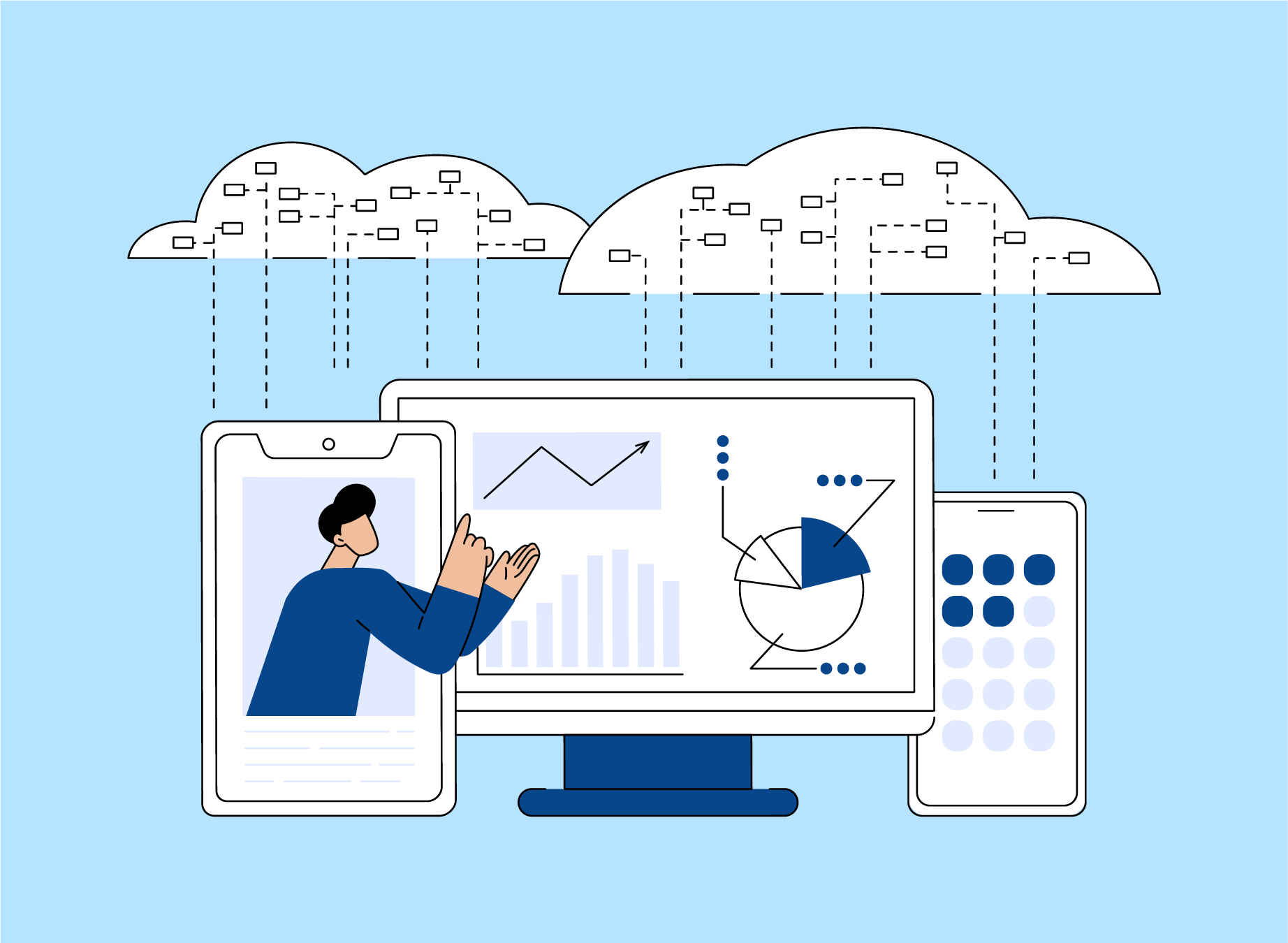
Modern logistics generates massive amounts of information from carriers, ports, IoT devices, and customer systems. Most TMS software struggles to manage this complexity because each source sits in a different database, forcing teams to reconcile conflicting reports.
A Salesforce-native TMS brings all that data together in one scalable model built for enterprise performance. The Salesforce platform can handle large volumes of structured and unstructured information, capturing every shipment, rate, and transaction needed to reflect real-world logistics operations.
Neurored TMS & SCM builds on this foundation using Salesforce’s advanced analytics tools, including Tableau CRM and Einstein Discovery. These tools analyze live operational data to uncover trends, predict risks, and optimize performance in real time.
The result is a clear, data-driven view of your logistics network that supports faster, smarter decisions across the organization.
8. Enterprise Security, Compliance, and Reliability

Security should never depend on add-ons or manual oversight. A Salesforce-native TMS benefits from the same enterprise-grade security infrastructure that protects some of the world’s most trusted organizations (including government and defence). Salesforce’s cloud environment is continuously monitored, automatically updated, and backed by multi-region redundancy that ensures consistent uptime and data availability.
Every Salesforce-native TMS inherits this protection by design. The platform is certified for SOC 1, SOC 2, SOC 3, ISO 27001, ISO 27017, and ISO 27018, and is fully compliant with major data privacy regulations including GDPR, CCPA, FedRAMP, and HIPAA. Field-level encryption, granular access control, and detailed audit trails ensure that every record remains secure and traceable.
Neurored TMS & SCM operates entirely within this framework. Each module follows the same standards for data protection, governance, and reliability used by global enterprises. The result is predictable and proven: trusted uptime, governed data, and peace of mind built directly into the system.
9. Stop Searching. Let Slack AI Find It for You.

In logistics, decisions are made in seconds. But when critical information lives across Slack, email, and text threads, those seconds can turn into delays. Messages get buried, people are left out of the loop, and small issues snowball.
That’s why Neurored TMS & SCM, built on Salesforce, integrates directly with Slack. With Slack’s enterprise search, your team can simply ask for what they need and get instant answers in one place.
Picture this: a senior account executive is preparing a renewal with TechFlow Industries. Instead of hunting through Salesforce tabs or Slack channels, they type:
“Show TechFlow’s Salesforce details, recent issues, satisfaction comments, and internal notes from the last six months.”
Within seconds, the AI generates a summary:
Positive signals
- 15% increase in Salesforce usage
- CTO praised the product roadmap in Slack
- Procurement called the tool “essential to our workflow”
Risks to address
- Billing discrepancy causing frustration
- Unresolved API rate-limit request from four months ago
- Internal champion is leaving the company
Armed with this, the executive takes clear, proactive steps:
- Clear the Air: Call the customer, acknowledge the billing issue, and offer a goodwill credit, showing ownership and responsiveness.
- Clear the Record: Notice the API rate-limit issue was already fixed and update Salesforce to prevent leadership from thinking the issue is still open.
- Keep Momentum: Schedule a handover with the new point of contact to reinforce the partnership and highlight ongoing value.
Now, leadership sees the real picture, the customer feels heard, and renewal conversations start from a place of trust.
And while the AI delivers all this insight, security never takes a back seat. Slack’s enterprise search processes your data in real time, without storing it. The system only accesses the information during the search, isolates it, and then wipes it clean.
Every search also respects permissions. Slack verifies who’s asking and shows only what that person is allowed to see. If access changes, results adjust instantly.
10. Adapts to Your Business. Empowers Your Team

Technology succeeds when teams can make it their own. Most logistics software forces users to adjust to predefined workflows and rigid interfaces, making adoption slow and frustrating. A Salesforce-native TMS takes the opposite approach. It adapts to your existing processes, letting you design screens, approvals, and workflows that match how your teams already operate.
This flexibility shortens training time and reduces resistance to change because users don’t have to relearn what already works. The system evolves naturally around your business instead of forcing new habits.
To drive the fastest adoption, the system must adapt to your unique environment (UI language, specific workflows/layouts). The customizability ensures you see the solution fitting your context, which is a key advantage of a transportation management system built on a flexible platform like Salesforce.
Neurored TMS & SCM applies this principle through fully customizable interfaces, role-based dashboards, and self-service portals for customers, carriers, and internal users. As your operations grow across new modes or regions, the same scalable architecture supports global expansion without reimplementation or disruption.
Addressing Common Questions About a Salesforce-Native TMS

Does a Salesforce-native TMS create vendor lock-in?
Not at all. You gain the advantages of a unified platform without the perceived disadvantage of lock-in, as the Salesforce ecosystem is open and extensible. Through the Salesforce AppExchange, businesses gain access to more than 7,000 leading business applications that integrate natively with the same data model.
Beyond that, Neurored TMS & SCM already connects with the industry’s top logistics technology providers and, backed by years of experience in complex logistics integrations, can easily connect any additional tools your operation requires. You get the freedom to evolve without sacrificing security or consistency.
Is implementation complex or time-consuming?
Implementation focuses on quick configuration, which minimizes the initial time investment logistics professionals often consider a disadvantage of traditional TMS systems. Neurored TMS & SCM uses structured templates and deployment frameworks that streamline setup and reduce project timelines.
Whether your company already uses Salesforce or not, you start on a stable, enterprise-grade foundation with minimal disruption. Customers consistently recognize Neurored as a leader for “Fastest Implementation” and “Easiest to Do Business With” on G2.
» Learn more about Neurored TMS & SCM achievements
Does it provide deep logistics functionality?
Absolutely. Neurored TMS & SCM delivers a comprehensive suite of transportation, rate management, and supply chain visibility capabilities developed from decades of logistics expertise.
Every function is built within Salesforce’s enterprise architecture, combining specialized industry knowledge with platform-level reliability, scalability, and performance. The result is a solution that meets the full depth and complexity of modern logistics operations with precision and confidence.
Leveraging the Power of a Salesforce-Native TMS
Your TMS architecture isn’t just infrastructure, it’s how your business adapts. When logistics, sales, and analytics operate on a unified platform, teams move faster, data stays clean, and decisions get made without delay.
A Salesforce-native foundation makes this possible. It replaces brittle integrations with a single data architecture, connects every department to the same live source of truth, and evolves with every platform release, without downtime, or rework.
Neurored owns the logistics layer of that platform. From embedded freight contracts to rate enforcement, quoting, and exception handling, every process is automated, auditable, and built to scale. Execution gaps aren’t fixed by switching providers or renegotiating contracts. They’re closed by systems designed to match how your business actually runs.
In a supply chain defined by volatility, adaptability isn’t an upgrade, it’s the requirement. If you want to transform how your logistics team executes using Salesforce-native architecture, you can schedule a demo of Neurored TMS & SCM.
Schedule your demo today!

Ricardo Medem
Share Article



Let’s Get Started
Schedule a Demo Now