


















Chief Product Officer specializing in enterprise software for freight and supply chains.

Content Marketing Specialist with expertise in B2B SaaS, SEO, AEO, and technical writing.

Director of Marketing with 10+ years in B2B SaaS demand generation and revenue growth.
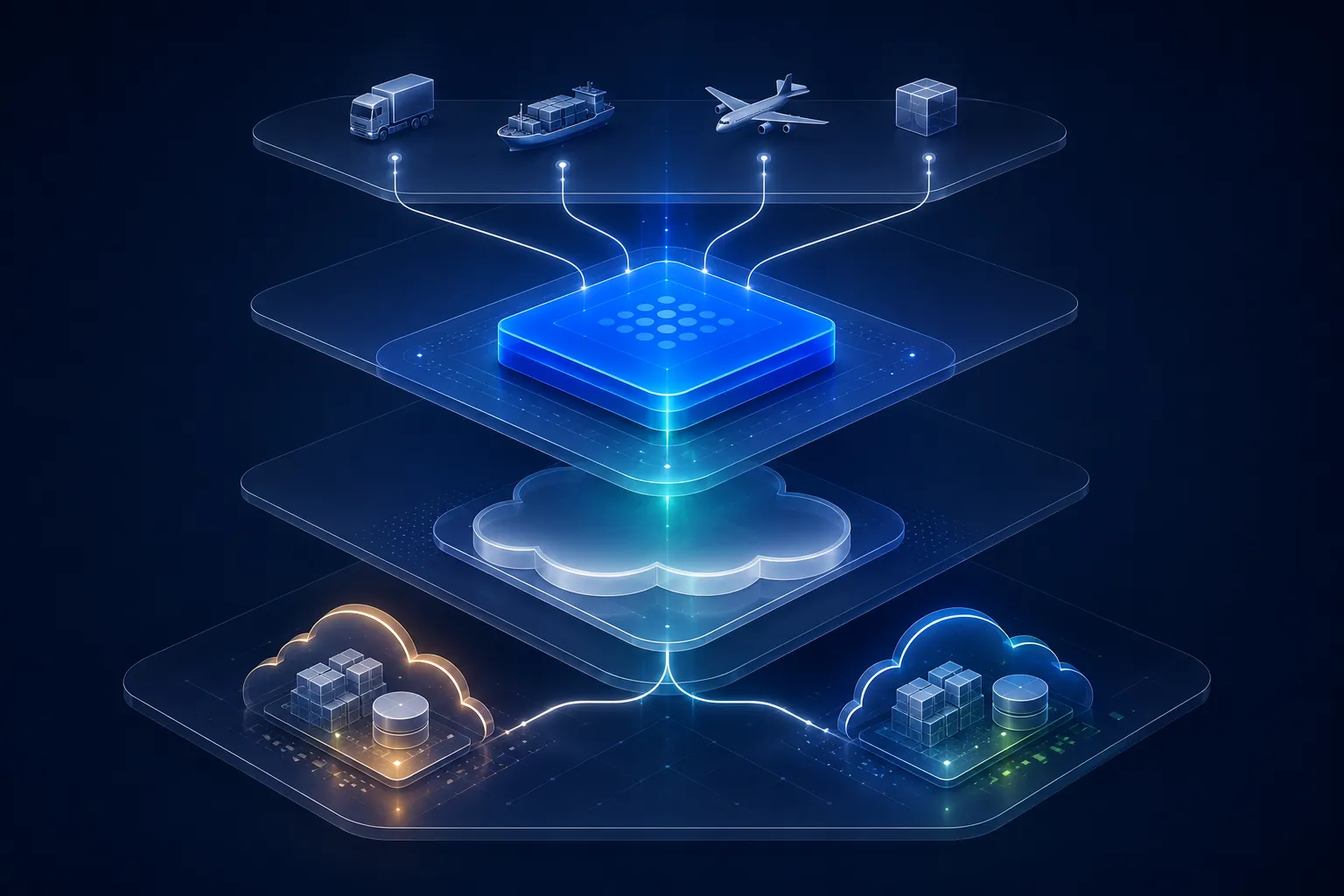
One platform for transport management and supply chain, built on Salesforce.
Book a demoThe TMS used to live in the back office. Dispatch software. A tool for truckers.
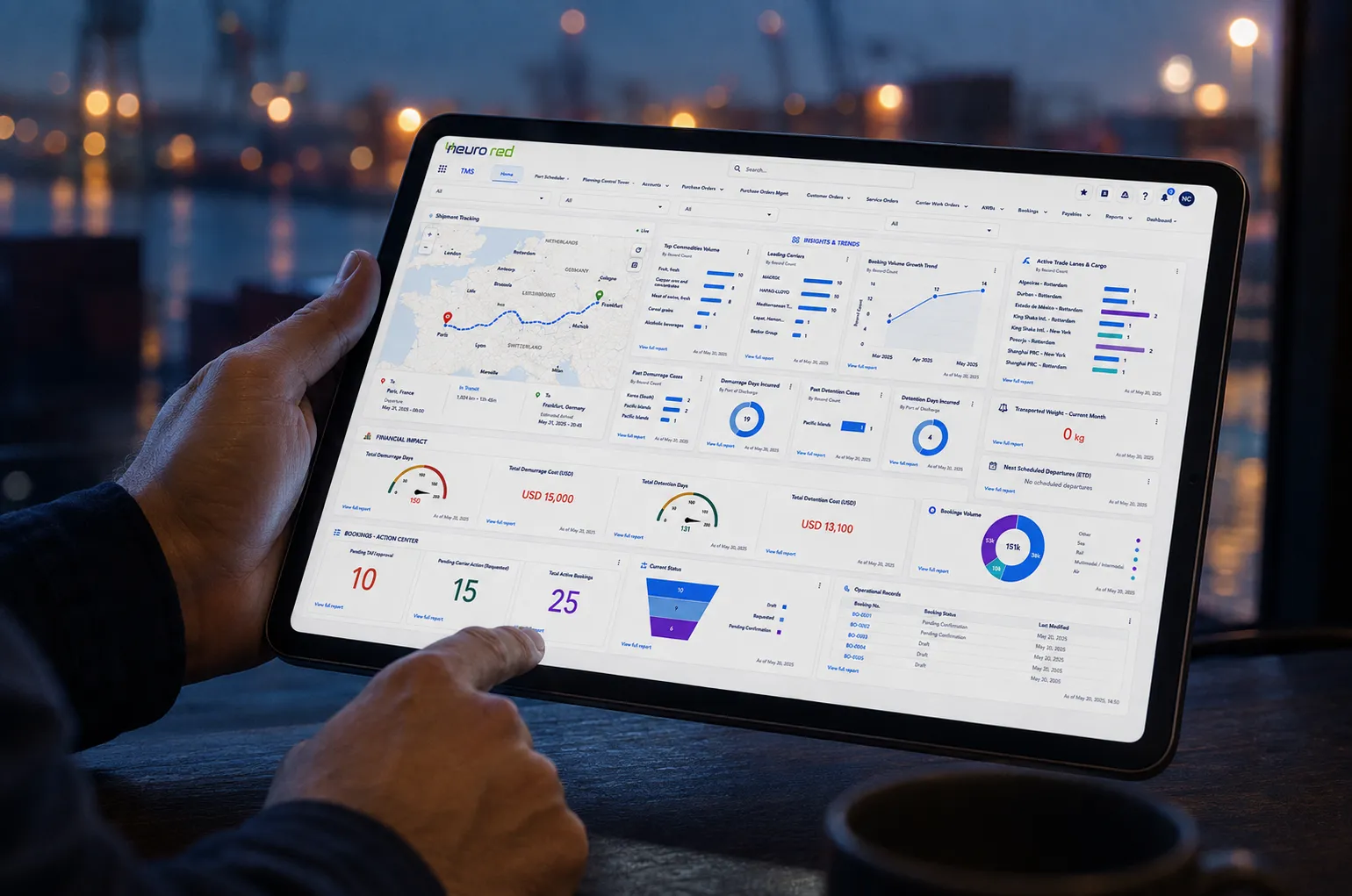
Today it's the strategic nerve center of the supply chain, handling carrier selection, customs compliance, carbon reporting, and AI-driven decisions from a single platform. If you're evaluating or upgrading now, the transportation management system features you need look nothing like they did two years ago.
The market sees it too. The global TMS market is projected to hit $37 billion by the early 2030s, and more than half of supply chain leaders are increasing their technology spend.
But not every platform is ready for this moment. Many are still running on architectures built for a simpler era: single-mode, domestically focused, and disconnected from the carrier ecosystems and regulatory frameworks that define modern logistics.
The 43 transportation management system features below, organized into eight categories, show you exactly what separates a modern, future-proof platform from the legacy software that's already holding you back.
Category 1: Transportation Optimization and Order Management
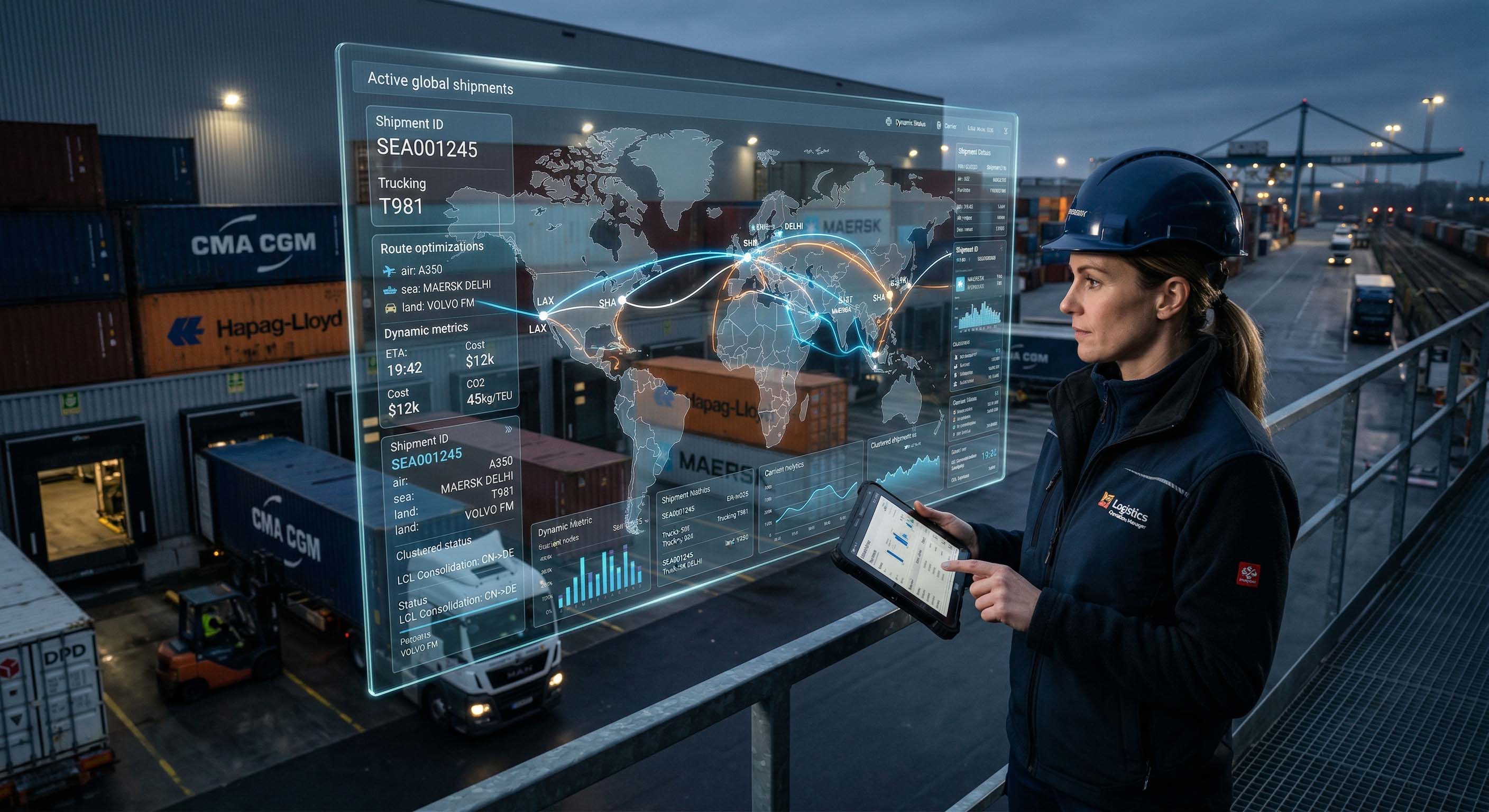
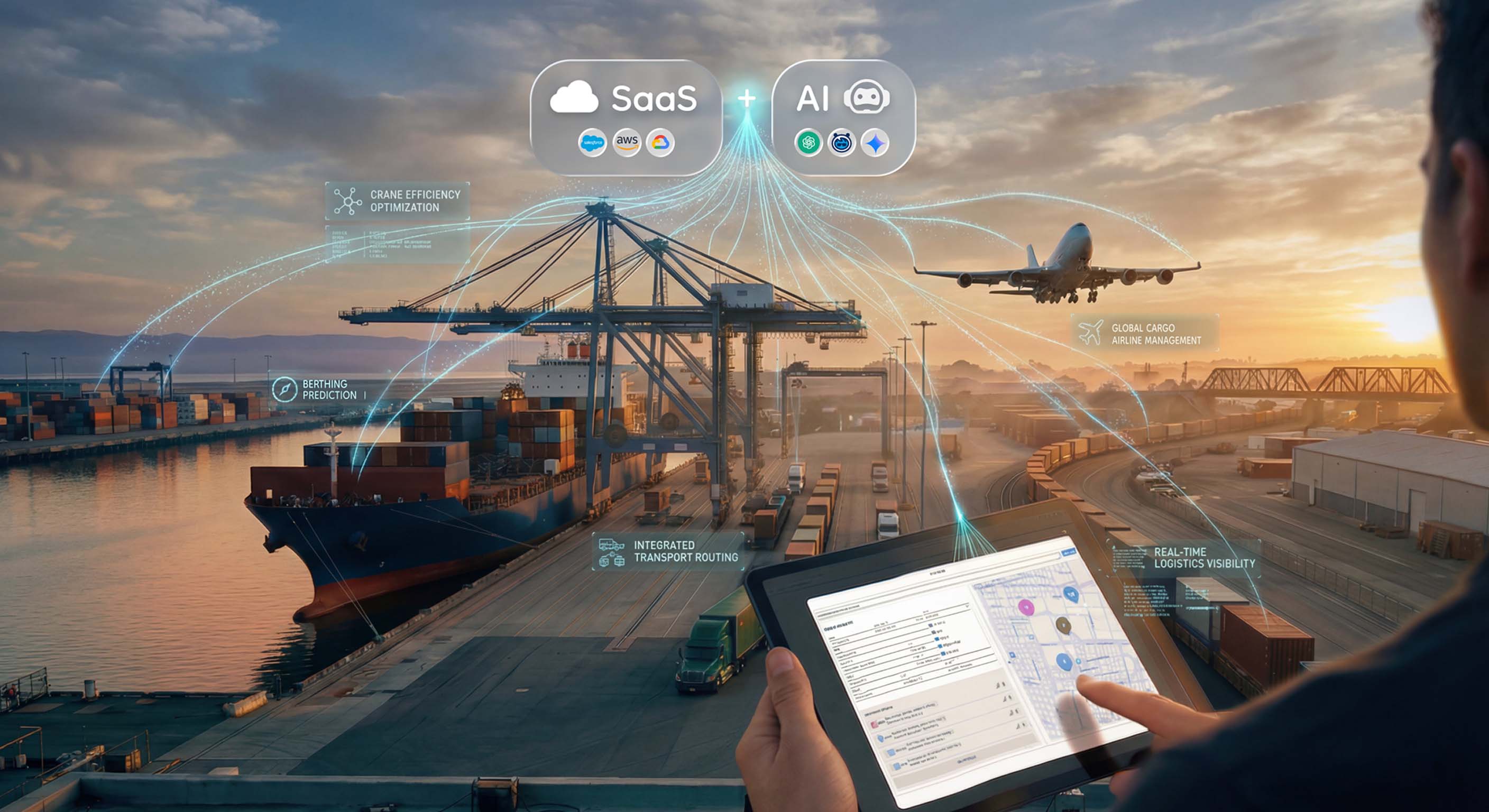
Getting goods from A to B sounds simple. Doing it at the lowest cost, fastest speed, and smallest carbon footprint across multiple modes and carriers takes serious optimization.
1. End-to-End Transport Order Management
A modern TMS keeps every order in one place: item quantities, packaging, pickup and delivery addresses, fees, emails, invoices, and supporting documents all tied to a single record.
Without that, teams waste hours piecing data together across spreadsheets and emails. Duplicate entry, invoice errors, hunting for information.
For teams handling hundreds of orders a week, bulk upload and mass editing make that scale manageable.
A mid-sized freight forwarder managing 500+ orders weekly, toggling between spreadsheets, email folders, and a legacy accounting system, is a good example. One consolidated order record cuts reconciliation time and eliminates invoice-matching errors. That's the difference between keeping up and actually getting ahead.
[post|How Smaller Freight Forwarders Can Compete With the Giants|Explore how technology helps smaller teams streamline operations and deliver better customer service.|https://cdn.prod.website-files.com/699ee1f3535208d5a990b4ca/6acf98a97803daa07440d985_Cover_How%20Can%20Mid-Sized%20Freight%20Forwarders%20Compete_.jpg|Read the article|https://www.neurored.com/blog/competing-with-forwarding-giants/]
2. Multimodal Network Optimization
Shippers who stick to one mode or carrier may overpay. Algorithms find cheaper, faster, or greener combinations that manual planning misses, because the variables are simply too many to weigh at once: dozens of carriers, multiple modes, shifting rates, changing schedules.
Multimodal network optimization evaluates every combination of ocean, air, road, and rail against your constraints: cost limits, transit windows, carbon targets. It groups pickup orders into single line haul shipments to cut per-unit costs, and it builds demurrage and detention risk into scheduling so hidden charges don't eat your savings later.
Here's a concrete example. Five LCL shipments leave Shanghai for Rotterdam in the same week. Manual planning books five separate slots. An algorithm combines them into one FCL container. Ocean freight per unit drops and paperwork shrinks. The shipments were going to the same place at the same time anyway. The opportunity was always there.
[post|10 Ways to Improve Transportation Across Modes|Explore practical strategies to reduce costs, improve routing, and make better use of capacity across your transport network.|https://cdn.prod.website-files.com/699ee1f3535208d5a990b4ca/6ac8ab5d55f3eeb4d149c45e_Cover_How%20to%20Optimize%20Transportation%20in%202026.jpg|Explore the strategies|https://www.neurored.com/blog/transportation-optimization-strategies/]
3. Route Optimization (First Mile, Last Mile, Line Haul)
Most routing tools plan once at dispatch and never update. That gap between the route calculated at 6 AM and the reality on the road at 2 PM directly affects fuel costs, delivery times, and emissions.
Modern route optimization closes that gap. It factors in tolls, live traffic, delivery windows, and driver availability from the start. When something changes mid-journey, whether a breakdown or a cancellation, the system reroutes automatically. For fleets that track emissions, it can also weigh road gradient, congestion, and vehicle type to cut carbon per shipment.
The results are measurable. Fleets using dynamic rerouting typically save on fuel. That's why the most useful question when evaluating any routing tool is: does it recalculate mid-journey, or only at dispatch? The answer tells you whether you're looking at a planning tool or an execution tool.
[post|Move Beyond Static Freight Routing|Learn how to define your requirements, prepare your data, and implement a freight routing system.|https://cdn.prod.website-files.com/699ee1f3535208d5a990b4ca/6acf98a94a0bf592fa57e455_Cover_How%20to%20Implement%20Freight%20Routing%20Systems.jpg|Read the guide|https://www.neurored.com/blog/implementing-freight-routing-systems/]
4. Cargo and Vessel Loading Optimization
Packing containers well means shipping fewer of them, and that directly cuts freight costs. The challenge is doing it consistently at scale.
Cargo optimization sequences items by delivery order, weight, and orientation so that what comes off first sits closest to the door. 3D load planning maps the container or hold before anything is packed, making problems visible and fixable before they reach the dock.
For vessel loading, the rules are stricter. Some hazardous materials can't share a bay. Stackability, tilt limits, and regional regulations all apply. Get it wrong and you face delays, fines, or worse. The financial case is straightforward. Better utilization means fewer containers for the same volume. Same goods, fewer boxes, lower freight costs.
5. Multimodal Scheduling, Carrier Booking, and Marketplace Integrations
Booking shipments across multiple carrier portals is slow, error-prone, and keeps your booking data separate from your rate and order records. A modern TMS solves all three problems with multimodal scheduling, carrier booking, and marketplace integrations.
It connects to carriers across every mode in one place, so your team can check schedules, pick departure times, and send booking requests without switching platforms. EDI and API connections to your core carriers go further, automating confirmations and cutting out email back-and-forth entirely.
For air cargo, marketplace integrations extend that reach. Neurored TMS & SCM includes prebuilt integrations, giving teams access to 75+ air carriers with real-time capacity and pricing and direct eBooking. What used to take minutes can be done in about 30 seconds.
6. Dispatch Planning and Fleet Asset Optimization
Assigning the wrong vehicle or driver wastes capacity and pushes costs up. Dispatch planning and fleet asset optimization fixes this by using historical data to make smarter allocation decisions from the start.
The system brings owned, contracted, and outsourced fleets into one place, then matches orders to vehicles based on load size, vehicle type, and carrier performance. Performance data is broken down by route and driver, so dispatchers know who to assign and why.
Over time, the system gets sharper. The algorithms learn which carriers perform best on which routes, and volume shifts toward the reliable ones. The guesswork fades out.
7. Yard Management and Dock Scheduling
Yard congestion doesn't stay in the yard. A truck waiting two hours at a loading dock means wasted driver time, delayed deliveries, and potential detention charges. The fix starts with better coordination.
Dock appointment scheduling gives drivers and warehouse staff a simple interface to coordinate arrivals, so everyone knows when to show up. Dwell time tracking spots congestion patterns before they become bottlenecks. Automated gate check-ins regulate the flow of vehicles and people, and the system tracks delays by carrier and driver so underperformance is easy to identify.
Neurored TMS & SCM handles this entire chain in one platform. The Transportation Optimization module covers multimodal routing, last-mile delivery, 3D cargo loading, and dispatch across owned and outsourced fleets.
Its pre-built carrier integrations let teams check schedules, book shipments, and manage documentation without switching platforms. Yard Management and Dock Scheduling handle the physical layer: calendar-based appointments, gate operations, and dwell time analytics.
[cta|Coordinate Your Yard and Dock Operations|See how Neurored connects dock appointments, gate operations, and dwell time tracking with transportation planning.|Book a demo|#contact]
Category 2: Freight Rate Management and Quoting
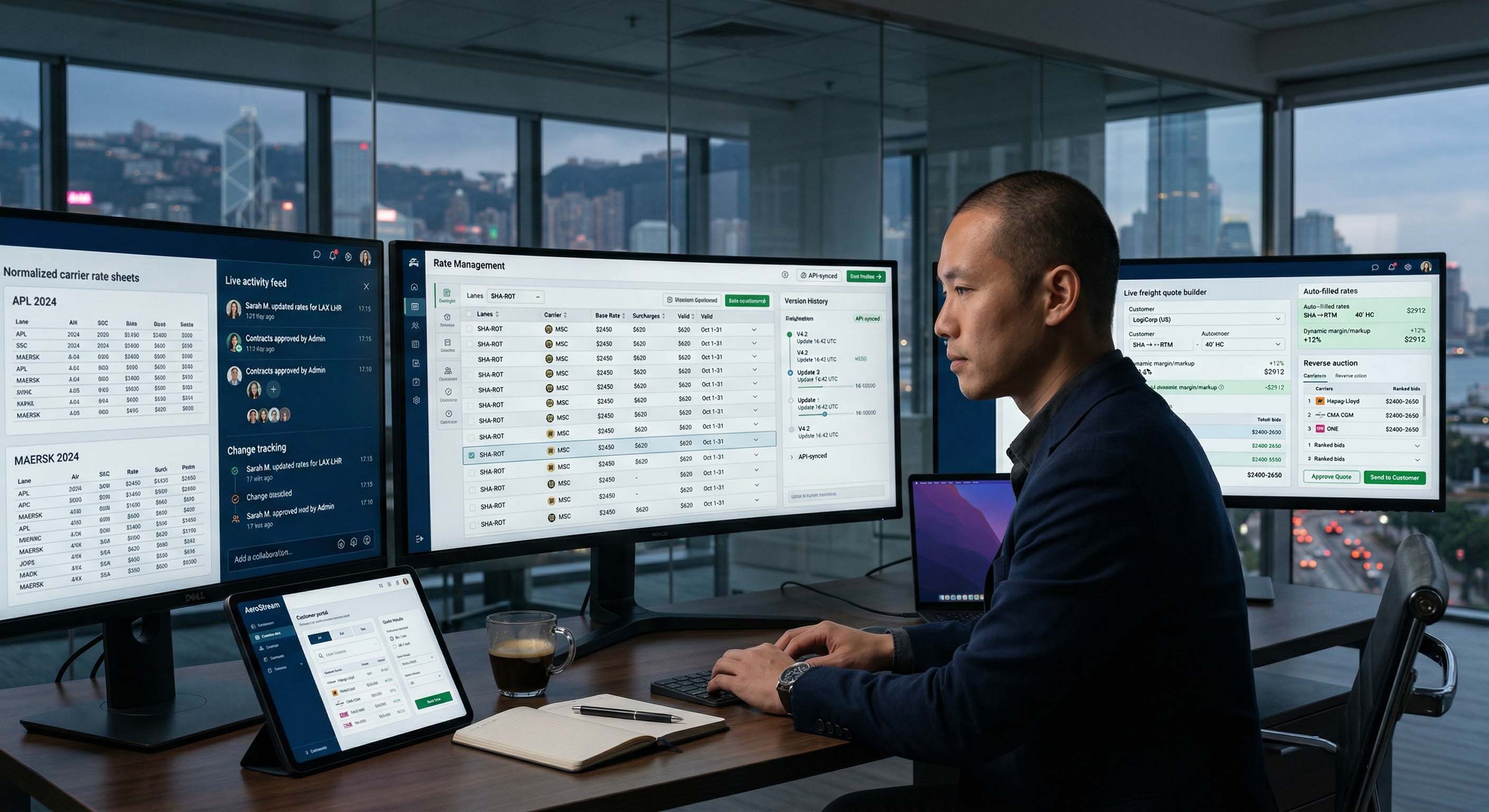
Rate management is where margin is won or lost. These four features determine whether a team spends hours building quotes or minutes approving them.
8. Freight Rate Contract Upload, Collaboration, and Management
When buy rates live in spreadsheets and email threads, nobody has the current number, and that uncertainty leaks into every quote. A modern TMS fixes this by giving everyone a single source of truth.
Teams upload carrier rate files as-is, with no reformatting needed. Every revision is stored with a full change history, and API integrations pull rates directly from carriers to keep records current automatically. The result is one accurate, up-to-date rate base across all modes.
Good collaboration depends on that foundation. With freight rate management, multiple teams can manage rates at the same time without overwriting each other's work. Approved rates flow automatically into downstream rate books for quoting, and historical data feeds trend and forecast analytics to support smarter procurement decisions.
The difference in practice is stark. A team that used to spend mornings hunting through emailed spreadsheets for the latest contracted rate can now pull it from one place in seconds.
9. Spot-Rate Sourcing and Electronic Tendering
Freight procurement moves faster when carriers can compete without friction.
Electronic tendering replaces slow phone and email cycles with real-time competition. API integrations connect your TMS to rate marketplaces and load boards, so pricing is always current. Spot rates shift quickly, and last week's price may already be irrelevant. This keeps you working with live data, not stale quotes.
More carriers bidding drives better rates:
- Carriers can submit spot quotes without creating an account, so there's no login barrier to entry.
- Reverse auctions with live bid rankings and target pricing sharpen that competition further.
- Private tenders keep the same process controlled for preferred providers.
You're not just buying on price, either. Carrier performance data and rate benchmarks are built into the workflow, so reliability is factored in before you decide. The result: tender cycles that took days now take hours, with more bids and better pricing throughout.
10. Rate Books and Automated Markup Management
Inconsistent pricing costs you margin and credibility. When every quote is built from scratch, different sales reps charge different prices for the same customer on the same lane. Over time, that inconsistency erodes margins and undermines trust.
Rate books fix this by giving your whole team a single source of truth. Rates are segmented by region, carrier, and charge type, with markups set as a percentage of buy rate or per freight unit. When market conditions shift, you can update pricing across entire books in one edit rather than fixing quotes one by one.
With rate books in place, quoting becomes fast and reliable. Your sales team generates branded quotes straight from pre-approved rates, no manual building required. Quotes go out faster, and margins stay consistent.
[post|Shipment-Based vs. User-Based TMS Pricing|See how each pricing model affects your software costs as shipment volumes and team sizes change.|https://cdn.prod.website-files.com/699ee1f3535208d5a990b4ca/6acf98a92c764978fde815af_Cover_TMS%20Pricing%20Post%20%28Shipment%20based%20User%20based%29.jpg|Compare pricing models|https://www.neurored.com/blog/transportation-management-system-cost/]
11. Self-Service Freight Customer Portal
A self-service portal removes the middleman, so customers can find answers on their own.
A quote request that needs a sales rep makes the customer wait and pulls your team from higher-value work. A branded portal removes that dependency entirely. Shippers can compare rates, check sailing schedules, book shipments, and track deliveries on their own.
Spot rates and routing options load instantly, and all their shipments are visible in one place with live status updates. The impact on turnaround time is immediate. Quote turnaround drops to zero, not faster, zero. And beyond speed, customers are more satisfied when they have control over their own freight.
Neurored's Freight Rates Management Software makes this possible. Bulk-upload carrier contracts, run private tenders, build rate books with custom markups, and generate branded quotes in one click. The branded Portal, built on Salesforce Experience Cloud, puts all of these features directly into your customers' hands while your business reaps the benefits of their loyalty.
[cta|Give Customers More Control Over Their Freight|See how Neurored's branded portal lets customers compare rates, check schedules, book shipments, and track deliveries.|Book a demo|#contact]
Category 3: Visibility and Real-Time Tracking

Visibility has graduated from competitive advantage to baseline requirement. These seven features define what "real-time" actually means in a modern TMS.
12. Real-Time GPS and Vessel Tracking
Real-time visibility lets you act on problems before your customer notices them. Without it, you're reacting. Satellite and GPS tracking across all modes gives your team the position data to catch exceptions early, across every part of the journey.
Vessels get tracked via AIS satellite, air cargo through airline integrations, and trucks via GPS and ELD connections across hundreds of manufacturers and millions of vehicles globally. Vessel positioning updates faster than any other solution on the market.
Knowing where things are is only half of it.
Dynamic geofencing handles the monitoring for you. Draw virtual boundaries around yards, ports, and delivery zones, and the system sends automated alerts the moment an asset crosses one. No one needs to watch a screen waiting for something to happen.
The result is a team that stays ahead of exceptions instead of explaining them.
[post|Is Your Real-Time Tracking Fast Enough?|See why timely shipment updates matter for spotting delays, responding quickly, and keeping customers informed.|https://cdn.prod.website-files.com/699ee1f3535208d5a990b4ca/6acf98a970df6e8efc561271_Cover_Is%20Your%20Real-Time%20Tracking%20Fast%20Enough%20to%20Compete_.jpg|Read the article|https://www.neurored.com/blog/is-your-real-time-tracking-fast-enough-to-compete/]
13. IoT Sensor Orchestration
Condition data is what separates a saved shipment from a lost one.
For temperature-sensitive and high-value cargo, location alone tells you too little too late. Sensors attach to pallets and individual items, tracking temperature, humidity, light exposure, and shock in real time alongside location data in your platform. That gives you a complete picture of what's happening to a shipment, not just where it is.
When something goes wrong, machine learning predicts how long you have before quality is compromised. Not just "something's wrong," but "you have 47 minutes." That window is what makes intervention possible.
The system then acts on its own, triggering exception workflows and rerouting to the nearest compliant cold-storage facility before product is lost.
The difference between catching a problem in time and finding out too late comes down to one thing: whether you had condition data.
14. Dynamic ETA Prediction and Proactive Alerts
Customers don't call to complain about delays. They call because nobody told them.
Most systems treat an ETA as a one-time guess based on a scheduled departure, and leave customers to chase updates themselves. Predictive ETAs fix this by recalculating continuously based on live traffic, weather, and vessel schedule changes. The number your customer sees at 9am reflects the world as it is at 9am, not a schedule set days ago.
Automated alerts handle the exceptions automatically. Delays, schedule changes, demurrage and detention risk, cancellations, customs completions: the system pushes these to customers before they pick up the phone or send the "where's my shipment?" email.
The drop in inbound status calls is not just operational efficiency. It's a sign of a better customer experience.
15. Container Tracking and Event Aggregation
Tracking a container across its full journey requires more than one data source.
Containers change hands multiple times, moving between ocean lines, terminal operators, and rail providers. No single tracking provider covers all of it. One might have strong ocean visibility but lose the container at the terminal. Another picks up rail but misses the last-mile truck. The result is partial data, stitched together, with gaps you can only hope don't matter.
Aggregation fills those gaps. A hub model pulls data from hundreds of carriers across ocean, road, and rail, combining multiple tracking sources for broader coverage and better data quality than any single provider can offer.
When a primary provider loses coverage mid-voyage, the system automatically switches to an alternative. No manual intervention, no gap in visibility, no frantic emails asking where the container went. The result is continuous tracking from port of loading to final delivery, regardless of how many carriers and terminals handle the container along the way.
16. Warehouse and Yard Asset Visibility
Most solutions track a container across oceans, terminals, and trucks, then lose it the moment it enters a facility. But stationary inventory still needs to be found, counted, and monitored. The goods didn't stop mattering because they stopped moving.
WiFi and Bluetooth beacon tracking fills that gap. Assets and containers are tracked in real time across yards, staging areas, and storage zones, with no barcode scanners or manual counts. The same IoT sensors that monitor temperature and humidity in transit keep working in storage, so condition monitoring continues through the full custody chain.
The same tracking extends to external 3PL facilities. Your goods, their warehouse, your data. The efficiency gains follow naturally. Facilities that replace manual scanning with beacon tracking can save hours every week on inventory counts alone, time that goes somewhere more useful.
17. Configurable Dashboards and Supply Chain Analytics
Configurable dashboards let teams build their own views without IT tickets or waiting weeks for a report that's already stale. Track demand allocation, capacity utilization, carrier performance, and delivery metrics, sliced by mode, lane, carrier, or customer. The data bends to how your business thinks, not a vendor's default template.
The analytics work on four levels: descriptive (what happened), diagnostic (why it happened), predictive (what will happen), and prescriptive (what to do about it). For deeper analysis, integration with Tableau and Einstein Analytics opens up the full toolkit.
Here's what that might look like in practice. An operations director builds a custom dashboard, pokes around, and discovers that 60% of detention charges come from three carriers. That single insight creates immediate leverage for renegotiating terms. That dashboard actually paid for itself before lunch.
[post|Get More From Your Transportation Data|Explore the KPIs, predictive methods, and data sources that help you measure performance and make better decisions.|https://cdn.prod.website-files.com/699ee1f3535208d5a990b4ca/6acf98a970df6e8efc56126e_Cover_Transportation%20Data%20Analytics.jpg|Read the guide|https://www.neurored.com/blog/transportation-data-analytics/]
18. Multimodal Supply Chain Control Tower
When every transport mode lives in a separate system, nobody has the full picture and problems slip through the gaps.
A control tower fixes this by bringing everything together: GPS tracking, IoT sensors, predictive ETAs, container aggregation, warehouse monitoring, and analytics in one dashboard. Carrier performance, inventory levels, and delivery data sit side by side, making it possible to spot patterns that siloed systems hide.
That matters most when things go wrong. A vessel arrives 36 hours late, pushing the connecting rail slot, which threatens a delivery window at a distribution center 4,000 miles inland. In a siloed environment, each delay lives in a different system and nobody connects the dots until the customer calls.
With a multimodal supply chain control tower, the team sees the cascade forming and acts before it hits.
Category 4: Sustainability and Carbon Management

Sustainability is no longer a CSR checkbox. It is an operational mandate with regulatory teeth and direct impact on routing, carrier selection, and reporting.
19. Carbon Footprint Reporting and Compliance
Sustainability reporting is no longer optional, and good intentions aren't enough. You need auditable data. A modern TMS tracks carbon at fleet and shipment level: distance traveled, fuel consumption, and emissions, all captured in dashboards built for reporting.
Integration with certified tools like EcoTransIT World means the numbers hold up under external audit, not just internal review. That turns sustainability claims into something regulators, investors, and customers can actually verify.
The same data also unlocks real money. Green tax credits, environmental incentives, and an edge with customers who factor sustainability into procurement decisions are all within reach once you have reliable emissions documentation.
20. Eco-Route Optimization
Most routing decisions default to cost because that's what the system optimizes for. Eco-routing adds the missing dimension.
AI evaluates topography, congestion, and vehicle type to find routes that minimize emissions per shipment. Planners can then compare cost, transit time, and carbon impact side by side before committing. The system also flags intermodal alternatives, like shifting road to rail, and identifies carriers with lower emissions on specific lanes.
The goal isn't to choose sustainability over efficiency. It's to see the tradeoff clearly so you can make the call consciously, with full information rather than a default.
21. EV and Alternative Fleet Orchestration
Fleet electrification fails without operational planning to back it up. Buying electric or hydrogen vehicles is the easy part. Without routing built around range, charging infrastructure, and payload constraints, new EVs quickly become expensive problems.
Heavier loads drain batteries faster, charging stations need to be on the route, and energy regeneration on downhill segments changes the math. A modern TMS system accounts for all of it.
That planning extends across the whole fleet. Combustion, electric, and hydrogen vehicles are managed together, with each assigned to routes where it performs best. EVs handle urban last-mile routes within their range. Diesel covers long haul. Charging schedules run overnight at off-peak rates.
Energy usage and renewable energy supply at distribution hubs are tracked alongside everything else, giving you a complete picture as the transition progresses. The right vehicle on the right route is how fleet transitions succeed instead of stall.
22. Scope 1, 2, and 3 Emissions Tracking
Measuring your supply chain emissions is now a legal requirement, and most organizations aren't ready. Scope 3 emissions, everything upstream and downstream including carrier emissions, supplier operations, and customer use, typically account for over 70% of a company's total carbon footprint.
They're the biggest number and the hardest to track. CSRD and CBAM are making accurate measurement mandatory, which means spreadsheets and estimates are no longer enough.
A modern TMS handles all three scopes:
- Scope 1 covers direct emissions from assets you own.
- Scope 2 covers indirect emissions from purchased energy.
- Scope 3 is tracked at shipment, route, and carrier level, with carrier emissions pulled automatically via API.
Reports are formatted to meet CSRD, CBAM, and ESG investor requirements without manual assembly. The difference shows up at deadline time. Companies with TMS-generated emissions data meet CSRD obligations in days. Those working from spreadsheets scramble for weeks.
Neurored's carbon tracking integrates with EcoTransIT World to deliver certified emissions data at shipment and fleet level, tracking distance, fuel, and gases continuously. The result is reporting infrastructure that meets compliance requirements while identifying decarbonisation opportunities that actually save money.
[cta|Bring Emissions Data Into Your Transport Planning|See how Neurored's EcoTransIT World integration helps you measure transport emissions and compare lower-emission options.|Book a demo|#contact]
Category 5: Collaboration, CRM, and Supplier Management

A TMS that only talks to your own team is half a TMS. These features extend the platform to every stakeholder in your supply chain.
23. Integrated CRM for Logistics
A service rep should be able to resolve a customer inquiry from one screen. Without a logistics-native CRM, that's rarely possible.
Generic CRMs can't connect a customer complaint to a specific shipment. Reps end up toggling between systems while the customer waits, piecing together order status, tracking data, documents, and communication history from different places.
A TMS-native CRM ties everything together. Every interaction, document, and communication is linked to the relevant shipment or order. Emails from Outlook and Gmail attach directly to orders, so the whole team sees the same history. When a delay occurs, a customer outreach task is created automatically.
Documents live where they belong too. Bills of lading, airway bills, and commercial invoices are generated and stored against the customer record, not scattered across inboxes and shared drives. The result is a single screen that shows everything: order status, tracking, documents, and communication history. One place, one view, one rep who can actually help.
24. Supplier Relationship Management (SRM), Performance Scorecarding, and Collaboration
Strong supplier relationships don't happen by accident. They're built on structured processes at every stage. It starts with onboarding. Automated approval workflows, clear qualification guidelines, and centralized storage for certifications and compliance documents get everyone into the system the right way.
Once suppliers are active, scorecards track performance across price, responsiveness, efficiency, quality, and compliance. Real-time alerts fire when performance dips below threshold, so you find out about problems before your customers do. Credit assessments and corporate social responsibility monitoring go further, helping find fragile suppliers before they become liabilities.
Day-to-day collaboration runs through integrated tools: document sharing, real-time chat, contract management with streamlined renewals, and structured feedback.
Automated bill audits compare invoices against original quotes, catching discrepancies without manual checking. When something goes wrong, incident workflows trigger automatically and keep the team moving without manual follow-up.
25. Branded Collaboration Portals for Customers, Suppliers, and Partners
The fastest way to reduce routine workload is to let partners serve themselves.
Every email exchange with a carrier, supplier, or customer that could have been self-service is wasted time on both sides. Fully branded portals eliminate it by giving external partners a single place to handle the basics: view rates, track shipments, submit RFQs, upload documents, and manage invoices.
For customers, multimodal tracking portals provide real-time visibility across all modes with event alerts, so they get answers without picking up the phone.
For warehouse and terminal partners, delivery booking portals show live slot availability so they can schedule their own appointments. They see what's open, they book it, done. No coordinator managing calendars over email. The result is fewer interruptions, faster resolution, and a branded experience your partners actually prefer.
[post|7 Ways to Improve Supply Chain Communication|Explore practical ways to reduce misunderstandings, coordinate handoffs, and keep teams working from the same information.|https://cdn.prod.website-files.com/699ee1f3535208d5a990b4ca/6ac8d07521c74f2ac29906fc_Cover_7%20Ways%20to%20Improve%20Supply%20Chain%20Communication.jpg|Read the guide|https://www.neurored.com/blog/supply-chain-communication-tips/]
26. Electronic B2B Payments Integration
Cross-border payments in logistics are slow, expensive, and fragmented. Integrated payment processing fixes this by automating payment requests, cutting out bank commissions through platforms like Veem, and securing better exchange rates.
Integrated payment tools solve this at every step. Built-in payment processing eliminates bank commissions and locks in better exchange rates on cross-border transfers. Automated matching validates invoices against contracted rates and releases payment on confirmed delivery, compressing cycles from weeks to days.
Neurored TMS & SCM ties the rest together. Built natively on Salesforce, it brings customer management, supplier collaboration, document generation, and freight billing workflows into one platform. Branded collaboration portals extend that visibility to external partners. Customers can track shipments, suppliers can participate in tenders, and carriers can submit quotes without leaving your ecosystem.
Category 6: Compliance, Documentation, and Financial Settlement

Compliance failures do not just cost money. They halt cargo at borders, trigger investigations, and destroy customer trust.
27. Automated Global Trade Compliance
One compliance miss can mean shipment seizure, fines, and reputational damage that takes years to recover from. Manual screening isn't reliable enough to prevent it.
The problem with name matching is that it misses complex ownership structures. If a trading partner's subsidiary is 51% owned by a sanctioned entity, a name match won't catch it. AI-driven screening applies ownership logic instead, along with OFAC and BIS regulations automatically, so those structures don't slip through.
When a partner's status changes on an international watchlist, transactions are blocked in real time, before the shipment moves, not a week later.
Automated HTS classification, valuation, and customs documentation reduce manual workload throughout. Every decision is logged in an unalterable audit trail, so when regulators ask questions, you have answers.
28. Ethical Sourcing and Supply Chain Traceability
If you can't prove your supply chain is free of forced labor, your shipment doesn't cross the border. That's the reality of UFLPA in the US and CSDDD in the EU. Both regulations require documented evidence of due diligence, and "we think our suppliers are compliant" isn't enough.
Shipment-level traceability provides that evidence. Every shipment carries its own paper trail: supplier documentation and chain-of-custody records from raw material to finished goods, all auditable on demand. When customs asks, you pull it up instantly rather than scrambling to assemble it manually.
The difference shows up at the border. Two companies ship goods on the same vessel. One clears customs in hours because their documentation is ready. The other is held for 30 days while someone digs through folders trying to piece the paperwork together.
Same shipment. Same port. Very different outcomes.
29. Automated Freight Documentation
Freight documentation errors are preventable. Most happen because people are retyping the same data into multiple documents.
One-click generation fixes this by pulling directly from order and shipment data to produce bills of lading, airway bills, commercial invoices, and packing lists. No re-keying, no copy-paste errors. Inbound documents are handled the same way: OCR scans email attachments and links them to the right shipment records automatically, so nothing gets missed or misfiled.
Every change is tracked behind the scenes: who edited what, when, and why. Validation checks catch errors before anything goes to customs, while there's still time to fix them rather than after a penalty or hold. The result is documentation that's accurate from the start and audit-ready throughout.
30. Freight Audit and Payment Automation
Freight invoices contain errors far more often than most teams realise, and those errors almost always favour the vendor. Automated freight audit fixes this by comparing every inbound invoice against the contracted rate and flagging discrepancies instantly.
Clean invoices process for payment automatically, with buy and sell rates flowing straight to your accounting or ERP system. No re-entry, no reconciliation.
The financial impact is immediate. Organizations that implement automated freight audit commonly recover tens of thousands of dollars in overcharges within the first quarter. Not a projection. Found money.
Neurored TMS & SCM AI Payables Assistant helps automate freight audit and reconciliation directly inside the TMS. It reads inbound invoices, extracts line items, and matches them against contracted rates or shipment charges.
Discrepancies are flagged automatically, while clean invoices move through the payment workflow, eliminating manual matching, spreadsheets, and costly billing errors.
[cta|Catch Invoice Discrepancies Before Payment|See how Neurored's AI Payables Assistant extracts invoice data, matches charges, and flags discrepancies for review.|Book a demo|#contact]
31. Blockchain-Backed Immutability and Smart Contract Settlement
Logistics payments are slow because proof is hard. When disputes arise over what happened, when, and who's responsible, nobody can verify the facts. It's all he-said-she-said. That costs time and money on every side.
A shared ledger solves the proof problem. A permissioned blockchain gives every stakeholder one version of events that no one can alter. Every movement, handoff, and status update is time-stamped and locked. When a question comes up, the answer is already there.
Remove the dispute, and you remove the delay. Smart contracts can release payment automatically once sensors confirm a delivery arrived at the right place, on time, at the right temperature, without damage. The sensors check, the contract fires, the money moves.
The result is a direct hit to your cash flow. Traditional payment cycles run 30 to 45 days. Automated confirmation cuts that to near-instant payment on delivery. Capital that used to sit frozen in transit disputes comes straight back to your business.
32. Supply Chain Risk Scoring and Credit Exposure Management
Supply chain risk is manageable when you see it coming. The problem is that most companies don't. A supplier goes bankrupt, a carrier loses its license. By the time a logistics team hears about it, they're already behind.
Continuous risk scoring closes that gap. The system watches credit exposure in real time and builds a single risk profile for each partner, pulling in price swings, operational red flags, and geopolitical signals. When a threshold is breached, you get an alert. Rate benchmarking helps you decide what to do next.
Neurored TMS & SCM supports this workflow natively. Its Supply Chain Risk Management tools let teams set credit exposure limits per account, trigger real-time alerts when thresholds are breached, and compare live rates against historical trends from their own supplier network. All documentation tied to those risk events is stored at the shipment level, keeping the audit trail intact.
Category 7: AI and Intelligent Automation

AI in logistics has moved well past chatbots and dashboards. What matters now falls into three categories.
- Predictive analytics forecasts what's coming: demand spikes, delays, capacity crunches.
- Prescriptive optimization runs the scenarios and tells you what to do about it. Reroute here, consolidate there.
- Generative AI agents go beyond recommendations. They act. Book the carrier, send the update, adjust the plan.
Forecasting tells you what's coming. Optimization tells you what to do. AI agents do it for you while you supervise. A mature TMS needs all three working together.
33. Predictive and Prescriptive Analytics
Prediction alone isn't enough.
Knowing a shipment will be late is useful. But computing the optimal reroute, reallocating the carrier, and repositioning inventory to mitigate that delay? That's what actually drives ROI.
This is the difference between predictive and prescriptive analytics. Both matter. Here's how they work together.
- Predictive analytics forecast what's coming. The models look at historical patterns to estimate container demand, freight rate trends, and the probability that a specific shipment will hit an exception. You get early warning before loads fail.
- Prescriptive analytics take those predictions and answer the harder question: what should we do about it?
This is where optimization engines come in. They consume the forecast outputs alongside your live orders and solve the math problem: which carrier mix is optimal, which route is cheapest, where should inventory sit. The system doesn't just tell you what will happen. It tells you what to do.
Human judgment still matters. Collaborative workflows let your team refine the algorithmic forecasts, adding context the models can't see.
One thing to watch: time-series foundation models from the hyperscalers (Google, Amazon, Salesforce) are starting to outperform custom-built forecasting systems. If that trend holds, forecasting pipelines get simpler. And the vendors who adapt fastest will have an edge.
34. AI-Powered Quoting, Rate Intelligence, and Email Intake
The faster you quote, the more you win. Every hour between receiving an RFQ and sending a quote increases your odds of losing to a faster competitor. AI compresses that window at every stage of the process.
It starts before a human touches anything. Inbound RFQs arrive as unstructured text. AI parses them into structured requests, extracts the key details like origin, destination, cargo type, and dates, and prompts senders to fill in anything missing. By the time a person looks at it, the request is already clean.
Pricing gets sharper. Dynamic pricing analyzes win/loss history, distances, surcharges, and cargo context to recommend the right number. Not a gut feel. A computed answer.
Quoting itself is next. Instead of building from scratch, the system drafts in seconds using historical data, current market rates, and structured rate models. Your team reviews and sends. Quote cycle time drops from 20 minutes to two.
Rate ingestion follows the same logic. Onboarding a new carrier's rate file means dealing with different vendors, schemas, and formats. AI tools compare the variants, flag differences, and suggest fixes, cutting onboarding time in half.
The most aggressive implementations don't wait for the RFQ at all. They send competitive rates to high-value customers before they ask, based on when those customers typically need the service. At that point, speed stops being an operational advantage and becomes a reason customers stay.
35. Intelligent Document Processing and OCR
Document processing is one of the biggest drains on freight forwarding operations. The work is repetitive, adds no strategic value, and scales badly. AI eliminates most of it.
The same logic applies across every document type. Invoice processing extracts line items, pricing, payment terms, and vendor details, then matches them against contracted rates automatically. Bill of lading automation captures locations, dates, costs, and cargo details, validates against orders, and flags discrepancies early.
OCR mass-digitizes physical documents into searchable data, cutting manual handling dramatically. Knowledge agents centralize product docs and SOPs so operators and customers get instant answers in plain language, reducing support tickets in the process.
Neurored TMS & SCM is built around this vision:
- AI Rate Assistant compares rate files and flags schema differences.
- Quote Agent drafts multimodal freight quotes in seconds.
- NeuDoc digitizes shipping documents with OCR and intelligent extraction.
- AI Payables reads invoices and matches them to TMS fees.
- The AI Help Center Agent answers product and SOP questions instantly, while Community Intake parses inbound RFQ emails into structured requests.
The pattern holds across all of it. AI handles the repetitive work, your team handles the judgment calls, and that division is where the productivity gain lives.
[post|Explore AI-Powered Workflows in Neurored TMS 4.0|See how AI-powered quoting, OCR, and automated payables help reduce manual work across quotes, documents, and invoices.|https://cdn.prod.website-files.com/699ee1f3535208d5a990b4ca/6acf98aaa330ece51397e770_Cover_Neurored%20TMS%204.0.jpg|Explore TMS 4.0|https://www.neurored.com/blog/neurored-tms-v4-teaser/]
36. AI Governance and Explainability
AI governance in your TMS isn't a nice-to-have. From August 2026, the EU AI Act makes it a legal requirement for any system that makes autonomous decisions. You'll need risk classification, data-flow mapping, and audit trails. But compliance is the floor, not the ceiling.
Without governance built into the architecture, three things go wrong:
- Regulatory exposure accumulates quietly.
- Accuracy drifts without anyone noticing.
- AI scope creeps beyond what anyone intended.
Look for human override on every AI decision, decision logging that shows not just what the AI recommended but why, and multi-model fallback so you're not hostage to one vendor's roadmap. Data residency, PII redaction, and customer-scoped indexes ensure your data stays yours and doesn't leak between tenants.
The release process is equally telling. Serious vendors stage AI features through research, pilot, limited release, and full rollout, validating each phase with real operators before going wide. This is how drift and edge cases get caught before they cause damage.
Two questions will tell you whether a vendor has this right.
- Do your AI features follow a staged release process?
- Can I opt out of specific AI-driven decisions?
Vague answers mean governance exists on paper, but not in the product.
37. Agentic AI and Autonomous Orchestration
Traditional automation handles defined tasks. Match an invoice to a rate. Flag a missing field. These systems do exactly what they're told, nothing more. Agentic AI handles judgment calls, coordinates across systems, and takes actions without waiting to be prompted at each step.
The practical difference becomes clear under pressure. A port strike hits. A disruption agent detects it and assesses the impact on in-transit shipments.
It coordinates with an inventory agent to identify buffer stock, triggers a procurement agent to solicit alternative carrier quotes, and rebooks affected freight via new routes. No human touches it until the decisions are made. That kind of coordinated response is beyond what any rules-based system can do.
The architecture behind this matters. Multi-agent systems use specialized agents for disruption, inventory, procurement, and carrier tendering working in concert, rather than one model trying to handle everything. Each agent does what it's built for, and they hand off between each other as the situation develops.
Most TMS systems are earlier in this journey. Today, agentic AI assists with specific tasks: parsing RFQ emails into structured requests, drafting quotes from rate data, answering operator questions against SOPs. Useful, but limited.
The direction is clear. Today, agents assist. The trajectory is agents that orchestrate.
Category 8: Platform Architecture and Security

Features are only as good as the platform they run on. These architecture decisions determine whether your TMS scales, adapts, and survives in a threat landscape that evolves faster than your freight.
38. API-First Architecture and Open Ecosystem Connectivity
Isolated systems don't scale. An API-first TMS fixes this by connecting your entire logistics stack into one hub: ERP, WMS, OMS, carrier systems, finance platforms, and feeds like weather, port congestion, and geopolitical risk.
What makes that hub work is moving from batch EDI to live APIs. Old integrations updated overnight. Modern ones update in seconds. That's the difference between reacting to yesterday and responding to now.
Pre-built connectors make setup easy. Modular design means you can upgrade one part without touching the rest. When your TMS spots a delayed truck, your WMS adjusts labor schedules, dock priorities, and pick sequences automatically. No calls, no emails, no lag.
39. Cloud-Native SaaS Deployment
On-premise TMS installations create work. Your IT team manages servers, schedules maintenance windows, and handles every upgrade manually.
Cloud-native TMS like Neurored TMS & SCM removes all of that. No servers to maintain or patch. It runs on Salesforce, which scales automatically, delivers 99.9%+ uptime, and updates continuously in the background. No maintenance windows, no downtime, no upgrade projects.
Security holds up too. Each customer gets an isolated environment, so your data stays separate, while shared underlying infrastructure keeps costs down. The difference: on-premise means your team manages the system. Cloud-native means your team uses it.
[post|What Are the Advantages of a Salesforce-Native TMS?|Explore how shared data, integrations, and configurable workflows can support your logistics operations.|https://cdn.prod.website-files.com/699ee1f3535208d5a990b4ca/6ac76091574f89a5e8b1db62_1_Best%20TMS%20Software.jpg|Explore the benefits|https://www.neurored.com/blog/salesforce-tms-advantages/]
40. Low-Code/No-Code Extensibility
When every custom workflow needs a developer ticket, your operations slow to the pace of your IT queue.
Low-code tools fix this. Visual drag-and-drop interfaces let dispatchers, analysts, and warehouse managers build dashboards, workflows, and automations themselves. A dispatcher who needs a custom exception alert doesn't wait two weeks for IT. She builds it in 30 minutes. According to 451 Research, low-code platforms cut development time by 50-90%.
AI goes further. Describe what you need in plain language, and it drafts the code. You refine and deploy. IT doesn't lose control in either case. Architects set the guardrails: data access limits, approval gates, security rules. Frontline staff build freely within those boundaries.
One thing to check with any TMS vendor: can IT actually define those guardrails? If anyone can build anything with no limits, you've traded one problem for another.
41. Converged IT-OT Cybersecurity
A security breach in a modern TMS isn't a data problem. It's an operational shutdown.
That's because a TMS now controls physical assets: fleet movements, automated vehicles, and facility operations. Compromise any part of it and the effects are immediate. A tampered telematics sensor feeds false location data. Your fleet misroutes. Shipments go to the wrong facilities. By the time anyone notices, the damage is done.
IoT devices are the most exposed entry point. Malware targeting telematics and sensors surged 400% in recent years, according to IoT World Today. Continuous monitoring and anomaly detection are the practical response.
AI routing adds another surface to protect. Autonomous algorithms can be manipulated through prompt injection and data poisoning. Cryptographic protections defend against both.
Two design principles contain the damage when something gets through. Zero-trust architecture treats every connection as suspect until verified. Micro-segmentation isolates systems so a breach in one area can't spread. That compromised sensor stays contained while everything else keeps running.
Compliance sets the minimum bar. TSA operational technology requirements, FTA frameworks, and international data regulations all apply. At scale, none of them are optional.
42. Digital Twin Simulation and Scenario Planning
You can't stress-test your supply chain in production. But you can simulate it.
A digital twin mirrors your real network in real time: facilities, routes, carriers, inventory, and external conditions, all fed by your TMS, ERP, and IoT data. Instead of guessing what might happen, you model it first.
Correos Express does exactly this. They run 70 facilities, 6,380 routes, and over 15,000 delivery points across Spain and Portugal. At that scale, intuition isn't enough.
With Neurored TMS & SCM, they built an AI-powered digital twin that gives their teams live visibility across the whole network, plus the ability to forecast demand, simulate routes, and optimize resources.
The result: faster decisions, better-balanced resources, and early warning on bottlenecks. When a shipping lane closes, severe weather hits, or a carrier fails, they can model the disruption, test their response, and refine the plan before any real resources are on the line.
[post|How Correos Express Digitized Its Logistics Network|See how Correos Express uses Neurored to improve visibility, model scenarios, and coordinate resources across its network.|https://cdn.prod.website-files.com/699ee1f3535208d5a990b4ca/6acf98a90d9f34a03359d947_Cover_Correos%20Express%20Launches%20AI%20Transport%20Digital%20Twin%20with%20Neurored%20TMS%20and%20SCM.jpg|Read the story|https://www.neurored.com/blog/digitizing-correos-express/]
43. Mobile Access and Integrated Driver Applications
Field workers are the last mile of TMS adoption, and the mobile experience makes or breaks it. If the app is clunky or needs constant connectivity, people won't use it.
The basics matter: digital signatures, delivery photos, proof of delivery. But the bigger unlock is eCMR, the electronic consignment note that replaces paper with a legal digital record of every custody transfer. When something goes wrong, that distinction is everything.
Paper gets lost, requires manual filing, and drags disputes out for weeks. Digital eCMR with photo documentation resolves the same disputes in hours. Reliable field use also means the app has to work without signal. Offline mode with automatic sync means drivers aren't stuck when they lose connectivity.
The DriversON mobile app extends the TMS to every field worker, with full eCMR, digital signatures, and delivery documentation built in. Drivers capture every custody transfer digitally, creating a reliable record that flows straight into the system.
Behind the app, Neurored TMS and SCM runs on Salesforce and AWS, providing enterprise security, automatic zero-downtime updates, and low-code customization. It connects to your ERP, WMS, and carrier network out of the box, with pre-built integrations across 30+ logistics partners.
The result is one system, shared by drivers and back office alike.
[cta|Connect Drivers With Your Back Office|See how Neurored's DriversON app brings delivery photos, digital signatures, and proof of delivery into your transportation workflow.|Book a demo|#contact]
Your Evaluation Starts Here
These 43 capabilities aren't a wish list. They're the baseline transportation management system features for any platform expected to handle volatility, manage complexity, and grow with your business.
Modern TMS solutions have evolved from dispatch tools into supply chain nerve centers. Carrier optimization, carbon reporting, AI quoting, real-time visibility, blockchain settlement: it all runs in one system now.
Organizations still on legacy platforms are falling behind on three fronts: regulatory risk from missed CSRD and EU AI Act deadlines, competitive pressure as faster rivals automate what you're still doing manually, and operational fragility when the next disruption hits a supply chain held together by spreadsheets.
You don't need to build this from scratch. Neurored TMS & SCM brings all of it together natively on Salesforce: multimodal optimization, freight rate management, visibility, AI automation, and supply chain collaboration in one platform. Whether you're a freight forwarder, 3PL, global shipper, or port operator, schedule a demo to see what we can do for you.
Description
Description