
7 Common Supply Chain Communication Failures, and How to Fix Them
Effective communication is the lifeblood of any supply chain operation. A single miscommunication can lead to delays, increased costs, and dissatisfied customers. During the COVID-19 pandemic, 57% of companies reported significant supply chain disruptions, many of which were linked to communication and visibility challenges (EY US).
In this guide, we’ll explore seven common communication failures in supply chain management and provide actionable solutions to overcome them, supported by real-life examples, expert advice, and practical tools.
1. Ignoring the Power of Centralized Communication
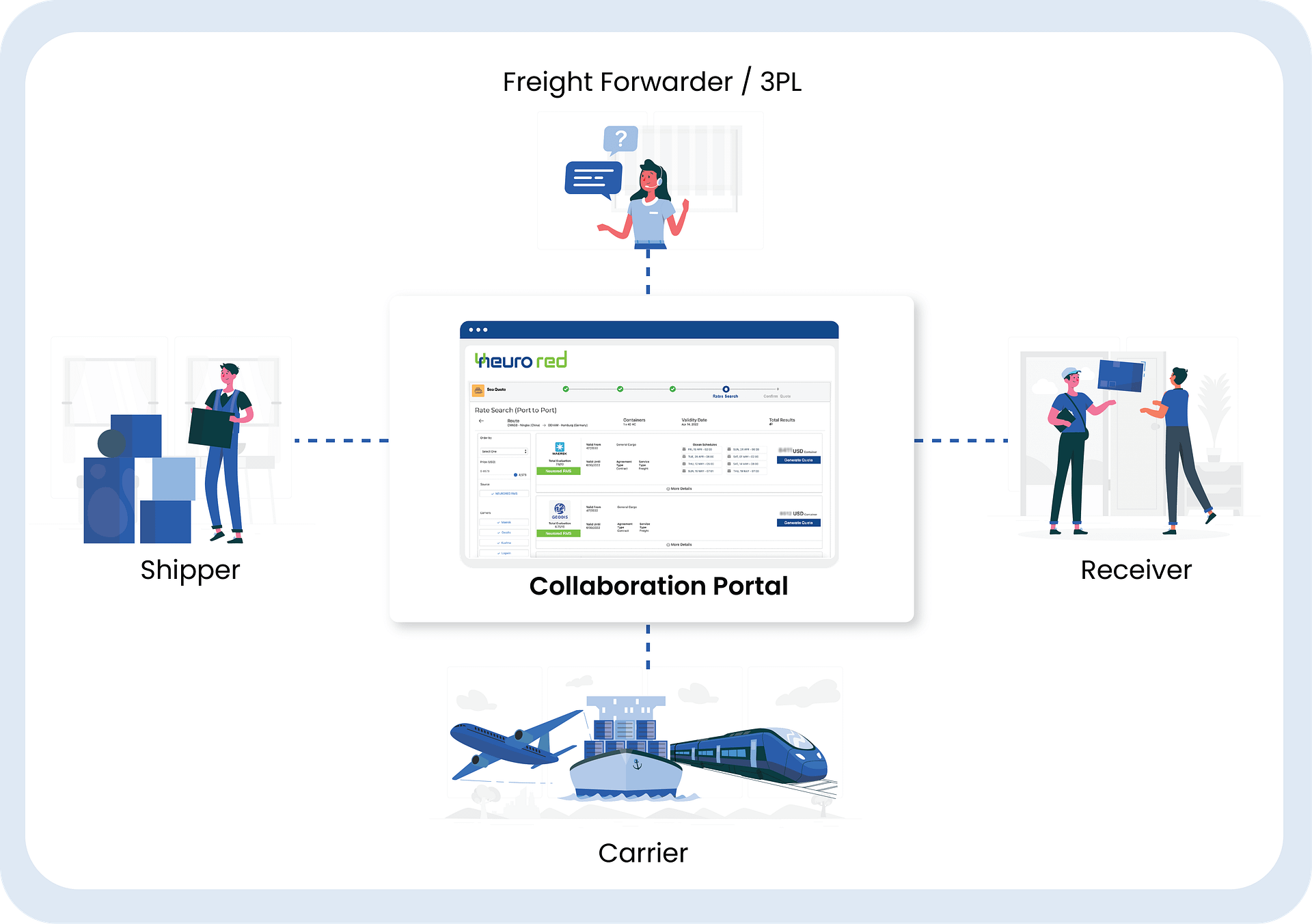
The Problem: Relying on multiple, disjointed communication channels can lead to missed messages, confusion, and inconsistent information flow.
The Fix: Implement a centralized communication platform, such as a digital portal, where all stakeholders—carriers, 3PLs, and customers—can access real-time updates, share documents, and communicate directly. This not only streamlines communication but also ensures that everyone is on the same page. This fix is known to reduce email traffic by 40% and improve response times by 30%.
Tool Recommendation: Neurored’s Supply Chain Collaboration Portal provides a comprehensive solution that centralizes all communication within the supply chain. Leveraging the power of MuleSoft, it connects seamlessly with various systems and tools, ensuring a unified communication flow across all stakeholders. The platform supports email integration with Outlook and Gmail, automatically recording customer emails in the system to give your team the context needed to provide a friction-free customer experience.
2. Failing to Organize Communication by Stakeholder Type

The Problem: Lumping all communications together without categorizing them by stakeholder type can result in critical messages getting lost or delayed.
The Fix: Leverage the Email Integration feature of Neurored’s CRM & SRM Software to automatically connect emails to relevant accounts and contacts within the system. This ensures that all email communications are organized and easily accessible by the relevant teams. With emails properly categorized and linked to the appropriate accounts, your team can collaborate more effectively, respond faster, and maintain a comprehensive view of all stakeholder interactions.
By automatically associating emails with relevant accounts, team members get immediate access to the necessary information, saving 20% time in overall coordination.
Tool Recommendation: Neurored’s CRM & SRM Software provides robust Email Integration with Outlook and Gmail, connecting communications directly to the relevant accounts in the system. This feature ensures that all email interactions are well-organized and accessible, supporting seamless collaboration and quicker decision-making.
3. Over-Reliance on Disconnected Email Clients

The Problem: Email, while a staple in business communication, is often too slow and cumbersome for the fast-paced demands of supply chain operations.
The Fix: Incorporate real-time messaging tools like Slack into your communication strategy to complement your email communications. Slack allows for quicker responses and more dynamic interactions, which are crucial in time-sensitive situations. Additionally, ensuring that all email communications are integrated within your logistics management software results in a 25% reduction in response times and a significant improvement in overall team efficiency.
Tool Recommendation: Use Slack for real-time team communication, integrated with Neurored’s TMS Software to ensure that all email communications are automatically logged and connected to the relevant accounts within the system. This combination provides a comprehensive communication solution, ensuring that your team has access to both real-time updates and complete email histories, enabling faster and more informed decision-making.
4. Neglecting Real-Time Sync with Stakeholders

The Problem: Batch data sharing is prone to delays and inaccuracies, which can disrupt the supply chain.
The Fix: Adopt real-time synchronization tools that keep all systems and stakeholders updated instantly. This minimizes the risk of errors and ensures that everyone has access to the latest information, reducing order processing errors by 15% and significantly improving inventory accuracy.
Tool Recommendation: Neurored’s Supply Chain Collaboration Portal, integrated with MuleSoft, provides real-time data synchronization with all supply chain stakeholders. This ensures that your entire network is always working with the most current data, reducing the chances of errors and delays.
5. Failing to Use Collaboration Tools Effectively

The Problem: Even with the right tools, communication breakdowns can occur if they’re not used effectively.
The Fix: Utilize team collaboration tools to facilitate real-time communication, file sharing, and project discussions, but its full potential is only realized with proper training. Training ensures your team knows how to use features like group discussions and notifications effectively, reducing reliance on scattered emails and keeping all communications centralized.
Tool Recommendation: Salesforce Chatter is an excellent tool for streamlining communication. Ensure that your team is trained to use it effectively for maximum benefit.
6. Lack of Clear Communication Protocols

The Problem: Without clear protocols, communication becomes chaotic, leading to confusion and delays.
The Fix: Establish clear communication protocols with automated workflows and task templates that save time by standardizing repetitive tasks. Task templates ensure that essential details are communicated consistently, helping teams follow protocols without extra effort.
Tool Recommendation: Neurored’s Automation Tool for Back-Office Operations helps streamline communication by automating protocols and using task templates to save time on standard tasks.
7. Overlooking the Importance of Feedback Loops

The Problem: One-way communication is a major pitfall. Without feedback loops, issues can go unnoticed and unresolved.
The Fix: Create feedback loops where stakeholders can easily report issues or suggest improvements. Regularly review this feedback and act on it to enhance communication and operations.
Tool Recommendation: Use SurveyMonkey or Survey Vista from the Salesforce AppExchange, integrated with Neurored’s platform, to gather and analyze feedback from stakeholders efficiently. This tool allows you to create surveys and monitor responses directly within your CRM.
Conclusion
Avoiding these common communication pitfalls can significantly improve your supply chain’s efficiency and reliability. By centralizing communication, leveraging real-time tools, and establishing clear protocols, you can overcome these challenges and keep your supply chain running smoothly.
Ready to optimize your supply chain communication? Contact us today to learn how Neurored’s solutions can help you implement these strategies and improve your logistics operations.
Schedule your demo today!

Ricardo Medem
Share Article



Let’s Get Started
Schedule a Demo Now