
Freight Consolidation Guide: What It Is, When to Use It & How It Cuts Costs
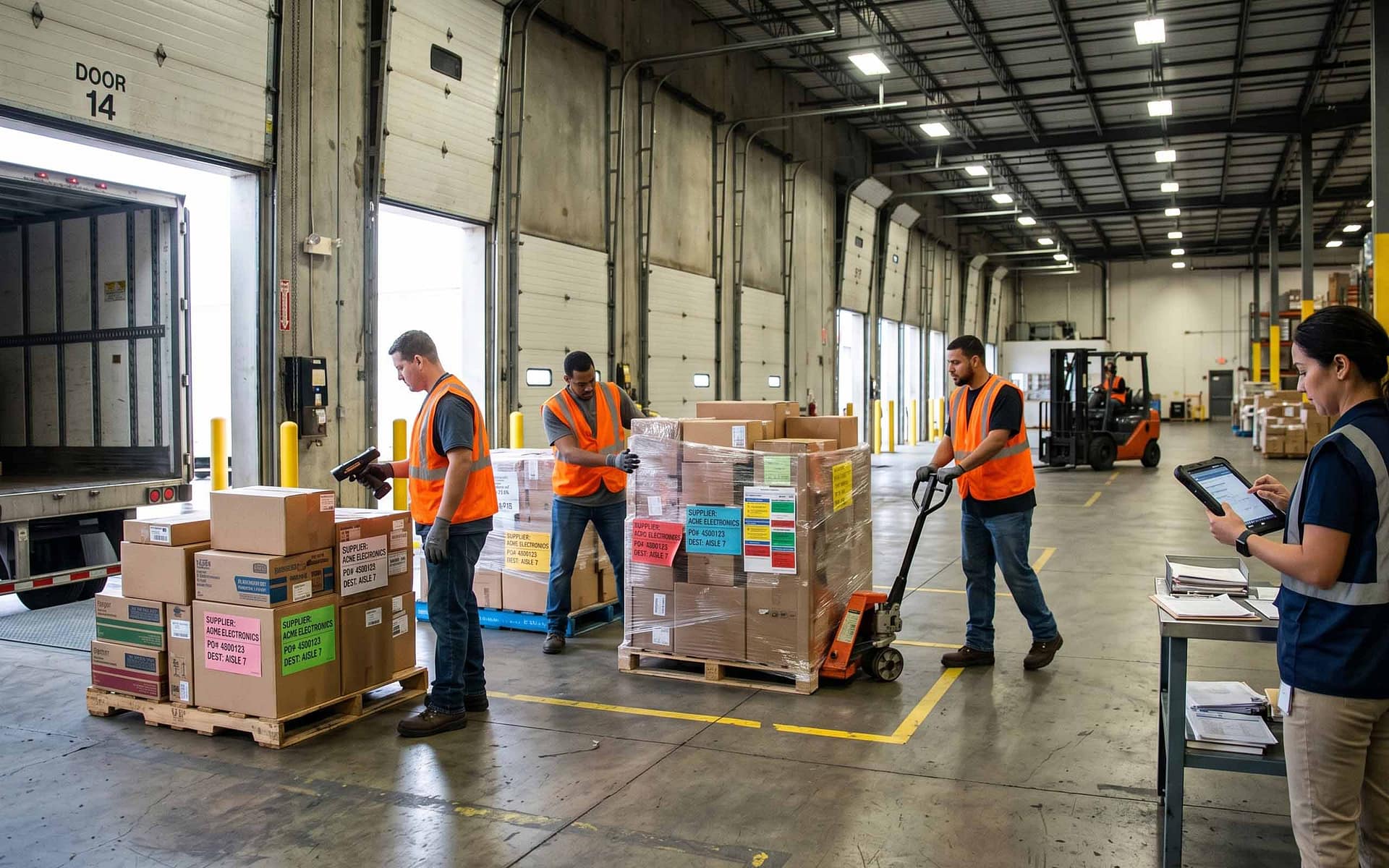
Freight budgets spiral in slow motion because of accumulation.
One more partial truckload here. One more last-minute LTL booking there. One more accessorial charge nobody catches until the invoice arrives three weeks later.
By the time someone pulls the data and asks why cost per shipment keeps climbing, the answer is usually the same: the freight was fragmented, and nobody planned the capacity.
Here’s what most teams miss: freight cost and service cost are not separate problems. A shipment that looks cheap on the rate sheet can become expensive when it triggers accessorials, misses a retail appointment, or creates a chargeback.
Freight consolidation helps teams solve that problem by combining compatible shipments into larger, better-planned moves.
Done well, it lowers per-unit cost and protects service performance. Done poorly, it trades freight saving for a supply chain problem that costs far more.
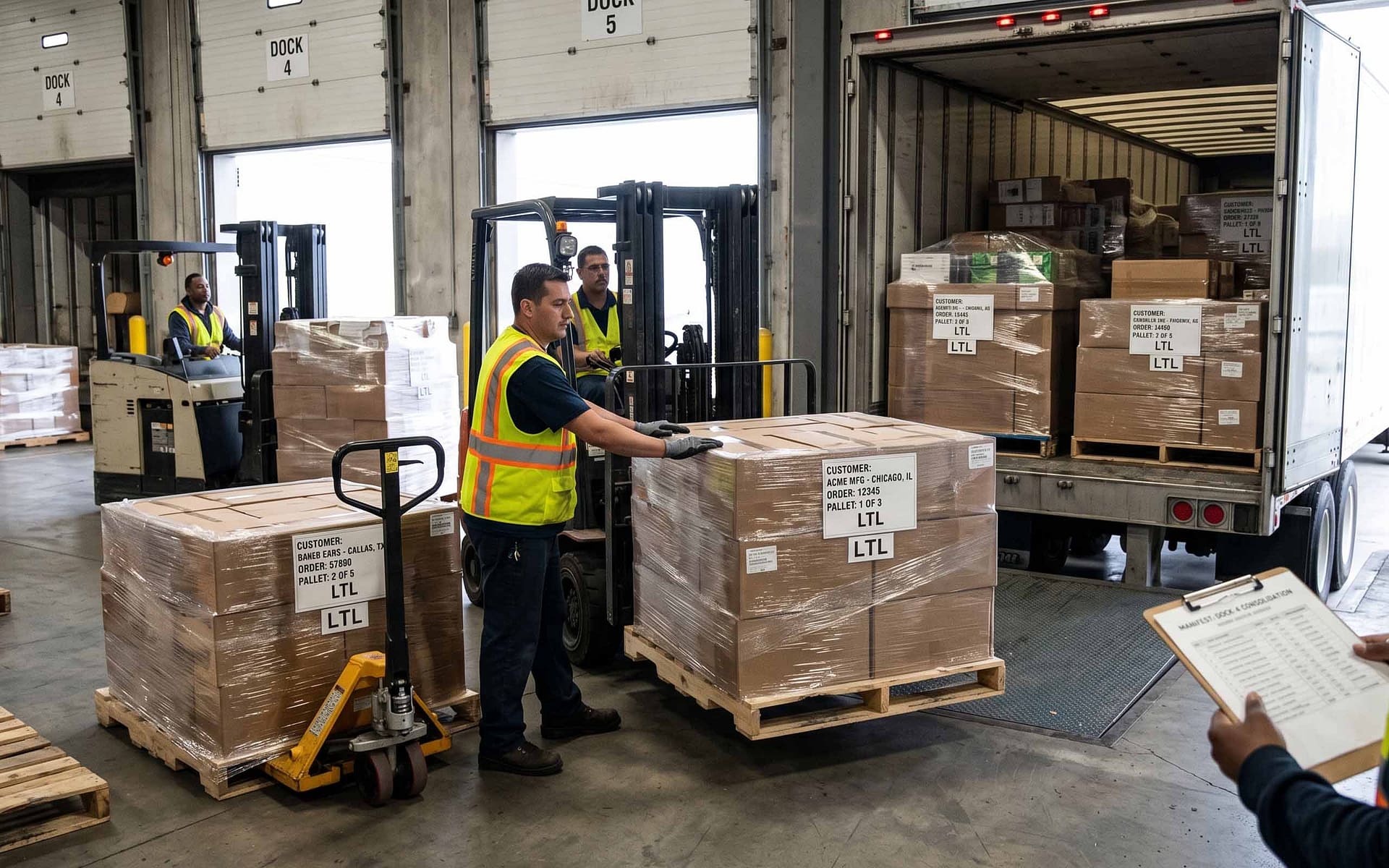
Freight consolidation is the practice of combining multiple smaller shipments into a single, larger move to reduce transportation costs and improve delivery reliability.
Instead of shipping each load separately, a shipper, 3PL, or a transportation management system identifies shipments with compatible origins, destinations, and delivery windows, pools them into one load, and tenders it to a single load.
The core benefit is economic: a truck costs the same to operate whether it's half full or full. Consolidation spreads those fixed costs across more freight, lowering cost per unit while reducing the accessorial charges that fragment shipments tend to accumulate.
Not all consolidation works the same way. The right method depends on your freight type, your lanes, your volume, and how much your customers will tolerate waiting.
There are four main types and each one solves a different problem.
1. LTL-to-FTL Freight Consolidation
This is the most common consolidation type. You take several less-than-truckload shipments and combine them into a single fuller truckload or multi-stop move.
LTL makes sense for shipments between 150 and 15,000 pounds, roughly one to six standard pallets, where you pay only for the space you use. FTL makes sense when combined volume justifies the full truck or when the freight needs dedicated capacity.
2. Shared Truckload
Some freight doesn't fit anywhere cleanly. It’s either too large and dimensionally awkward for clean LTL economics, or too small to justify a dedicated full truckload. Most shippers land it in the gray zone and absorb the penalty.
A shared truckload is built for exactly that freight.
STL pools compatible midsize shipments, typically between 10 and 40 linear feet, from multiple independent shippers traveling similar routes. The load moves point to point without ever touching a cross-dock terminal.
3. Retail Consolidation
This freight consolidation type is less about saving money on freight and more about not losing money on chargebacks.
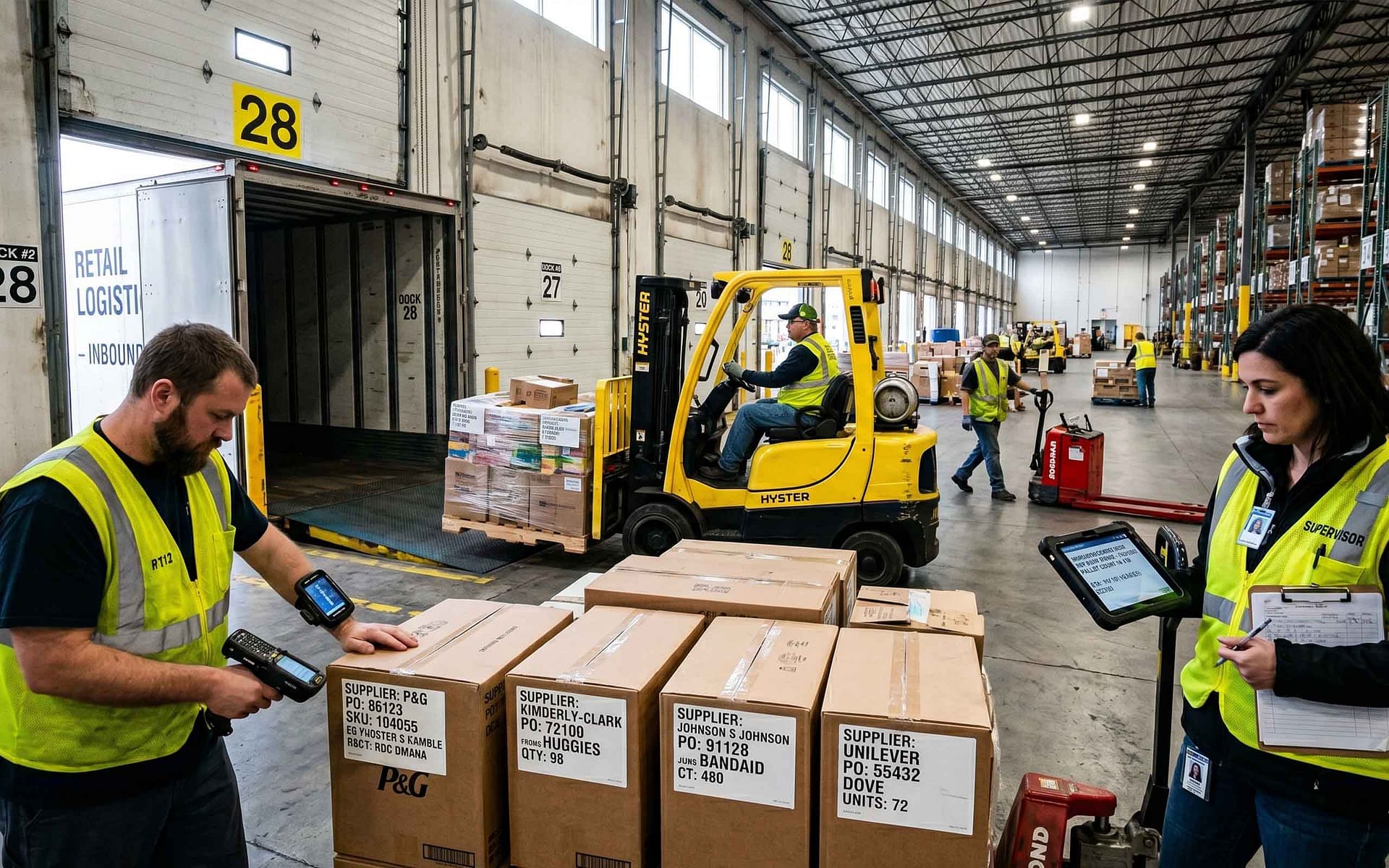
Retail freight consolidation pools shipments from multiple suppliers going to the same retailer's distribution center. For example, Walmart runs a program that lets suppliers join scheduled multivendor loads bound for specific distribution centers on fixed departure windows.
Those loads stage through a consolidation center before moving to the retailer's distribution center as a single, compliant delivery.
4. International Freight Consolidation
International consolidation works the same way domestic consolidation does. Smaller shipments combine into fuller, more efficient moves. The complexity is just spread across borders, currencies, customs regimes, and container economics.
There are three models. In each of them, a freight forwarder typically manages the documentation, customs coordination, and carrier relationships that make the consolidated move possible:
- Buyer's consolidation merges LCL shipments from multiple suppliers into a single FCL at origin, dedicated to one importer.
- Seller consolidation lets one exporter combine freight for multiple buyers in the same destination market.
- Multi-country consolidation aggregates shipments from several origin countries through regional hubs before reconsolidating into optimized FCL flows.
On the US-Mexico corridor, that model has a practical edge. C.H. Robinson deployed consolidation facilities inside Mexico with a unified internal customs team, allowing freight from multiple suppliers to cross the border on a single truck while moving in-bond, deferring US tariff liability until the goods clear at the destination.

Consolidation works when the conditions support it. Here are the four signals worth looking for.
When Shipments Share Geography
Geography is the first filter for freight consolidation.
Multiple suppliers near the same origin, multiple customers near the same destination zone, several shipments headed to the same retail distribution center. The closer the freight in origin, destination, or route path, the easier it is to consolidate without adding meaningful delay.
When Delivery Windows Can Flex
Freight consolidation needs enough planning room. If every order must ship immediately, pooling opportunities shrink to near zero.
Three policies define how teams handle this:
- Time-based policies ship on a fixed schedule regardless of fill rate, predictable but vulnerable to underfilled loads.
- Quantity-based policies hold freight until a volume threshold is met, maximizing utilization but introducing unpredictable delays.
- Hybrid policies dispatch when either the target volume or the maximum wait time is reached, whichever comes first.
Hybrid policies can perform the best in practice. They protect both usage and service without requiring a judgment call on every load.
When LTL Penalties Are Eating Margin
LTL pricing punishes freight that exceeds length thresholds, takes up disproportionate trailer space, or is one that can't be stacked or falls below density minimums.
If your freight keeps generating accessorials, consolidating into planned FTL or shared truckload sidesteps those penalties at the source, before the invoice arrives.
When Retail Compliance Is Costing Money
A cheap LTL shipment that triggers a $15,000 chargeback wasn't cheap. The freight cost and the compliance penalty hit the same margin. They just show up on different invoices.
Freight consolidation through a managed program protects margin twice: once by lowering the transportation rate, and again by reducing the service failures that generate the penalties in the first place.
Consolidation is not always the right move. Here's when to leave the freight alone.
- When Delay Costs More Than the Freight Saving: Saving $300 on a consolidated load doesn’t matter if the extra day of waiting triggers a $5,000 chargeback. The math only works if you're counting all the costs, not just the freight rate.
- When the Freight Is Incompatible: Not every shipment that shares a destination belongs on the same truck. Conflicting temperature requirements, hazmat restrictions, food-grade separation rules; any one of those can spike costs. Consolidation can’t paper over incompatibility. It just moves the cost downstream.
- When Handling Risk Is Too High: Every additional terminal handling event is an additional damage opportunity. For fragile, high-value, or damage-sensitive freight, that math turns against you fast. One damaged shipment can cost more than months of usage savings.
- When You Can’t Track the Consolidated Move: Consolidated freight concentrates risk. One delayed load can affect multiple orders, customers, and retailer appointments at the same time. Without fast real-time tracking, you're managing a sequence of surprises instead of a freight consolidation program.
How Freight Consolidation Cuts Costs
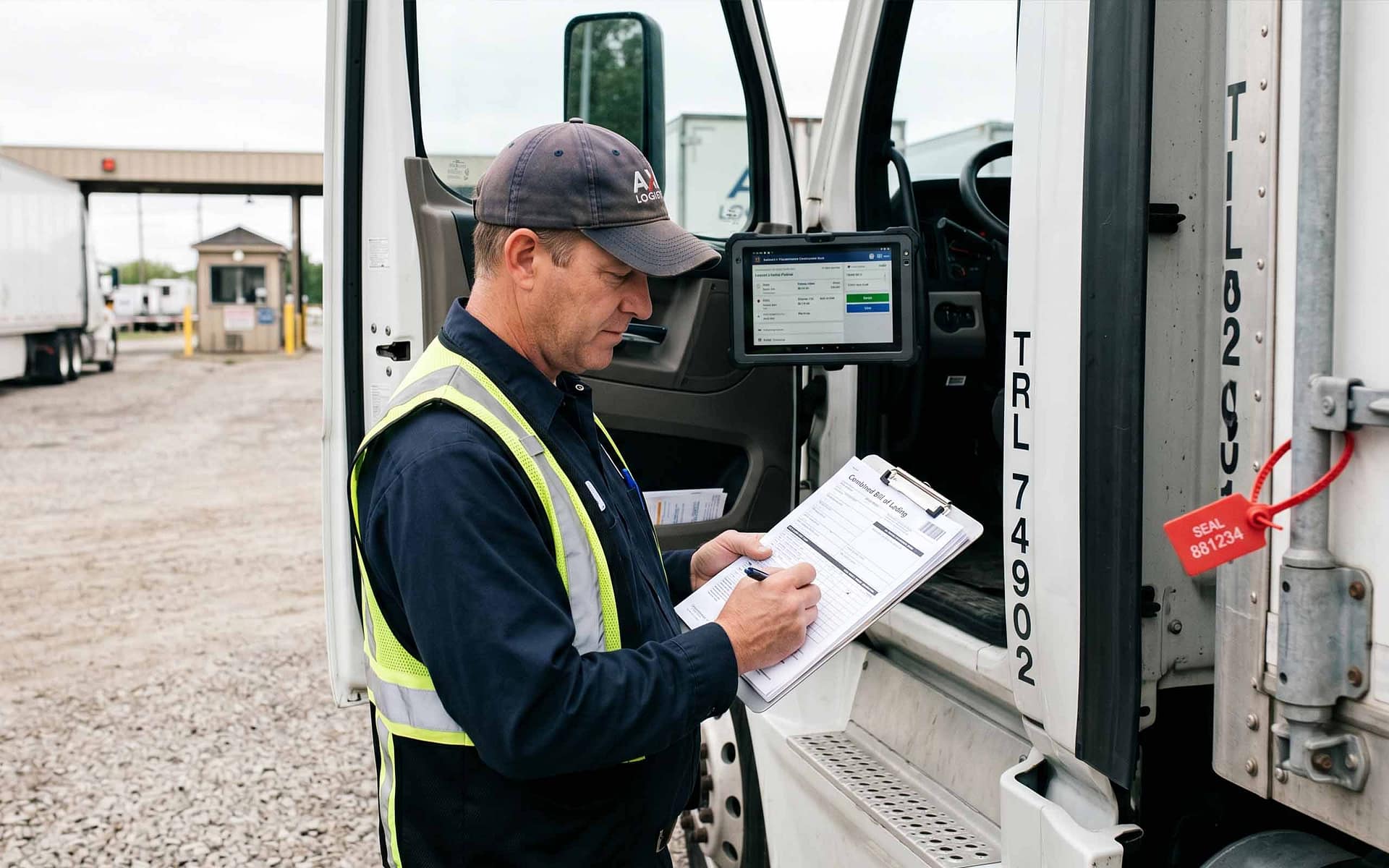
The benefits of freight consolidation for cost-cutting fall into four categories: lower per-unit rates, fewer penalty charges, stronger carrier relationships, and less administrative overhead. Each one compounds the others.
Here's how it works.
It Eliminates the LTL Penalties
Most shippers know LTL has accessorial charges. Few know how punishing those charges get, or how quietly they stack up.
According to C.H. Robinson's August 2024 Freight Market Update, accessorial charges have been increasing over the past several years in frequency, variety, and as a percentage of total LTL costs.
LTL carriers run three distinct penalty mechanisms that shippers can trigger, often without knowing until the invoice arrives.
- Overlength fees apply when any single piece exceeds 96 inches for most carriers, and the charges usually run in tiers based on length. Some carriers even charge per offending item instead of per shipment.
- The linear foot rule voids your negotiated rate entirely when the cumulative shipment footprint exceeds a specific length, usually 10 to 12 feet. It re-rates it at 1,000 pounds per foot occupied. So an 8,000-pound shipment spanning 16 linear feet can get billed as 16,000 pounds.
- The cubic capacity rule fires when freight exceeds 750 cubic feet and falls below 6 pounds per cubic foot in density. When triggered, negotiated discounts are voided, and freight gets reclassified to a more expensive category. Non-stackable pallets are especially vulnerable because carriers usually bill the airspace above the pallet as occupied trailer space.
Consolidating dimensional or awkward freight moves sidesteps all three. The savings are in the line-haul rate and the accessorials you stop paying entirely.
It Spreads Fixed Transportation Costs Across More Freight
A truck costs the same to operate whether it's half-full or full. Driver time, fuel, tolls, equipment… those costs don't change based on how much freight is inside.
Freight consolidation spreads the costs across more freight, which lowers the cost per unit.
At 50% trailer usage, you're paying full truck economics for half a truck's output. At 90%, that same cost base covers nearly twice the throughput. You get the same truck on the same lane, with half the cost per unit.
A lane moving three partial LTL shipments per week, each carrying its own linehaul cost, carrier minimum charge, and fuel surcharge, can often be restructured into one or two consolidated FTL moves at substantially lower total cost. Consolidated freight shipping on a fixed weekly lane can outperform ad-hoc LTL on both rate and reliability.
It Improves Carrier Negotiation and Routing Guide Compliance
Carriers price for risk.
Predictable, dense, well-planned freight is easier to operate than fragmented, irregular loads. Shippers who consolidate freight on repeatable lanes can see better acceptance rates, more stable contracted pricing, and stronger routing guide compliance.
The shipper with consistent, well-built loads gets treated differently from the one who shows up with whatever happens to need moving that day.
That difference is invisible during normal markets. But it does show up when capacity tightens and trucks get scarce.
When that happens, carriers prioritize their best shippers first. Those are almost always the ones offering predictable, dense freight on consistent lanes. That’s exactly what a freight consolidation program produces.
It Reduces Admin Work
Fewer shipments mean fewer bookings, invoices, document handoffs, and track-and-trace exceptions to chase down. For teams managing hundreds of shipments per week, that overhead is real. It shows up in planner hours, billing disputes, and exception queues that never seem to shrink.
Freight consolidation reduces shipment count. But the administrative cost per unit of freight moved drops with it.
Taken together, these four advantages compound each other. A federally funded study published by the U.S. Department of Transportation found that effective freight consolidation could reduce operational costs by approximately 23% while moving the same volume with 67% of the trucks previously required.
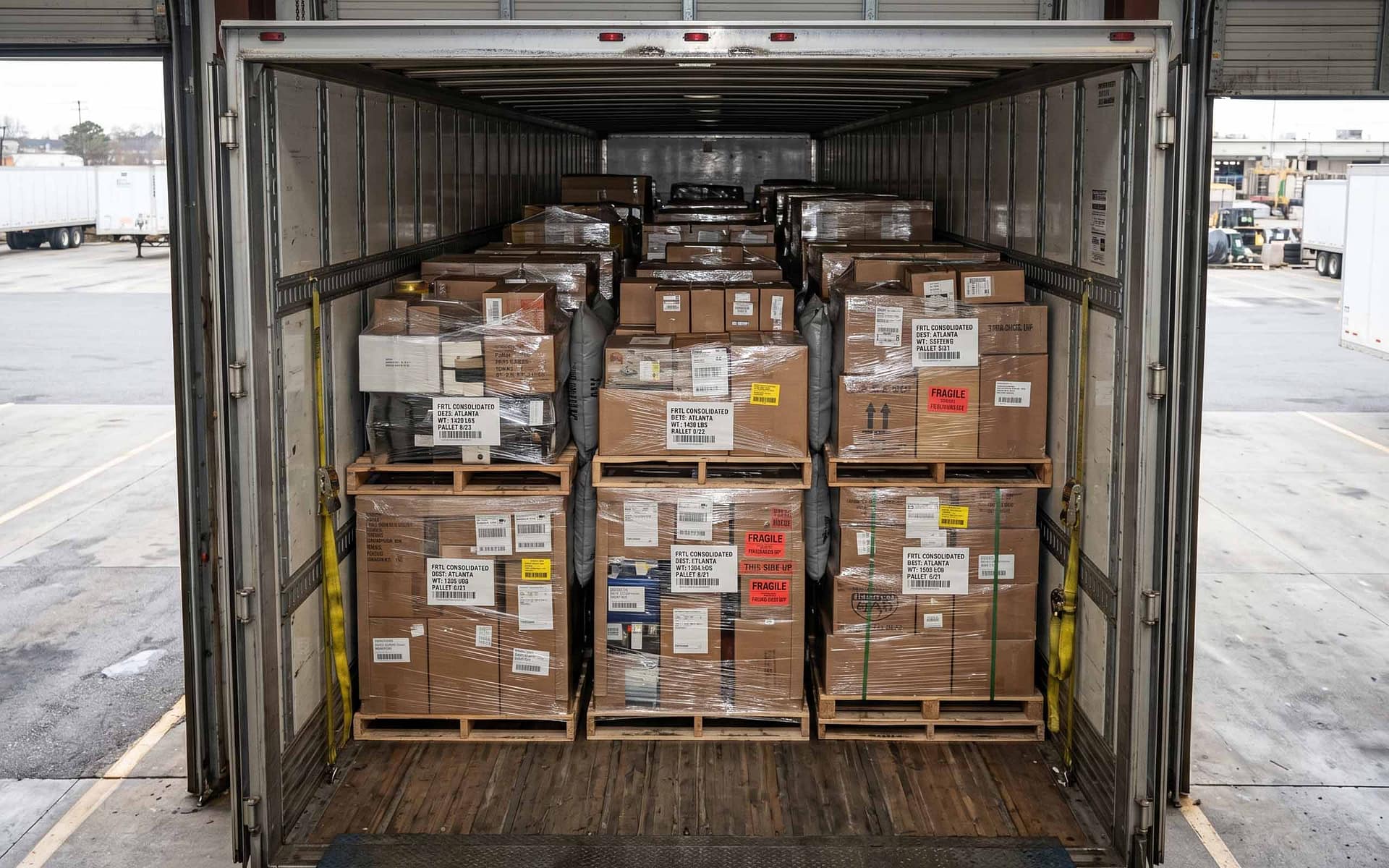
Most freight consolidation strategies for cost reduction fail the same way: the data wasn't ready, and the process wasn't built to sustain it. The six best practices below are built around avoiding that failure pattern.
Here's how to build one that holds.
1. Map Your Shipment Data First
You can’t consolidate what you can’t see.
Clean, complete shipment records by origin, destination, weight, dimensions, stackability, handling constraints, freight class, and accessorial history are the prerequisites. Most teams underestimate how much useful data they already have and how poorly organized it is.
Shipment history lives in one system. Rates in another. Customer requirements in email threads. Accessorial charges buried in the invoice reconciliation queue. Some teams are still patching this together with spreadsheets and phone calls, which means they're making consolidation decisions on stale, fragmented information.
Getting those into a single view is often the actual first step.
2. Find Repeatable Consolidation Lanes
Start where density already exists in your network.
The fastest wins come from recurring patterns: the same retail distribution center, destination region, supplier cluster, and weekly cadence.
Look specifically for LTL shipments in the 10,000 to 15,000 pound range with small-to-medium cubic volumes. That's the profile that consolidates cleanly into FTL economics. It's also the profile a TMS system can flag automatically once you set the trigger.
Recurring freight is consolidation's best friend.
3. Compare Total Cost, Not Quoted Rate
Evaluate LTL, FTL, shared truckload, pool distribution, and intermodal against total landed cost, not the line-haul rate your carrier quoted you.
Total landed cost means everything. Accessorials. Compliance risk. Handling damage exposure. The line-haul rate is one number in a longer equation, and optimizing for it alone is how you end up celebrating a "win" that costs you money.
A $500 rate saving that generates a $10,000 chargeback is not a saving. It's a math problem you didn't finish. Retailers have compliance programs that are engineered to be triggered. Miss a label requirement, deliver outside the window, short a carton, and the fine arrives before the invoice does.
That math has to include reliability risk too. A mode that looks cheap on the rate sheet and adds four days to transit is not cheap when your distribution center runs out of safety stock.
Intermodal looks attractive until you're paying expedite fees to fix what the dwell time broke. The math has to include what happens when things go sideways, not just when they go right.
‣ Compare the main types of freight routing before you lock in a mode
4. Set Hybrid Time and Quantity Rules
Every consolidation program eventually faces the same choice on every load. Wait for a fuller truck, or ship what you have. If you always wait, service suffers. If you always ship, utilization suffers. Neither extreme works.
The hybrid rule solves this. Hold freight until either the target volume or the maximum wait time is reached, whichever comes first. One condition protects utilization. The other protects service. You don't have to choose on every load because the policy chooses for you.
Two levers tell you when to adjust the thresholds.
- When inventory holding costs rise, increase dispatch frequency. Don't let freight sit waiting for a full truck when the cost of waiting exceeds the cost of a lighter load.
- When the penalty for late delivery is severe, dispatch smaller loads faster. At that point, chasing utilization is the expensive mistake, not the solution.
Set the thresholds once and review them when lane density changes or chargeback exposure shifts.
5. Build the Load Plan Before Tendering
Most freight consolidation mistakes are made before the truck moves. They show up on the invoice three weeks later.
Check density before routing. Confirm stackability before combining freight. Plan delivery sequence before loading. Verify axle-weight distribution before the truck leaves the dock.
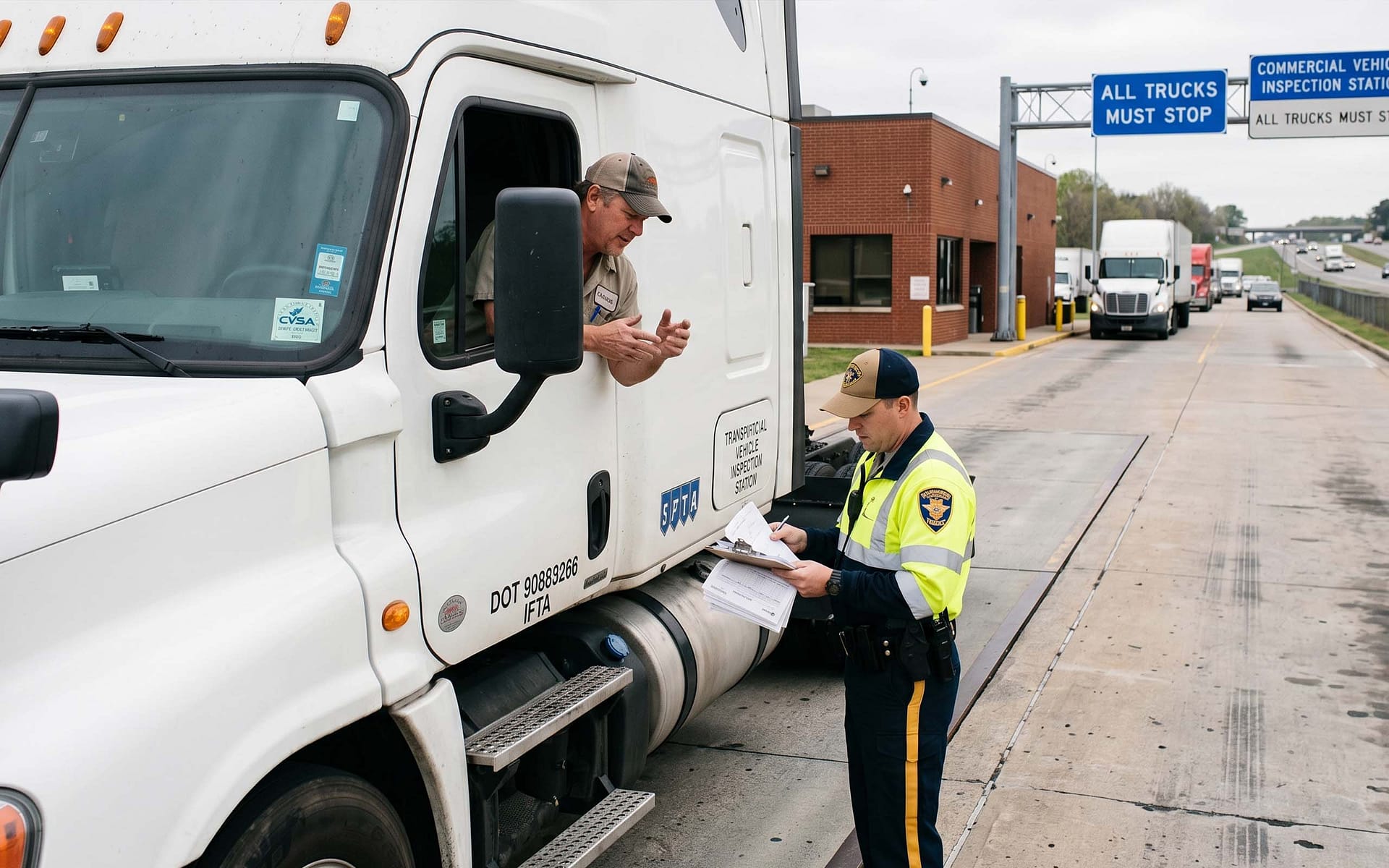
That last check is the one teams skip. A load can clear every dimensional and density threshold and still fail at the weigh station if the weight isn't distributed correctly across axles. By then the driver is calling from the road, and the window is gone.
One technique worth knowing before you tender: pinwheeling. Rotating alternating pallets 90 degrees compresses the linear footprint and keeps borderline loads from triggering the linear foot rule. Small adjustment. Significant penalty avoided.
Build these checks into the process before tendering, not after the problem arrives.
‣ See the full load planning process behind these checks and how it cuts transportation costs
6. Track Total Cost and Service KPIs
Here's the most common way consolidation programs quietly fail. The freight rate improves. Everyone declares success. Nobody checks what happened to OTIF.
A consolidation program that improves trailer utilization by 30% while OTIF drops 5 points is not a success. It's a trade you didn't mean to make, and you probably won't notice it until a retailer makes it very clear for you.
The metrics that actually tell the story: cost per shipment, trailer usage, LTL accessorials avoided, damage rate, and CO2 per unit. Not all of these will matter equally to every operation, but ignoring any of them leaves part of the picture dark.
You should track the freight rate by all means. It's not irrelevant. But it's one output of a system, and optimizing for it alone is how teams underperform while the dashboard looks fine.
How Neurored TMS & SCM Supports Freight Consolidation
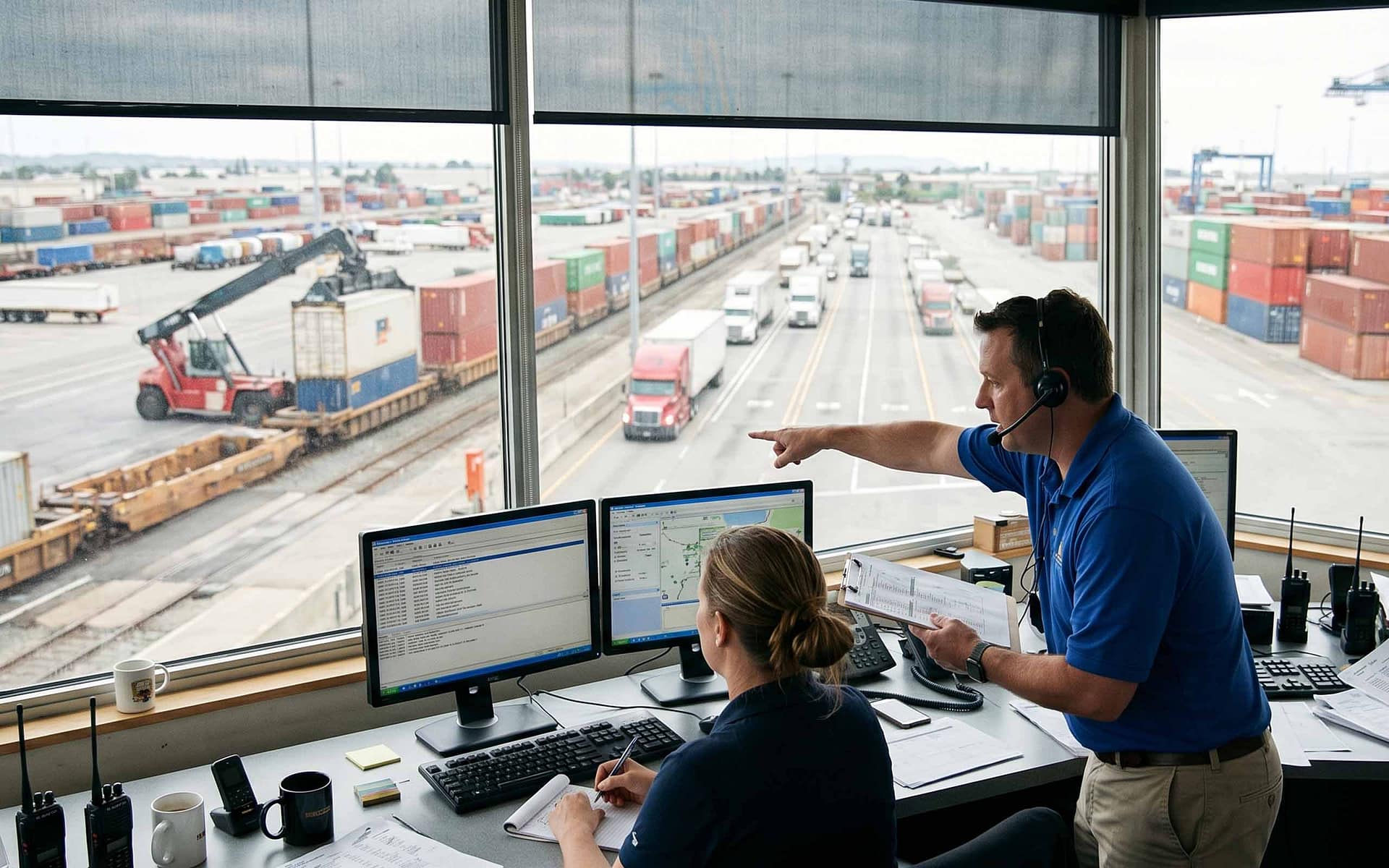
Freight consolidation usually fails because the data is spread across too many systems, and the coordination overhead quietly eats the savings. The decision ends up being made on incomplete information, and the savings estimate was never quite real.
Executing that strategy consistently requires the right infrastructure underneath it. Neurored TMS & SCM puts those elements into one workflow, and the sequence matters.
The decision starts with the load. Neurored’s Multimodal Transportation Optimization Software lets teams compare routing options, optimize delivery sequences, and account for usage, tolls, and emissions before anything is tendered. That's where the consolidation logic has to live, because once the load moves, the opportunity is gone.
The rate comparison happens in the same moment, not separately. Neurored’s Freight Rates Management Software surfaces contracted rates, spot rates, and carrier options across modes while the load is still being planned. The mode decision and the cost decision happen together, based on current data, not last quarter's spreadsheet.
Then the load ships, and that's when consolidated freight becomes most exposed. One disruption doesn't affect one order. It affects multiple orders, multiple customers, and multiple retailer appointments simultaneously.
Neurored’s Supply Chain Visibility Software gives teams a single view across ocean, air, road, and rail so exceptions surface before a delay becomes a chargeback. The difference between catching it early and explaining it later is whether your visibility is real-time or retrospective.
Freight Consolidation Works Best When It Balances Cost, Capacity, and Service
The savings are real and achievable for most shippers with recurring lanes and predictable freight patterns. But they only hold when the consolidated move still protects delivery performance, compliance, inventory flow, and customer trust.
The teams that run the best programs know which freight to consolidate, which to leave alone, and where the breakeven sits on their specific lanes. The ones that stall capture the initial saving and move on, until the freight fragments again and the cost creeps back.
The right question isn't whether you can fill the truck. It's whether you can build a fuller move without creating a more expensive problem somewhere else. If you want to see how Neurored TMS & SCM supports that workflow, schedule a demo.
Schedule your demo today!

Ricardo Medem
Share Article



Let's Get Started
Schedule a Demo Now