
Why a Working Strait of Malacca Still Threatens European Supply Chains?
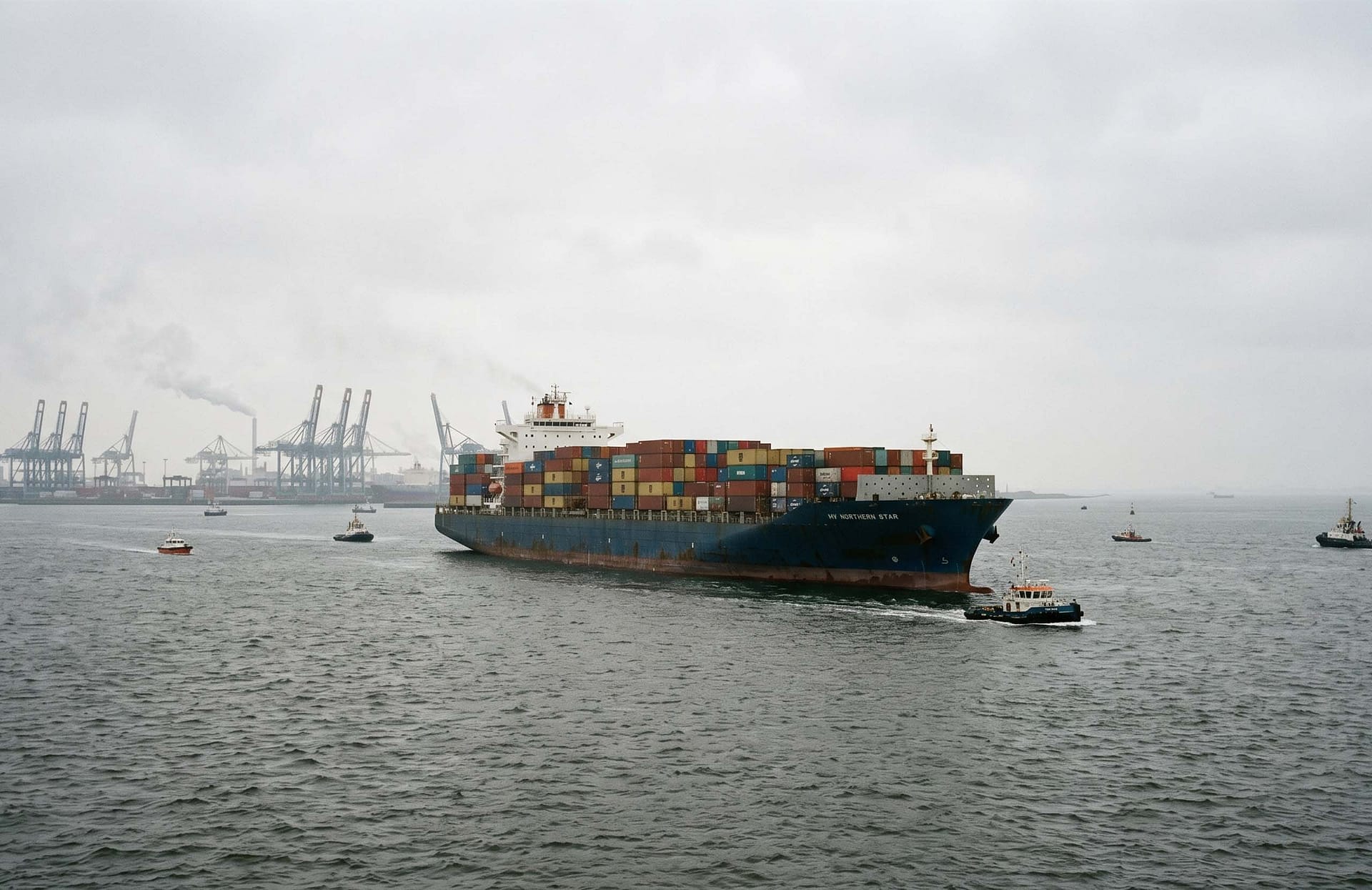
The Phillips Channel in the Malacca Strait is 2.7 kilometers wide at its narrowest point. In some places it runs 25 meters deep. Through that gap, it moved 102,500 vessels in 2025. A record year by all accounts.
But right now, off Rotterdam, a containership is sitting at anchor. Its cargo cleared the strait weeks ago. It crossed the Indian Ocean, rounded the Cape, transited the North Sea. It made every leg of a 25,000-kilometer journey without incident.
It’s waiting for a berth. That’s the operating environment of the strait, and if you’re still planning around closure scenarios, you’re thinking about the wrong disaster.
The strait doesn’t need to fail to hurt you. It only needs to keep working exactly as it does today, at absolute capacity, with no slack left to absorb the next bad weather day, the next Lunar New Year surge, the next cluster of delayed vessels arriving all at once. An open door attached to a hallway that’s already full guarantees nothing.
Here’s what that actually looks like from Asia to your distribution center, and what you can do about it before the next pulse of bunched arrivals lands on your desk.
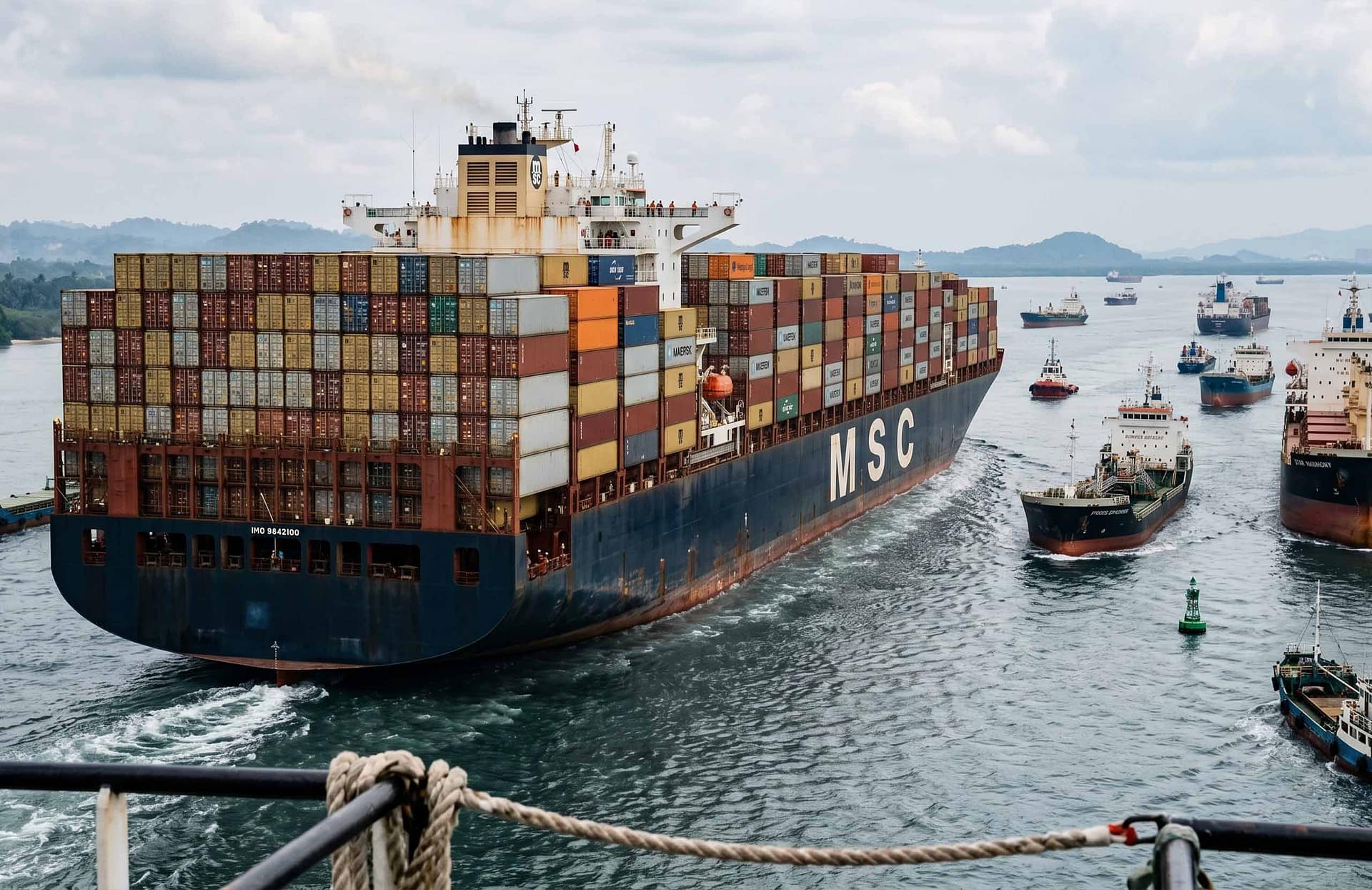
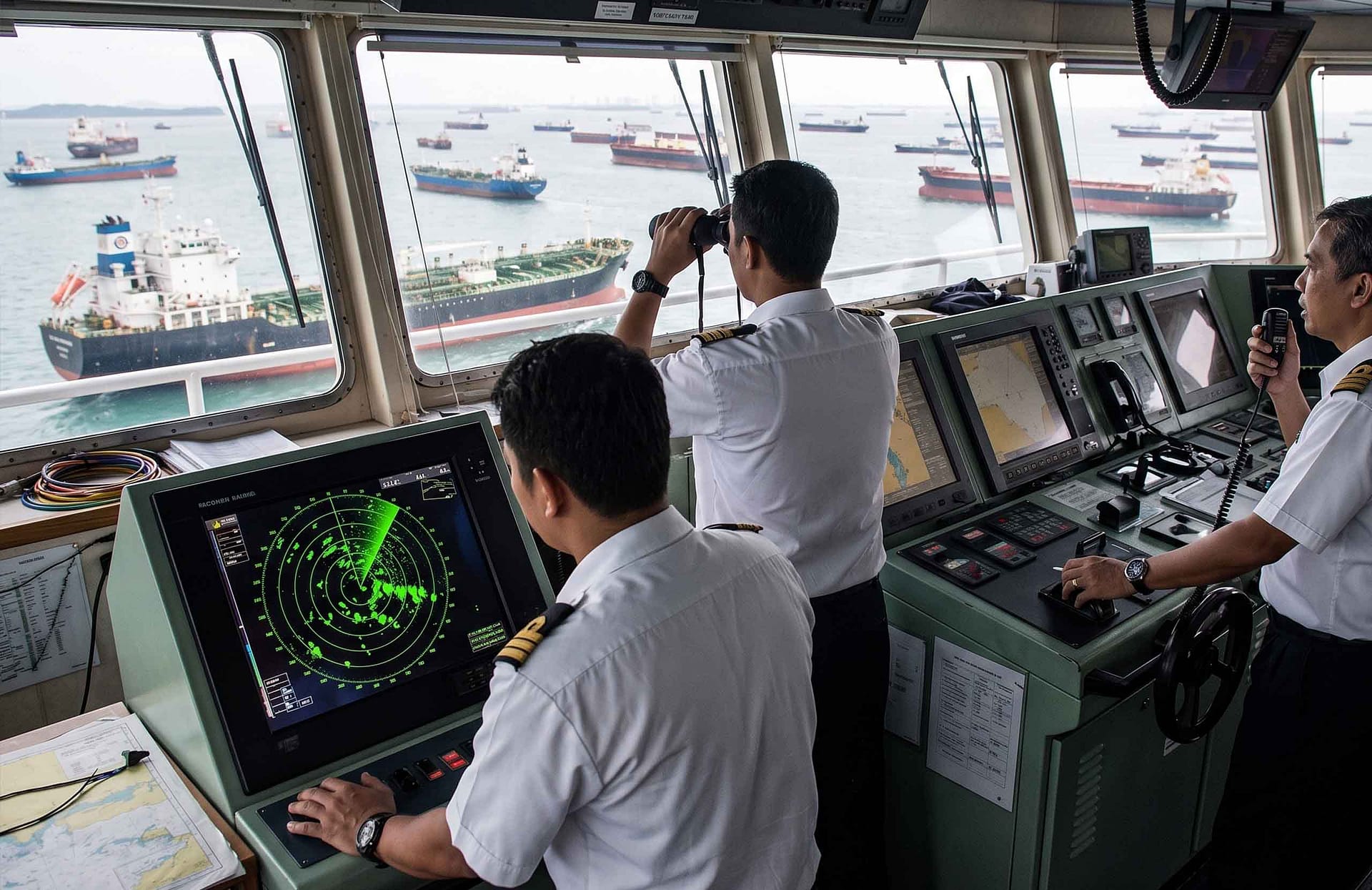
A fully loaded 24,000-TEU megaship can draw more than 16 meters of water. The tightest section of the Straits of Malacca and Singapore leaves only a few meters between the hull and the seabed once mandatory clearance is factored in. That gap is what a quarter of the world's traded goods moves through every year.
Go too fast through water that shallow, and you trigger the squat effect. Pressure drops beneath the hull, the ship sinks deeper than its draft, and the seabed comes up to meet it. The largest crude carriers already know this, so they skip the strait entirely and go around Indonesia rather than trust that gap.
The ones that do make it through are threading a channel narrower than many rivers. Hundreds of vessels a day, and every one of them is carrying pieces of a supply chain that has no backup plan.
A network running that close to full has already lost the one thing that keeps it alive: slack. No slack means a bad weather day hits hard. A localized strike hits hard. A cluster of delayed vessels showing up together hits hard. The strait doesn't have to break to hurt you. It just has to keep doing this.
‣ Explore the impact of the Hormuz Strait closure on supply chains and learn what you can do about it
By the time your cargo clears Malacca, it’s already behind.
The trouble starts somewhere in Asia, like Shanghai, Ningbo, or Shenzhen. Thousands of miles upstream, long before a single box gets anywhere near the strait.
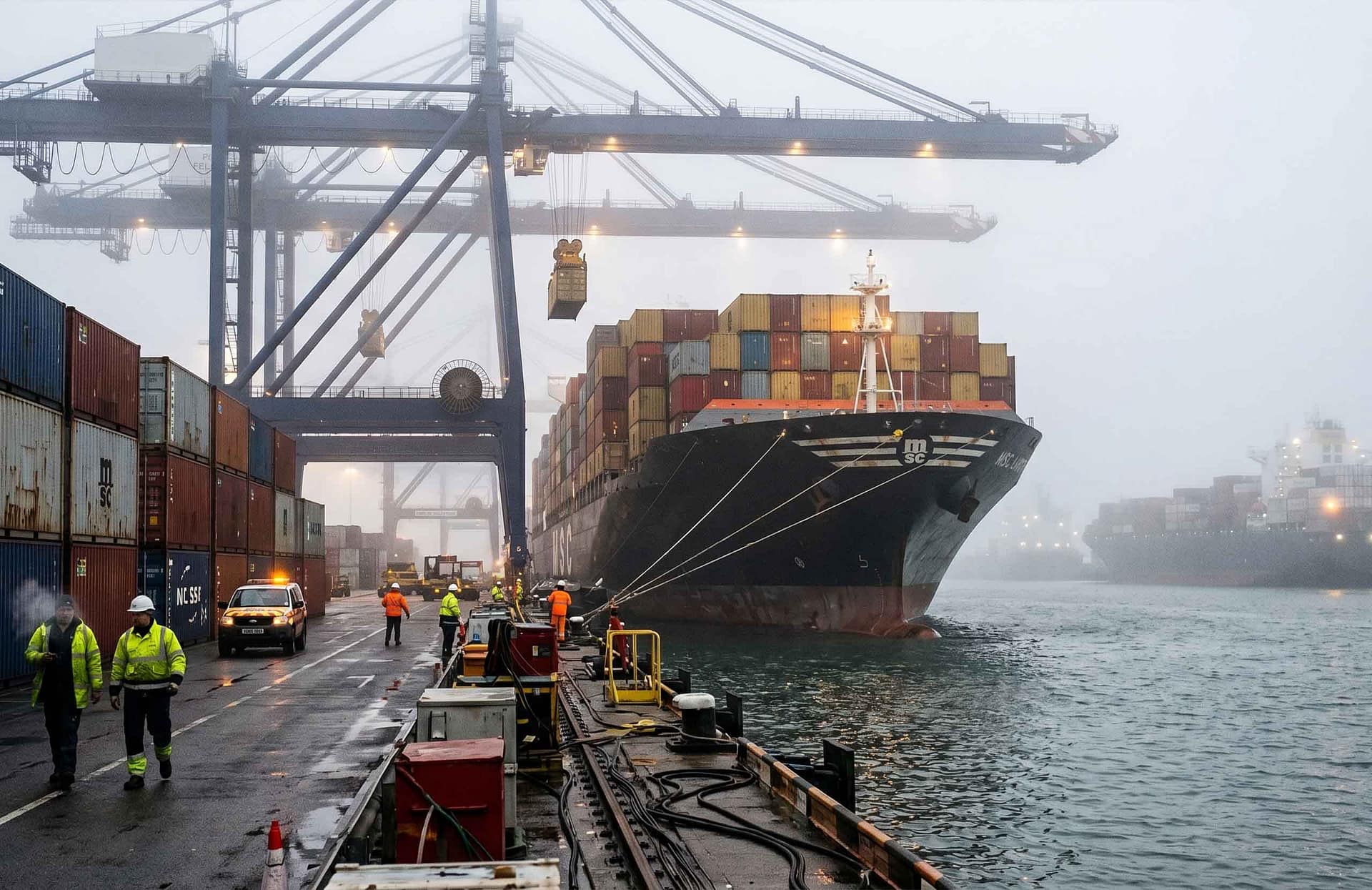
In early 2026, Shanghai and Ningbo-Zhoushan were running 2.5-day waits just to get a berth. The reason: dense fog, a pre-Lunar New Year export surge, tighter customs checks.
But what happens next is where it gets expensive.
When such a big upstream port stalls, the backlog doesn't spread out evenly when it clears. Every delayed vessel leaves at once. That whole pile of cargo moves together as one pulse, down through the South China Sea, through Malacca, straight onto Singapore's already-full berths. A fog event in Shanghai becomes a bunching crisis in Singapore two weeks later. The origin port sets the beat, and a broken beat travels.
That’s the operational picture. But there’s a second layer on top of it, and it is worth being clear here because it is easy to overstate.
The build-out across the Spratly Islands is real and well documented. Twin radomes on Subi Reef. Fixed antenna arrays pointed out to sea. Mobile electronic warfare units spread across the artificial outposts. Analysts at CSIS have tracked all of it.
What it’s not, today, is a threat to stop your ship.
The real risk comes quietly. GPS signals get degraded. AIS positions get spoofed. Confidence in where your vessel actually is gets a little shakier. This isn’t theoretical. The same kind of interference has already hit commercial traffic near Hormuz.
For a European shipper it comes down to two things: higher war-risk premiums, and a little less certainty about where your cargo is right now.
That second one sounds small, but it’s not. Low-grade uncertainty stacks fast when the rest of the network is already running hot. It’s the kind of cost that never shows up as a line item. It just shows up as a bad quarter.
‣Explore satellite navigation features that help ships stay ahead of disruptions in maritime corridors
Delays travel from Asia, and when they land in Northern Europe, they land all at once.
Here’s why. Suez transits are still running roughly 60% below early-2023 levels. A Shanghai-to-Hamburg run that once took 25 to 28 days now adds 5,000 miles of open ocean. And all those extra miles do just one thing: they let ships catch up to each other.
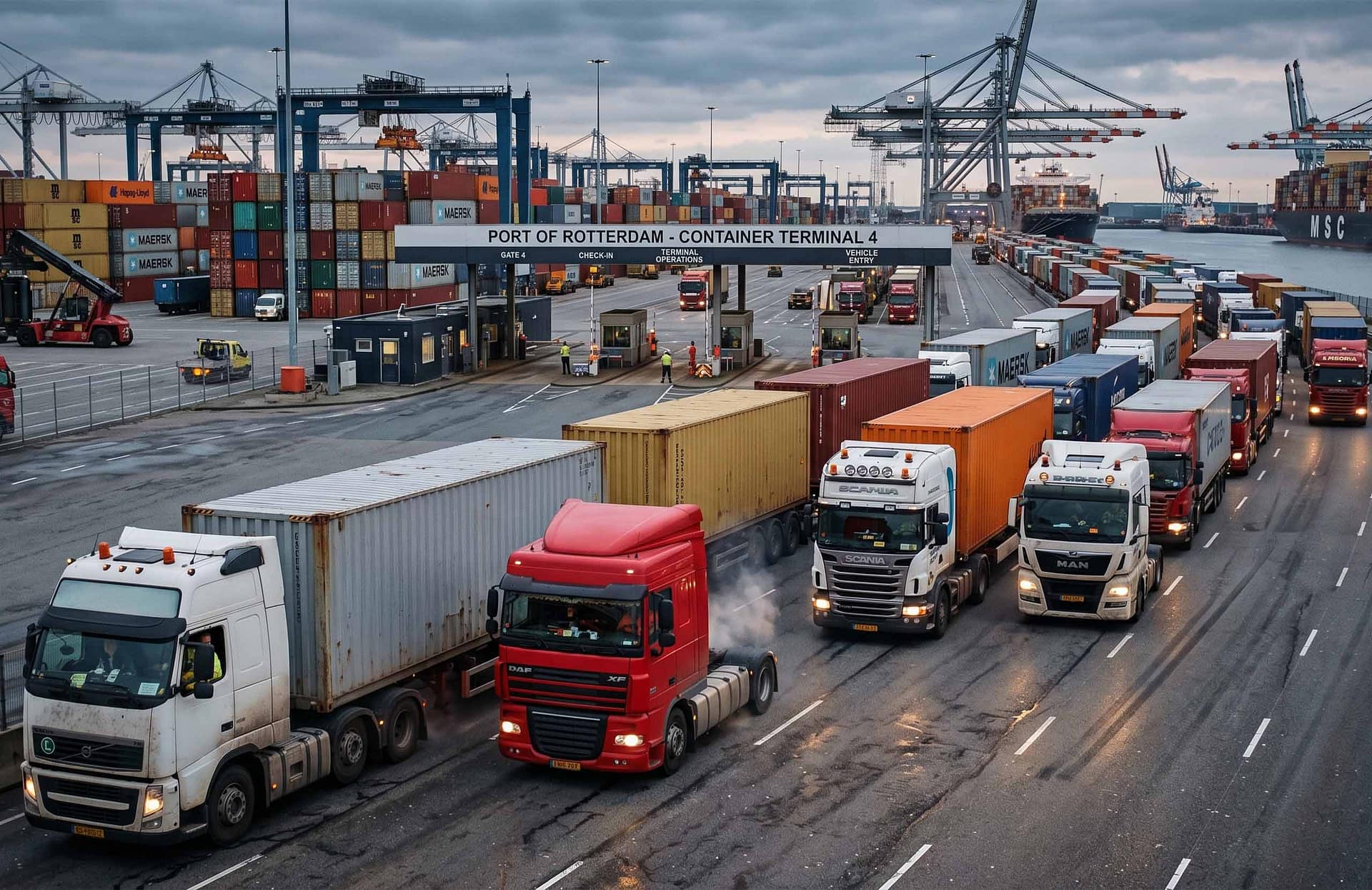
Vessels that left Asia a week apart close the gap across the Indian Ocean and arrive together. So Rotterdam stops getting one ship a week. It gets three ships in two days. Then nothing. Then three more.
Nobody can really absorb that.
But the terminals try. And at the worst of the 2025 bunching, here is what trying looked like:
- Rotterdam: Barge delays of 48 to 72 hours.
- Hamburg: Ships waiting up to two and a half days just to get a berth.
- Antwerp: Waits jumping from 32 hours to 44 in a matter of weeks.
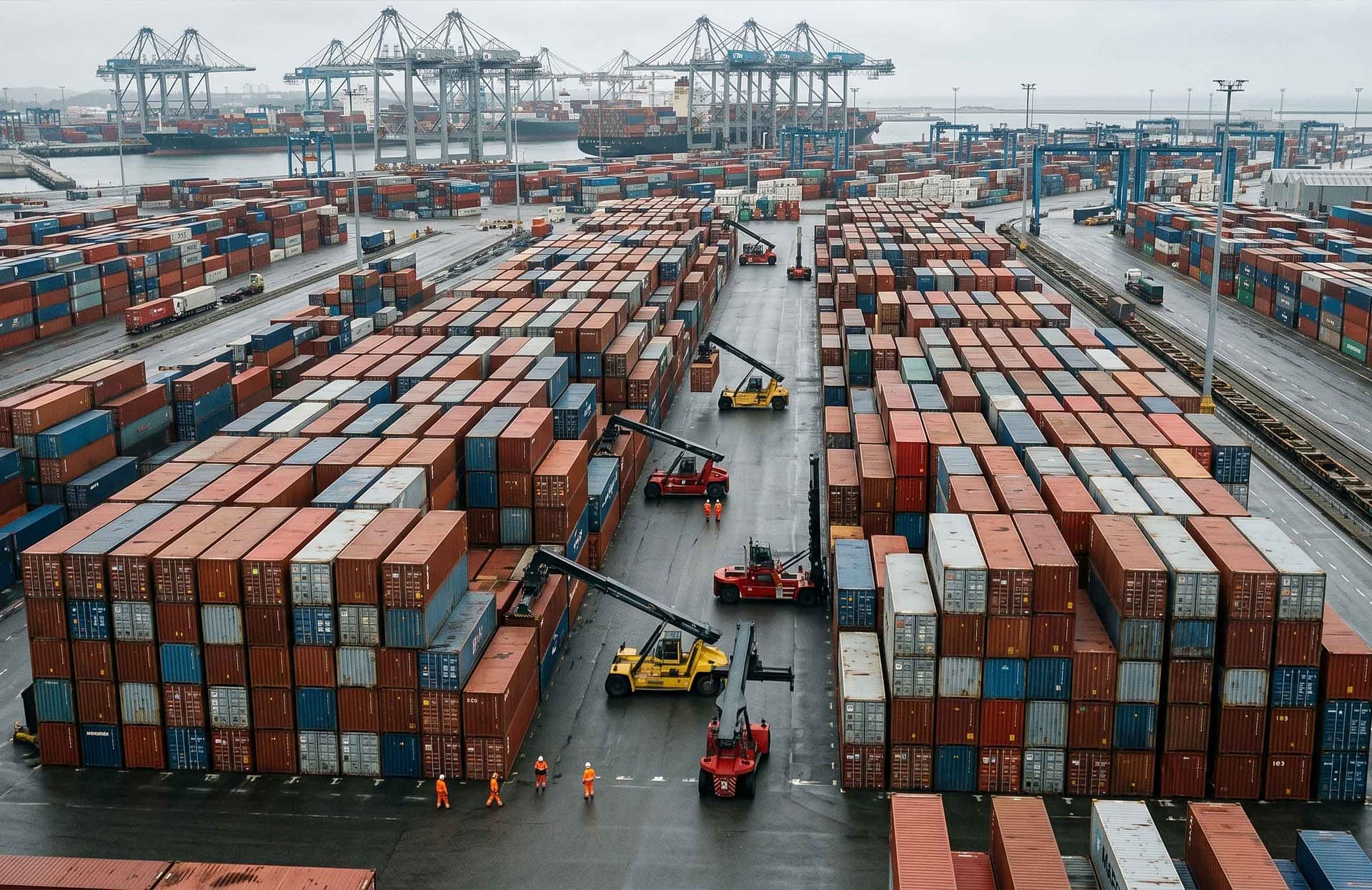
Yard density pushed past 85% in some cases, the point where cranes stop moving cargo forward and start shuffling boxes around just to reach the ones they actually need.
Then it spilled past the fence.
The Rhine was low. Barges could not carry full loads. Germany's rail lines were mid-construction. Trucks were short. Every exit from the port backed up at the same time. The fog that held a ship in Asia finishes its journey as a truck that never shows up in Europe.
When freight costs make the news, it’s always the spot rate. The big number that spikes, crashes and gets the headline. That number is almost a distraction. The really expensive stuff never shows up as a line item. You just pay it over and over without ever seeing it broken out.
Here’s what you’re actually paying for.
Empty Containers
Europe imports far more from Asia than it sends back. So boxes pile up empty in Western ports and have to be shipped back to Asia at the carrier's expense. In a stable network that’s manageable. In a bunched, congested one it breaks down fast.
In 2025, 41% of all global container moves were empty repositioning legs. Up from 31% in 2019. Carriers pay to move all that air across the ocean. They get it back the only way they can, by baking it into the rates you pay on the way out.
Learn how allocation management helps shippers balance contracted capacity against spot rates and reduce the deadfreight that builds up when networks bunch
‣Learn how allocation management helps shippers balance contracted capacity against spot rates and reduce the deadfreight
Demurrage
Leave a container at a European terminal like Antwerp past its free time and you are looking at up to 500 euros per box per day. That compounds fast when bunching delays your paperwork and you have no idea when your cargo is actually going to move.
EU Emissions Trading System
Then there is the EU Emissions Trading System. From January 2026, carriers surrender allowances for 100% of verified voyage emissions, up from 70% in 2025. The Cape reroute from Malacca is longer and burns more fuel. Higher carbon bills mean higher surcharges.
So go around it. That’s the obvious move.
The Sunda Strait, one of the common reroutes, is too shallow and too narrow for megaships. The Lombok Strait is deep enough but adds thousands of kilometers of steaming, enough extra cost and time that in practice it carries deep-draft energy cargo, including sanctioned dark-fleet tankers, so many shippers avoid it.
The Northern Sea Route gets floated every year as a 40% shortcut. In 2025 it moved 3.2 million tons, almost all Russian LNG. But it has no container port infrastructure, hard seasonal ice limits, and Western sanctions keeping most European carriers off it entirely.
Alternatives exist on a map, but on a map is the only place they work. The Strait of Malacca is full and irreplaceable at the same time, and there’s no routing your way out of that.
‣ Find out why the Panama Canal dispute proves chokepoint rerouting rarely works the way planners expect

The metric most logistics teams track is schedule reliability. The percentage of vessels that arrive on the day they promised. It's on every carrier dashboard, in every ops review.
But here’s the assumption buried inside that number, and it’s wrong.
Most teams treat schedule reliability and service instability as two sides of the same coin. Heads: ships arrive on time. Tails: ships arrive late. Flip between the two and you have the full picture of how your supply chain is performing. That feels complete but it’s not, because both sides of that coin only count ships that sailed.
The voyages that never happened are not on the coin at all.
A blank sailing leaves no arrival record. A port that quietly dropped from the rotation generates no delay alert. A canceled voyage does not show up as late. It just does not show up. Schedule reliability cannot measure what it cannot see, and it cannot see anything that never moved.
That’s what service instability tracks: the services that changed shape without warning, like sailings, port omissions, ad-hoc extra loaders, the structural shifts that reshape a trade lane while your dashboard stays green.
According to Sea-Intelligence, 56% of scheduled services now have some structural disruption. Before 2020, that was 23%. On Asia-to-North-Europe trades, it has climbed by a factor of more than three.
So schedule reliability and service instability are not two sides of the same coin. They’re two different coins entirely. One counts what happened. The other counts what did not. And if you’re only watching one of them, half of your risk is invisible.
The number to watch is how often the service itself changes shape. Track whether ships sailed at all, not whether they’re late.
‣ Find out how transportation data analytics helps teams catch network problems before they compound

So what can a TMS genuinely do in an environment this constrained? There are three things.
It Can Show You Trouble Before It Reaches You.
Without real-time visibility you’re blind until the cargo fails to show up at the distribution center. By then your options are gone. A TMS wired into live carrier data, port congestion feeds, and blank-sailing alerts turns that blindness into early warning.
Pressure building in Shanghai. Schedule slipping through Singapore. An alliance quietly adjusting its network. All of it visible before any of it lands on your desk in Rotterdam.
You still can’t redirect every vessel or undo every disruption. But you can stop promising a customer a delivery date the operation can no longer support. You can start managing the exception while there is still room to act.
What that requires from a TMS is genuine upstream visibility, not dashboard green lights that only reflect what sailed. Live carrier data, port congestion feeds, and blank-sailing alerts have to be wired together so that pressure building in Shanghai shows up in your Rotterdam planning before it shows up as a missed delivery call.
Neurored’s Multimodal Transportation Optimization Software is built around that kind of connected visibility, linking carrier performance tracking and workflow alerts across the full journey.
It Can Help You Move the Freight That Can’t Wait
For time-critical or high-value freight, a multimodal TMS can spot where it makes sense to pull a shipment off a delayed vessel and move it forward by air or sea-air.
But here is the honest constraint: this works for a slice of your cargo, not the whole load. You’re not airfreighting 18,000 TEU, but finding 200 boxes where the cost of delay is higher than the cost of the switch.
Neurored Freight Rates Management Software supports that decision by bringing multimodal visibility, freight rates, schedules, and transportation alternatives into one operating environment, so teams can compare options faster instead of scrambling across emails, spreadsheets, carrier portals, and disconnected systems.
It Can Get the Cargo Moving Once It Lands
This is really where a TMS earns its keep, because this part has nothing to do with the ocean.
When bunched cargo hits Rotterdam or Antwerp, the system can shift dynamically between rail, barge, and truck based on yard density, inland congestion, and what capacity actually exists. No maritime rerouting or geopolitics, just the question of which path is actually moving today.
Neurored Multimodal Transportation Optimization Software is built for this kind of handoff. Its last-mile routing optimization helps teams adjust routes around traffic, delays, breakdowns, last-minute orders, and cancellations, while its collaboration portal gives carriers, customers, and partners a shared view of shipment status, delivery slots, documents, and exceptions.
For port, terminal, or yard operations, Neurored TMS & SCM also supports dock scheduling and gate-in/gate-out coordination, helping turn the scramble at the gate into a more controlled operational handoff.
None of these solutions above move the ocean. But they help you see further upstream, respond faster when the picture changes, and absorb the chaos more efficiently than a competitor who is still finding out about problems from missed delivery calls. In an environment where everyone faces the same strait, that gap is the whole game.
Stop Planning for the Supply Chain You Wish You Had
Open is not the same as reliable. That is the only insight worth taking out of all this. The strait works perfectly. Your cargo still sits at anchor. Those two things are not a contradiction. They’re just the operating environment now.
Resilience is not something you bolt on after the next disruption. It has to be built into procurement, inventory, and routing decisions now, while things are calm, because the calm is exactly when the fragility is invisible, and most importers do nothing.
There is no crisis to wait out. The instability, the empty boxes, the compounding surcharges, that is not a temporary anomaly. It is the baseline. The sooner it gets treated that way, the sooner the planning gets honest.
And honest planning is the only kind that survives contact with a strait that works perfectly and still lets you down.
Neurored TMS & SCM helps logistics teams plan for that baseline with multimodal visibility, routing intelligence, carrier collaboration, and execution tools built for disruption as the norm. Schedule a demo to see how your team can make more resilient decisions before the next bottleneck exposes the weak spots.
Schedule your demo today!

Ricardo Medem
Share Article



Let's Get Started
Schedule a Demo Now