
Is Off-the-Shelf Transportation Software Holding You Back?
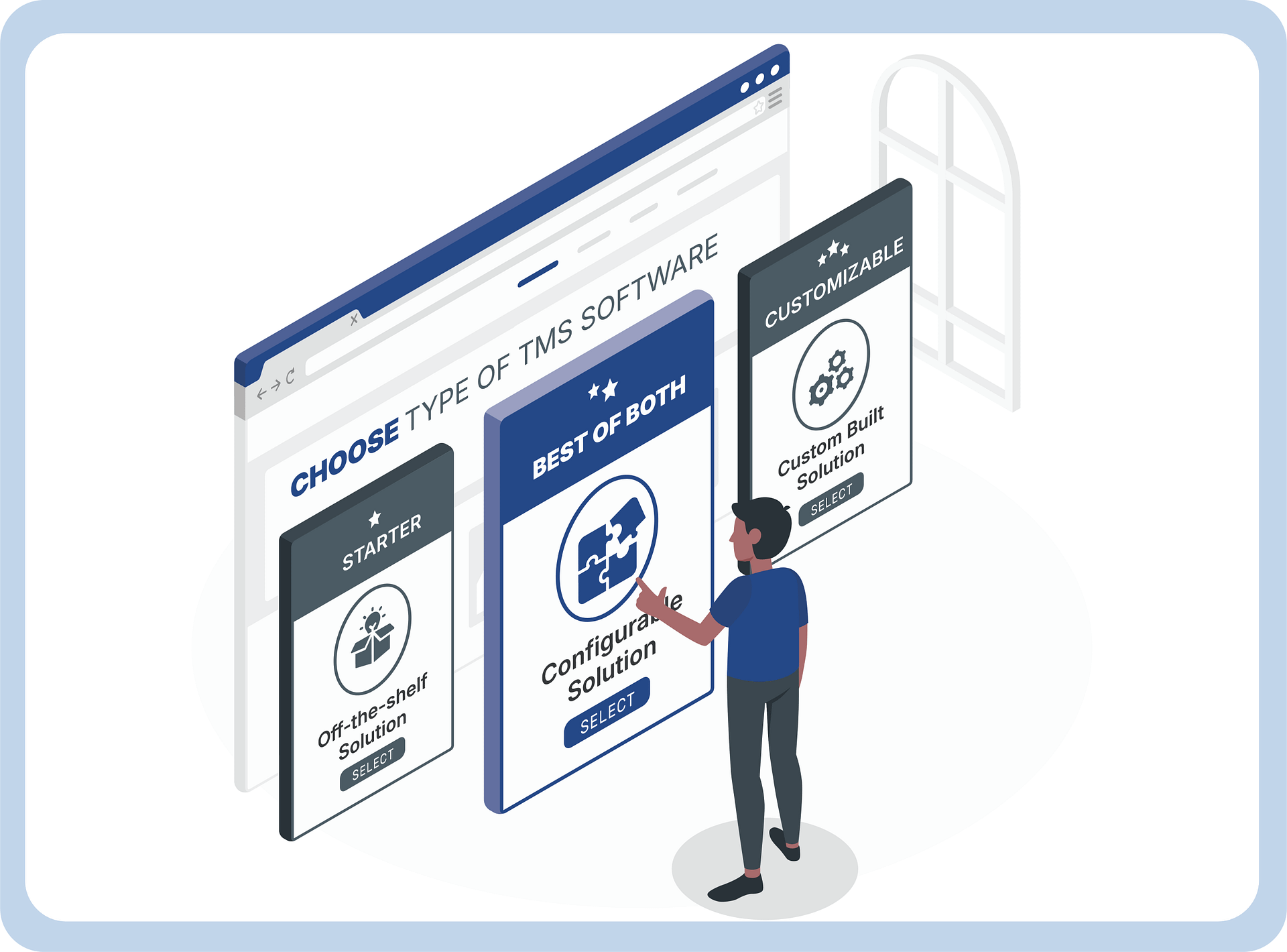
As your transportation or logistics business expands, you might find yourself asking: “Is my software still working for me, or am I working around it?” For growing businesses, this is a crucial question. When you first start out, an off-the-shelf software solution might seem ideal—easy to implement, cost-effective, and packed with industry-specific features. But as your business scales, the cracks start to show.
This leads to a common dilemma: Should you stick with your out-of-the-box software and adapt your business processes to fit it, or is it time to invest in custom software? While this is a valid question, there's actually a third option that offers the best of both worlds: A fully-configurable, modular TMS software.
1. The Limits of Off-the-Shelf Software
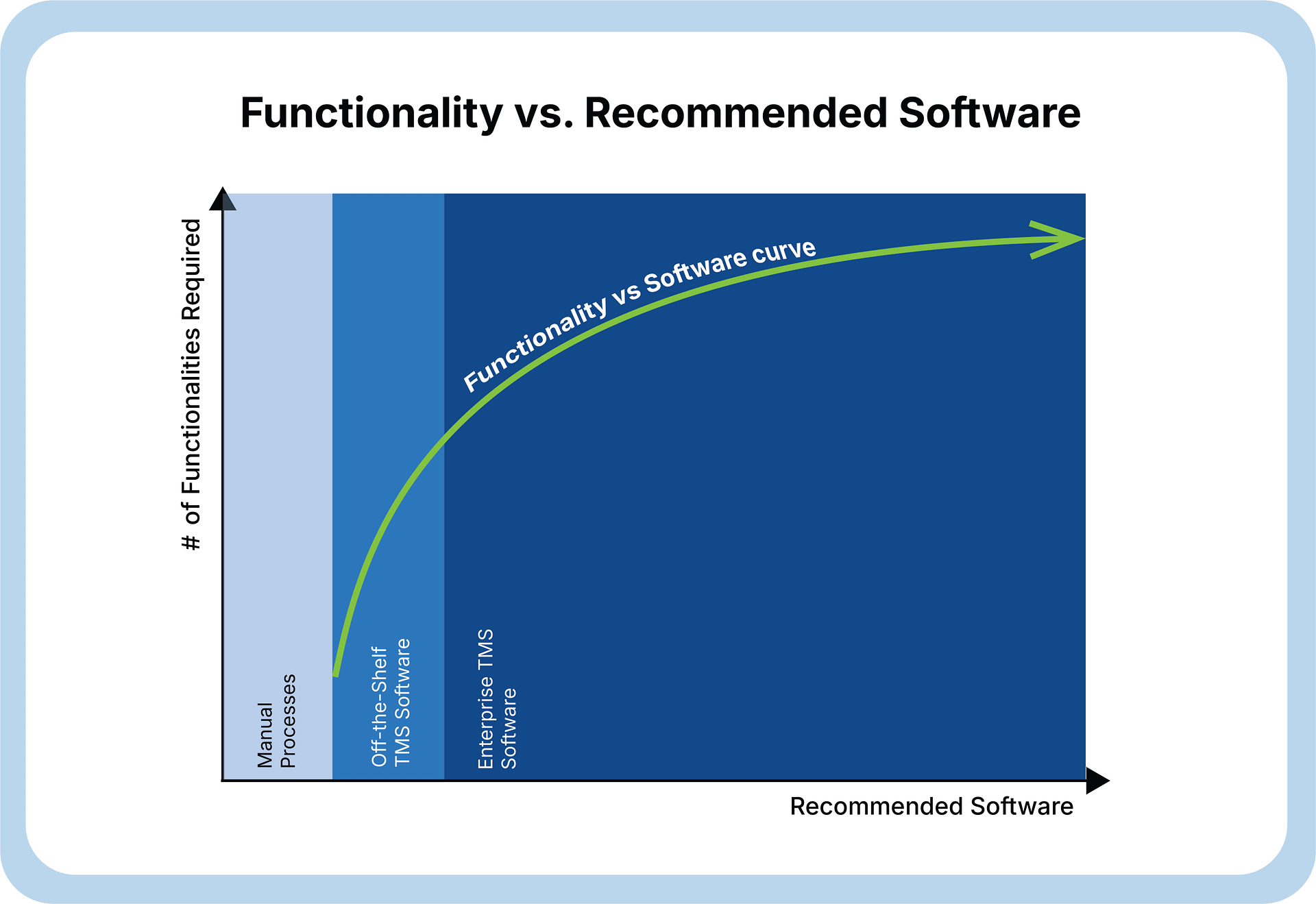
At first glance, off-the-shelf software appears to check all the boxes. It's typically developed for specific industries, including transportation and logistics, making it easy to assume it will handle your needs as your business grows.
However, as many businesses quickly discover, off-the-shelf solutions are made for the mass market, not for your specific processes. While it might handle the basics, once you need any tweaks to fit your unique operational needs, you hit a wall. Want to add a custom field to track a particular data point? Not possible. Need to generate a specific report that reflects your internal workflows? Unlikely.
The result? You find yourself working around the software instead of it working for you. These limitations can frustrate your team, slow down operations, and ultimately limit your ability to grow. Even worse, it can be hard to outperform competitors if you're all using the same off-the-shelf system.
2. Modular Configuration vs. Custom-Built Solutions: Understanding Your Options
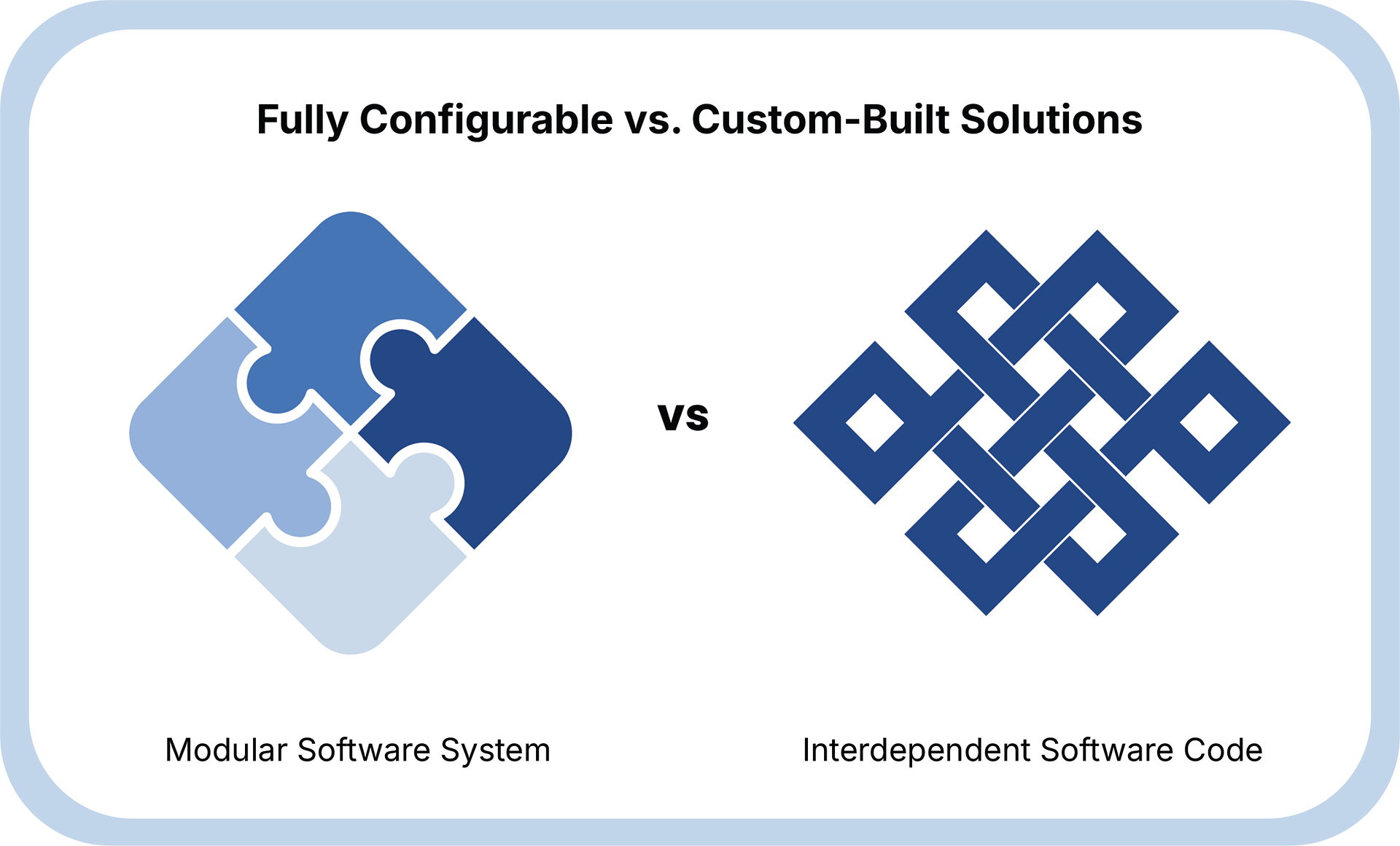
When evaluating software solutions for your logistics operations, it's crucial to distinguish between "fully configurable" and "customized" systems, as each offers distinct advantages and limitations.
2.1 Modular TMS Software: Flexibility Without Complexity
Modular, fully configurable software provides a flexible framework that allows you to tailor the system to your specific needs without altering the underlying codebase. These systems offer pre-built modules that can be enabled or disabled, adjusted, or integrated to suit your operational requirements. For instance, software like Neurored TMS & SCM, built on the Salesforce platform, enables you to:
- Modify pre-built modules to better align with your existing workflows (e.g., adjust fields, forms, and layouts).
- Enable or disable specific features based on your operational requirements.
- Integrate advanced business processes, such as fleet tracking, customer engagement, shipment visibility, or specialized third-party applications using the Salesforce AppExchange.
In short, configurable software gives you the best of both worlds: a solution that’s ready-to-go but flexible enough to grow and adapt to your unique requirements.
2.2 Custom-Built Software: Tailored to Your Unique Needs
Custom-built software is developed specifically for your organization, addressing unique business processes and requirements. This approach involves creating a solution from the ground up, allowing for complete customization. While this can result in a system that perfectly fits your needs, it comes with several considerations:
- Higher Initial Costs: The development process is time-consuming and expensive.
- Longer Implementation Time: Building a custom solution can take months or even years to complete.
- Maintenance Challenges: Ongoing updates and support depend on the development team, and if they are unavailable, maintaining the system can become difficult.
- Limited Vendor Support: Custom solutions may not receive the same level of support and updates as commercially available software.
In summary, while custom-built software offers a high degree of personalization, it requires a significant investment of time and resources and may pose challenges in terms of maintenance and scalability.
3. Why Fully Configurable Software is the Future of Logistics
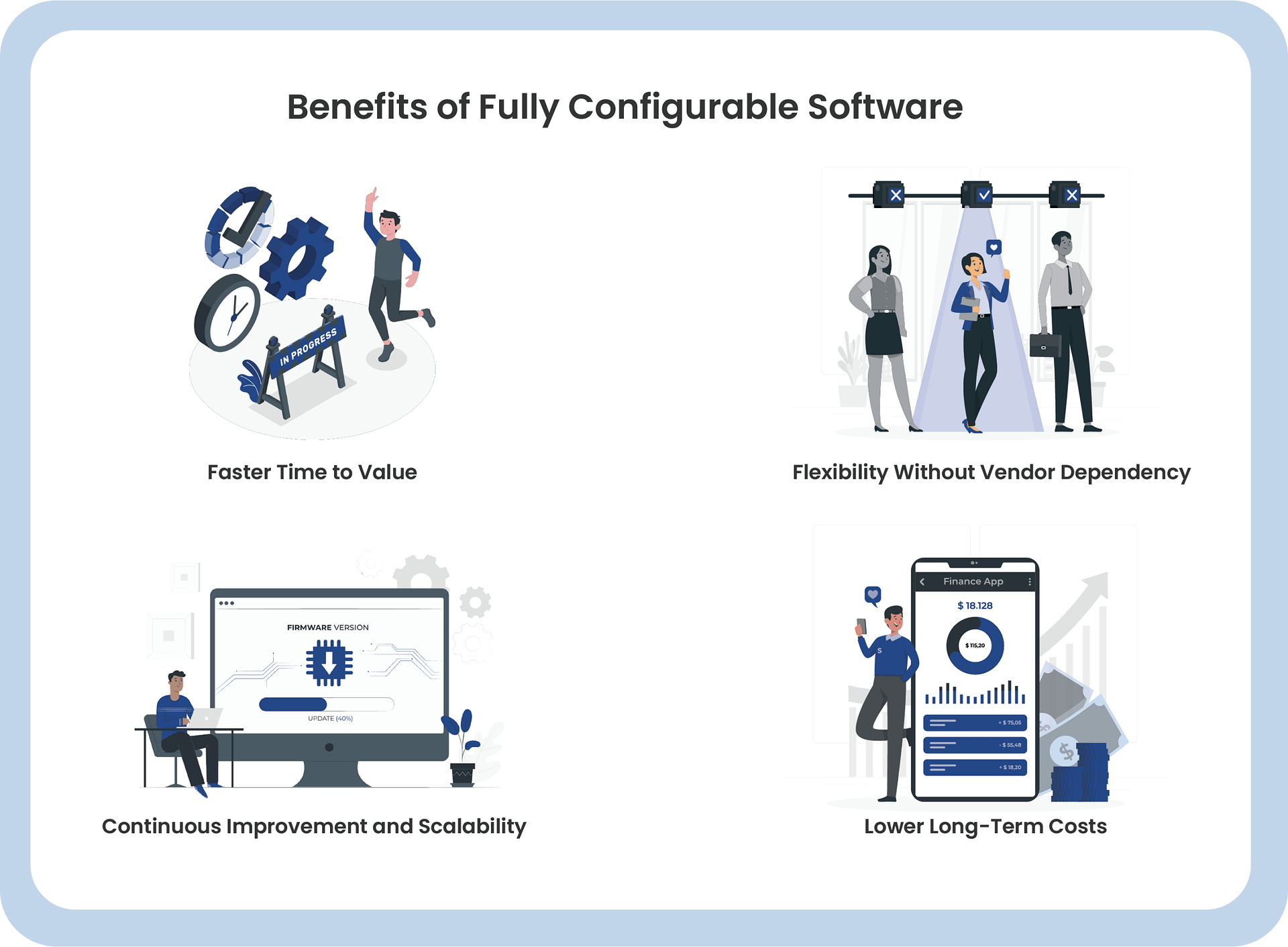
When it comes to balancing flexibility and efficiency, fully configurable software outshines both off-the-shelf and custom-built solutions. Here’s why it’s the smart choice for growing logistics and transportation businesses:
- Faster Time to Value: Configurable software allows you to quickly adapt a pre-built solution to your needs without the long development timelines of custom software. Since these systems are industry-specific, much of the groundwork is already done, meaning you can start benefiting from the software almost immediately. Adjusting settings, configuring reports, and adding fields can be done in days, not months.
- Flexibility Without Vendor Dependency: Unlike custom-built systems that often lock you into a specific vendor, configurable software is built on robust platforms that offer more flexibility. You aren’t dependent on a single developer or vendor for upgrades and changes. As your business evolves, you can adjust the software accordingly without needing to rebuild it from scratch.
- Continuous Improvement and Scalability: With configurable software, you're not stuck with a solution that’s frozen in time. Because it's built on platforms like Salesforce, these solutions continuously evolve. New updates and features are regularly rolled out, ensuring that your software stays cutting-edge and scalable as your business grows.
- Lower Long-Term Costs: The upfront cost of configurable software is often lower than custom software because you’re leveraging a pre-built foundation. Additionally, the modular nature of configurable solutions allows you to scale as needed, adding only the features that are relevant to your current needs, without incurring massive re-development costs.
4. Key Features of a Strong Configurable System
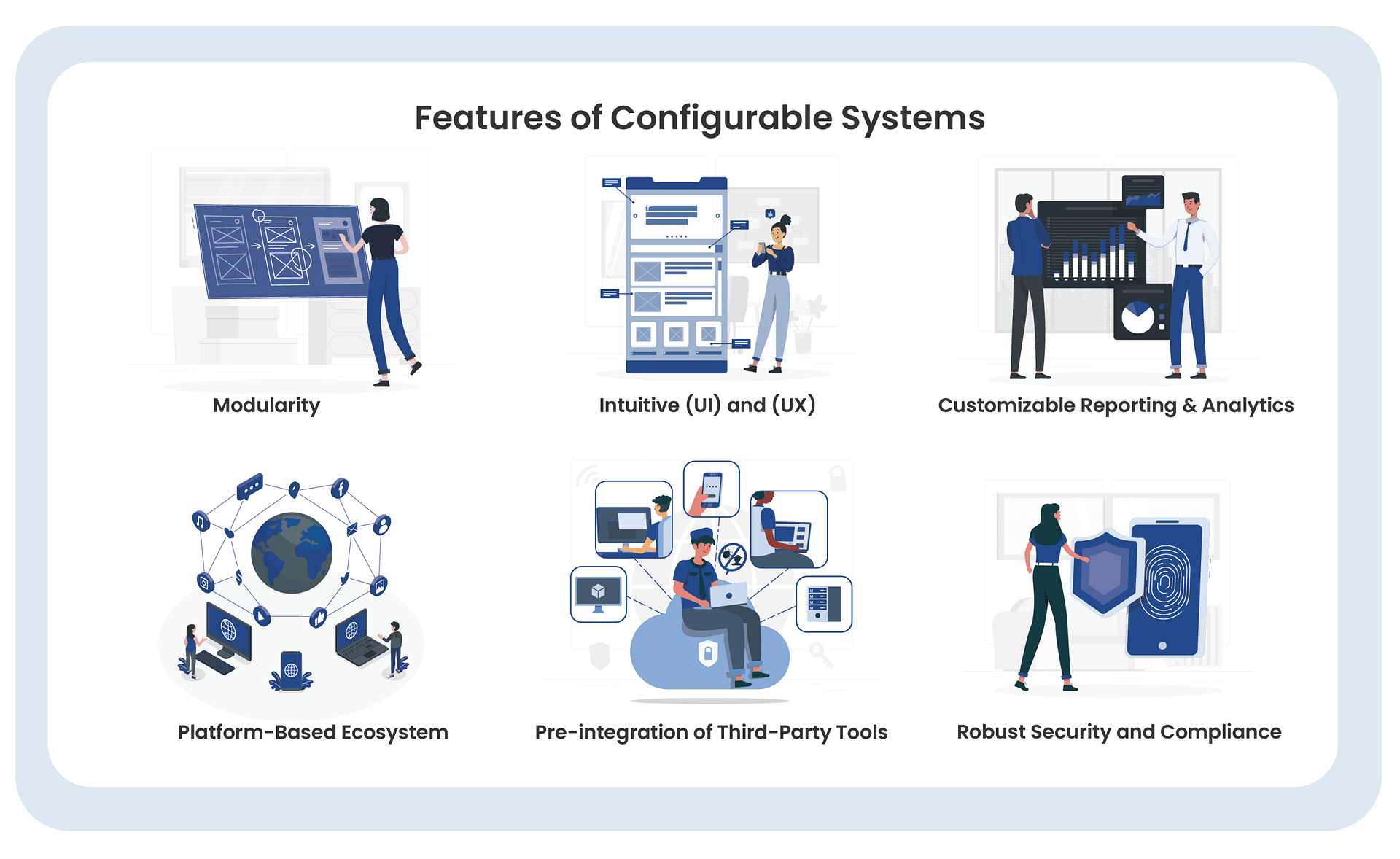
Not all configurable solutions are created equal. To truly benefit from a flexible, adaptable system, here are the key features you should look for in a strong configurable solution:
- Modularity: A good configurable solution should come with modular components designed specifically for your industry. Each module should be capable of standing alone or integrating with others to form a complete system. This allows you to pick and choose which features are most relevant to your business now and easily add more as you grow.
- Intuitive User Interface (UI) and User Experience (UX): A configurable solution should be easy to use for your team. Look for a system that offers an intuitive UI and UX, enabling users to quickly understand and use the system without requiring extensive training. This is especially important for logistics operations where efficiency is key.
- Customizable Reporting and Analytics: Reporting is essential for logistics management. A good configurable solution should allow you to easily configure reports to match your business’s KPIs and generate actionable insights from your data. The ability to adjust, filter, and visualize data in ways that are meaningful to your business ensures you’re making data-driven decisions.
- Platform-Based Ecosystem: A strong, configurable system should be built on a robust platform, such as Salesforce or AWS, that enables scalability with stability. Being platform-based also ensures that your solution will integrate well with other systems, making it easier to implement new features or connect with additional tools (like ERP or accounting software) without compatibility issues.
- Pre-integration of Leading Third-Party Tools: A configurable system should also pre-integrate other specialized third-party tools. This ensures that your business benefits from the niche innovations of multiple leading companies in the industry. Neurored pre-integrates with 20+ niche technology partners to ensure their customers always have the best solution on the market.
- Robust Security and Compliance Features: Given the nature of transportation and logistics, security is paramount. Ensure your configurable software provides robust security features like encryption, role-based access, and compliance with industry standards. This protects both your business and your clients from data breaches or compliance violations.
5. When to Transition from Off-the-Shelf to Customized Solutions
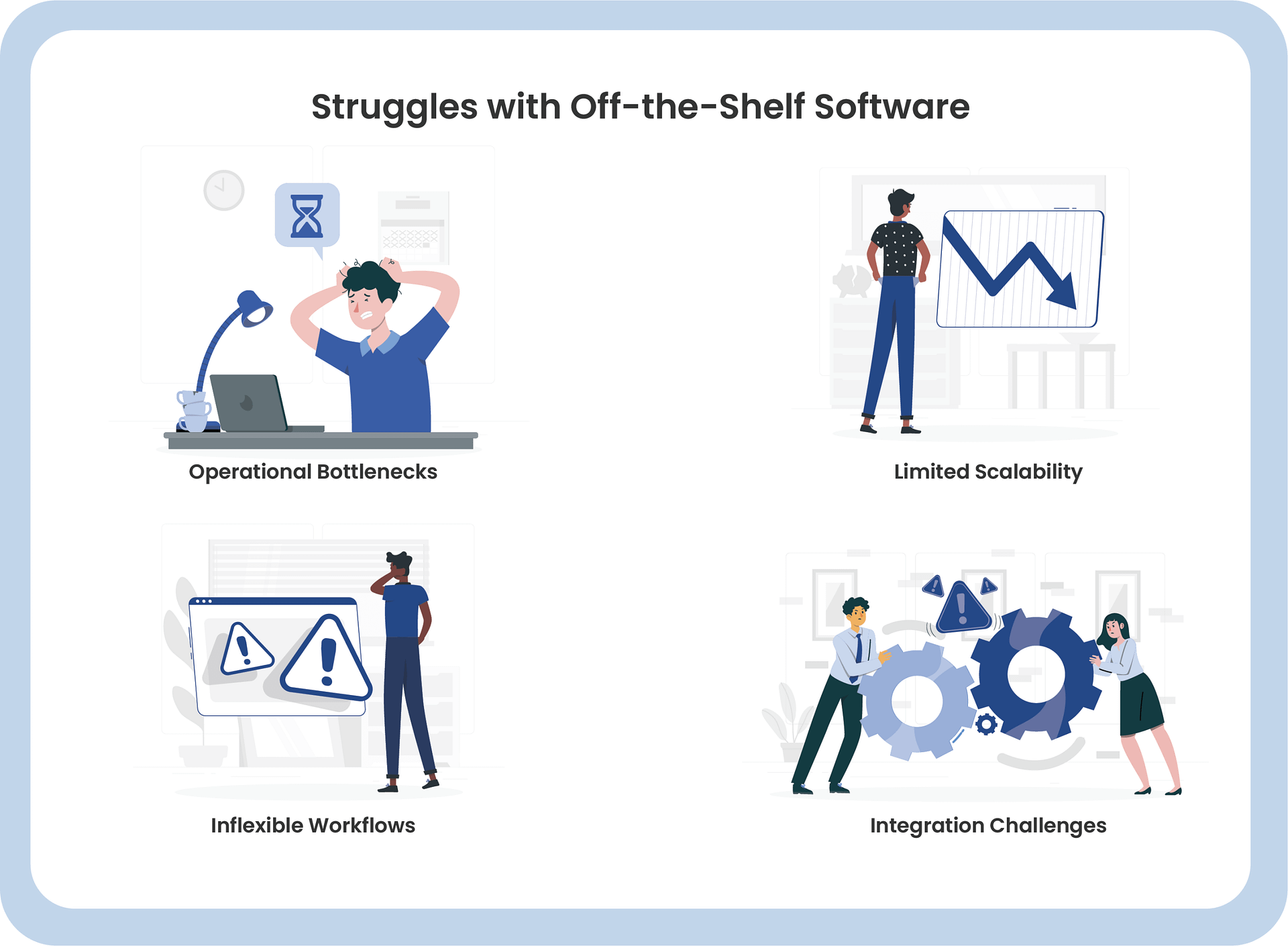
How do you know when it’s time to move away from off-the-shelf software and start looking at configurable or custom solutions? Here are some common warning signs:
- Operational Bottlenecks: As your business evolves, processes often become more complex. If your current off-the-shelf software can no longer handle key operations efficiently—such as managing orders, tracking shipments, or generating reports—you may find yourself creating workarounds just to keep things running. This is a clear sign that a more flexible, configurable solution is needed.
- Limited Scalability: Off-the-shelf software is often built with a specific business size in mind, and as your business grows, its limitations become apparent. If your software struggles to handle increased transaction volumes, multiple locations, or expanding operations, it's likely time to consider a solution that can scale with your business, such as a configurable platform that allows you to add features and modules as needed.
- Inflexible Workflows: A rigid off-the-shelf system can force your business to adapt to its predefined workflows, even if they don’t match how you want to operate. If your software isn’t flexible enough to support the unique processes that make your business efficient, you’re wasting time and resources. Configurable software allows you to adjust workflows to fit your exact operational needs, ensuring your business runs more smoothly.
- Integration Challenges: As your business grows, you may need your software to integrate with additional systems, such as customer relationship management (CRM) tools, accounting software, or fleet management solutions. If your off-the-shelf software doesn’t integrate easily with these systems, it can create data silos and operational inefficiencies. A configurable system, especially one built on a strong platform, will integrate seamlessly with other tools, ensuring smoother operations.
Once you recognize these signs, it’s time to evaluate whether a fully configurable solution like Neurored TMS & SCM can offer the flexibility you need to keep growing.
The Right Software for the Right Stage of Growth
Choosing the right software is about matching your current business needs with the right level of flexibility. Off-the-shelf solutions might work for a while, but as your business grows, so do your software requirements. Custom solutions can be expensive and slow to implement, making modular, configurable software the perfect middle-ground solution.
With Neurored, you get the best of both worlds: pre-built industry expertise and the flexibility to tailor the solution to your business’s needs, all on the world’s leading platform, Salesforce.
Ready to explore whether configurable logistics software is the right fit for your growing business? Contact us for a free consultation today!
Schedule your demo today!

Ricardo Medem
Share Article



Let’s Get Started
Schedule a Demo Now