
Rail Technology in Logistics: 10 Innovations Driving Efficiency
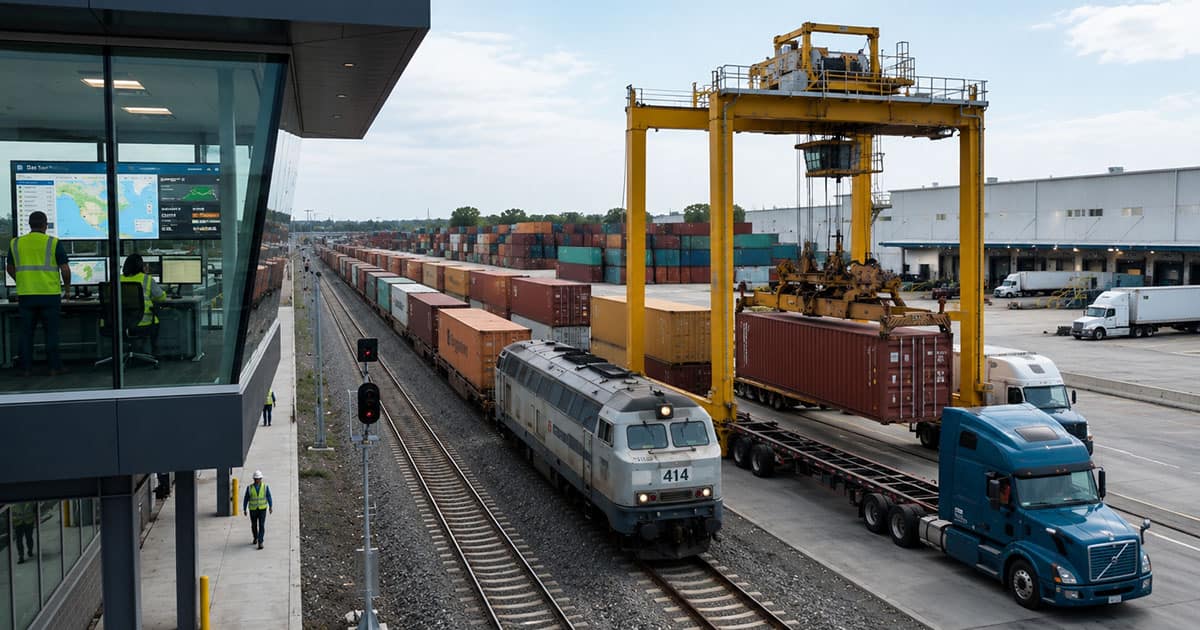
For decades, rail was the freight mode logistics teams put up with rather than chose. Cheap and green, yes. But also slow, opaque and famously bad at telling you where your wagon was.
That picture is changing. And the reason is dozens of unglamorous innovations, stacked on top of each other, that together make rail freight visible, predictable and trustworthy.
Rail is slowly but surely getting easier to trust. Below, we explore the 10 advancements in rail technology and logistics that matter right now.
Why Rail Technology Matters More in Logistics Now
Rail's emissions advantage isn't news. Per ton-mile, it produces 6% of freight emissions in the world, according to the International Energy Agency.
But as much as they sound good in theory, low carbon emissions by themselves don’t win freight.
What does win is visibility, reliability and the ability to plug rail into a broader operational stack without a custom integration project. Until recently, rail lost on all three. So shippers chose trucks, and the emissions advantage stayed theoretical.
This reality is about to change.
Five forces arrived at roughly the same time: decarbonization regulation, network congestion, AI maturity, falling sensor costs and better data connectivity. No single one of them would have been enough. Together, they eliminated the excuses.
Rail is no longer choosing between green and operational. It can be both.
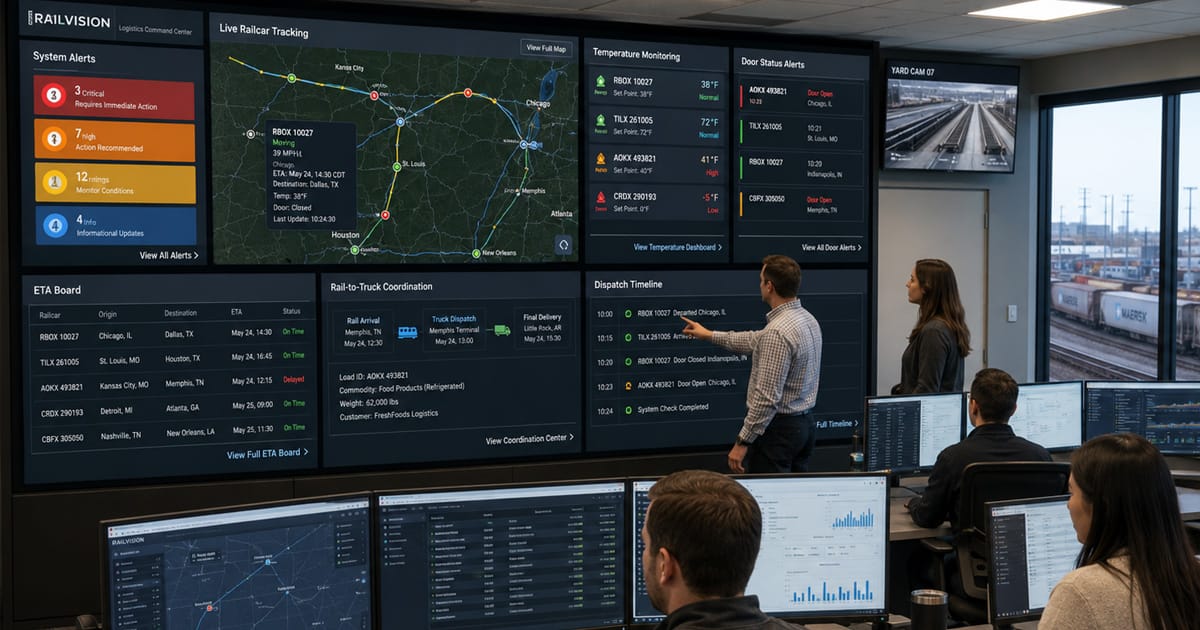
As of late 2024, only 14.5% of the world's freight wagons carried any digital sensor. The rest were dark assets, invisible until they passed a fixed checkpoint. Somewhere between those checkpoints, your shipment just disappeared.
Trucking solved this fifteen years ago. Freight rail technology is catching up, and the numbers are hard to ignore:
- RailPulse launched a vendor-neutral telematics platform in September 2024.
- By 2025, TTX had brought 177,000 North American railcars onto it.
- In Europe, Nexxiot crossed 200,000 connected rail vehicles.
What does all that instrumentation actually produce? Precise location, load and empty status, door alerts, temperature and shock data, and clean handoffs between rail and road. That list sounds operational. It is. That’s exactly the point.
Once the data exists, the bottleneck moves. Shippers don't need just another tracking screen. They need one view across every mode, with exception management, document workflows, and customer portals built in.
That's what Neurored's Supply Chain Visibility Software does: a Salesforce-native dashboard that pulls rail, ocean, air, and road into a single screen. The new rail data becomes something you can work with, not just get an overview of.
‣ Discover the advantages of having a TMS that’s native to the Salesforce platform
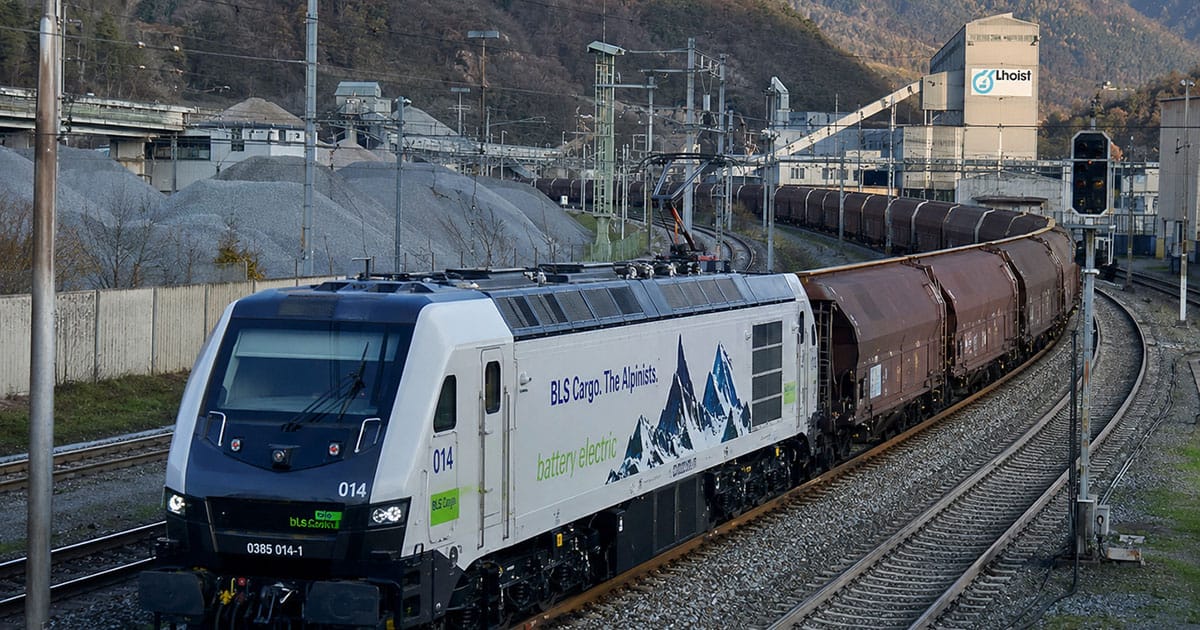
On the right routes, battery-electric locomotives can save a lot of money
The clearest example is Wabtec's FLXdrive, which holds up to 7 MWh of battery capacity. BHP deployed FLXdrive locomotives at Port Hedland in November 2025 for heavy iron ore hauling, following an earlier deployment by Roy Hill.
Loaded with ore, the train descends 344 kilometers from mine to port, and instead of bleeding that energy away through glowing friction brakes, the regenerative system catches it. By the time it reaches the coast, the batteries are full. The empty cars climb back on stored power. Gravity, which used to just heat the air above the Pilbara, now does the return trip.
The point is simple: batteries work best where routes allow energy recovery and don't require sustained long-range power. Yard switching, regional runs, and heavy-haul loops with strong regenerative profiles are the sweet spot. Long, flat mainline operations aren’t.
For logistics teams, this is less a debate about propulsion than a planning and reporting problem. Battery-assisted rail legs change fuel costs, emissions, and sometimes reliability. Those route-level differences need to sit alongside every other trade-off you're tracking, or the case for shifting modes never closes.
‣ Read our fleet route optimization guide and improve your operations across the legs that actually matter
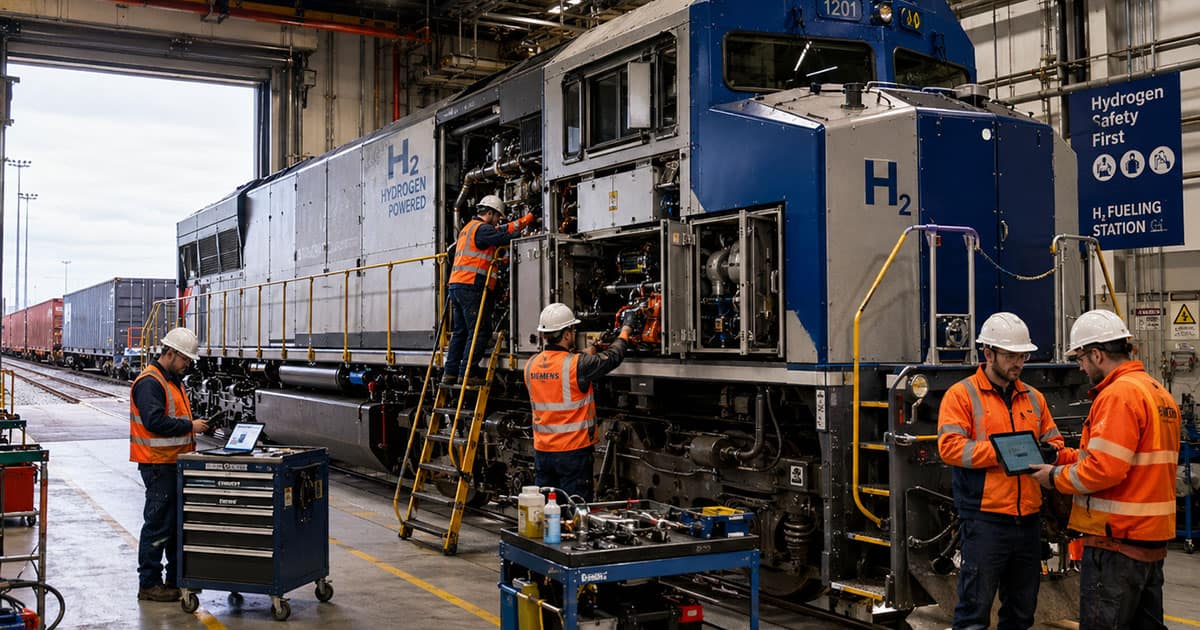
On punishing terrain, hydrogen carries the load. CPKC's North American program proves it.
CPKC stripped back diesel frames, fitted them with Ballard FCwave fuel cells, attached a hydrogen tender for range, and sent them into service. A prototype pulled a loaded bulk train (thousands of tonnes) 600 kilometers through the Canadian Rockies, from Sparwood to Golden, up grades that punish even diesel.
By the end of 2024, the program had covered more than 6,000 miles of revenue freight without a hydrogen powertrain failure. CPKC then ordered 98 fuel cell engines from Ballard.
In March 2025, CP 1201, CPKC's first high-horsepower hydrogen locomotive, entered regular mainline service in British Columbia. The fleet is doubling in 2025: three more locomotives, a second tender car, and four additional units planned for late in the year.
For shippers, the practical consequence is this: propulsion costs will split by route, and the carriers you use will carry different cost and emissions profiles. Carbon costs, fuel surcharges, and reliability will no longer read the same across a network.
That’s worth tracking now, before it becomes a question you are asked to answer rather than one you chose to ask.
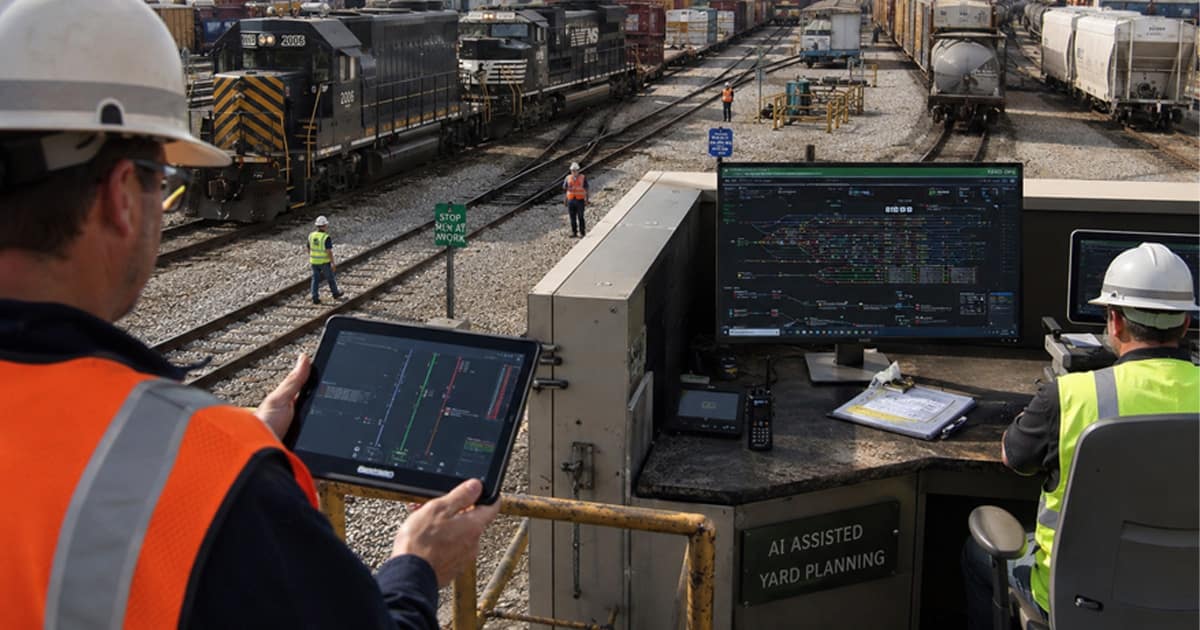
AI is one of the fastest-moving innovations in rail right now because it sharpens what railroads already have. Rail yard switching is the best example of what that looks like in practice.
For example, BNSF built a switching plan for a major yard that decides which cars couple with which trains, in what sequence, across which tracks. What used to take a trained planner 30 to 60 minutes, BNSF's AI yard planner does it in 2. The company’s internal target is to eventually reach 10 seconds.
For shippers, the effects are concrete: faster train builds, fewer unnecessary switches, and fewer yard-level delays that ripple into missed connections and late departures.
AI works in rail because the mode is, at its core, a giant sequencing problem. In a yard, every railcar has a destination, every track has limited capacity, and every switching move affects the next one.
The cost shows up in every extra move, every idle car, and every outbound train that leaves late. The problem has a shape, and AI fits that shape.
5. Preventive Maintenance Inspections with AI
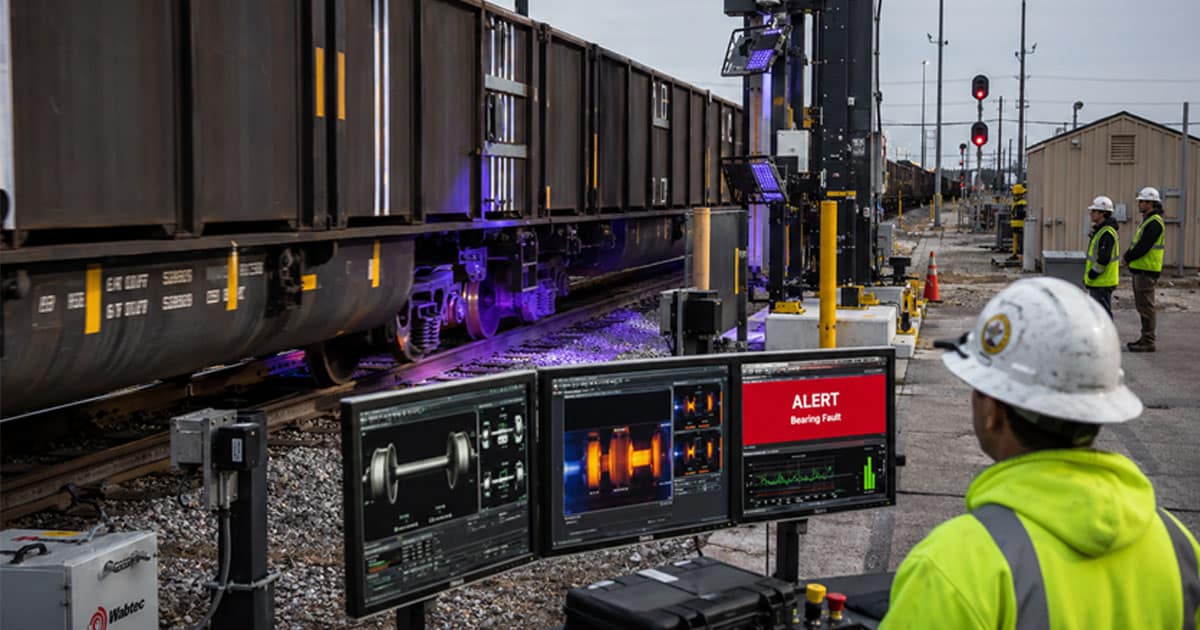
Of all the modern rail safety technologies powered by AI, defect inspection has produced the best returns yet. Every defect caught is a failure prevented before it spreads. A wheel that doesn't give out at speed, a shipment that doesn’t sit stranded on a cold siding somewhere in the middle of the night.
Norfolk Southern's inspection systems read passing trains without slowing them down. In 2024, they found more than 25,000 mechanical defects, 87 of them critical.
The success brought expansion, and a new wheel inspection system went live at Burns Harbor, Indiana in November 2025. It caught a manufacturing flaw in a supplier's casting serious enough to trigger an industry-wide recall and confirm seven defective parts across North America.
Since January 2025, the systems have pulled more than 50 defective wheels from service before they failed in the field.
For logistics teams, what AI train defect inspection buys is operational:
- Fewer breakdowns mean delivery windows that hold.
- Catching defects earlier means the cars carrying your freight stay in service instead of sitting in a repair shop.
- Fewer workers standing alongside the live track means a safer network and more predictable insurance costs.
Those are the benefits that show up in the on-time numbers you put in front of a customer.
‣ See which transportation data analytics actually move on-time performance instead of just filling dashboards.
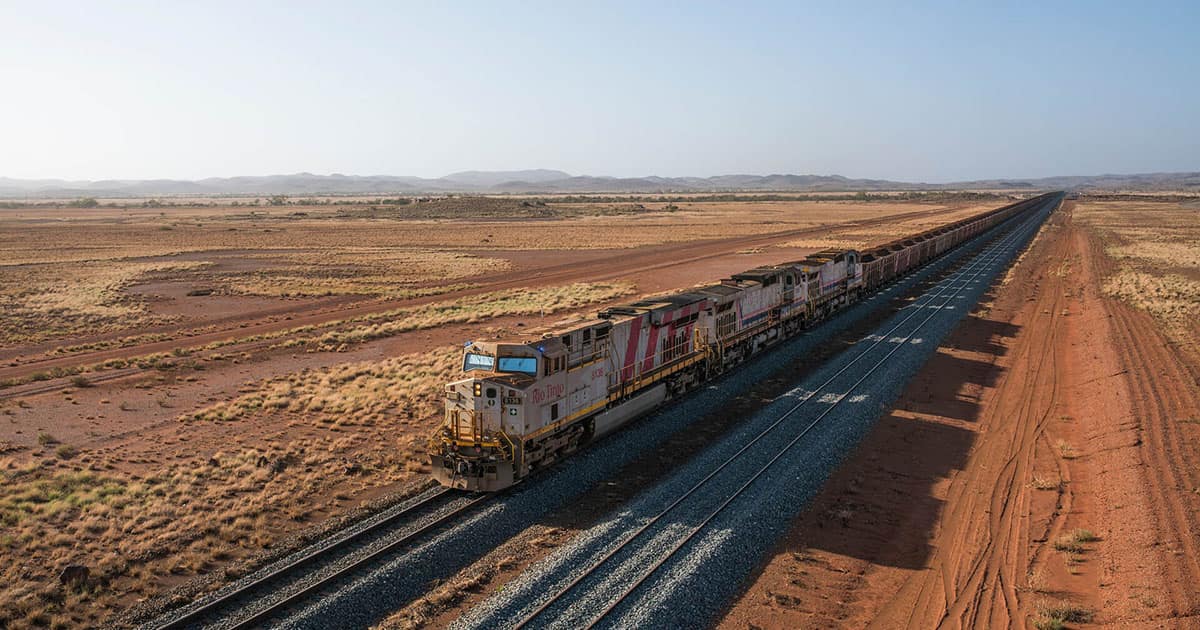
Copyright © 2025 Rio Tinto
Full autonomy in freight rail is real, but its first major gains are coming where operating conditions are consistent enough to support it.
Rio Tinto's AutoHaul has been operating in the Pilbara region in Australia since 2019 as the world's first fully automated, heavy-haul, long-distance rail network. The system covers more than 1,700 kilometers of track, with recent extensions including a 166-kilometer spur to the Gudai-Darri mine.
It has covered 33 million autonomous kilometers and runs about 6% faster than under human operation, because it holds a consistent throttle that no driver, however skilled, can maintain across hundreds of kilometers of open line.
Those results come from a very specific operating environment. The Pilbara is a dedicated freight network running through remote desert, with no level crossings to manage, no passenger trains to yield to, and no dense urban traffic around the line.
That is why fully automated heavy-haul rail is advancing first in mining corridors, bulk freight networks, and yard operations. These are controlled, repeatable environments where autonomy can deliver steadier speeds, tighter schedules, and fewer small delays that compound into missed windows.
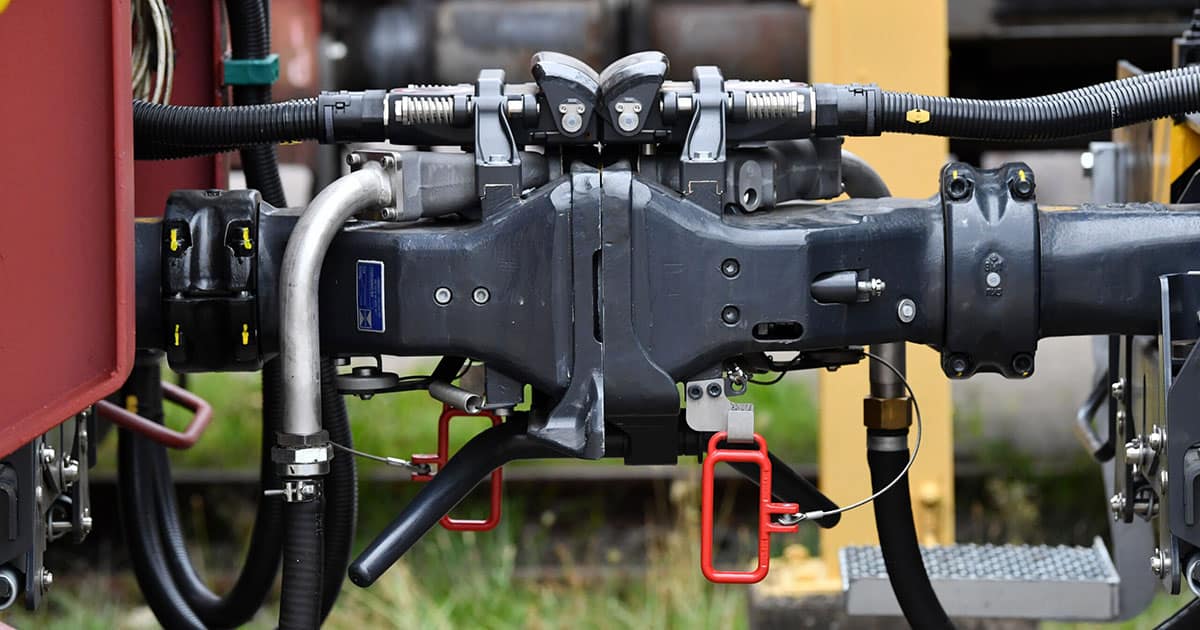
Credit: Deutsche Bahn AG
Europe's roughly 500,000 freight wagons are still joined by manual screw couplers. To couple two wagons, a shunter steps into the narrow gap between 80-tonne steel masses, lifts a heavy bracket, screws it tight, and connects the brake pipes by hand.
The job is physically punishing and genuinely dangerous. And when it's done, the wagons still know nothing about each other. No current passes between them. No data. The train is a chain of steel boxes, each one sealed off from the next.
DAC breaks that isolation. It automates the mechanical and pneumatic connection and threads a live power and data line down the full length of the train, giving it something like a nervous system for the first time. Brakes that once received their signal one wagon at a time, rippling slowly down the length of the train, now fire simultaneously.
What this means is that trains can now run longer and heavier. They stop shorter. They run faster without becoming dangerous.
The economics of DAC are favorable, and the rollout is already underway:
- In March 2025, Westfälische Landes-Eisenbahn became the first operator to run DAC wagons in commercial service in Germany.
- The DAC4EU consortium, backed by EUR 8.25 million from the German Federal Ministry, is targeting production-ready cross-European demonstrators by 2027.
- Norway has commercial tests planned for 2027 on the Oslo-Bergen route, one of Europe's most demanding mountain corridors, with full deployment aimed at 2028.
DAC sounds like a niche infrastructure upgrade, but it isn't. Longer trains, predictive maintenance, and advanced signaling systems like ETCS Level 3 moving blocks all depend on it. Strip it out and the future of European freight rail doesn't hold together. Literally.
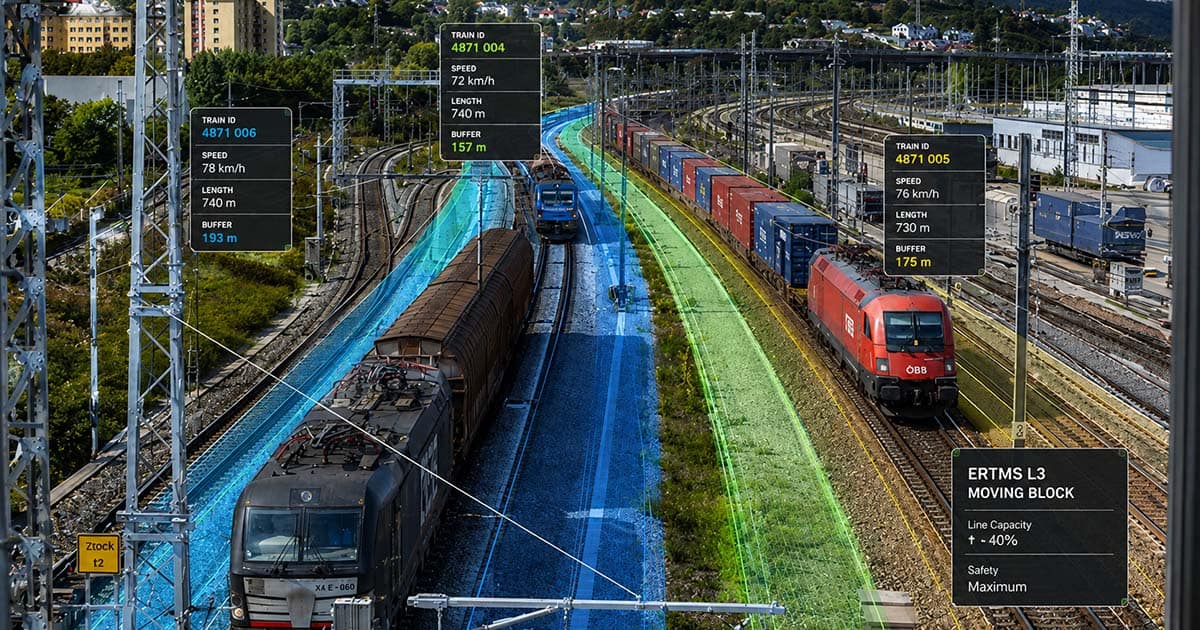
By 2024, around 13,700 km of European track had ETCS equipment installed, about 15% of the EU network. Progress varies sharply by country. Even at this pace, ETCS is becoming the default rail signalling and communication technology across the continent.
Germany's digital interlocking investment and the UK's East Coast Digital Programme stand out. Most other deployments come down to replacing old signaling with newer old signaling that brings minor freight benefits.
The real change comes with ERTMS Level 3, also called moving block. Under conventional signaling, a train needs to fully clear a fixed section of track, sometimes several kilometers long, before the next train can enter.
Picture kilometers of empty line between two moving trains, enforced by where a signal happens to stand. Moving block dissolves that gap.
Each train carries its own safety buffer, one that stretches as it accelerates and tightens as it slows, calculated in real time from speed, position, and whether it's intact. The train behind closes to the actual safe stopping distance, and the empty kilometers shrink to meters.
The capacity difference is big. Gains go up to 40% on an existing line without building a new track. Most of Europe's main freight corridors are already running near capacity, so that gap separates a network that can handle more traffic from one that can’t.
‣ EU regulation is advancing more than just rail. Find out why ONE Record is necessary for air cargo
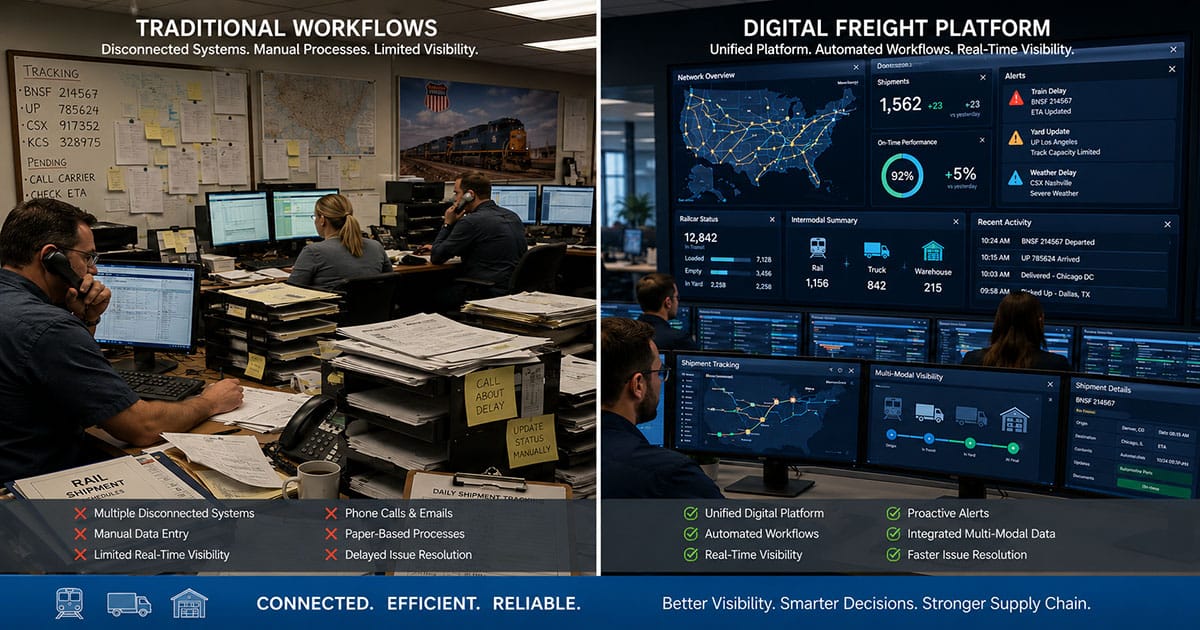
Rail transport technology is finally being treated as a standard mode inside transport management systems rather than a special case. For years, booking a rail shipment meant stepping outside your main system: a different interface, a phone call, a spreadsheet.
Now shippers can quote, book, track, and reconcile a rail shipment in the same platform they use for everything else. The remaining gap is connectivity between rail operators and third-party platforms. APIs are improving, and work on shared data standards and digital shipping documents is moving forward, slowly.
This is still the area where capability varies most between vendors. It’s also where technology choices land hardest.
For shippers running rail inside a broader freight operation, the hardest problem is connecting quotes, bookings, visibility, documents, customer portals, and billing across rail, road, ocean, and air without building a custom integration for each.
Every custom integration is a project. Every project costs time and money, and frays a little when the vendor updates their API. Neurored TMS & SCM is designed for exactly that coordination problem. You get a Salesforce-native platform where rail moves through the same quoting, booking, visibility, and document workflows as every other mode.
If you have been treating rail as an exception in your TMS, the software layer is where that exception finally goes away.
‣ Check out our exhaustive list of essential TMS features every logistics team needs
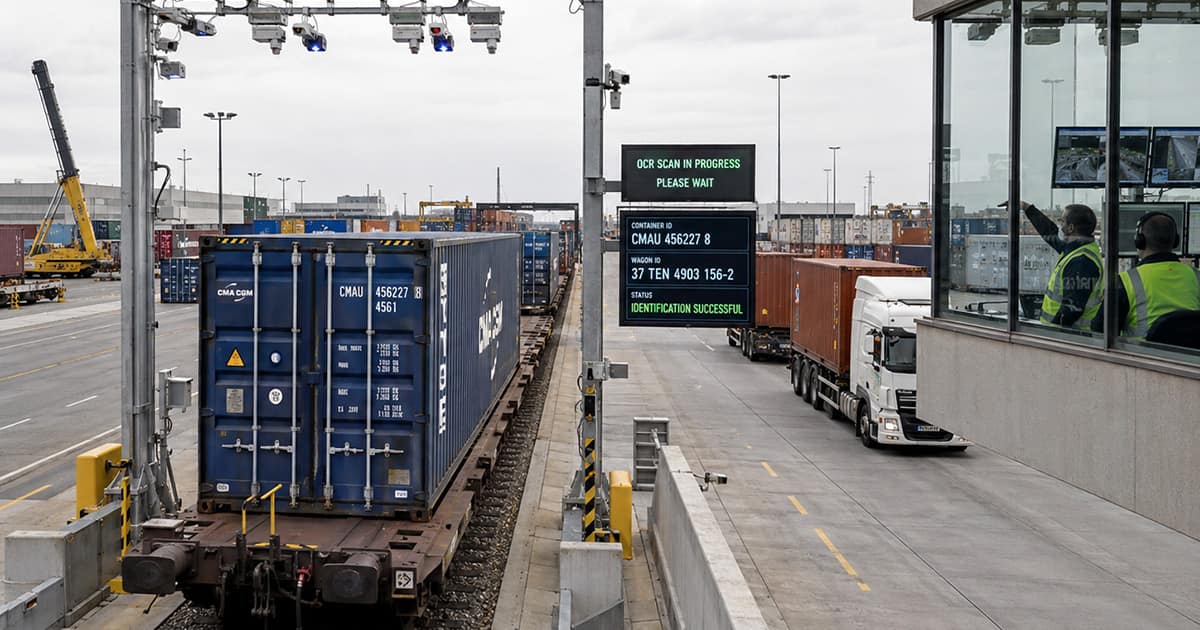
A fast train still loses if the terminal is slow. Most of rail's speed disadvantage versus trucking lives at the handoff point, not on the mainline. Terminal automation is where that gap is closing fastest.
Gate automation comes, powered by Optical Character Recognition (OCR). As a train rolls in, cameras sweep every surface: container codes, wagon numbers, hazard labels, all read at better accuracy before the train has fully stopped. What used to take a team with clipboards and handheld scanners now happens in the time it takes the locomotive to coast to a standstill.
Inside the terminal, the cranes move without anyone in the cab. For example, Kuenz automated stacking cranes work Rotterdam and Hamburg's yards through the night, lifting and placing containers with a steadiness no human operator can hold across a full shift.
Robotic pin handling pulls workers out of the last tight, loud, genuinely dangerous corner of the yard: the gap between containers and wagon frames where twist locks are still set by hand.
At the same time, you have the East-West Gate terminal in Hungary that runs a private 5G network so operators can guide fast-moving equipment from a control room with the precision that used to require being there in person.
This may be the least glamorous innovation in this piece. But it may also be the most immediately useful. If your freight moves intermodally, the terminal is where the next two years of delay reduction will mostly happen.
What You Should Do With This Information
Treat this list of rail technology advancements in logistics as one system being rebuilt piece by piece. Regulation is making rail strategically necessary. Visibility is making it operationally usable. Inspection AI is making it reliable. None of those forces resolve in isolation, and none of them is useful without somewhere for the data to land.
The teams that win will wire technology for rail (data, planning, execution) into the same platform they use for everything else.
If you are already thinking about how to connect rail with the rest of your freight operations, Neurored TMS & SCM is built for it: Salesforce-native, multimodal by design, and ready for the next generation of rail data. Schedule a demo to see rail running through the same workflows as every other mode.
Schedule your demo today!

Ricardo Medem
Share Article



Let's Get Started
Schedule a Demo Now