
Who Controls the Panama Canal? The Dispute Reshaping Supply Chains
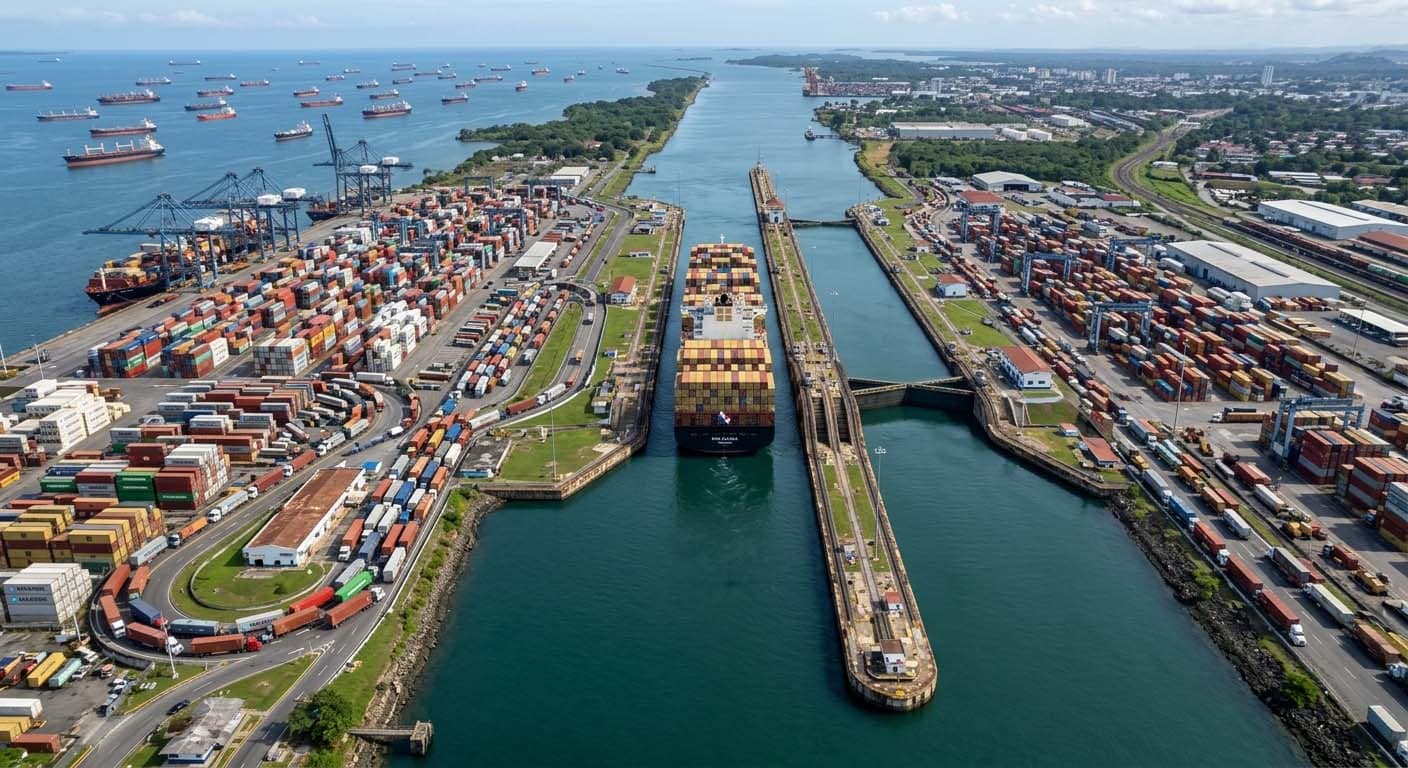
The Panama Canal never closed.
Vessels kept moving. The route was open, the water was there, the slots were available. By every traditional measure of supply chain risk, nothing was wrong.
And yet, in March 2026, shippers routing cargo through Panama woke up to canceled bookings, equipment stranded on the wrong coast, and costs appearing in places nobody had planned for.
The disruption didn't come from a blocked route. It came from a single carrier decision. That's the part nobody has a dashboard for.
China doesn’t operate the Panama Canal. The Canal Authority has been Panamanian since 1999. But China's response to losing its port concessions in 2026 created disruption that spread through the entire system.
Here's what happened, why it spread, and what it tells you about where your supply chain is actually exposed.
A Domestic Legal Ruling Triggered a Multi-Layer Supply Chain Shock
To understand what happened in March 2026, you have to go back to January 30 of the same year.
That's when Panama's Supreme Court ruled that the concession governing Balboa and Cristóbal was unconstitutional. The concession holder was Panama Ports Company, a subsidiary of CK Hutchison Holdings.
The Hong Kong conglomerate had run both terminals for 25 years. The court said it owed Panama roughly $1.2 billion in unpaid revenue-sharing going back to the original deal.
The government didn't wait.
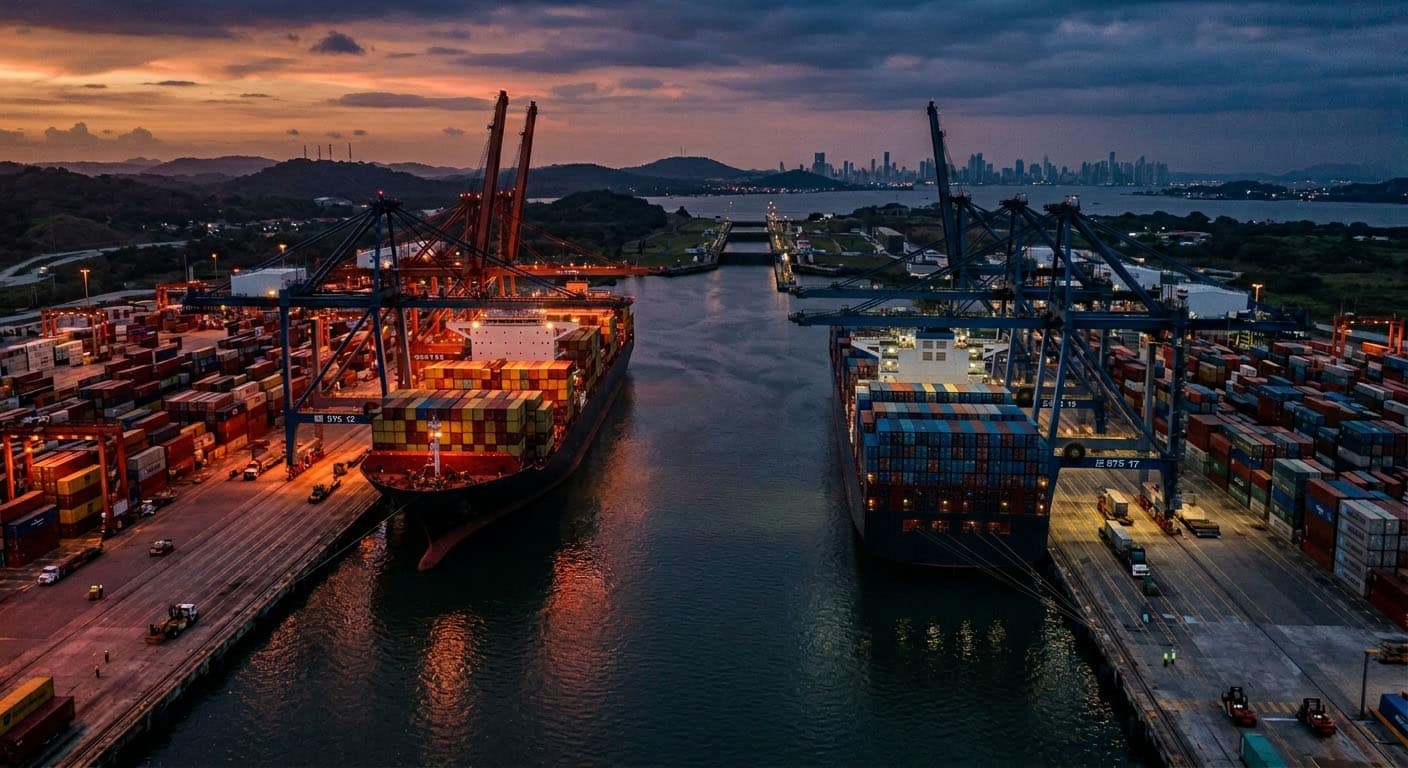
When the ruling hit the official gazette on February 23, Executive Decree No. 23 followed quickly. The state assumed direct control of both terminals. APM Terminals, Maersk's port arm, took interim operations at Balboa. Terminal Investment Limited, MSC's port subsidiary, took Cristóbal. Both arrangements were temporary, eighteen months, with a public tender to follow.
Why This Was Never About Canal Control
Before we go further, one thing needs to be said clearly.
The Panama Canal Authority is Panamanian. It has charged uniform tariffs to every nation since 1999. It runs independently. What was at issue here was a commercial port concession, held by a Hong Kong company, awarded in 1997. Those are different things.
But the pattern underneath it? That's real. And it matters.
The CK Hutchison situation was already caught up in a proposed $23 billion sale of the company's global port portfolio to a BlackRock-led consortium. Washington encouraged it. China moved to block the sale of the Panama Canal ports, framing it as illegal interference with Chinese commercial interests. Panama said the Supreme Court made a domestic legal ruling.
Washington called the terminal handover a win for canal neutrality. China rivalry over the Panama Canal had been building for years. And then COSCO, a Chinese state-owned shipping company, suspended services at the terminal now run by Maersk. That was fifteen days after the handover. The timing was not a coincidence.
China’s Retaliation Introduced Friction Into the Maritime System
In March 2026, China's port state control authorities detained 123 vessels at Chinese ports. Of those, 91 were registered under Panama's flag, meaning nearly three quarters of all detentions in China that month involved ships from a single registry.
Laura DiBella, The U.S. Federal Maritime Commission chair, wrote in a statement that the inspections were "far exceeding historical norms" and appeared "intended to punish Panama." The Chinese Foreign Ministry Spokesperson Guo Jiakun directed press conference questions to "competent authorities" and said nothing else.
The concentration looks even more striking in the regional context. Across the entire Asia-Pacific region, 179 vessels were detained that month. More than half of them were Panamanian ships held specifically in China.
Port state control detentions are officially about safety. But when more than half the detained ships in a region share the same flag, in the same month, right after a terminal handover their government opposed, the safety explanation stops being plausible.
Regulatory Pressure Escalated Into Direct Carrier Intervention
On March 20, Lloyd's List reported that China's National Development and Reform Commission, the country's top economic planning body, summoned Maersk CEO Vincent Clerc to Beijing. They also contacted MSC Chairman Diego Aponte in writing, according to Newsroom Panama.
The message to both was the same: leave Balboa and Cristóbal. They were told not to "engage in illegal activities that harm the interests of Chinese companies." Neither carrier has confirmed the meetings publicly. Neither has complied.
Here's why that last part matters.
If Maersk and MSC walk away, American firms are the likely replacements. Beijing knows that. Which means they’re not looking at this as a commercial dispute over port management contracts. They’re looking at it as a strategic displacement that needs to be reversed before it becomes permanent.
Why Node Instability Propagates Faster Than Route Disruptions
Ports are strategic assets. And in a world where the U.S. and China are actively competing over infrastructure and influence, that means they are also pressure points.
When that competition reaches a node your supply chain runs through, the instability doesn't stay in the courtroom. It doesn't stay in the diplomatic channel. It moves into the commercial system, into your costs, your routes, your timelines. Control of nodes matters as much as control of routes. Sometimes more.
Why This Disruption Spread Beyond the Terminal
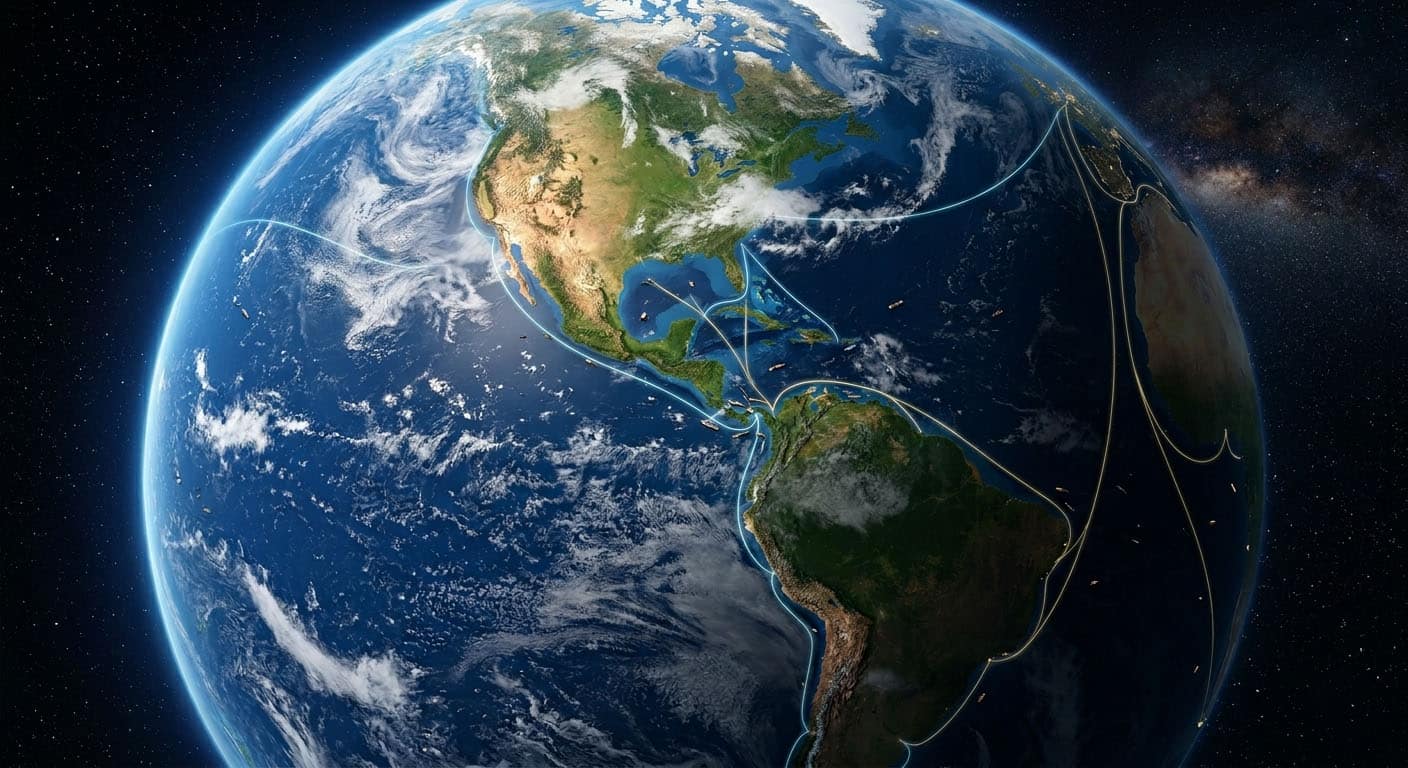
Most people picture the Panama Canal the same way. A ship enters one ocean, passes through the locks, exits the other side, and continues to its destination. Clean. Linear. A transit corridor.
That simplified model misses most of what actually matters.
Panama’s Throughput Reveals Its Role as a Distribution System
According to Global Trade Magazine, Panama's ports handled 9.9 million TEUs in 2025, up 3.6 percent from the prior year, with major volume moving through Manzanillo, Balboa, Colón Container Terminal, and Cristóbal.That’s a port system of serious scale. And roughly 72% of ships transiting the canal also call at a Panamanian port.
Panama is not a transit corridor. It is a distribution hub.
Transshipment Turns One Shipment Into Many Dependencies
Pacific-side terminals like Balboa receive large transpacific vessels coming in from Asia. Cargo gets sorted, split, and redistributed. Some of it goes through the canal to the Atlantic side directly.
Some of it crosses the isthmus by rail. Some of it gets loaded onto feeder vessels serving Central America, the Caribbean, and South America. About 95 percent of Panama port traffic is transhipment. A single large vessel from Shanghai becomes dozens of smaller shipments fanning out across the Americas. The terminals are what make that happen.
The Colón Free Trade Zone Extends the Transshipment Chain Inland
The Colón Free Trade Zone sits at the Atlantic end of this system. It's the second-largest free trade zone in the world by trade volume. Goods arrive from Asia, clear customs under preferential terms, and get redistributed across Latin America and the Caribbean. The entire commercial model depends on the transhipment chain running reliably through Panama's ports.
When Balboa wobbles, Colón feels it. When Cristóbal goes through a contested management handover, the free trade zone's supply lines get caught in the disruption even if not a single container is formally delayed.
Simultaneous Control Disruption Hit Both Sides of the System
That's what makes the Balboa and Cristóbal takeover different from a drought or a transit restriction. Both terminals were reassigned simultaneously. One on each side of the canal. The instability hit both ends at once.
Transhipment efficiency on the Pacific side degraded at the exact moment the Atlantic-side gateway went through a management handover. The cross-isthmus rail link, the Colón Free Trade Zone, the feeder networks, the container repositioning flows: all of it depends on those two nodes functioning reliably.
When their control became contested, the disruption moved through the entire ecosystem.
COSCO’s Withdrawal Signals Risk Beyond Lost Volume
Panama's canal and port revenues account for roughly 7 percent of GDP. Losing COSCO's volume, even at Balboa's reported 4% attributable to that carrier, is not an abstract geopolitical inconvenience. It’s a direct revenue loss, and a signal to every other carrier that the stability assumptions built into their Panama routing may no longer hold.
Ownership doesn't guarantee traffic. Logistics runs on reliable operators. When the operators become contested assets, reliability is the first casualty.
How Panama Canal Disruption by China Forced Cargo Redistribution Across the Network

Rerouting sounds manageable. One decision, one new route, problem solved.
In practice, it contains multitudes.
Pacific-Side Capacity Constraints Forced Cargo Diversion
When COSCO suspended Balboa calls, Pacific-side cargo had to go somewhere. The Atlantic terminals absorbed the overflow. Yards that were already managing elevated throughput from Red Sea-driven rerouting got tighter. Berth windows shrank.
At the height of the 2024 drought, median berthing times at Puerto Colón had reached 23.5 hours. Additional inbound pressure on an already-stressed system doesn't add linearly. It compounds.
Inland Transport Networks Absorbed the Overflow
The Panama Canal Railway moves containers across the isthmus without consuming a canal transit slot. It saw increased demand from freight that now needed to move from the Atlantic side back toward Pacific-bound vessels. Regional transhipment began shifting toward alternatives. Buenaventura in Colombia. Lázaro Cárdenas in Mexico.
The system was redistributing. But redistribution has a cost.
Empty Container Imbalances Became the Critical Failure Point
This is where rerouting gets genuinely painful for anyone managing a global freight program.
COSCO's customer notice specified that empty containers must be returned to Manzanillo or Colón only. No empties accepted at Balboa. That single line created a cascade.
Empty container repositioning is one of the most assumption-heavy operations in logistics. Empties that were supposed to return to the Pacific side for Asia-bound voyages were now stranded on the Atlantic coast.
Moving them back means paying for cross-isthmus rail. Or burning a canal transit slot. Or finding alternative repositioning routes that didn't exist in the original cost model.
The global equipment shortage, already worsened by Red Sea diversions that had extended vessel voyages and slowed container cycling, absorbed another hit.
‣ When routes shift overnight, the right freight routing technology determines how fast you can follow
The Financial Impact Extended Across the Entire System
The full picture goes well beyond spot rate changes:
- Unplanned inland drayage.
- Detention and demurrage on cargo that missed connections.
- Equipment repositioning fees.
- Inventory carrying costs as goods sat in the wrong terminal awaiting rerouting.
- Carrier surcharges on alternative services.
McKinsey has estimated that alternative routing scenarios of this kind typically add around 5% to total ocean costs and slow transit by roughly 20%. Those numbers compound fast across a meaningful volume base.
Cargo in the wrong place. Equipment on the wrong coast. Costs appearing where nobody budgeted for them. Schedule reliability eroding another notch in a year when it was already under pressure.
That is what rerouting actually contains.
‣ Read our guide and master freight routing to keep your operations running smoothly
Unpredictability Became the Primary Constraint
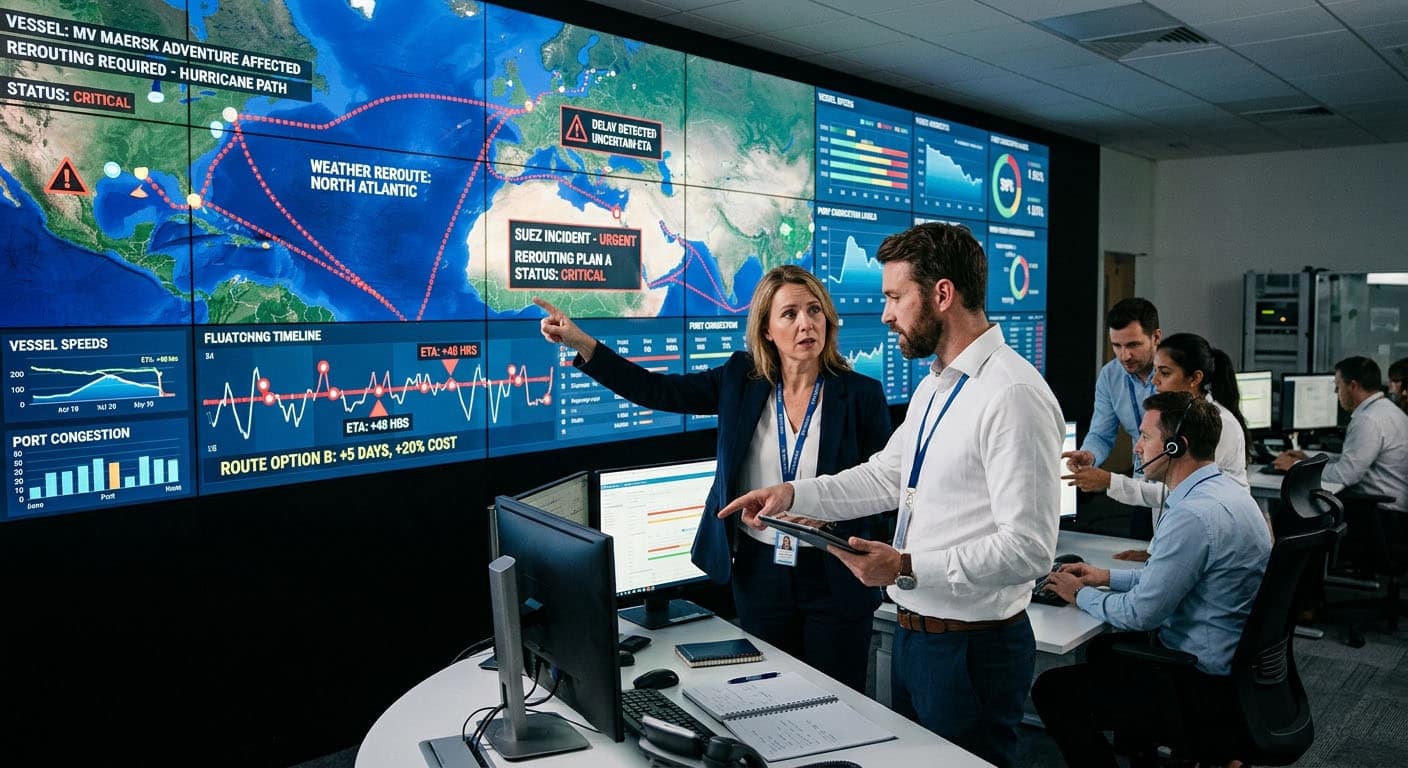
Zoom out from Balboa and Cristóbal and the pattern becomes hard to ignore.
- The Red Sea crisis began in late 2023 and continued reshaping trade flows through 2026 driven by Houthi attacks on commercial vessels.
- The Panama Canal drought of 2023 to 2024 was El Niño cutting Gatun Lake water levels so severely that daily transits fell from 36 to 38 per day down to as low as 18.
- The Balboa and Cristóbal situation was a Supreme Court ruling on a 1997 concession, caught in a US-China contest over strategic port infrastructure.
Three entirely different causes. Three different geographies. Three different mechanisms. The result? Nearly identical: transit time variability, equipment imbalances, cost inflation, reliability loss.
But the common thread isn’t physical blockage. It's that the global system is now politically exposed, tightly interconnected, and dependent on specific nodes operating within predictable parameters.
When those parameters shift, for any reason, the outcome looks similar regardless of cause. Volatility is now structural. Static routing assumptions are an operational liability.
‣ Another chokepoint, a different threat. Learn what a Hormuz closure means for your operations
The Disruption Undermined Planning Assumptions Across the System
Panama's capacity is largely intact. The canal is transiting. The terminals are operating, under new management, but operating.
The loss is predictability. And predictability is what supply chains are built on.
Freight programs are built on transit time assumptions, carrier routing commitments, terminal stability expectations, and equipment flow models. Those assumptions are rarely written down explicitly. They've been reliable enough for long enough that they've become background. Baked into the plan.
When a node goes from stable background assumption to active uncertainty in fifteen days, the plan doesn't just need updating. Every buffer in the chain needs rethinking simultaneously. Inventory buffers. Cost buffers. Time buffers. Carrier contingencies. The overhead of operating under instability accumulates fast. And it accumulates everywhere at once.
You can work around a cost increase. You can sometimes absorb a delay. What kills planning is not knowing what the actual transit time or routing condition will be this week, because the situation shifted overnight and your carrier just sent a memo with no explanation.
That’s the real cost of instability. Not the disruption itself. The uncertainty that surrounds it.
‣ Find out how to prepare for future supply chain disruptions
Panama Canal Disruption Exposes Two Critical Technology Layers
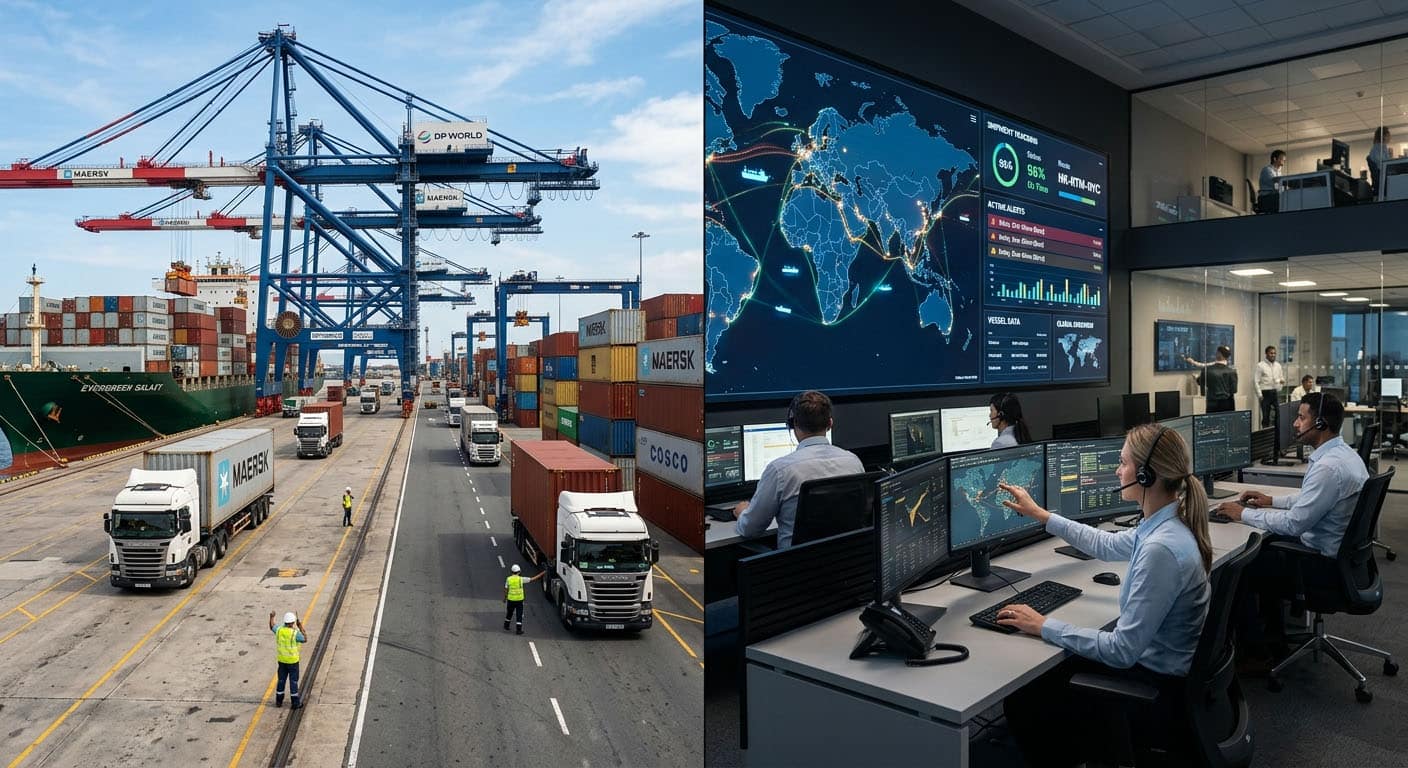
When a node like Balboa goes unstable, two separate kinds of technology kick in. The distinction between them matters more than it might seem.
The Terminal Layer
Terminal Operating Systems handle what happens inside the terminal. Yard management. Berth scheduling. Crane coordination. Gate operations. They’re built for local efficiency.
When COSCO suspended Balboa calls, APM Terminals' TOS managed the operational transition with reasonable continuity. The terminal kept processing cargo already in the system. Import releases continued. The local layer did what it was designed to do.
But TOS visibility ends at the terminal gate.
- It can’t tell a freight forwarder in Shanghai which of their customers' bookings have just been canceled. It cannot identify which lanes are now exposed and by how much.
- It can’t compare the cost of rerouting through Manzanillo versus Buenaventura versus Lázaro Cárdenas.
- It can’t generate an updated quote for a customer whose shipment has just been displaced.
That's not a criticism of TOS design. It's simply not what TOS is for.
The Network Layer
Transportation Management Systems (TMS) are the global coordination layer. They include, routing decisions, carrier selection, rate comparisons, visibility across the network, and customer-facing documentation.
When a node goes unstable, the forwarders who pivot fastest are the ones whose TMS gives them real-time network visibility rather than a terminal-by-terminal patchwork of manual updates.
For freight forwarders, shippers, and carriersnavigating Panama-related disruption across China-linked freight flows, Neurored TMS & SCM acts as exactly this global coordination layer. It gives teams multimodal visibility across ocean, air, road, and rail in a single view.
When a node like Balboa goes unstable, they can immediately see which shipments, bookings, and customers are exposed. They can compare alternate carriers, routes, schedules, and costs without rebuilding the plan manually.
Neurored's Supply Chain Control Tower Software adds real-time exception alerts across the network, configured to fire when specific terminals, carriers, or lanes show deviations from expected parameters. And because it's Salesforce-native, teams can reroute and re-quote from the same environment where the original bookings were managed.
‣ Learn about the advantages of a Salesforce native transportation management system
The Canal Is Open, But the System Around It Is Unstable
As of writing, nothing is resolved. The arbitration is live. The detentions continue. Maersk and MSC are still in the terminals and still being pressured to leave. The full tender for permanent operators hasn't started.
This is an ongoing condition of instability with no clear timeline for resolution.
The companies managing this disruption best aren't waiting for clarity. They are building the operational capacity to function without it. For freight forwarders, , shippers, and carriers navigating exactly this kind of multi-node instability, Neurored TMS & SCM provides that global coordination layer.
Schedule a demo to see how it connects rate management, visibility, optimization, and customer-facing quoting in one place, so that when the next memo lands, the response doesn't have to start from scratch.
Schedule your demo today!
Ricardo Medem
Share Article



Let’s Get Started
Schedule a Demo Now