
Air Cargo’s ONE Record Shift: How Neurored TMS & SCM Supports Readiness

Air cargo is switching from files to real-time shared data. IATA's ONE Record, launched January 1, 2026, makes this shift official.
For years, the industry relied on e-freight and e-AWB. These systems replaced paper with PDFs and telex with XML, yet the underlying process stayed the same: send a file, wait, then send an updated version when things change. Data sat trapped in copies moving back and forth between parties.
That model worked when cargo meant bulk shipments tracked by totals. Not anymore. E-commerce needs visibility into every package. Regulators like ACAS, ICS2, and PACT require detailed cargo data before takeoff. Shippers want actual carbon per flight instead of averages. AI also needs clean, structured data and breaks on PDFs and email chains.
All of this demands real-time updates. Files can't be delivered. They create delays, duplicates, and errors because everyone works from different versions of the same information. ONE Record solves this by replacing files with shared records. Instead of passing copies, everyone accesses the same source. When something changes, it updates instantly across the system.
But to understand why this matters, we first need to see where the old system broke down.
Meet Air Cargo’s Bottleneck: The Legacy Messaging Model
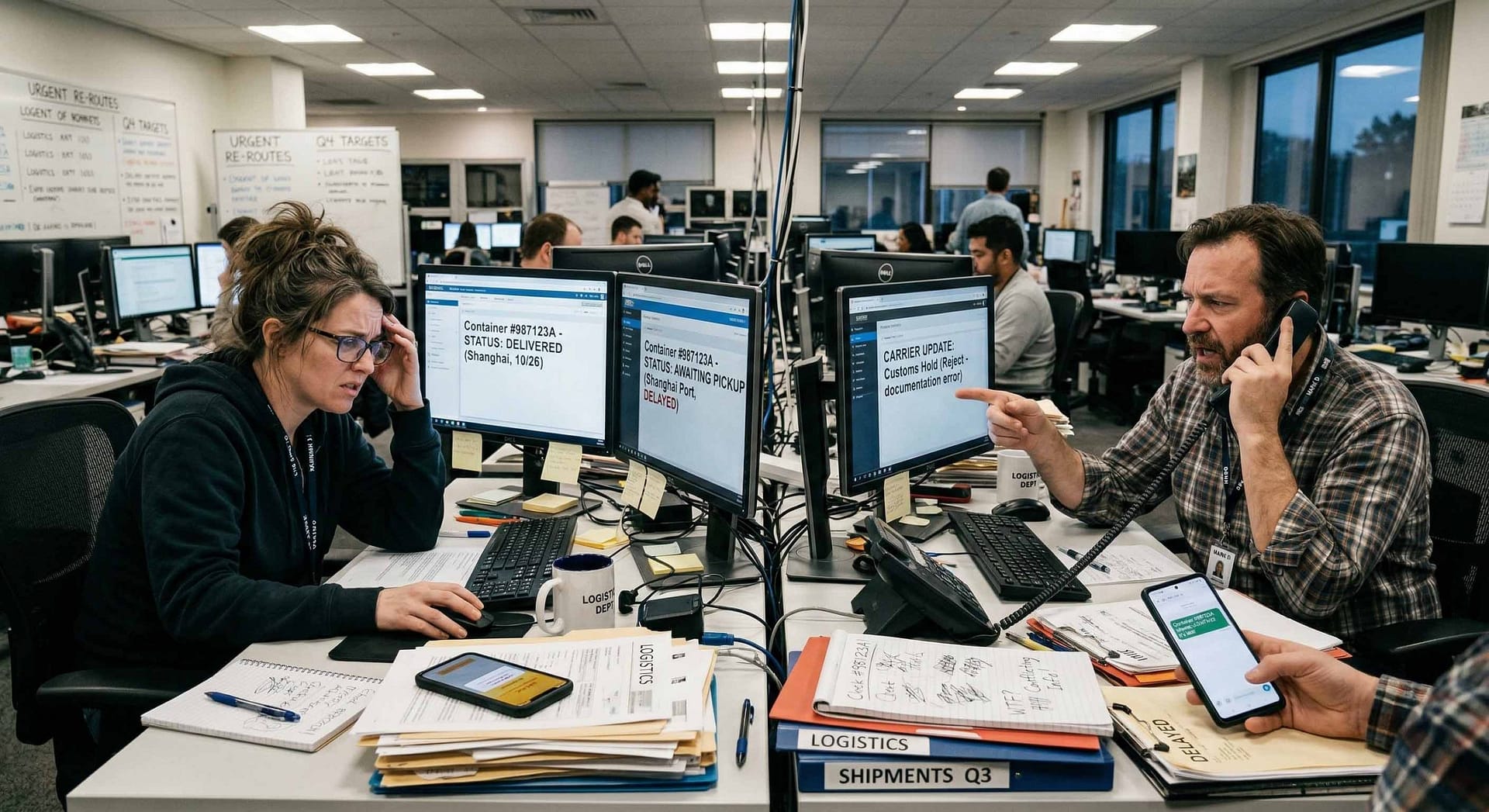
The peer-to-peer messaging model is the root cause of air cargo’s data problems. It creates competing versions of reality across the supply chain, which workers must then reconcile manually, shipment by shipment.
Air cargo data has always worked like a relay race where the baton keeps dropping: you bundle information into a message, launch it into the system, then watch as reality shifts beneath you. Something changes. You bundle again. Launch again. Each message captures a single moment, then calcifies.
This limitation outlasted three generations of standards. Cargo-IMP arrived in 1975. Cargo-XML loosened the grip in 2010. The electronic Air Waybill became standard in 2019. Yet the same defective rhythm remains: dispatch a message, wait for something to shift, dispatch again. The data never settles. It lurches from one frozen frame to the next, truth always one message behind.
What the Legacy Model Looks Like on the Ground
Air cargo tracking has no single source of truth. Walk into any airline, forwarder, or handler and watch operations staff toggle between screens, each displaying a different status for the same shipment. The same AWB number tells three different stories depending on whose system you’re viewing.
Data enters the chain complete and precise at the shipper’s dock. By the time it reaches the forwarder’s system, dimensions are rounded, special handling codes simplified. The airline gets a stripped version. The handler gets fragments. Each translation sacrifices detail for compatibility.
This information decay forces two behaviors. Teams pick up phones and reconstruct shipments manually. “Can you confirm the piece count?” “What does your screen show for the pickup time?” The same questions loop through offices in Singapore, Frankfurt, and Chicago every hour. Trust migrates from systems to human verification.
Then there’s timing. Your dashboard updates when messages arrive, not when events occur. A container clears customs at 6 AM, but you don’t see it until 11 AM when the EDI batch processes. You plan around stale information while treating it as current. You can’t view a shipment.
You can only view the messages you’ve received about it. And those messages age the moment they land.
‣ Struggling with fragmented data across your logistics partners? Learn how to improve supply chain communication.
Why the Legacy Model Can’t Keep Up
Message-passing systems can’t keep up with modern air cargo. Watch a hub during peak hours: pallets arrive, handlers scan, inspectors clear, trucks depart, all within minutes. But the data? It crawls through queues, waiting its turn.
Cargo moves fast, data doesn’t. Information only reaches the next party after the previous one finishes processing. By then, decisions have already been made with stale data.
A security status changes, but the update sits in queue. A temperature sensor detects a spike in a pharmaceutical shipment, but the alert waits behind hundreds of routine messages. The system doesn’t flow. It stutters.
The workflow has changed completely. Cargo once moved through a neat chain: airline to handler to customs to trucker. Now it exists in a web of parallel action. Customs begins clearance while the airline updates routing. The handler coordinates offload while the freight forwarder notifies the consignee. Everyone needs to act at once, not wait their turn.
This hits regulators hardest. PLACI doesn’t request information, it requires it immediately for every shipment. The current system forces regulators to either interrupt the queue (chaos) or wait (risk). Neither works.
The system has hit a wall. Message-passing works like a relay: receive, process, send. This works when information moves slowly and predictably. It collapses when everyone needs the same data at once. Only a different approach works: shared, real-time data that multiple parties can access simultaneously.
So how does ONE Record break this cycle?
How ONE Record Replaces Files With Shared Truth

ONE Record ends the cycle of copying and forwarding shipment data. Everyone involved sees live information at its source, updated the moment it changes, visible only to those with permission.
A distributed digital record anchors cargo data in each partner’s system but threads it together into one unified view. Each stakeholder feeds the record from their platform. Your forwarder surfaces shipper details. The airline pulses in flight status. Ground handlers mark acceptance times the moment they happen.
This dissolves the version control nightmare. Picture five people working from a spreadsheet bouncing between inboxes. By Tuesday afternoon, the single source of truth has splintered into parallel realities. Someone opens Monday’s file, oblivious to changes. Another clicks Tuesday morning’s draft, missing the latest corrections.
The distributed model works differently. One living canvas. Multiple hands with permission. Everyone watches the same information crystallize in the moment. No lag, guesswork, or ghost versions.
Where This Record-First Model Already Exists
ONE Record doesn’t invent the concept of treating shipments as live, event-driven objects. It standardizes it for the entire air cargo ecosystem.
The best logistics operations already pulse with this rhythm internally. Walk into these facilities and watch screens refresh: shipments shifting status, air waybills updating in real time, exceptions flagging the moment they occur.
Neurored TMS & SCM works on this principle: transport order records anchor everything as a single source of truth, with event-based tracking that catches changes the instant they happen, exception handling that routes problems to the right people, and automated notifications that reach customer portals without intervention.
When a container clears customs or a flight gets delayed, workflows fire, alerts push out, dashboards update. The old friction of “download the spreadsheet, mark your changes, email it back, wait for someone to manually update the system” dissolves.
These logistics teams already operate on data that stays current inside their own walls. What ONE Record does is break through those walls, extending the same living-data model across every company in the chain.
How ONE Record Works

ONE Record eliminates the need to resend shipment messages between systems. Instead, it uses a shared data model and standard APIs that let systems publish, link, and update shipment objects directly.
Data Carries Its Own Context
With ONE Record, data carries context, such as units, relationship, and meaning. Fields arrive with instructions, not just empty boxes. A pharma shipper can track vibration shock at every handoff. They weave that field into their local record, thread it to the standard shipment, and every other partner’s system continues humming along, untouched.
Real-Time Connections Replace Rigid Edi Pipes
Instead of rigid EDI pipes, ONE Record uses REST APIs. This is the same integration pattern modern control towers use. Neurored TMS & SCM, for example, uses a REST API and supports real-time change delivery via Streaming API and webhooks, so external systems react to shipment updates instead of polling or resending full messages.
Subscribe to a shipment once. When anything changes, you get notified instantly, no more checking every fifteen minutes, hoping for updates. Update one field without resending the entire record. Your network stays clean even when milestones fire every few minutes.
Every Piece Gets Tracked Individually
ONE Record treats each piece as a distinct physical object with its own digital identity. One damaged box in a fifty-piece shipment? The system marks that specific unit, not the whole air waybill. Chain of custody becomes tangible. That master waybill hiding two hundred packages inside? Now each one emerges from the shadows, fully tracked.
How ONE Record Protects Your Data

ONE Record makes data sharing more secure. Protection comes from three reinforcing layers: decentralized ownership, granular access controls, and a unified legal framework that hardens as the network grows.
Your Data Stays Under Your Control
ONE Record is decentralized. Your data sits on your servers or on racks you've chosen, managed by vendors you've vetted. You own it. You control who touches it. There's no central IATA repository where records pool together, no black box where your data mingles with competitors'. Your local data laws still govern every byte. When you share through ONE Record, you're granting permission to view, not handing over files. The data never crosses your threshold.
You Share Access Rights, Not Files
Traditional sharing is blunt. Click send on an Excel file or fire off an EDI message, and the recipient holds everything inside: customer names, margins, volume commitments. Hand over the keys, they open every door.
ONE Record cuts with surgical precision. Your trucking partner sees weight, dimensions, and handling codes (the details they need to move cargo safely). But customer names? Shipment values? Pricing structures? Those fields stay locked.
You're not choosing between exposing everything or sharing nothing. You're selecting exactly which details each partner can read, down to individual data points. Access follows necessity.
Technical Controls Verify Every Access Request
Authentication blocks the door before anyone knocks. Mutual TLS and X.509 certificates verify identities at the network perimeter. No certificate means no entry. Authorization operates at a different scale.
Access controls apply to individual fields within records, not wholesale access to files. A partner cleared to view cargo dimensions can't pivot to invoice amounts. The system enforces these boundaries without human gatekeepers, checking permissions on every query.
One Legal Agreement Replaces Dozens of Contracts
The Multilateral Data Agreement standardizes data rights across the entire network. Instead of negotiating separate NDAs with every new partner (watching legal teams wade through redlines while business development waits weeks for signatures), companies adopt one shared framework. New partners onboard in days because the rules already exist.
Everyone enters knowing what data they can access, how they can use it, and what happens if they breach terms.
The result: partnerships form faster, enforcement stays consistent, and business moves at logistics speed instead of stalling in legal review queues.
What Changes When Everyone Shares ONE Record

Here’s what happens to your day-to-day work when you use ONE Record.
Airlines: See What’s Coming Before It Arrives
You stop discovering problems after you’ve sold the space. Real dimensions and weight arrive with the booking, so you know whether three pallets will actually fit before you confirm capacity. Your ULD builds get tighter because you can plan stackability before cargo hits the warehouse. Dead space vanishes.
The bigger win comes with interlining. Right now, you can’t share flight operations data with a partner airline without exposing customer pricing. ONE Record splits the difference. Your partner sees what they need to coordinate the handoff, but your commercial terms stay hidden. Both carriers move faster.
Freight Forwarders: Turn Visibility Into Your Product
You’re done chasing status updates across five portals. The data flows to you.
Your customers get tracking that rivals FedEx without you building FedEx-level infrastructure. Customs delays from manual re-keying disappear when systems sync automatically. Smaller forwarders can plug into “ONE Record as a Service” platforms instead of hiring developers to build integrations from scratch.
Systems that aggregate modes and events become force multipliers. Neurored TMS & SCM unifies air, ocean, and road into one view. Your team stops checking statuses and starts managing exceptions. Your customers watch live milestones instead of waiting for email updates. Visibility becomes your edge, not your cost.
Ground Handlers: Stop Scrambling When Cargo Arrives
Let’s paint a nightmare scenario: Cargo appears and you’re hunting for equipment while dwell time climbs. You didn’t know about the live animal shipments until the truck door opened. You’re wondering if anyone mentioned the lithium batteries. Paper handoffs mean critical details get lost between shifts.
ONE Record ends this nightmare. You see bookings as they’re confirmed, not when the Flight Booking List finally arrives hours later. “Heavy forklift at 14:00, DG-certified handler at 15:30.” You schedule based on what’s actually coming.
Proof the New Model Works: Record-First Operations Are Already Normal
Traditional systems cut messages at 80 characters. A pharma shipment needs: "TEMP RANGE 2-8°C. MUST REMAIN UPRIGHT. DO NOT STACK ABOVE 3 UNITS. REQUIRES THERMAL BLANKET Frankfurt-Singapore LEG ONLY."
It gets chopped to: "TEMP RANGE 2-8°C. MUST REMAIN UPRIGHT. DO NOT STACK ABOVE 3 UNIT" Stack limit? Gone. Temperature gear? Unknown. Which leg needs special handling? Missing. The handler guesses, delays the shipment to call for answers, or breaks the rules without knowing.
Lufthansa's digital twins remove character limits. Every instruction arrives intact. It's running across their network now, not as a test, but in production.
‣ Digital twins are transforming nationwide courier networks. See how Correos Express is using AI-powered digital twins to transform logistics.
ONE Record Is the Foundation for What Comes Next

Everything being built for the next decade of logistics assumes ONE Record already exists.
AI That Catches Problems Before They Happen
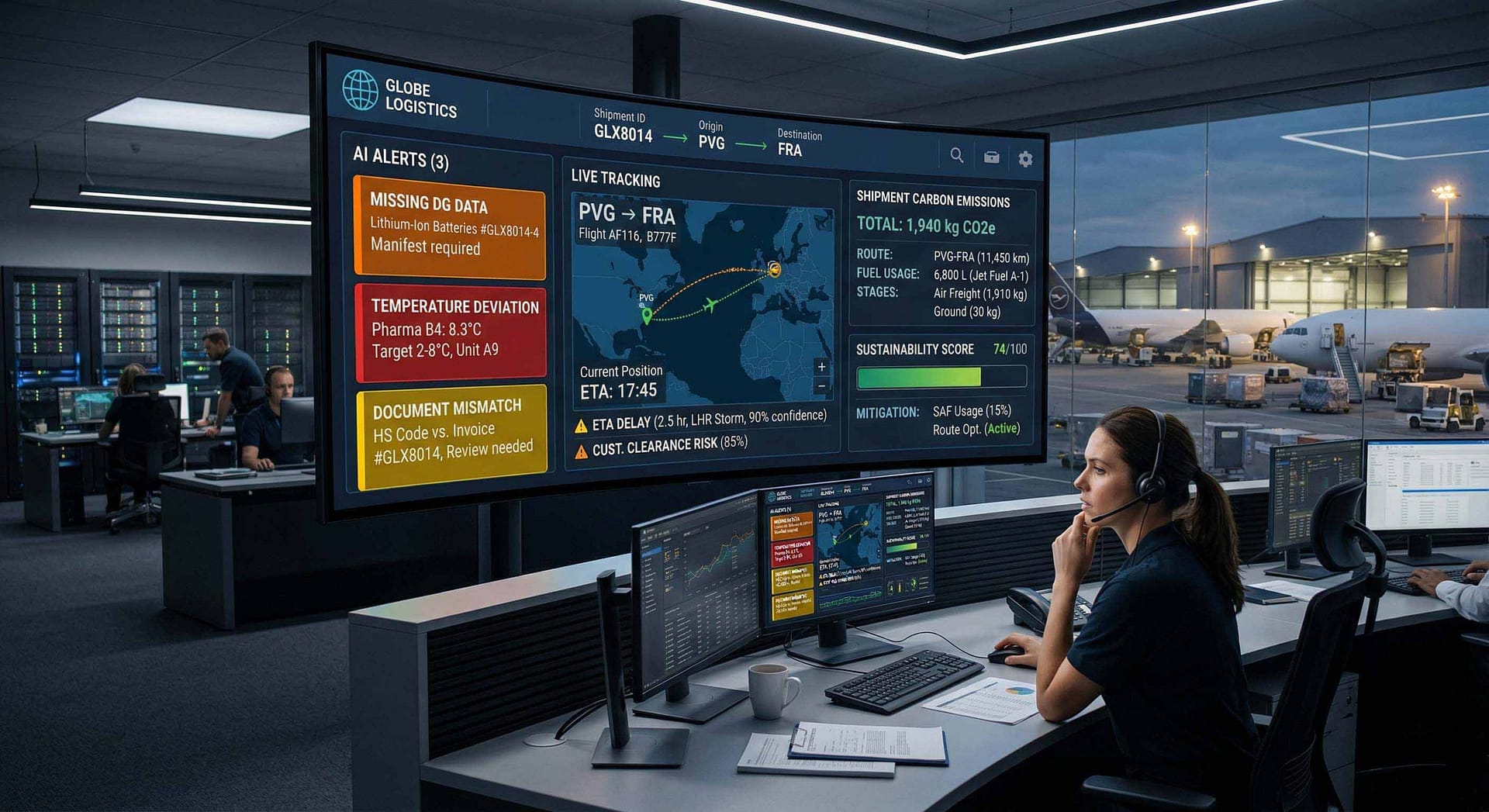
IATA is testing artificial intelligence that reads ONE Record data in real time. It scans shipments and flags issues instantly: a dangerous goods form missing critical details, a gap in cold-chain handling, documents that don’t match. Problems surface before cargo reaches the warehouse.
Because each shipment object contains consistent fields (commodity, screening status, temperature ranges, documents, piece events), the model can evaluate completeness and risk the moment anything changes.
This works now because the AI reads clean, structured data. It failed before because machines can’t reliably parse blurry PDFs or inconsistent message formats.
‣ AI compliance is just one piece. See what else leading operators are doing in our 2026 transportation optimization guide
Carbon Reporting You Can Actually Audit
Scope 3 emissions reporting is currently a mess. Most companies calculate from route averages and industry estimates. Auditors squint at the numbers. Customers demand something real.
ONE Record fixes the math. Emissions data attaches directly to specific shipments. Not averages, but actual fuel consumption, actual routing, actual handling. The numbers become auditable. Finance and sustainability teams stop debating methodology.
The 2026 Milestone Is Here. The Time to Move is Now
Change comes slowly. But standing still has a cost.
What January 1, 2026 Actually Means
IATA set a target: by 2026, major players should be able to exchange data through ONE Record. Your legacy systems won't crash on January 2nd. This isn't a hard deadline.
But it's enough to shift the ground. Early movers will favor partners who share data instantly. The gap between smooth operations and stuck ones will start to widen.
How Most Companies Are Starting
The adoption path for IATA’s ONE Record is practical:
- Choose one painful process, not your whole operation. Pick one place where clumsy data costs you time or money.
- Sign the Multilateral Data Agreement. Legal approves it once, not thirty times.
- Map your data to the ONE Record structure. It sounds harder than it is. You're not rebuilding your system, just showing how your fields match the standard.
- Run a pilot on one lane with one trusted partner. Shanghai to Frankfurt. Prove it works, then grow.
The key is you don’t tear out your old systems, you bridge between them. Integration middleware can map legacy EDI transactions into a canonical shipment/order record so modern tools can consume the same source of truth.
Systems like Neurored TMS & SCM support phased rollout, so you can modernize process by process while EDI and APIs operate in parallel during the transition, lowering risk instead of betting everything on a single cutover.
‣ Adopting ONE Record starts with the right TMS. Here's how to choose one that scales with your strategy.
The Cost of Waiting
A split is already forming. On one side are the companies that share data instantly. Live visibility. Automated work. Lower costs. On the other: firms stuck in messaging silos. Manual checks. Late information. Rising costs as they become the hard partner to work with.
What happens to those left behind? They slow everyone down. Customers can't see them clearly. Connecting to them gets expensive. Over time, partners route business toward the easier links, not out of cruelty, but necessity. Those who are standing still aren’t staying level. They’re falling behind while the network moves ahead without them.
‣ Disruption doesn't wait. Here's how to build supply chain resilience before the next crisis hits
Why ONE Record Matters for Air Cargo
2026 isn't a cutoff. It's when network effects start to compound. The gap between fluid operations and legacy silos will widen as partners favor the links that share data instantly. Standing still means falling behind while the network moves forward.
Neurored TMS & SCM delivers the real-time visibility and automated workflows that modern air cargo demands. It connects quoting, booking, tracking, and compliance across all transport modes in one Salesforce-native platform. Schedule a demo to see how your operations can move toward live data and unified visibility.
Schedule your demo today!

Ricardo Medem
Share Article



Let’s Get Started
Schedule a Demo Now