
Ocean Freight Allocation Management in Logistics: Cut Deadfreight

Ocean freight teams don’t always lose money because they booked the wrong rate. Sometimes they do it because they forgot to use the capacity they already paid for.
It happens all the time. Procurement negotiates a block space agreement. Leadership celebrates the hedge against volatility. Then the daily booking team makes shipment decisions with a spreadsheet, a routing guide, and someone’s memory.
That is where the leak starts. This is why allocation management in ocean freight matters when it comes to logistics.
Procurement buys the allocation, operations books the freight and finance finds the penalty later. Three teams with three workflows and one avoidable deadfreight invoice.
The problem is that ocean freight capacity allocation data isn’t visible when logistics teams make the booking decision.
This article breaks down what BSA mismanagement really costs, why traditional TMS logic misses the problem, and how allocation-aware rate search protects margin at the booking screen.

When a sailing leaves, any unused allocation leaves with it.
That’s the part of block space agreement (BSA) management that creates so much hidden risk: the space has value only if teams use it before the sailing departs. You may have bought contracted ocean freight capacity on a vessel service, but you can’t store last week’s unused slot and apply it to next month’s cargo surge.
The value is gone once the departure passes.
Ocean capacity behaves more like an airline seat or a hotel room than a static contract line. It has a date. It has a limit. And if your team doesn’t use it, the exposure becomes deadfreight. Deadfreight is the charge for unused booked space. In plain English: you reserved capacity, failed to load enough cargo, and still owe the carrier for the shortfall.
The formula is simple:
Deadfreight penalty = (Agreed capacity - Actual loaded capacity) × Applicable freight rate
This is the cost that turns unused allocation into an invoice. It shows whether the space you bought protected the business, or became capacity you paid for twice.
A well-used BSA protects the business while a poorly used one exposes it. But that doesn’t mean every shipment should automatically move under the BSA. That’s exactly the moment where the booking decision gets harder.
‣ For a broader view of how digital tools help teams prepare for volatility, read our guide on how to adapt to supply chain disruption
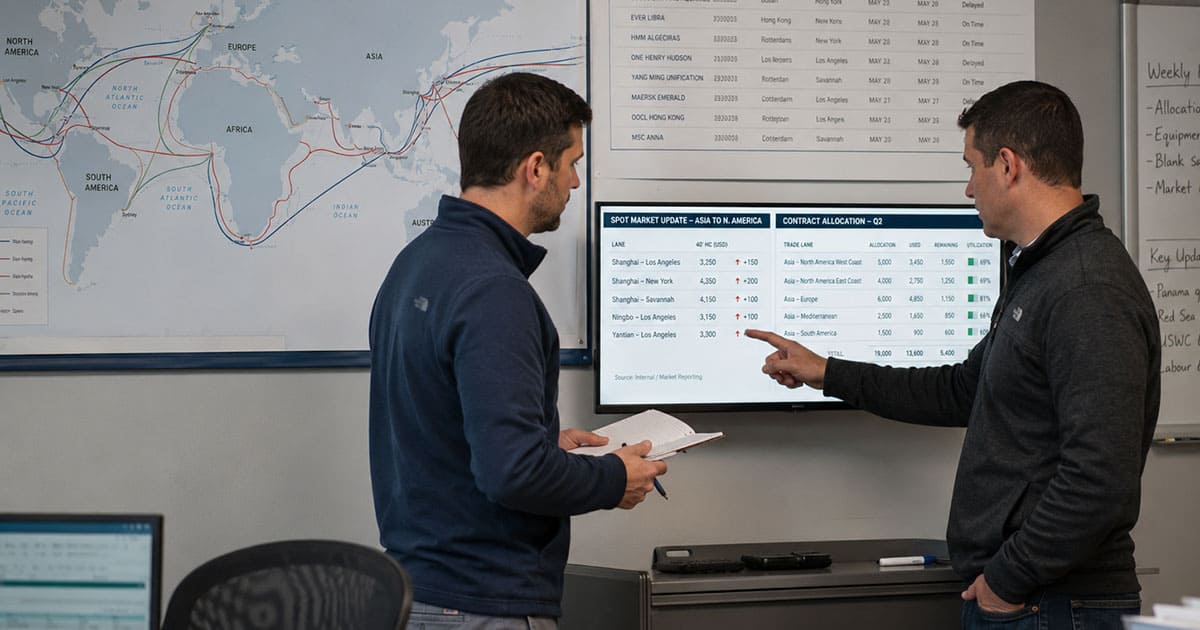
Operators are often making a spot rate vs contract rate comparison: use the committed allocation, or take a spot rate that looks cheaper on screen.
Spot Can Be Right When the Total Cost Is Lower
The wrong workflow treats that as a simple rate comparison. It’s not. A spot rate can be the better move when the market drops far enough below the value of using contracted space.
If the spot option is cheaper, faster, or better aligned with the customer’s service requirement, forcing the shipment into the BSA may protect a utilization metric while hurting the actual margin. So the report looks better, but the shipment economics actually get worse.
The BSA Can Be Right When the Lane Relationship Matters
A BSA can also be the better move, even when the spot rate looks cheaper.
If the business needs carrier volume commitment tracking, an active carrier relationship, and access in the next capacity cycle, the contract has value beyond today’s rate. Abandon the agreement every time spot gets cheaper, and the carrier will notice. You may win today’s load and lose priority when the market tightens again.
The Best Booking Depends on Total Cost, Not Just Rate
The better question isn’t:
“Contract or spot?”
The better should be:
“Which option creates the best total outcome for this shipment, this customer, this lane, and this carrier relationship?”
A rate table can’t answer that by itself. A spot option may look $150 cheaper on screen. But what happens if using it leaves the Asia-Europe allocation short for the week? What if that shortfall creates deadfreight exposure? What if the carrier sees the volume shift and gives your freight lower priority during the next market squeeze?
The cheapest visible rate isn’t always the cheapest decision. The reverse is also true.
A contracted allocation is not sacred. If the sailing is too slow, the schedule is risky, or the spot market has moved far enough below the contract, the rational choice may be to use the spot and accept the utilization impact.
That’s the role of better software. Not to replace judgment, but to give it better inputs. Allocation-aware workflows shouldn’t trap operators inside rigid “BSA-first” rules. They should show the commercial context before the booking is confirmed.
That means surfacing the rate, the allocation position, the deadfreight risk, the customer requirement, the lane priority, and the carrier relationship impact. Then the operator can make a defensible choice that’s best for the business. That broader context is what separates basic carrier selection from superior freight routing.

Deadfreight usually gets blamed on forecasting.
Sometimes that’s fair. If the commercial team overestimates demand, operations inherit a problem it can’t fully solve. But forecasting is only part of the story.
Procurement, Operations, and Finance See Different Data
In many ocean freight operations, a broken workflow creates deadfreight. Procurement, operations, and finance are all looking at different versions of the business. That’s the problem. The team that books often can’t see the commercial exposure behind the booking.
Here’s a common sequence:
- Procurement negotiates a block space agreement for committed ocean capacity.
- Operations books shipments based on rates, schedules, and carrier availability.
- Finance receives the deadfreight invoice after the unused capacity has already expired.
By the time the penalty appears, nobody is making a decision anymore. They’re explaining what already happened.
‣ For a broader look at reducing handoff failures across logistics teams, read our guide to improving supply chain communication
Operators Optimize for What the System Shows Them
This is why deadfreight is often a visibility problem. Operators optimize for what their system shows them. If the booking screen shows spot rates, sailing options, transit times, and carrier availability, they will choose the best visible option.
That doesn’t make them careless. It means the workflow is missing the one piece of information that changes the decision: allocation exposure.
The system nudges good operators toward bad economics and the cost doesn’t stay inside the freight budget. Deadfreight spreads.
Month-End Deadfreight Is Too Late to Fix
If you commit to ten slots and only use eight, the cost of those two unused slots get absorbed somewhere else. Usually, it gets buried in lane margin, customer profitability, or an ugly month-end variance.
It also ties up working capital. Every dollar spent on unused capacity is a dollar that cannot be used for better carrier terms, inventory, technology, or cash flexibility.
It makes the landed cost harder to trust.
When deadfreight becomes recurring, finance loses confidence in lane economics. Sales prices with less certainty. Operations cannot easily tell the difference between a good decision and a lucky one.
And then comes the admin work. Teams chase amendments. Reconcile penalties. Explain variances. Adjust documents. Rebuild carrier trust.
The invoice is only the visible cost. The hidden cost is the time spent cleaning up the workflow failure. A deadfreight invoice at month-end is a symptom; deadfreight risk management has to happen at the booking screen.
‣ To learn how to find hidden cost leaks in logistics data, read our guide to transportation data analytics
The Gap in Legacy TMS Software
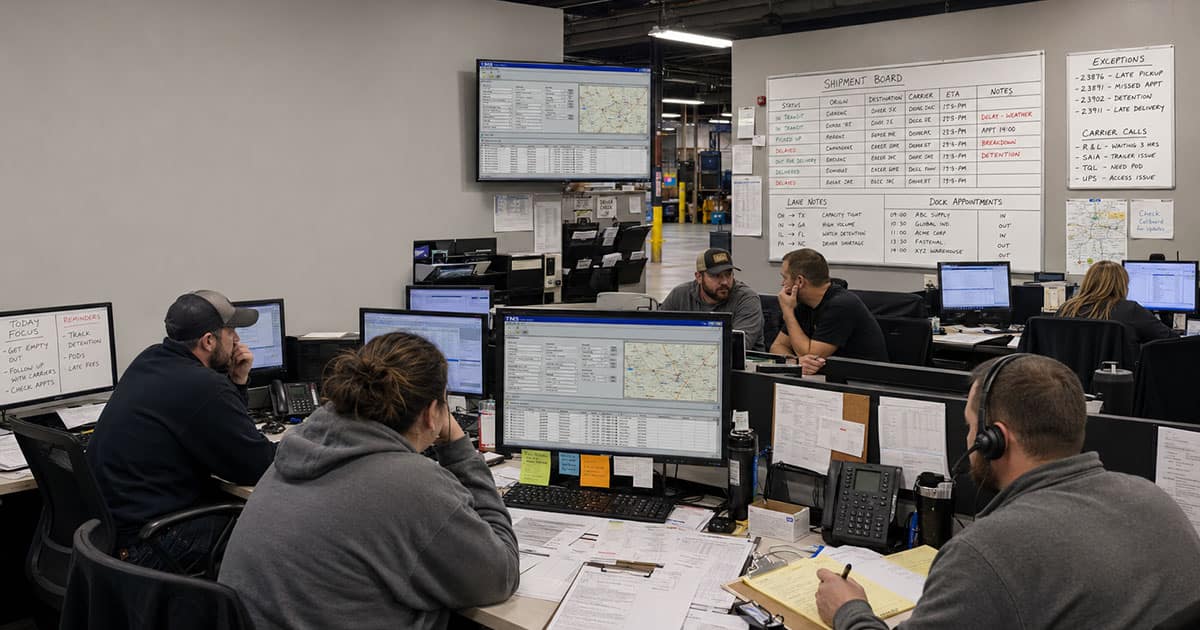
A traditional transportation management system was built to answer one basic question: Which carrier should get this shipment?
For a long time, that was enough.
Markets were more stable. Freight routing guides were more reliable. Rate updates moved slowly. A planner could follow the list: carrier one, then carrier two, then carrier three.
The system worked because the problem was simpler. But that’s not the question freight teams are trying to answer anymore.
Today, the better question is: What does this booking actually cost the business?
That’s where static routing guides fall short.
They may know the preferred carrier order, but they don’t know that your team is underusing committed capacity on a specific lane, sailing or capacity plan for the ship. They don’t know that a cheap-looking spot rate today may create a deadfreight penalty three weeks later. They don’t compare this shipment against your monthly allocation plan.
They just follow the hierarchy.
‣ If your team is debating whether to patch legacy workflows or replace them, read our guide to build vs. buy software for logistics teams
Legacy Systems Split Procurement From Execution
The architecture behind your system is the real limitation. In many companies, the work is split across disconnected tools:
- Procurement manages carrier contracts and volume commitments.
- Operations books shipments in the TMS.
- Freight audit checks invoices after the fact.
- Finance sees the final cost when it is too late to change it.
So the operator making the booking decision does not see the full decision.
They see rates. They see schedules. They see carrier availability. They may not see allocation exposure, BSA utilization, deadfreight risk, or the downstream cost of choosing one option over another. That is how bad freight decisions happen inside perfectly normal workflows.
This is the main failure of traditional TMS architecture: procurement and execution are disconnected. The person booking freight often lacks visibility into the company’s broader volume commitments.
‣ Evaluating TMS options? Check out our exhaustive list of essential TMS features
Shipment-Level Tools Miss Business-Level Cost
This is also why logistics teams are moving toward more intelligent execution. Gartner found that 38% of companies plan to deploy intelligent automation for logistics within the next three years.
You should treat this statistic as a signal that rule-based execution is no longer enough.
A modern freight execution system should show what each booking does to cost, service, freight capacity management, allocation utilization and carrier strategy. Because the best booking isn’t always the cheapest shipment on the screen.
‣ If you’re evaluating whether your current platform can support that shift, read our guide to aligning TMS software with business strategy
Why Contract Capacity Belongs Inside the Rate Search Workflow
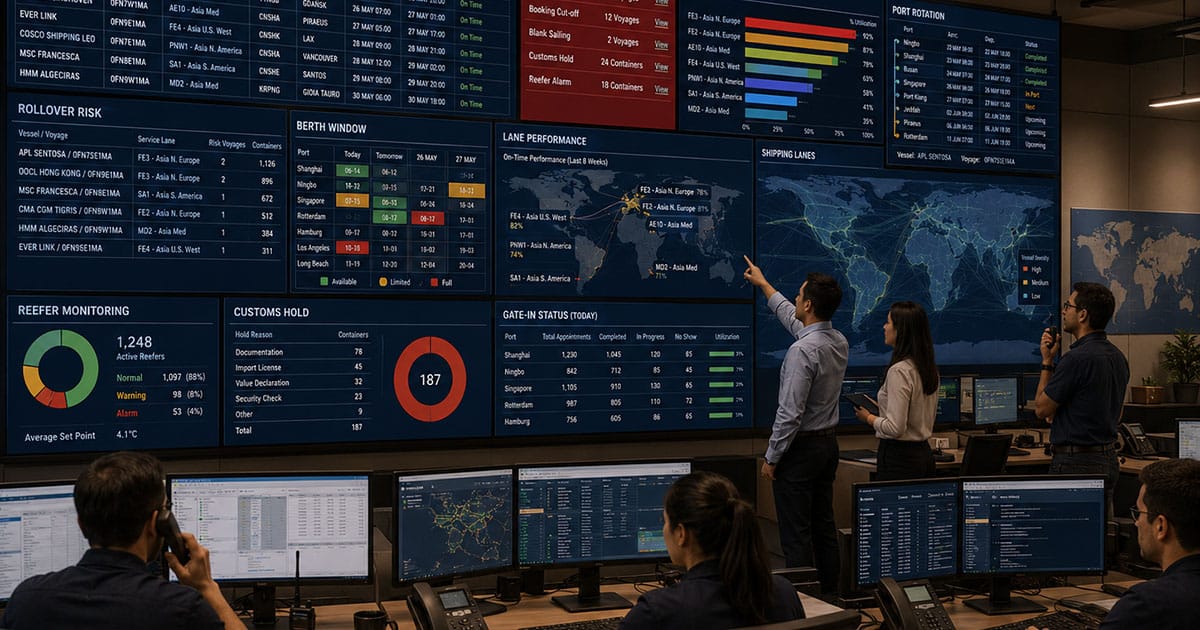
The booking decision happens in one place.
The rate search screen.
That’s where the operator compares carriers, checks schedules, reviews costs, and decides what to book. So that’s where contracted capacity needs to appear.
Not in a procurement spreadsheet. Not in a month-end report. Not in a dashboard someone checks after the damage is done. Right there, beside the rate
Allocation Data Needs to Appear Before the Booking Is Confirmed
When allocation data lives inside the rate search workflow, the operator can search a lane and see the full set of options together:
- spot rates
- contracted rates
- sailing details
- available BSA allocation
- customer requirements
Now the operator isn’t just choosing the cheapest visible rate; they’re seeing the commercial context around the booking.
And that context changes behavior. A dashboard tells you what happened. A filter shapes what happens next.
An “Allocation Available” Filter Makes Paid-For Space Visible
This is why an “allocation available” filter is so useful. It turns contracted capacity from something procurement tracks into something operations can actually use.
If paid-for space is still available on a lane, the operator can see it while searching. If the lane is under-paced, the risk is visible before the booking happens. If the spot option looks cheaper today but creates deadfreight exposure later, that tradeoff is easier to catch.
Fresh Data Makes Allocation Filters Trustworthy
But this only works if the data is current. Allocation-aware rate search depends on reliable carrier feeds, booking data, sailing schedules, and allocation updates. This is why standards like DCSA matter. Modern allocation workflows cannot run on stale EDI messages, emailed spreadsheets, and yesterday’s booking data.
Without fresh data, an allocation filter is decoration. With fresh data, it becomes something much more useful: a way to collapse rate search, contract compliance, and allocation management into one booking decision. The better decision becomes easier to see.
‣ Learn why ocean why ocean export workflows keep breaking and how enhanced ocean eBooking can fix them
Neurored TMS & SCM Brings Allocation Context Into the Booking Workflow
The system isn’t asking the operator to remember the contract. It’s putting the contract into the decision. Inside Neurored’s Freight Rates Management Software, logistics teams can bring rate search, carrier contracts, spot-rate tendering, booking, quoting, and customer context into one Salesforce-native TMS environment.
The important part here is that the data appears where the operator is already working. Rate tables, allocation data, customer requirements, and booking context can share the same record instead of moving slowly between disconnected systems.
That matters because trust depends on freshness. If the allocation view is stale, operators will not trust it. If they do not trust it, they will work around it. If they work around it, the business is back to spreadsheets.
And spreadsheets are where allocation discipline goes to die. The goal is not to force every shipment into contracted space. Ocean freight is too messy for that. Schedules slip. Customers escalate. Spot markets move. Carriers roll cargo. Ports congest.
A rigid BSA-first rule will eventually create new problems. The goal is to support better decisions. Before booking, the operator should be able to answer the questions that actually affect margin:
- What is the spot option?
- What is the contracted option?
- How much committed allocation remains?
- Is this lane under-paced?
- What happens if the allocation goes unused?
- Does the customer requirement justify using the spot market?
That is the difference between automation and awareness. Automation executes a rule. Awareness improves a decision.
Better Ocean Freight Allocation Starts With Better Booking Visibility
The future of ocean freight management comes down to better allocation visibility and better booking decisions. The best teams will not choose contract capacity every time or chase spot rates every time. They'll compare both options before the booking is made.
That shift moves allocation management out of the back office and into the booking workflow, where operators can see spot rates, contracted capacity, remaining allocation, customer requirements, and penalty exposure before cost is locked in.
Because the cheapest visible rate can still become the more expensive decision.
A spot rate may look attractive today and create deadfreight exposure later. Contracted capacity may look safe until the market moves under it. The best teams will see both clearly at the moment that matters.
Schedule a demo and find out how the Neurored Freight Rates Management Software helps bring that context into one Salesforce-native workflow, connecting rate search, carrier contracts, allocation visibility, quoting, and booking.
Schedule your demo today!

Ricardo Medem
Share Article



Let's Get Started
Schedule a Demo Now