
Why Ocean Export Workflows Keep Breaking & How to Fix Them

Ocean exports look simple from the outside. A shipper books a container. The container ships. The paperwork gets filed. The cargo arrives. One process, start to finish.
Inside the ops team, that one process lives in four different systems. The booking goes into one platform. The shipping instructions get retyped into the carrier's portal. The cargo weight gets emailed in just before the deadline, sometimes from a phone, sometimes from a spreadsheet.
Every handoff is a place where data drifts, deadlines slip, and the audit trail becomes a reconstruction project.
This isn't about lazy operators or bad software. It's structural. The booking-to-VGM (Verified Gross Mass) chain spans three message types, multiple deadlines, and a dozen stakeholders across the carrier's commercial system, the carrier's documentation system, and terminal operations.
When those three things live in different tools, the workflow breaks in the worst way: quietly.
The errors stay hidden until they become delays, disputes, or rework.
That’s the issue at the heart of ocean export workflows.
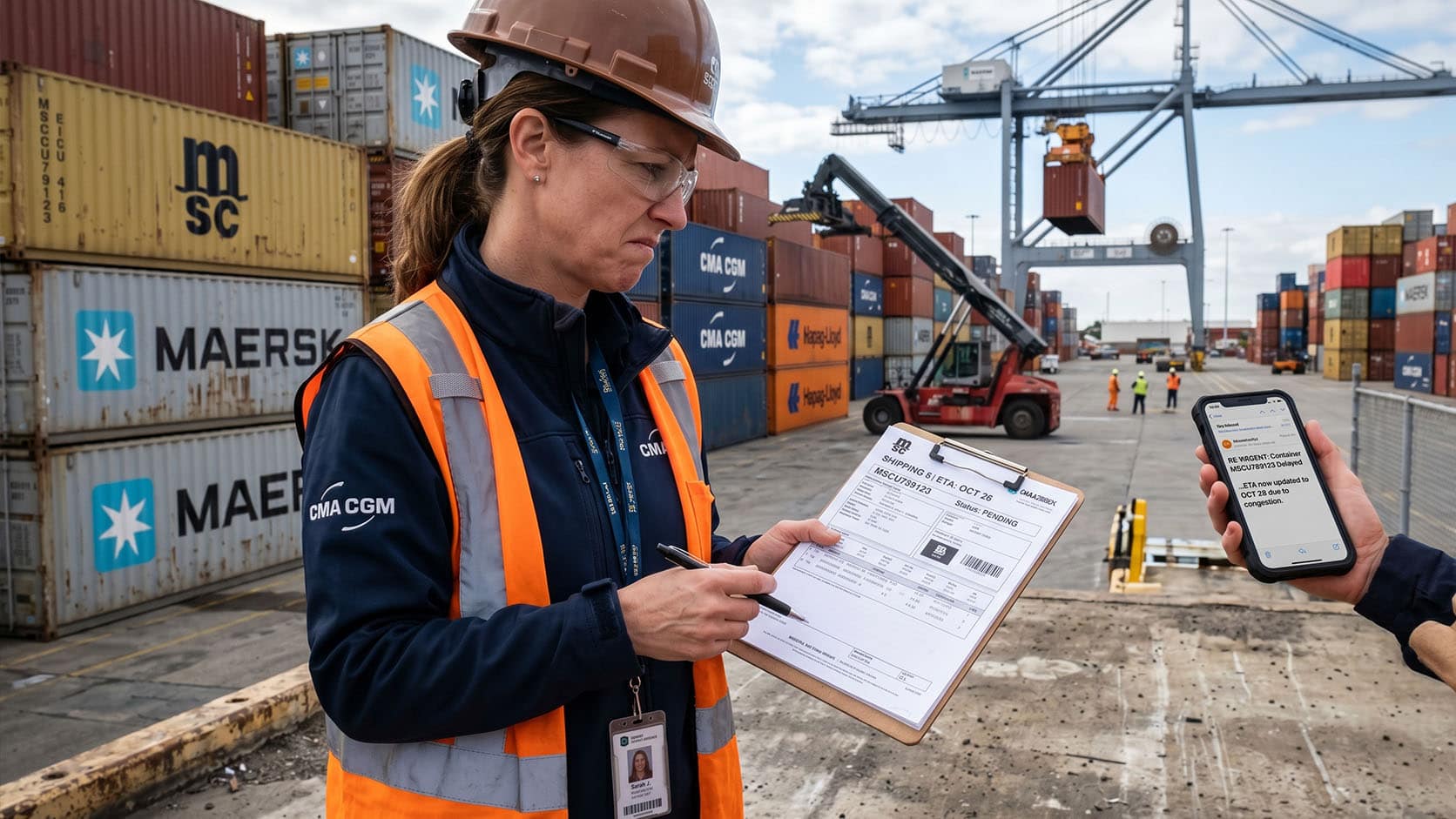
A standard ocean booking carries 40 to 60 fields of information.
Freight routing, vessel info, voyage details, ETD, ETA, parties involved (shippers, consignees, and forwarders) container type, ISO codes, packed weight, package counts, HS codes, references, charges, and payment terms all have to line up.
Some fields are mandatory at booking. Others get added at the shipping instructions stage. Some, like the final verified weight, only get filled in hours before cut-off.
When the same data lives in three separate systems, it gets typed in three separate times.
Each time someone rekeys it, something can change. A different person fills in the next step. A field gets missed. A number gets transposed. By the time the same shipment has passed through three sets of hands, the weight filed with the carrier may not match what's on the shipping document. The delivery address may not match the original booking. Small things. Fixable things.
But they add up.
Discrepancies trigger emails. Emails trigger calls. Calls trigger corrections. Corrections trigger re-submissions. None of it shows up on a dashboard, because the cost is paid in staff time, not failed shipments.
The fix is simple in principle. Stop retyping the data. If every step of the shipment draws from the same record, there's nothing to drift. One version of the truth, visible to everyone involved.
‣ Learn how to use your operational data with our transporation analytics guide
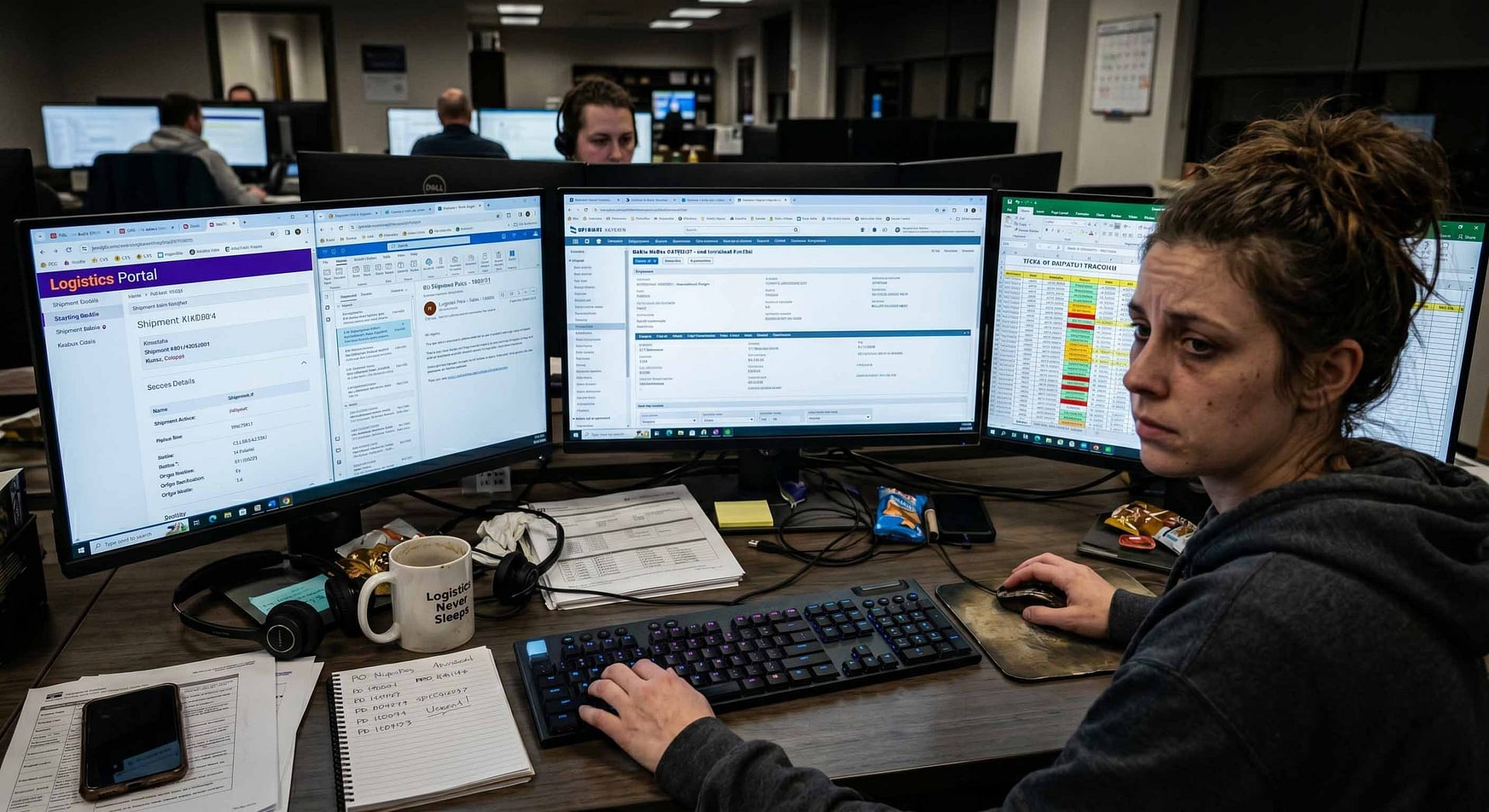
Ocean carriers set three deadlines for every export booking.
- The documentation deadline. When the paperwork must be submitted.
- The weight deadline. When the verified cargo weight must be filed.
- The terminal deadline. When the container must physically be at the port.
Miss any one of them and the shipment gets bumped to the next vessel. That may be days later.
The deadlines aren't the problem. The carrier publishes them. They're on the booking confirmation. Everyone knows they exist.
The problem is where the deadlines live versus where the work happens.
In a fragmented workflow, the deadlines sit in one system. The paperwork gets prepared in another. The weight certification gets submitted through a third. The person handling the paperwork may have no visibility into the weight deadline. The person handling the weight may be reacting to a phone call from the warehouse, not checking a system.
When the deadline and the work live in different places, deadlines stop being deadlines. They become suggestions.
The cost of a missed cut-off is concrete. A rolled booking means a customer call, a re-quoted ETA, sometimes a rebooking fee, sometimes dead freight charges. The operator who missed the cut-off didn't choose to miss it. They were working from incomplete information.
The fix is the same as the data problem. Surface the cut-off in the same record where the work happens. The deadline becomes part of the work, not a separate thing to remember.
‣ Discover the maritime satellite navigation features that can help you make better decisions
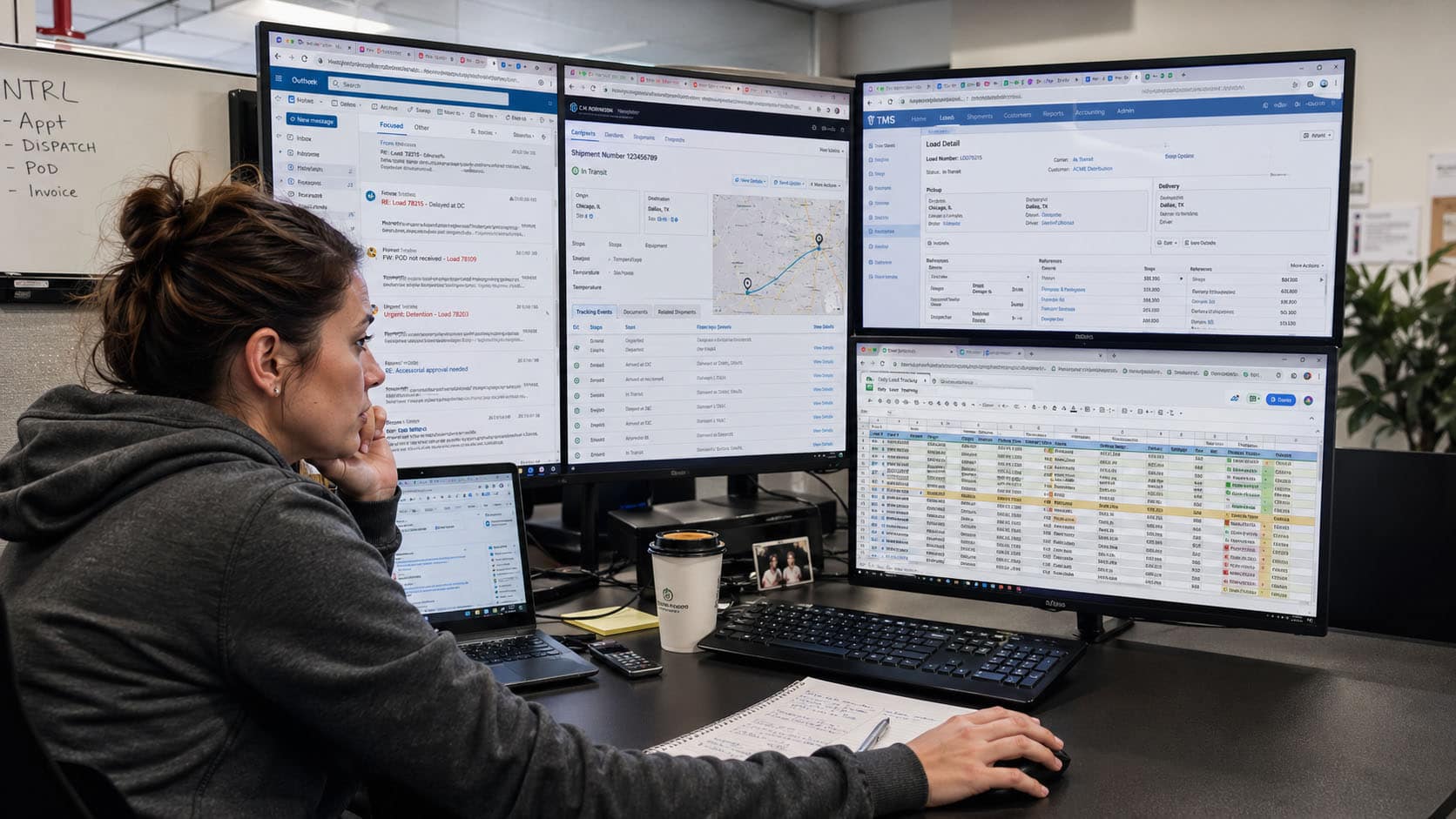
Most ocean shipments go smoothly. The ones that don't will consume your operations team's time. Every exception requires a reconstruction.
Here's what that looks like.
A customer calls about a discrepancy on the Bill of Lading. The operator pulls up the shipping instructions. It was filed through a carrier portal that doesn't expose its history to the transportation management system (TMS).
They find the email confirming the submission. The email references a version that doesn't match what's in the portal now. They check the original booking. Different delivery details than the shipping document. Was the document updated after the booking? Was the booking updated after the document? Who made the change, and when?
Twenty minutes later, the operator has an answer.
The problem wasn’t just the effort required to find the answer. It was the business time and resources consumed in the process. Multiply those 20 minutes across every shipment that generates an exception, and reconstruction time becomes one of the largest hidden costs in ocean operations. It just never shows up on a dashboard.
A unified record doesn’t just make exceptions easier to investigate. It prevents many of the gaps that create them.
The chain of submissions, confirmations, amendments, and updates lives in one place. Timestamps. Operator names. Carrier events that triggered each response. When something goes wrong, the answer is one query, not an archaeology project.
‣ The same fragmentation problem is reshaping air cargo. See how IATA's ONE Record is rebuilding air freight workflows around shared data.
How to Fix Broken Ocean Export Workflows

The fix to all three problems is the same.
Keep the booking, the shipping instructions, and the cargo weight in a single record. Send everything to the carrier from that same record. Don't make your team switch systems to complete the shipment.
Neurored TMS & SCMand Coneksion recently announced a partnership that does exactly this for ocean shippers and freight forwarders on Salesforce.
The Neurored TMS handles booking requests, amendments, and cancellations electronically. Shipping instructions get submitted from the same record that holds the booking. Weight certifications get filed without the operator switching systems.
Coneksion provides the connection layer, handling the standardized messaging between Neurored and the ocean carriers.
One record. One chain. No re-entry.
The point isn't that this is the only solution. The point is that the solution has to be structural. Any transportation management system that keeps the full chain in one record, with electronic carrier transmission tied to that record, addresses all three failure points.
Patching separate tools together doesn't. Because the gaps between systems are exactly where the failures happen. That's a structural problem. And structure is the only thing that fixes it.
What to Check Before Choosing a Fix
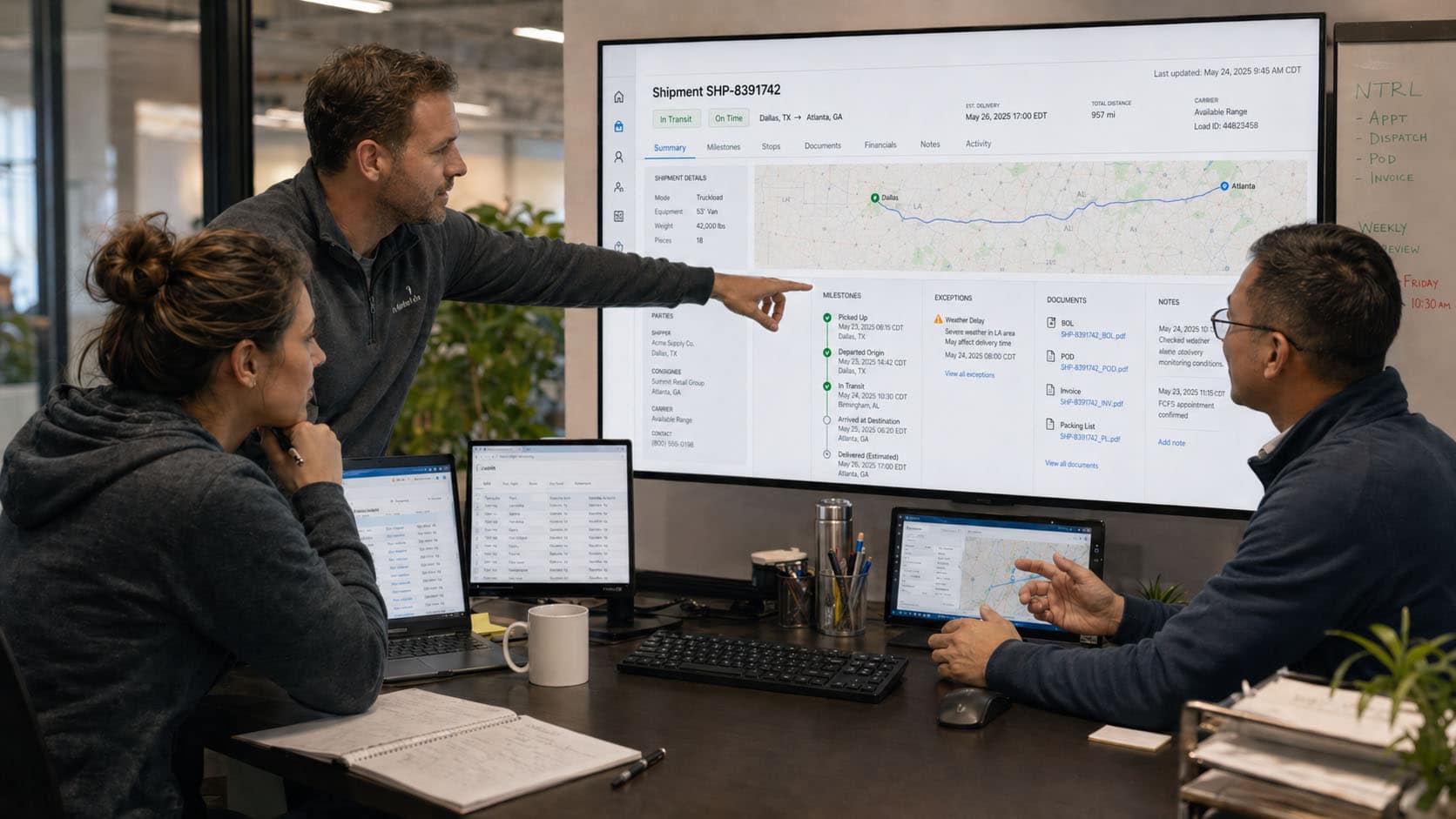
Three questions worth asking, of your current setup or any system you're considering.
Does your booking, your shipping documents, and your cargo weight all live in one record, or three? If it's three, the re-entry problem is built into your workflow. It doesn't matter how good each individual tool is. The gaps are structural.
Can your team see the deadlines in the same place they do the work? A deadline that lives in one system but not in the tool where the work gets done is a deadline that gets missed. Not because someone forgot. Because the system didn't show it.
Can you reconstruct the full shipment history from one place? Bookings, amendments, documents, weight filings, carrier confirmations. If the answer requires checking multiple systems, the audit trail is fragmented by design.
The gap between booking and final submission is one of the more under-discussed sources of operational friction in ocean freight.
Fixing it doesn't require new processes or a transformation initiative. It requires removing the gaps between systems where the workflow currently breaks. That's a smaller change than it sounds. And a more expensive problem than most dashboards show.
The Real Problem Is the Gap Between Systems
The three failures in this article share the same root cause.
They don't happen inside any one system. They happen in the spaces between systems. The TMS holds the booking. The carrier portal accepts the shipping instructions. The Verified Gross Mass tool transmits the weight. Each one works as designed. The failure is that none of them knows what the others did, when, or why.
Most operations teams treat workflow problems as tool problems. Better booking tool, better shipping instructions tool, better Verified Gross Mass tool. But these failures don't get fixed by upgrading individual systems. They get fixed by removing the boundaries between them.
The work of ocean export isn't getting simpler. The question is whether that complexity gets distributed across multiple systems, where the operator becomes the integration layer, or handled inside a single record, where the operator can focus on work that actually requires judgment.
The booking-to-VGM chain is a chain. Every link connects to the next. Treating it as one workflow, in one record, isn't a feature. It's an acknowledgment of how the work actually flows. If you want to see how Neurored TMS & SCM handles the full booking-to-VGM chain in a single record, schedule a demo.
Schedule your demo today!

Ricardo Medem
Share Article



Let’s Get Started
Schedule a Demo Now