


















Chief Sales Officer specializing in global partnerships and enterprise freight technology.

Content Marketing Specialist with expertise in B2B SaaS, SEO, AEO, and technical writing.

Director of Marketing with 10+ years in B2B SaaS demand generation and revenue growth.
One platform for transport management and supply chain, built on Salesforce.
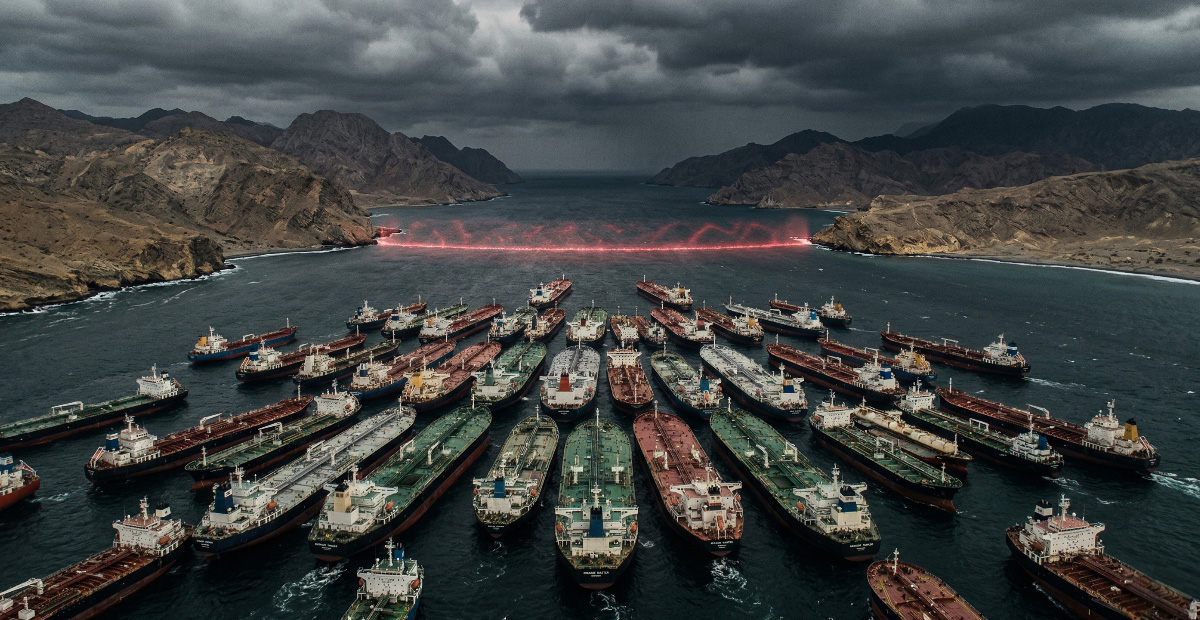
Book a demoFour weeks ago, more than 100 ships passed through the Strait of Hormuz every day. According to BBC, that number today is around 5-6.
At the same time, Clarksons Research estimates a 95% collapse in tanker traffic through the world's most critical maritime chokepoint. Vessels are stuck inside the Persian Gulf, with seafarers stranded between drone strikes and GPS jamming.
With the Strait of Hormuz closed, Gulf News reports that the recent Houthi attack on Israel is inciting panic about a possible Red Sea closure, which would block two critical shipping corridors at the same time.
Both chokepoints. Closed. At once. That's never happened in modern history.
If you work in freight forwarding, supply chain management or global trade, you're already feeling this. Energy costs, freight rates, insurance markets, routing assumptions... all of it is being repriced in real time. And the second-order effects are only starting to hit.
Here's what broke, why there's no clean workaround, and what logistics teams can do right now.
More Than War: The Financial Breakdown That Closed Hormuz
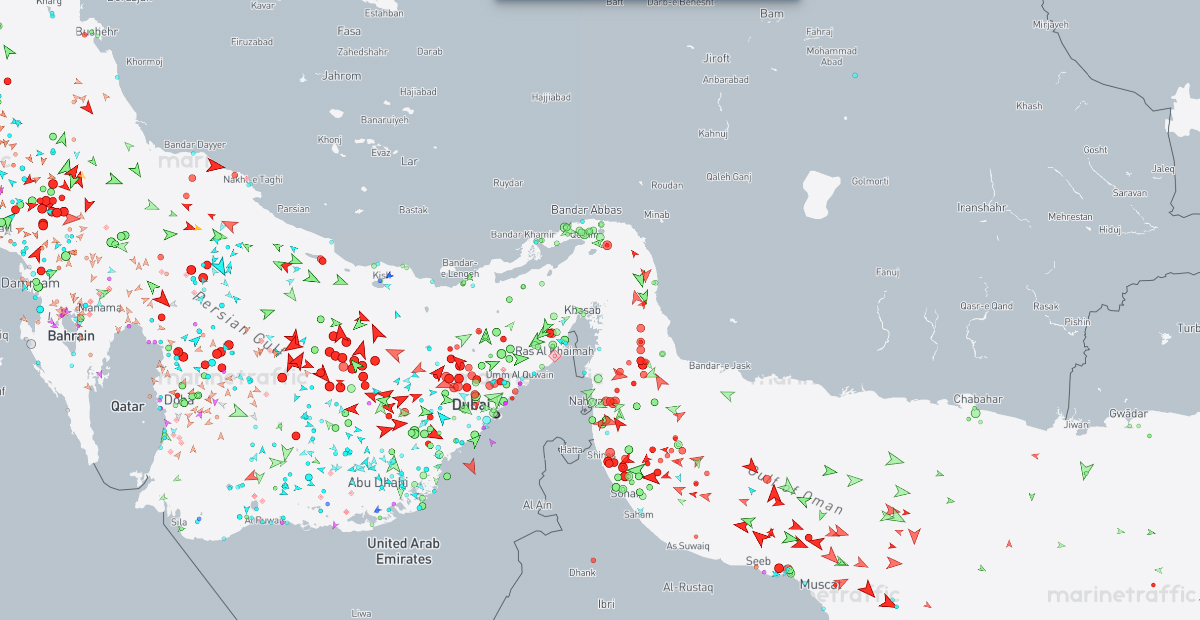
Screenshot taken from Marine Traffic,
Link: www.marinetraffic.com
Iran has threatened to close the Strait of Hormuz multiple times since the 1980s, but this is the first time commercial tanker traffic has effectively stopped. The threat of ships being destroyed collapsed the financial infrastructure behind global shipping in a matter of days.
The cascade started almost immediately. Within two days of the initial closure, Bloomberg reported that seven of the 12 members of the International Group of P&I Clubs were pulling war risk coverage for Gulf transits, effective March 5. This fractured the market. Without P&I cover, a commercial vessel over 1,000 gross tonnage can't dock at most major ports worldwide. By the next day, all 12 members of the International Group ultimately issued cancellation notices for parts of their war cover in the Gulf.
Lloyd's List was quick to point out that cover was still technically available on a case-by-case basis. But technically available and practically accessible are very different things when the mutual insurance system has effectively shut its doors.
Before all this, as S&P Global pointed out, standard war risk premiums for a Gulf transit ran about 0.15% to 0.25% of a ship's hull value, call it $250,000 on a $100 million tanker. By mid-March, Insurance Journal reported that premiums had hit around 5% of hull value for some vessels. That's a 20x increase. A single transit for the same tanker with a hull value of $100 million can now run around $5 million in insurance alone.
What you end up with is a lethal dependency chain. The initial wave of cancellations triggered a market-wide repricing so brutal that ships either lost the war risk coverage they needed to enter ports, or were simply priced out of the water. Break the financial link in the dependency chain and the physical ships stop.
During the Red Sea crisis, insurance premiums surged but coverage stayed available. Shippers paid more, absorbed the cost and kept moving. Hormuz is different. This is more than just the market getting more expensive. It stopped working. That difference is what makes the Strait of Hormuz closure different from anything the industry has seen so far.
Who Gets Through Now Depends on Politics, Not Routes
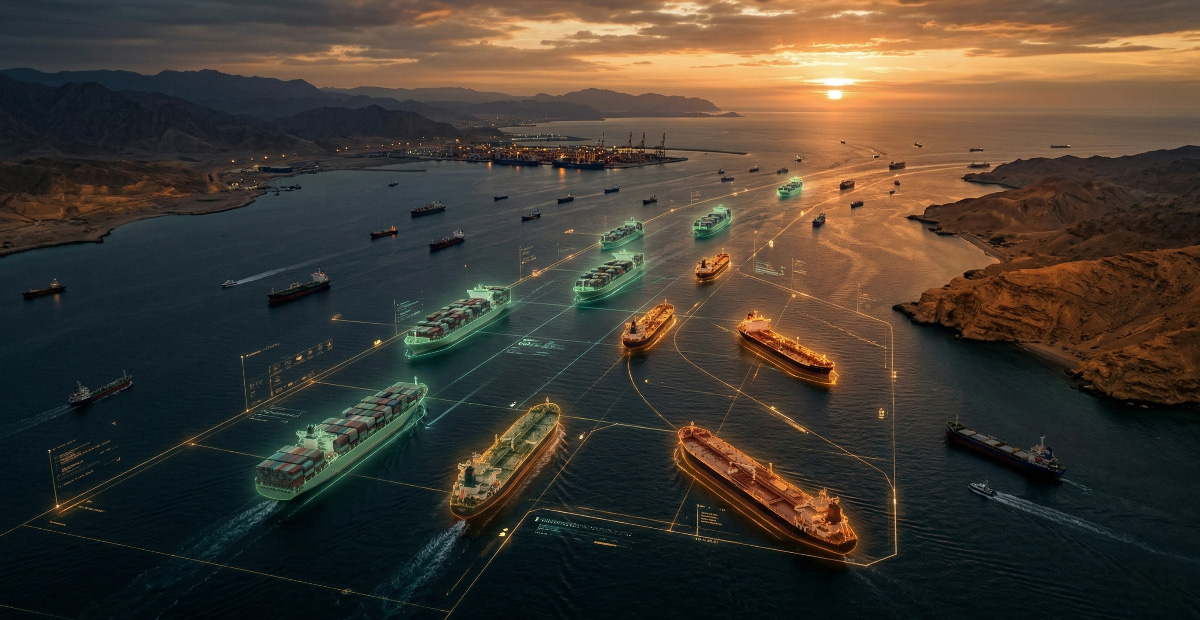
And even if the financial system hadn't broken, access wouldn't be guaranteed. The rules for who gets to transit have changed too. Here's the part that should concern logistics planners most. Iran isn't blocking everything. They're blocking selectively.
The Independent reported that as of mid-March, Iran is allowing transit on a country-by-country basis. Indian, Pakistani, Turkish and some Chinese vessels have been let through. Western-affiliated shipping? Entirely shut out. Iranian Foreign Minister Abbas Araghchi recently told Al Jazeera the strait remains "open, but closed to our enemies."
Think about what that means for your routing. The variable isn't geography anymore. It's diplomacy. Which flag your vessel flies, which country owns the cargo, which insurer backs the policy. Those factors now decide whether your shipment moves or sits in a queue.
Most contingency plans assume a chokepoint is either open or closed. But the reality now is conditional access. And the conditions can change with a single phone call between governments.
No standard logistics playbook accounts for this. No team can model it. But every logistics team needs to start factoring diplomatic relationships into freight routing decisions. Whether they have the tools for it or not.
No Way Around It: Why Hormuz Has No Real Alternative Routes
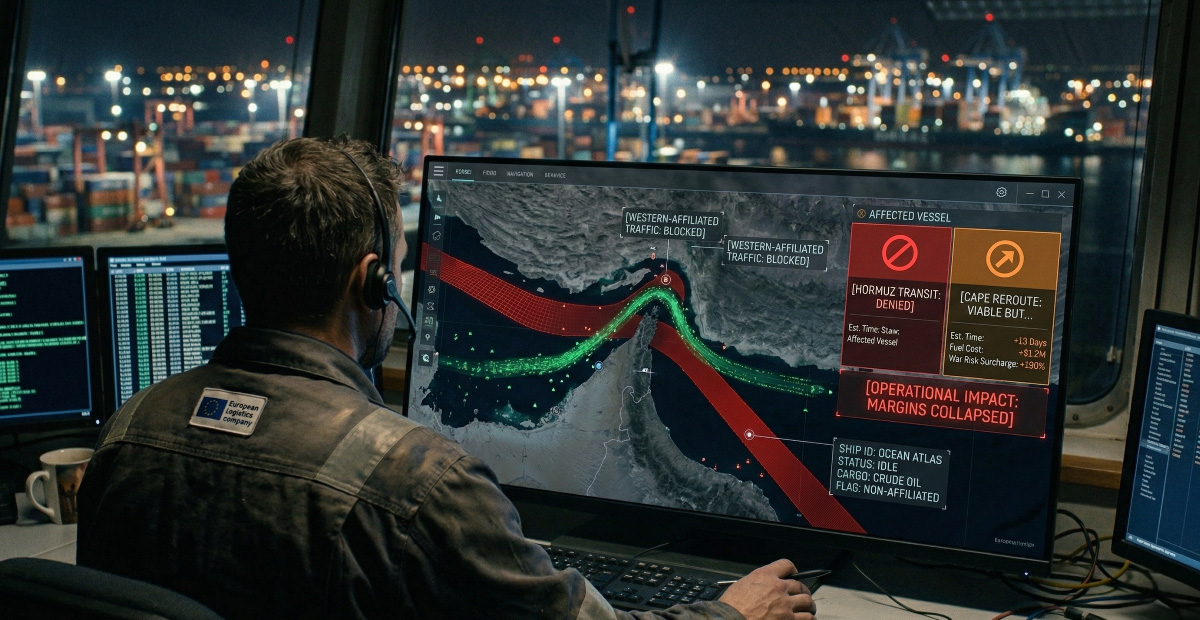
With insurance gone and access politicized, freight rates were always going to be the next domino, driven by a stark physical reality: for most of what moves through Hormuz, there's simply no other way out.
That reality is already showing up in the container market. S&P Global reported that major carriers have suspended Hormuz transits and stopped taking new bookings for Arabian Gulf ports. Emergency surcharges followed within an hour.
Tankers at least have the option of rerouting, but the economics are punishing. As reported by gCaptain, data from LSEG Shipping Research shows that rerouting an Aframax tanker from Asia to Northwest Europe via the Cape of Good Hope adds 16 to 32 days of transit and about $932,905 in fuel costs per voyage.
But even if every tanker took the long way around, the volume math still wouldn't work. According to IEA, pipeline capacity from Saudi Arabia and the UAE gives you a combined 20 million barrels per day.
The IEA estimates Gulf countries have already cut oil production by at least 10 million barrels per day. Part of this is due to direct kinetic strikes on facilities like Qatar's Ras Laffan and Saudi offshore fields. But even the untouched facilities are shutting down because the storage tanks are full. According to Al Jazeera, they simply have nowhere to put it.
The market priced that in immediately. A Lloyd's List analysis reported that VLCC rates on the benchmark Gulf-to-China route jumped 94% over a single weekend to an all-time record of $423,736 per day. Another analysis reports LNG carrier rates in the Atlantic Basin shot up 163% in a matter of days.
[post|What's Changing in Freight Routing?|Explore the challenges and trends shaping how logistics teams plan routes and respond to disruption.|https://cdn.prod.website-files.com/699ee1f3535208d5a990b4ca/6ac8d07a89873b7bbab8a3f5_Cover_Challenges%20and%20Future%20Trends%20in%20Freight%20Routing.jpg|Read the article|https://www.neurored.com/blog/challenges-and-future-trends-in-freight-routing/]
Is the Hormuz Closure Part of a Bigger Pattern?

Suez in 2021. Panama in 2023. The Red Sea from 2023 onward. Now Hormuz in 2026. This isn't an isolated event. The pattern is clear.
The gaps between major maritime disruptions are getting shorter. Each crisis is worse than the last. But the industry's readiness hasn't kept up.
Look at the data. Gartner found that only 7% of supply chains can make decisions in real time. McKinsey's December 2025 survey shows that the share of companies planning major digital supply chain investments actually dropped from 47% to 25% in a single year. Even as disruptions got worse, investment went down.
Here's the lesson from every prior crisis. The companies that came out strongest were the ones that invested to protect themselves against supply chain disruptions. They were the ones that could react the fastest. And reaction speed at this scale is an infrastructure decision you make before the crisis hits.
That infrastructure has four requirements:
- You need visibility across every shipment the moment a corridor closes.
- You need rate intelligence that moves as fast as the market does.
- You need rerouting tools that model alternatives before you need them.
- And you need documentation that keeps up when the route changes overnight.
Most logistics teams have pieces of this. But very few have all of it connected. That's the gap that shows up in the margins when two chokepoints close at once.
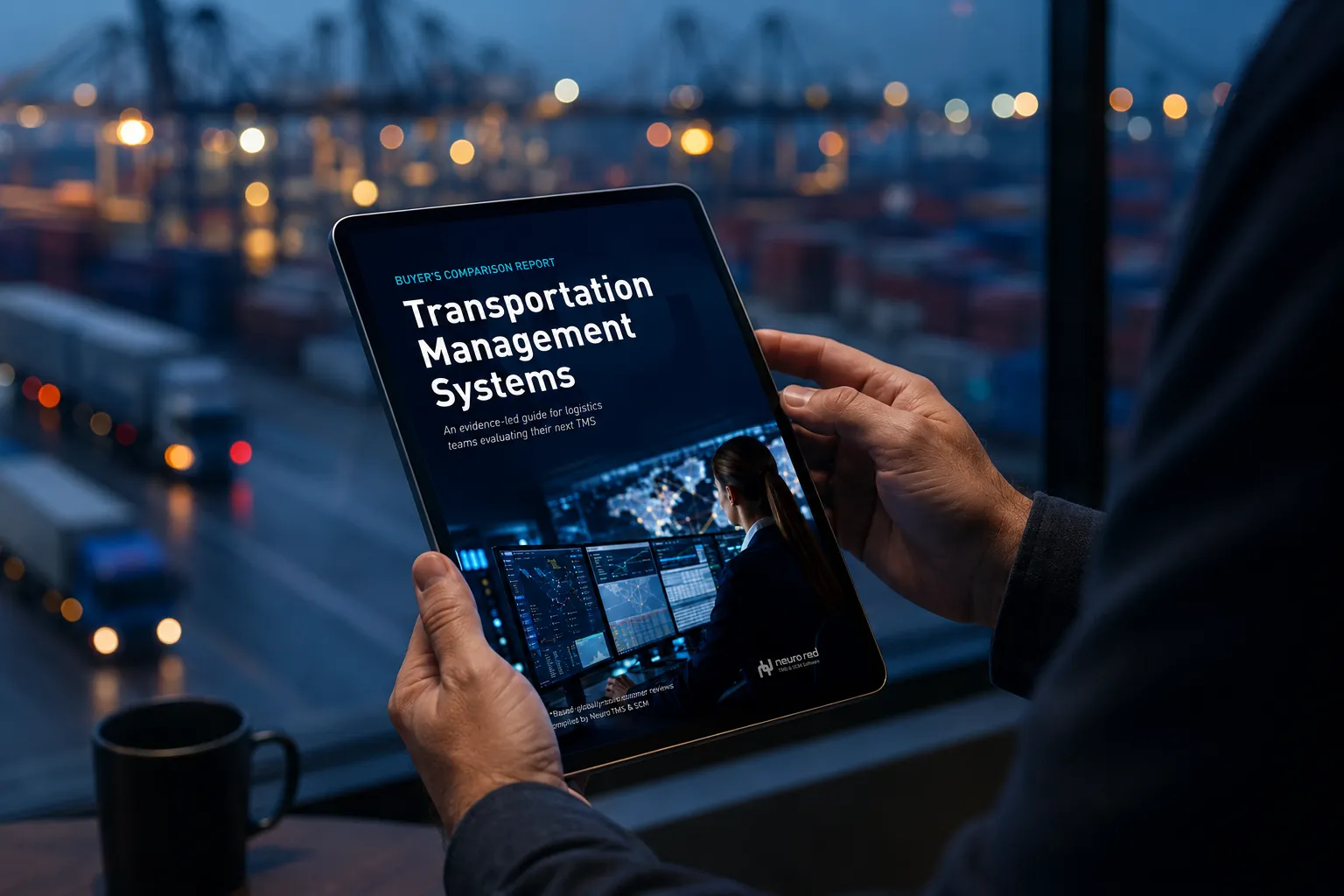
How Can a Transportation Management System Help You Respond to a Closure Like This?

Look at what actually failed under pressure in this crisis:
- Visibility into where shipments are.
- The ability to quote against rates that change by the hour.
- Rerouting decisions across modes.
- Documentation for emergency ports.
These aren't your typical edge features. They're baseline requirements in a disruption like this. And most teams should have them fully connected in one system. For most logistics teams, these functions are split across spreadsheets, carrier portals and manual workflows. That works in stable conditions. It breaks the moment volatility compounds.
That's why having a robust Transportation Management System (TMS) doesn't prevent geopolitical crises, but it gives logistics teams the visibility, rate intelligence and rerouting speed to respond with precision instead of scrambling. Here's why that matters. According to 360 Research Reports, companies using real-time visibility software report 20% fewer operational delays and 30% faster disruption response.
When two chokepoints are closed and insurance markets have fallen apart, that gap between equipped and unequipped shows up directly in your margins, your customer retention and your ability to keep operating.
[post|What Should a Modern TMS Do?|Explore 43 essential features to help you assess what your logistics team needs.|https://cdn.prod.website-files.com/699ee1f3535208d5a990b4ca/6ac791acdfa812d16d29b46f_Cover_Modern%20TMS%20Features.jpg|Explore the features|https://www.neurored.com/blog/essential-tms-features/]
Real-Time Visibility Across Every Mode and Corridor
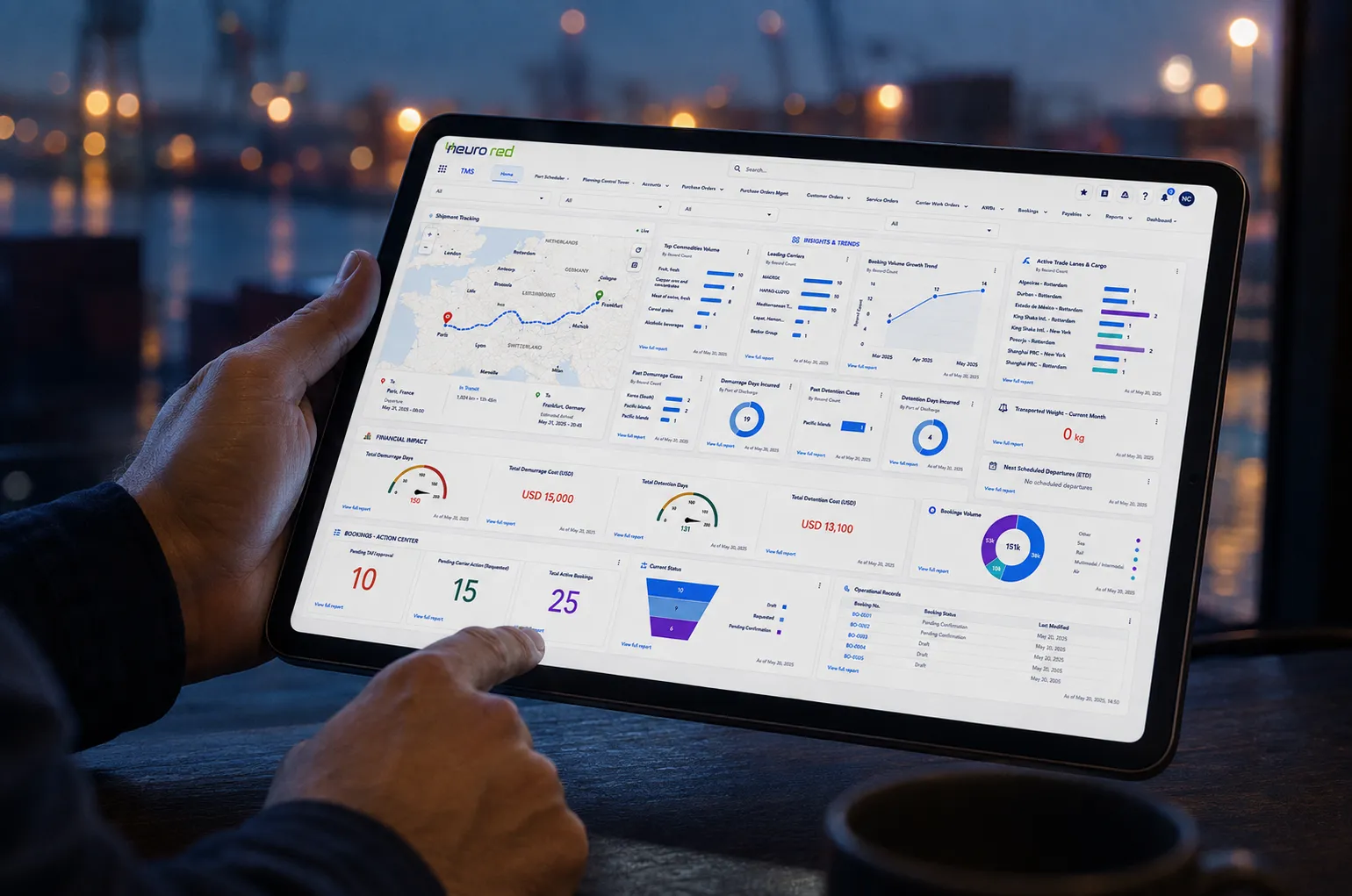
When both Hormuz and the Red Sea are blocked at the same time, siloed carrier portals and email chains don't cut it. You need a single view of every shipment across ocean, air, road and rail, with alerts firing the moment something changes.
Neurored's Supply Chain Control Tower tracks across 250,000 vessels, connected to tracking data from 120+ airlines and global air cargo networks, and 8.5 million trucks worldwide. When a corridor closes, configured alerts and exception tracking flag affected shipments across your network so your team can act on deviations as they surface, not after they've compounded.
[post|Is Your Real-Time Tracking Fast Enough?|See how timely shipment updates help your team spot delays, respond sooner, and keep customers informed.|https://cdn.prod.website-files.com/699ee1f3535208d5a990b4ca/6ac8d07521c74f2ac29906fc_Cover_7%20Ways%20to%20Improve%20Supply%20Chain%20Communication.jpg|Read the article|https://www.neurored.com/blog/is-your-real-time-tracking-fast-enough-to-compete/]
Freight Rate Intelligence When Markets Move Hourly
When VLCC fixtures skyrocket, manual rate management falls apart. The team quoting in minutes protects margins and wins business. The team quoting against last week's rates loses both.
Neurored's Freight Rates Management Software centralizes carrier contracts and rate books in one place, with bulk upload and API-based direct sourcing from carriers keeping rate records current. When conditions shift, your team can generate quotes from pre-built rate books in a single click and eliminate quotation turnaround time entirely.
Shippers can compare transportation alternatives and book directly through a self-service portal. No burning hours during a crisis.
[post|Prepare Your Freight Forwarding Operations for Change|Explore ways to strengthen your workflows, improve visibility, and adapt as customer needs and market conditions change.|https://cdn.prod.website-files.com/699ee1f3535208d5a990b4ca/6ac8d076645814c48fcf890f_Cover_Guide%20to%20Future-Proofing%20Freight%20Forwarding.jpg|Read the guide|https://www.neurored.com/blog/future-proofing-freight-forwarding/]
Scenario Planning Before the Disruption Hits Your P&L
We've already seen how quickly a corridor disruption stops being a routing issue and becomes a margin issue. Delays stack up, fallback options get crowded, and the cost of reacting late rises with every hour. Once that pressure hits, teams don't need more information. They need a way to compare alternatives fast and act before the disruption spreads across the rest of the network.
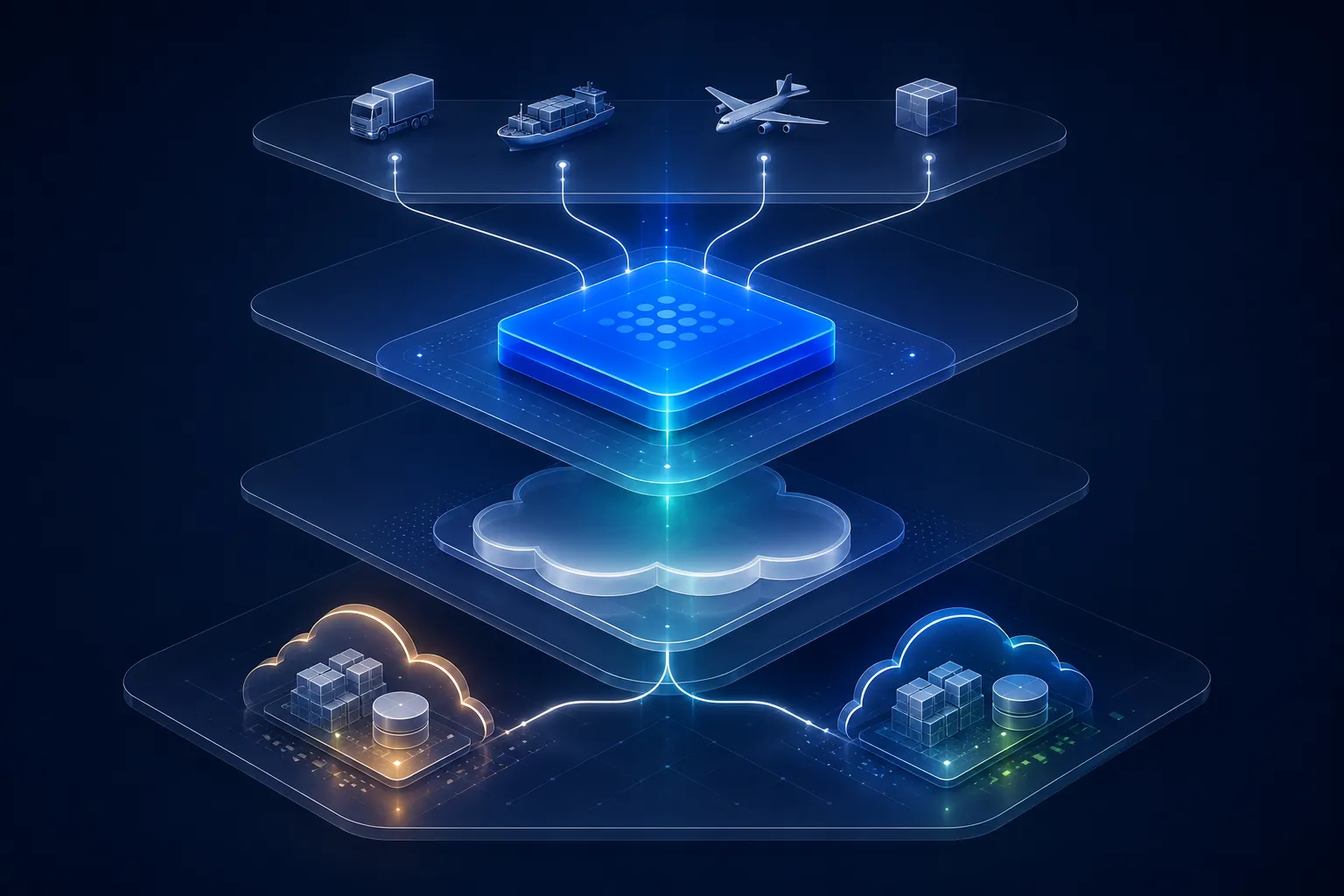
Neurored's Multimodal Transportation Optimization Software is built for exactly that kind of pressure. It supports multimodal route planning across sea, land, air and rail, with routes optimized for cost, speed or emissions depending on your priorities.
Carrier schedules are available through pre-integrated carrier connections, so teams can compare options and book without leaving the platform. Scenario modeling and AI-driven demand forecasting make it possible to test alternatives before disruption hits your P&L, using historical orders, expected demand and market trends.
The goal isn't to predict the next Hormuz. It's to build the ability to respond before disruption becomes financial damage.
[cta|Compare Your Options Before Disruption Costs More|See how Neurored helps you compare multimodal routes by cost, speed, and emissions and test alternative plans.|Book a demo|#contact]
This Disruption Won't Be the Last. Build for What's Coming
The Strait of Hormuz closure isn't just another disruption. It exposes a structural shift in how supply chain risk behaves. Insurance can disappear overnight. Access can become conditional. Entire corridors can go offline without warning.
The next disruption is a matter of timing. Your ability to respond is a matter of infrastructure. If you're unsure whether your current setup can handle conditions like this, that's the gap worth testing. Schedule a demo of Neurored TMS & SCM and we'll walk you through it.
Description
Description