
Is Your Freight Forwarding Business Future-Proof?

Freight forwarding has never been simple, but today the level of complexity is unprecedented. Costs are rising, compliance rules are tightening every year, and customers expect instant answers and full visibility. Meanwhile, industry consolidation means that the largest players are expanding their influence and shaping the terms of competition.
Being future-proof is not about avoiding disruption. It is about building a business that can withstand shocks, protect margins, and keep customers loyal even when conditions shift.
At Neurored, we work with forwarders every day, and the challenges we see are not one-off events. They are structural pressures that demand structural solutions.
Pressures That Threaten Profitability
The Squeeze on Margins
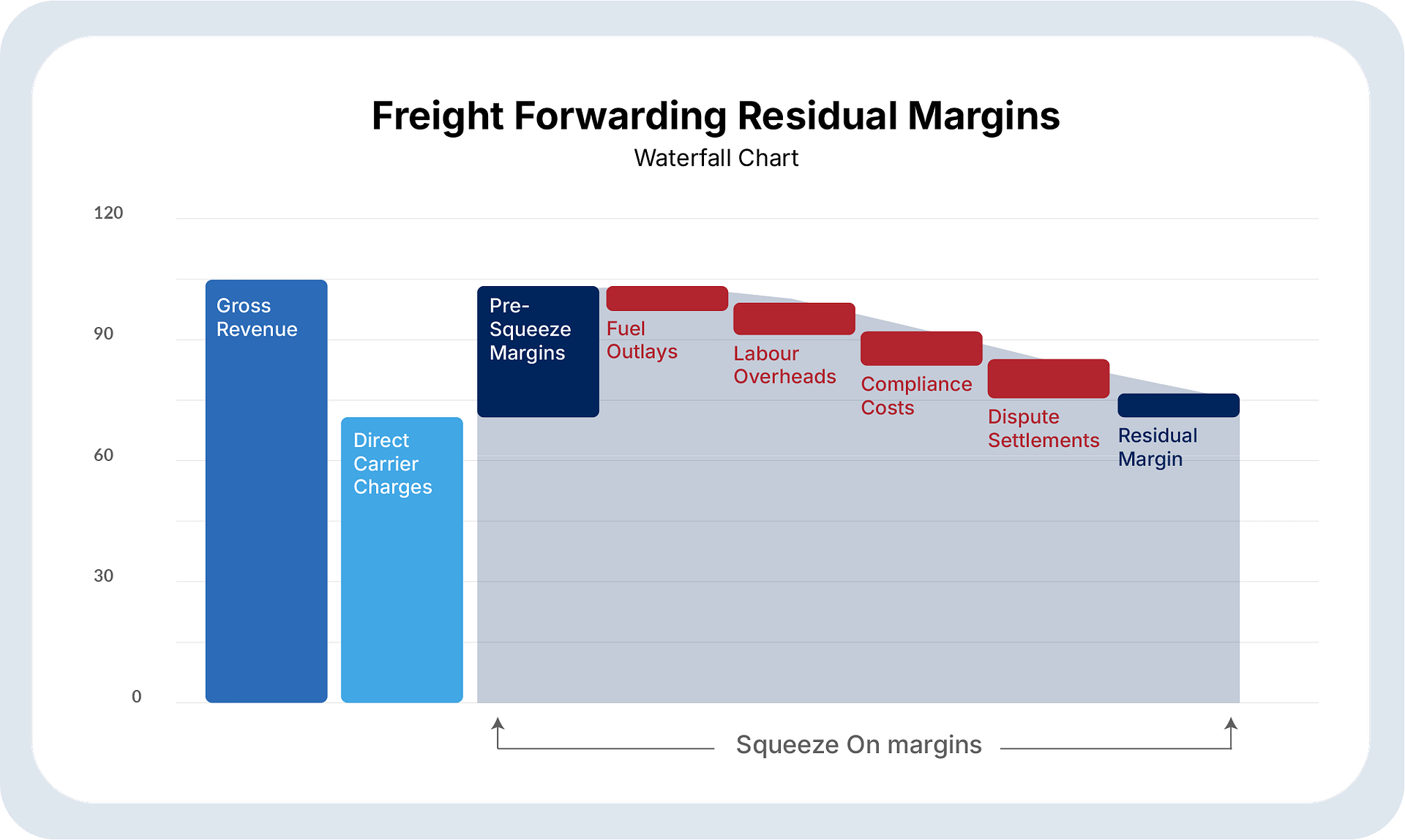
Fuel and labor costs continue to rise. Compliance penalties are more frequent and harder to absorb. Disputes drag out payments and erode trust.
The real challenge is not just the cost increase itself, but the lack of visibility into the numbers. Many executives cannot quickly answer questions such as: What is our break-even gross profit per shipment? How much margin disappears every month due to fines, disputes, or manual errors?
Without that visibility, forwarders are forced to make decisions in the dark. This is where digital support matters. Tools such as Freight Rates Management Software help automate quoting, contract workflows, and rate management across modes. That does not just reduce errors, it gives leadership clear insights into where the business is winning and where it is bleeding margin.
The Talent and Workforce Challenge

Margins are not the only thing under strain. So is the workforce. Experienced operators with decades of know-how are retiring, while younger professionals bring different expectations into the workplace. They want tools that reduce repetitive work and give them clarity, not more spreadsheets and email threads.
This generational shift creates risk on both ends. Without modern systems, senior staff are often trapped in a state of constant firefighting and burn out more quickly. At the same time, new hires face a steep learning curve when processes depend on tribal knowledge rather than standardized workflows.
A structured digital backbone allows businesses to codify expertise into repeatable processes. Instead of relying on a shrinking pool of veterans to catch every error, the system itself enforces best practices. This not only reduces the risk of mistakes but also makes it easier to onboard new talent, giving forwarders more flexibility in how they scale their teams.
Geopolitical Volatility

Trade routes are no longer dictated only by cost and distance. Political decisions, sanctions, tariffs, and carbon regulations can change the economics of a shipment overnight. What looks like a profitable lane today may become unviable tomorrow.
For forwarders, the real risk is speed. If re-routing and re-pricing take months, competitors who can adapt faster will seize the opportunity. The ability to simulate scenarios and shift volumes quickly is becoming as important as negotiating favorable rates.
We explored such risks in detail in the following post: Are You Prepared for the Next Supply Chain Disruption? (Coming Soon)
Competitive M&A Consolidation

Across the industry, mergers and acquisitions are shifting bargaining power. Global giants secure preferential rates from carriers and push mid-sized forwarders into the position of price takers.
The question becomes: if a competitor with deeper pockets acquires regional scale tomorrow, how much leverage would your organization lose? And how would that impact your ability to compete on rates?
For many, the answer is uncomfortable. The path forward requires operational efficiency and smarter resource allocation, so that negotiating power comes not only from volume but from demonstrated performance.
The Risk of Commoditization

Perhaps the most dangerous trend is commoditization. If customers see forwarding as a service they can buy from anyone, the only differentiator is price.
Why should a customer continue to pay more to work with your business instead of switching to the lowest bidder? Which customers contribute the majority of your profit, and are those relationships secure?
Sustainable differentiation often comes from the customer experience itself. Branded portals can give customers instant access to shipment visibility, historical service performance, and 24/7 collaboration features supported by AI. This reduces uncertainty for shippers and builds confidence in the relationship beyond rates.
Strategic Choices for Forwarders

Faced with these pressures, most forwarders must choose one of three strategic orientations.
- Cost Leadership. Pursuing operational scale and efficiency to compete directly on price. This requires significant automation and volume, as margins depend on lowering costs per shipment.
- Focused Differentiation. Specializing in specific lanes, geographies, or industries where expertise creates defensible value. Here, the premium comes from knowledge and tailored service rather than broad coverage.
- Service Excellence. Building loyalty through reliability, responsiveness, and customer engagement. This strategy depends on making the experience so consistent that customers are unwilling to risk change.
Each orientation can succeed, but only if it is supported by the right systems.
Manual processes cannot support cost leadership at scale.
Specialization is difficult to defend if profitability by lane or customer is not visible.
And service excellence requires a level of transparency and responsiveness that is impossible without digital tools.
This is where Freight Forwarding Software becomes critical. Rather than being one product among many, it is the combination of the most relevant solutions for forwarders today:
- Freight Rates Management for pricing clarity and error reduction.
- Supply Chain Visibility for real-time tracking across modes.
- Collaboration Portals for unified communication with customers and partners.
Together, these capabilities digitize the core of freight forwarding operations: planning, booking, execution, and customer-facing interactions.
Why Digitization Is No Longer Optional

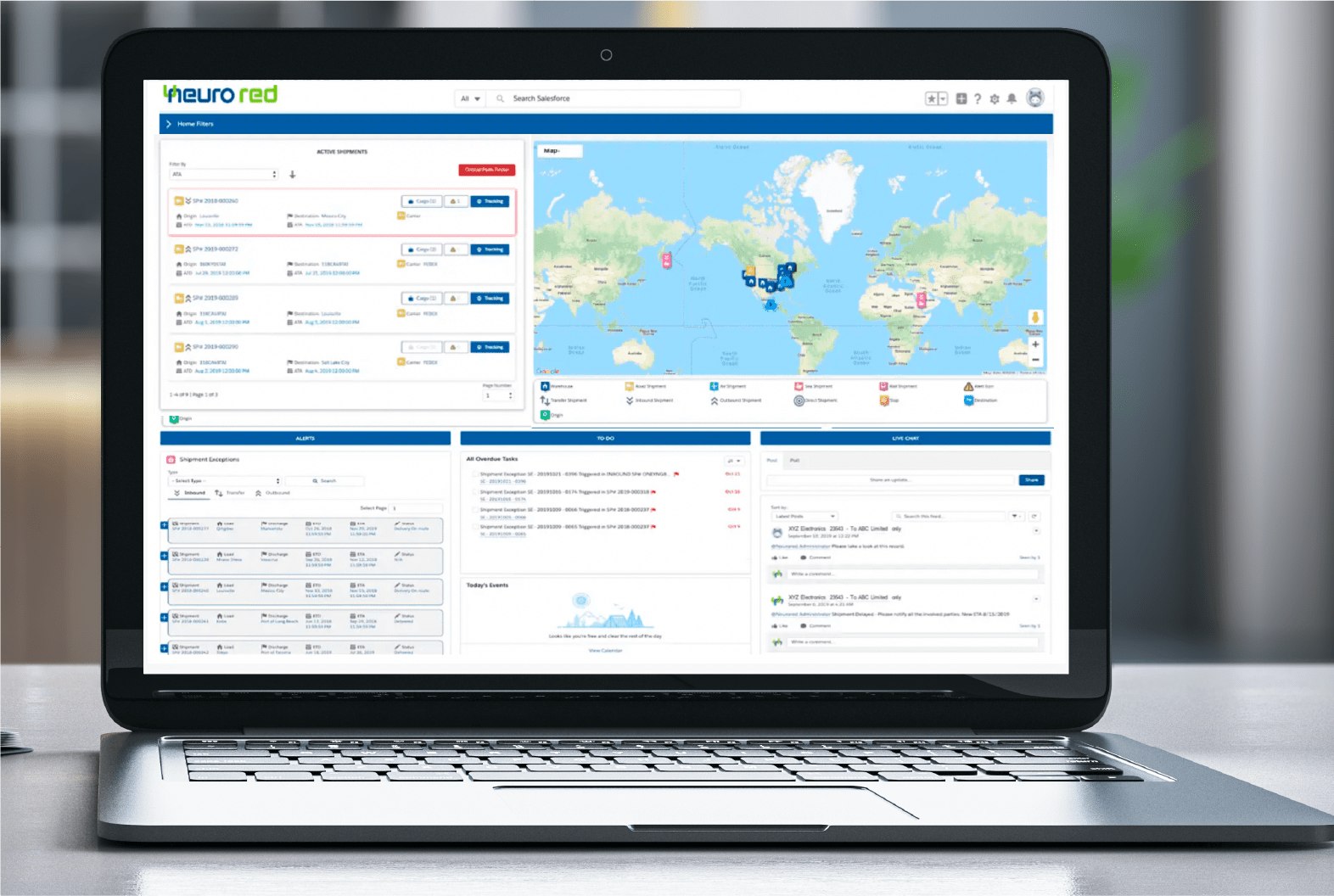
Digitization is not a project to consider “when the time is right.” It is the enabler that makes any strategy viable. The real question is how to align your technology with your business model, so it drives strategy instead of becoming a distraction. We’ve explored this further in our post on how to pick a TMS aligned with your business strategy.
With digital platforms, leadership gains the ability to model the impact of a rate change within days, not months. Teams spend less time chasing paperwork and more time building relationships. Customers gain direct access to the information they value most: the status of their shipments and the resolution of exceptions.
At Neurored TMS & SCM, we see this as more than adding technology. Our platform is built on Salesforce and AWS, which means enterprise-grade security, global scalability, and compliance, no matter where you do business. It integrates with ERP, WMS, and CRM systems already in use, so forwarders can centralize operations without disrupting what works. And with straightforward per-user pricing, growth does not come with hidden surprises.
Building a Resilient Future

The structural pressures on freight forwarders are not going away. Rising costs, consolidation, and commoditization will continue.
The choice lies in how forwarders respond. By selecting a clear strategic orientation and enabling it with the right digital tools, leadership can build resilience, protect margins, and keep customers loyal.
Neurored Freight Forwarding Software combines the capabilities forwarders need most into one platform: rate management, visibility, collaboration, and execution. It provides the digital foundation that supports whichever path leadership chooses, and adapts as market conditions evolve.
Future-proofing a freight forwarding business is not about predicting every shock. It is about being ready to absorb them without losing stability. The forwarders who invest in that foundation now will be the ones standing tall five years from now.
Let’s talk about how Neurored can make that foundation real for your business.
Schedule your demo today!

Ricardo Medem
Share Article



Let’s Get Started
Schedule a Demo Now