





















Founder & CEO and serial entrepreneur with 30 years building and exiting tech businesses.

Content Marketing Specialist with expertise in B2B SaaS, SEO, AEO, and technical writing.

Director of Marketing with 10+ years in B2B SaaS demand generation and revenue growth.
One platform for transport management and supply chain, built on Salesforce.
Book a demoMost logistics companies own plenty of digital tools. The tools just don't work together.
Walk through any freight forwarder, 3PL, or global shipper today and you'll find TMS platforms, visibility dashboards, automation pilots, and carrier portals. You'll also find dispatchers keeping backup spreadsheets because they don't trust the system. Shipment statuses that require a phone call to verify. Carrier rate sheets still arriving by email.
PwC's 2026 Digital Trends in Operations Survey puts a number on this: 85% of supply chain leaders say they are ahead of competitors in digital transformation. 89% say their technology investments haven't fully delivered the expected results. Both numbers cannot be true. Most companies are overestimating their own progress.
The gap has a name. Fragmented progress. Systems don't connect. Data quality is inconsistent. Teams optimize in silos. Adoption lags behind implementation because people don't trust tools that went live before the underlying processes were ready to support them.
Digital transformation in logistics is a sequencing problem. A maturity model gives operations leaders a diagnostic: here is where you actually are, here is what the foundation is missing, and here is why advanced tools applied to foundational problems produce complexity instead of results.
Why Generic Digital Maturity Frameworks Fall Short in Logistics
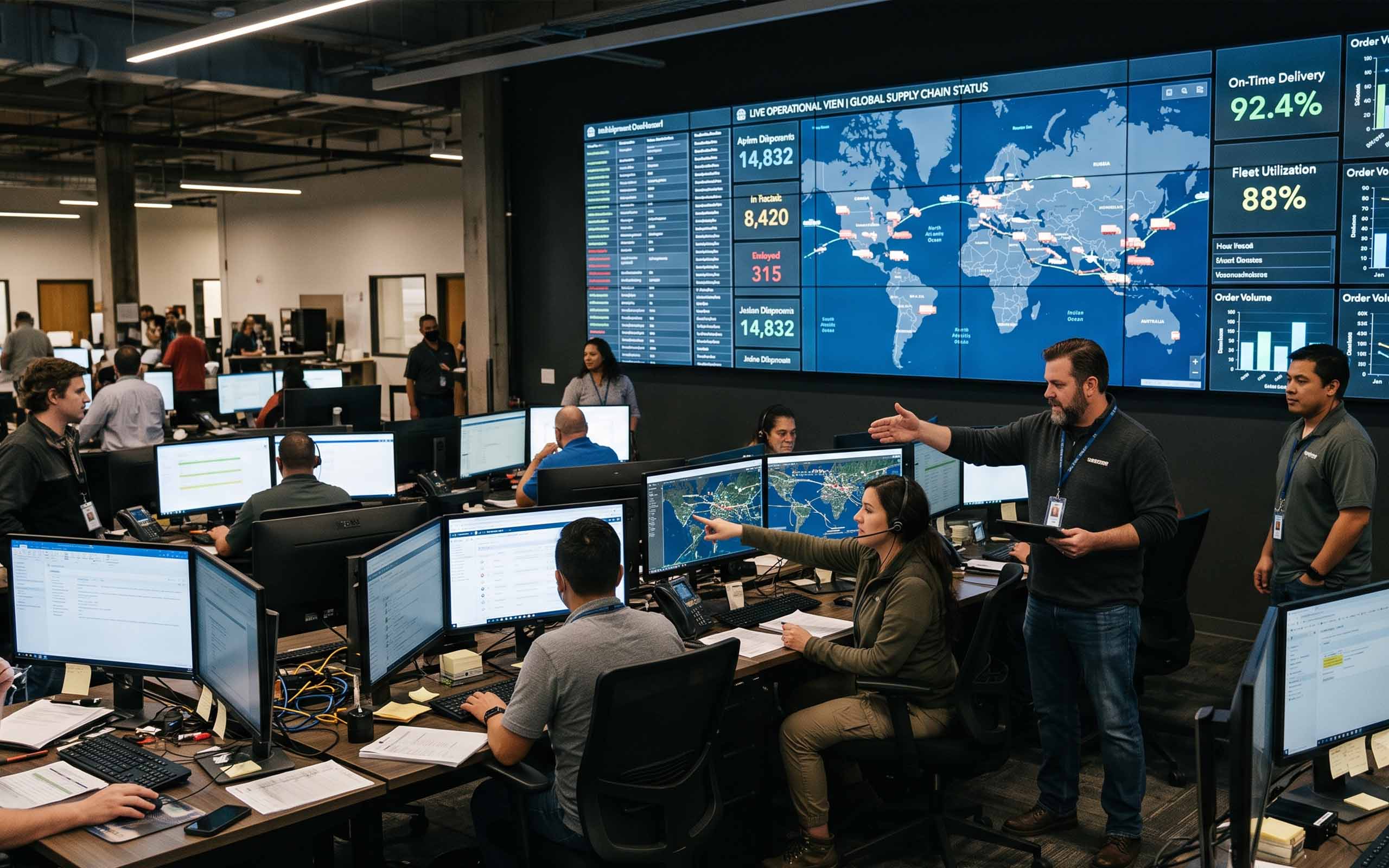
Gartner, BCG, McKinsey, Deloitte, Altimeter, IDC, and the OECD all publish digital transformation maturity models. All are useful at the board level. None will tell a logistics operations director what they need to fix.
Most of these frameworks are descendants of the original Capability Maturity Model developed for software engineering in the 1980s. The digital transformation capability maturity model framework adapts that stage-based logic to enterprise technology adoption.
Here's why.
Generic frameworks measure software ownership. Do you have cloud infrastructure? Transportation data analytics capabilities? An AI pilot underway? Check the boxes, score your tier. The result is inflated self-assessments, because the model measures what a company has purchased, not whether those purchases are integrated, adopted, or producing any operational value.
A company can own a world-class transportation management system (TMS), a visibility platform, and an AI-powered forecasting tool. If none of them talk to each other, the operation is still immature. The licenses don't matter. The connections do.
Logistics-specific maturity models start from a different premise. Digital maturity is the degree to which technology, people, and process are woven together tightly enough to produce better decisions at scale. Everything else follows from it.
The 5 Stages of the Digital Transformation Maturity Model
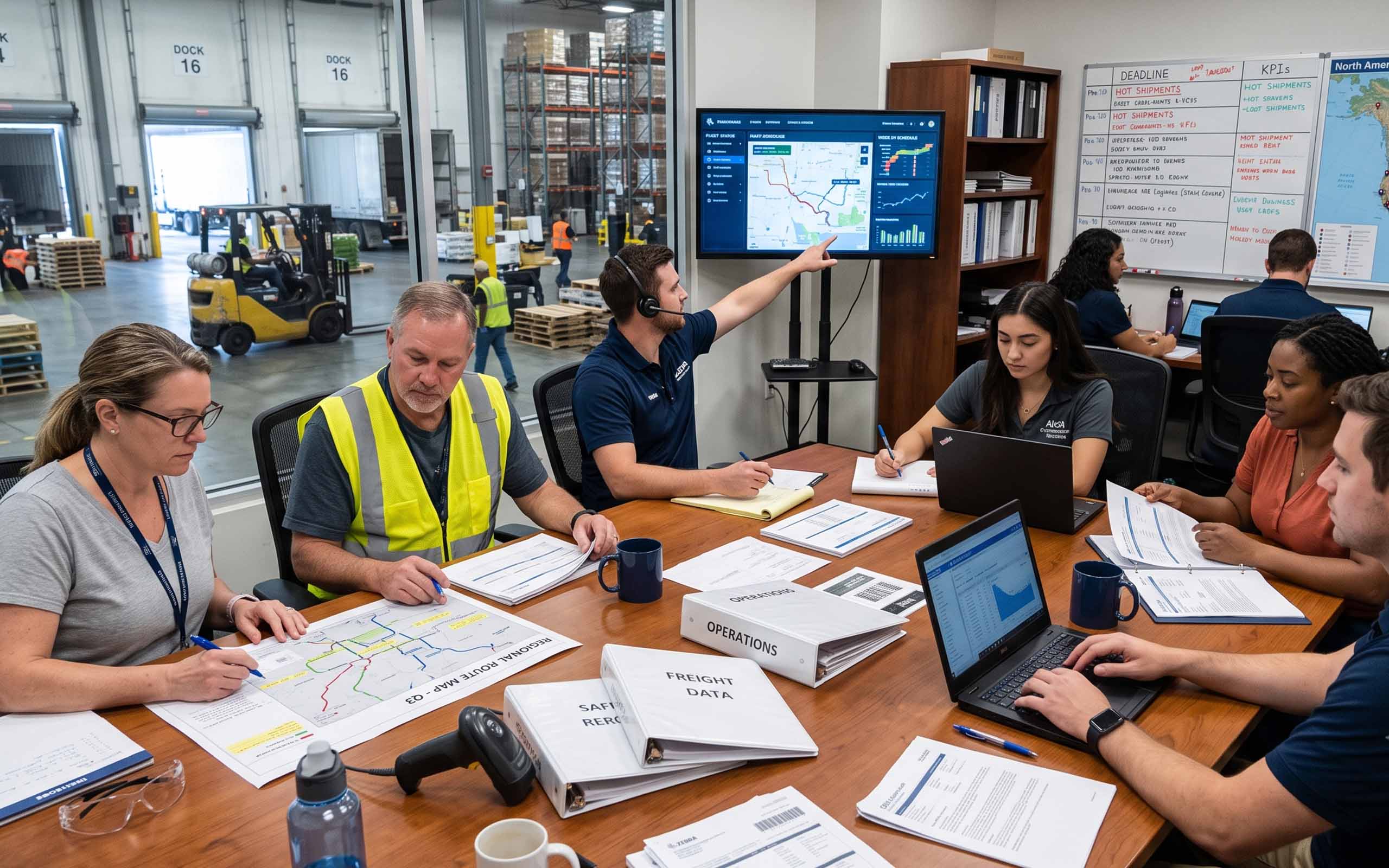
The five stages of digital transformation described below show how logistics organizations actually build digital capability over time. The stages are sequential. Skipping one doesn't speed up transformation. It only guarantees a more expensive failure at the next one.
Stage 1: The Baseline
This is where most logistics operations actually sit, including many that believe they have moved past it.
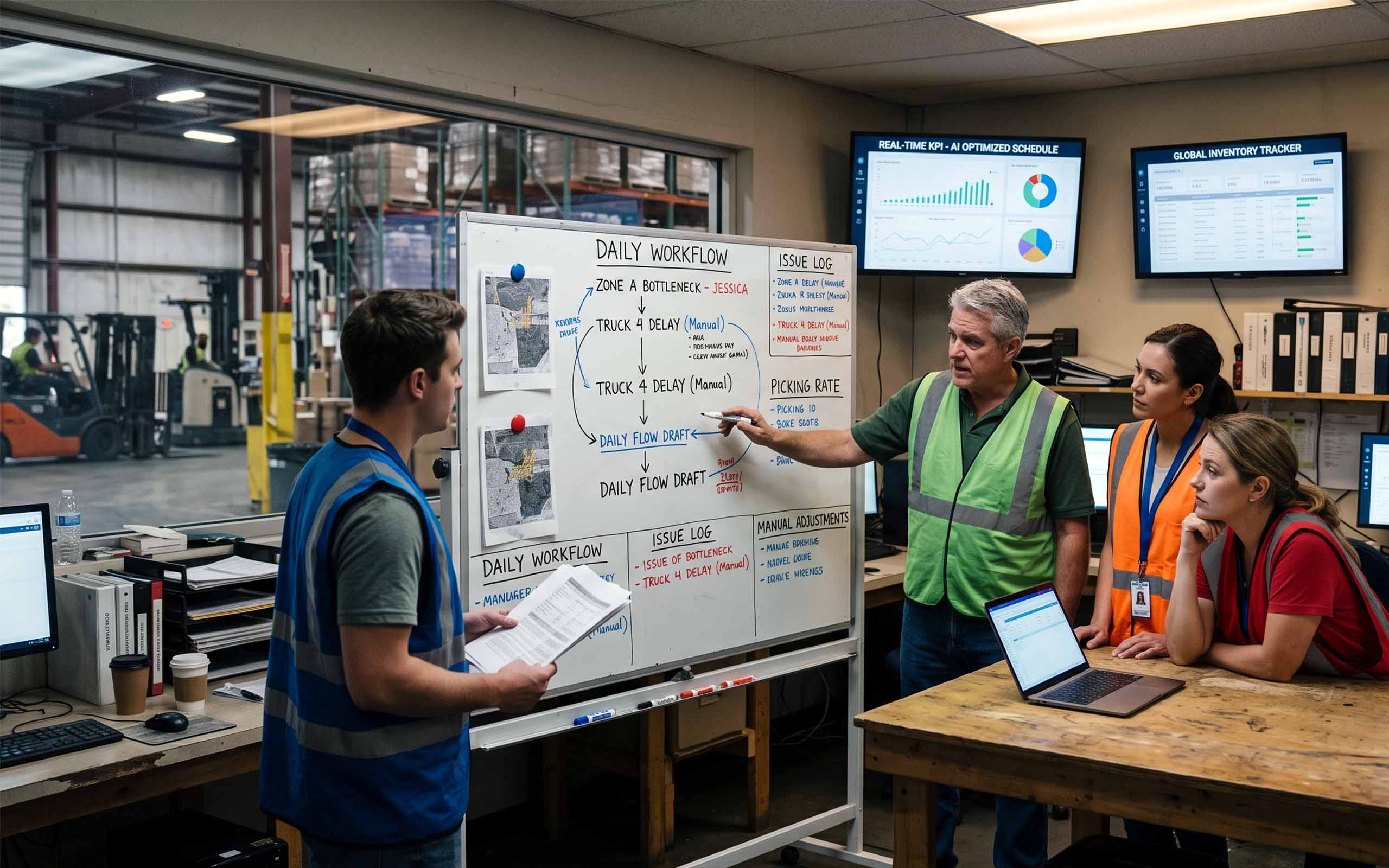
The Baseline is defined not by an absence of tools but by an absence of connection between them. Orders arrive by email, phone, or PDF. Data gets manually re-entered at every handoff. Shipment visibility means calling the carrier.
Problems only surface when a customer complains. Some software may exist (basic telematics, standalone accounting, a carrier portal) but none of it talks to anything else. Critical knowledge lives in the heads of senior dispatchers, not in a system.
The instinct at this stage is to buy more software. That instinct is almost always wrong. Adding tools to a fragmented foundation adds even more fragmentation. The real priority is to standardize core workflows, clarify who owns what data, and create one place where you can manage work consistently. You can't integrate what you haven't defined.
Stage 2: Foundational Integration
Stage 2 starts when leadership sees the cost of fragmentation and decides to fix it.
The move is an ERP or TMS that creates one shared record across the organization. For the first time, sales, operations, finance, and logistics all work from the same data. You log orders digitally, track costs in one place, and your KPI reporting becomes consistent enough to actually be useful for your operations.
Two gaps define this stage. Integration is still internal only. You still manage carriers, customers, and suppliers by email. And your operation can see what happened in the past but can't see what's likely to happen next. The spreadsheet chaos is gone, but the system is still reactive.
The work here is slow and boring: you clean up data, remove duplicate records, build shared reporting. But you need to do it anyway because every capability in Stages 3, 4, and 5 is built on what gets done here.
Stage 3: Cross-Functional Collaboration
Stage 3 is where the operation reaches outside itself for the first time.
Internal systems (TMS, WMS, ERP, CRM) start connecting to external partners via APIs. Customers can check shipment status without calling. Carriers get bookings digitally. When something goes wrong, the system flags it. You don't have to hope that your team manually notices the gaps.
This is also the stage where a supply chain control tower becomes actually useful, because the data is finally good enough to support real-time tracking across the network.
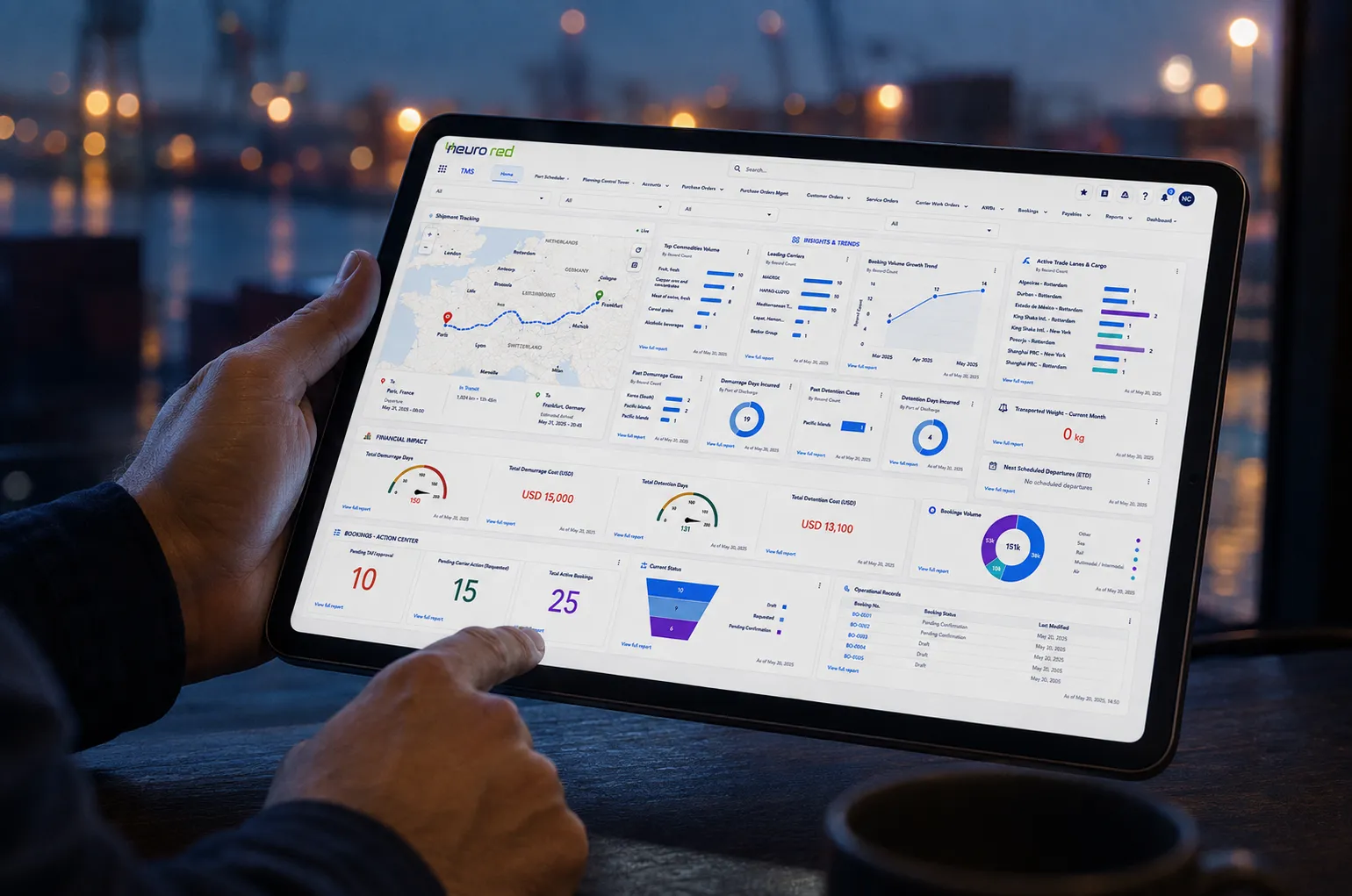
That's where Neurored TMS & SCM stands out. It runs natively on Salesforce, which means your CRM, freight rates, shipment execution, tracking, documentation, and customer portals all live in one connected system, not spread across five tools held together with email.
The system also connects to your ERP, WMS, carriers, and customs systems via API and EDI. The practical result: the visibility you've been trying to build by connecting disconnected tools is already built in.
Here's why that matters. Seeing that a shipment is late is not enough. The system needs to surface why, what the impact is on what comes next, and what the options are to fix it. That's the difference between watching a problem and solving one.
[post|10 Advantages of a Salesforce-Native Transportation Management System (TMS)|See how a TMS built on Salesforce keeps CRM, freight rates, execution and tracking in one connected system.|https://cdn.prod.website-files.com/699ee1f3535208d5a990b4ca/6ac76091574f89a5e8b1db62_1_Best%20TMS%20Software.jpg|Read the article|https://www.neurored.com/blog/salesforce-tms-advantages/]
Stage 4: Predictive Orchestration
Stage 4 is where the operation stops reacting and starts predicting.
At this level, machine learning, demand forecasting, and risk alerts begin surfacing problems before they hit the physical network.
McKinsey research has linked AI-enabled supply chain operations with 20 to 30% inventory reductions and 5 to 20% logistics cost reductions. But those outcomes depend on a level of data maturity that basic execution improvements cannot create on their own.
That is the problem with predictive tools: they amplify data quality. They do not fix it. If your rate data is inconsistent, manually entered, or full of gaps, the models will produce confident wrong answers. Fast, confident, wrong.
That's where Neurored's Freight Rates Management Software does real work. It centralizes contracted buy rates, spot-rate sourcing, rate collaboration, carrier inputs, and performance benchmarks in one structured environment.
Instead of treating rate data as scattered spreadsheets and inbox attachments, teams can turn it into usable decision infrastructure for routing, quoting, procurement, and planning.
Stage 4 prediction only works when the inputs are clean enough to trust. Neurored TMS & SCM helps build that foundation before the model ever makes a recommendation.
Stage 5: The Autonomous Ecosystem
Stage 5 is a long-term goal worth understanding.
At this level, the supply chain runs as a continuously learning system. Agentic AI handles routine exceptions. Digital twins, live digital replicas of the network, watch weather or traffic conditions, run supply chain disruption scenarios and act on them.
Correos Express, the express parcel arm of Grupo Correos, built one such digital twin. Together with Neurored TMS & SCM, they built an AI-powered transport digital twin: a living model of the entire delivery network that simulates operational decisions before they reach the physical network. The twin lets them anticipate problems, model different scenarios, and design the most efficient transport network possible.
None of that is purchased. It's built, stage by stage, on everything that came before it. You can't automate what you haven't standardized. You can't predict what you haven't measured. Organizations that try to buy their way to Stage 5 from Stage 2 don't skip ahead. They write the most expensive case studies in their industry.
Do the work in order. The capability at each stage is the foundation for the next one.
[cta|Get visibility without stitching tools together|See Neurored TMS & SCM connect your ERP, WMS, carriers and customer portals in one platform.|Book a Demo|#contact]
What Each Stage Requires: A Practical Summary
Here is the full picture of the five stages of digital transformation in one place:
The 7 Dimensions of Logistics Digital Maturity
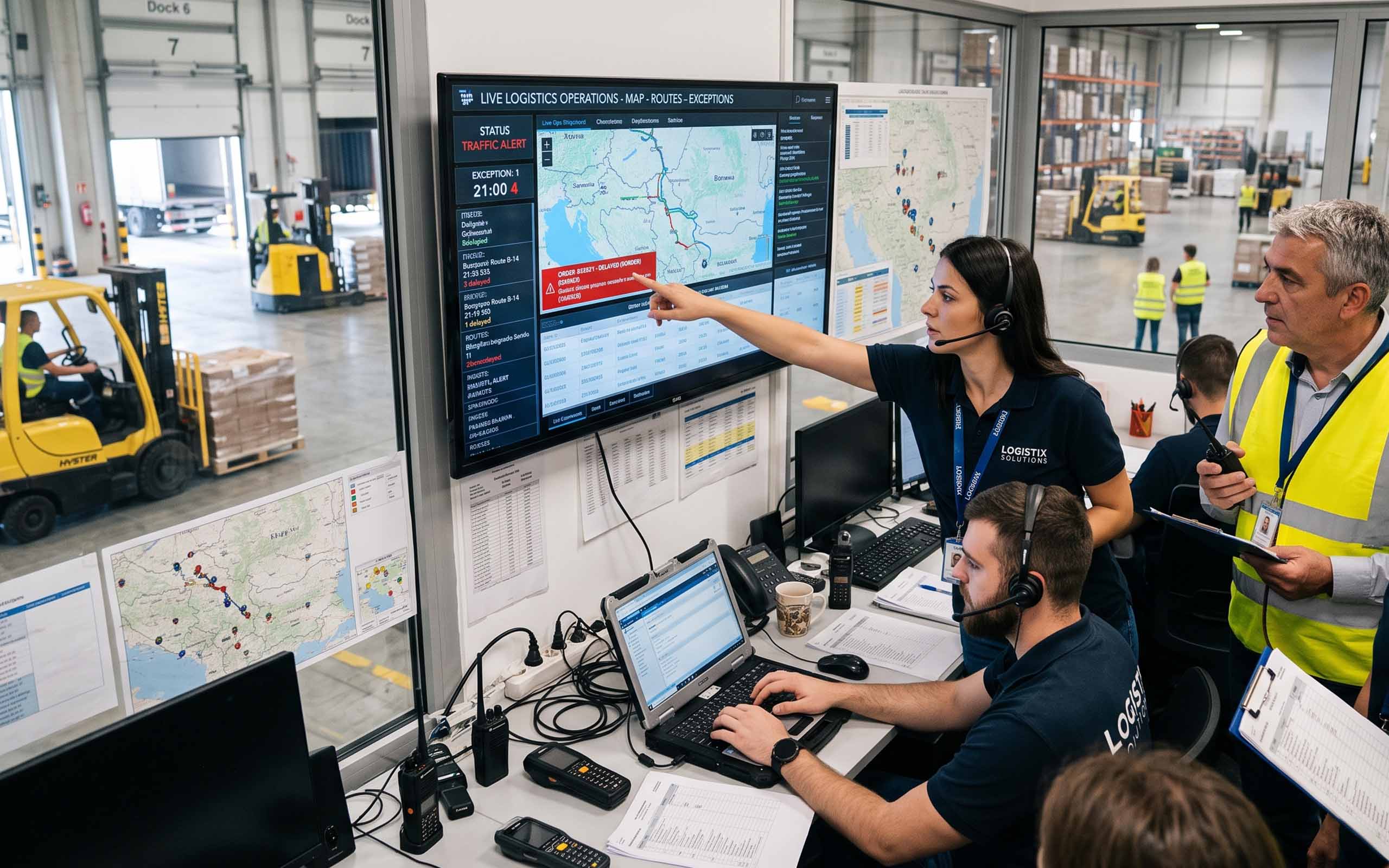
The five stages describe how an operation evolves over time, but the seven dimensions we'll describe below are what you're actually measuring at each stage and which one is the gap holding your operation back.
Most companies that struggle to move forward are stuck on one or two. Finding the right one is what makes a useful assessment.
- Strategic Leadership: Does transformation follow a clear plan with real ownership, or does the company buy tools reactively when the pain gets bad enough? Reactive buying produces a fragmented tool landscape with no logic connecting the pieces.
- Workflow Consistency: Are core workflows consistent across teams and locations, or does every regional office handle order intake differently? Consistency is what makes automation possible.
- System Connectivity: Are systems connected and API-ready, or is the organization running on legacy tools with data locked in silos? Architecture determines what is possible at every stage that follows.
- Cross-Team Alignment: Can sales, operations, finance, and logistics work from shared data, or is each team optimizing its own numbers in isolation? A procurement team that cuts unit cost by buying in bulk while quietly inflating inventory is the classic sign of broken structure.
- User Adoption: Do people actually use the systems, or do they keep backup spreadsheets because they don't trust the dashboard? Trust is the difference between a live system and an expensive, ignored one.
- Digital Skills: Can planners and analysts work effectively with data and exception queues, or do they rely on memory and instinct? According to IBM, many organizations still lack employees with practical experience for deploying AI at scale.
- External Partner Ecosystem: Can the company share data in real time with carriers, suppliers, and customers, or does external collaboration still happen by email? A highly connected internal operation still hits a ceiling if its partners are not.
The Technology Stack That Enables Each Stage

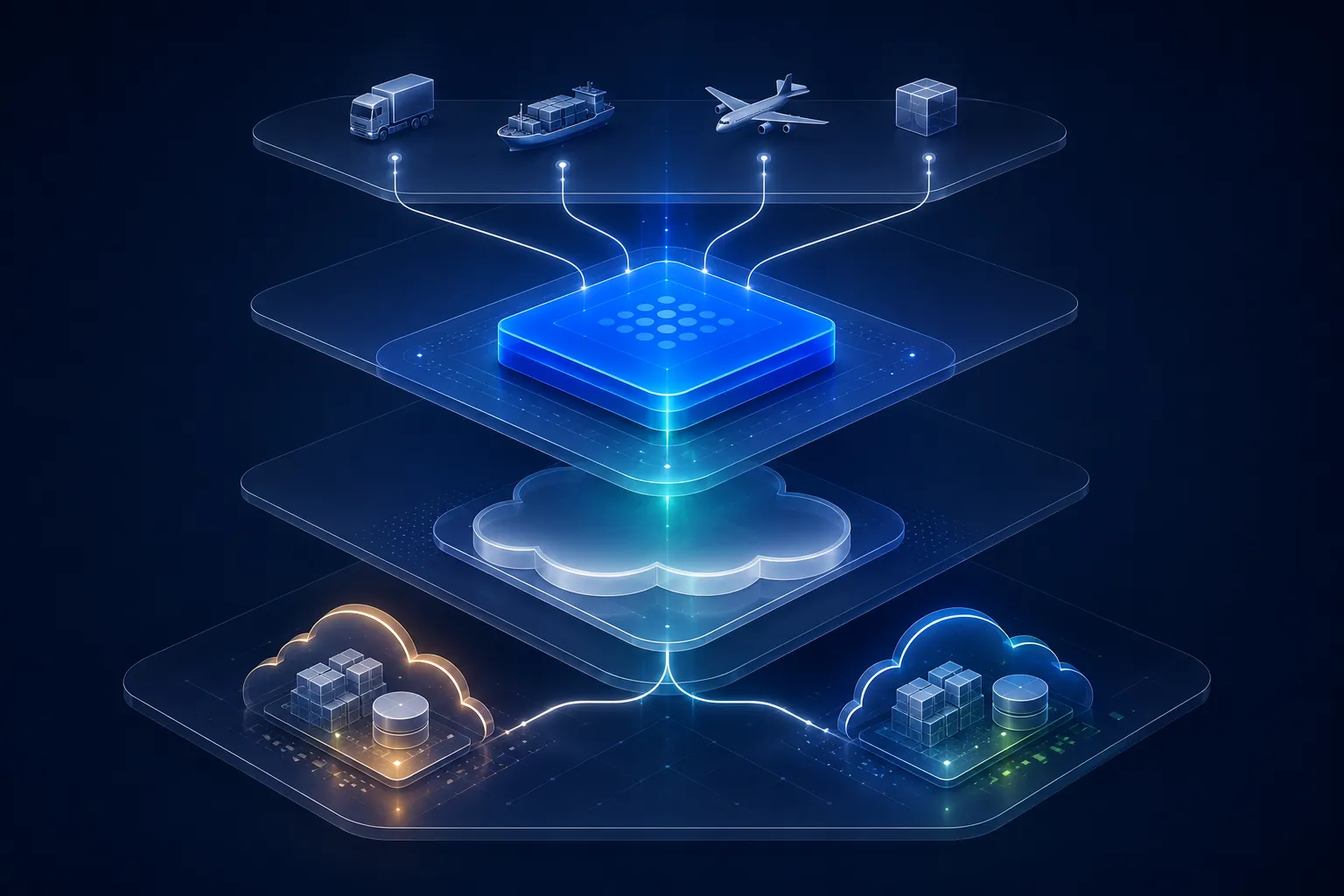
Think of the technology as four levels, each one only possible once the level below it is working.
- Level 1: Connection (Stages 1 and 2): APIs, EDI, cloud-based TMS, ERP, and WMS. This is what gets disconnected tools talking to each other and creates one shared data record across the organization. Every investment above this level depends on it. Without it, nothing above it is reliable.
- Level 2: Visibility (Stage 3): Real-time tracking across the network, control towers, customer portals, and carrier collaboration tools. This level only delivers value once Level 1 is sound and the organization is ready to turn what it sees into coordinated action. Visibility without action is just a dashboard nobody trusts.
- Level 3: Intelligence (Stage 4): Demand forecasting, dynamic routing, risk alerts, and spend analysis. Data quality is what determines whether this level works. Clean, structured data produces better decisions. Bad data produces faster confusion.
- Level 4: Automation (Stages 4 and 5): Exception workflows, invoice reconciliation, AI-generated quotes, and agentic systems. People and trust are what determine whether this level delivers. The technology can automate, but only if people trust it enough.
Digital Maturity Doesn't Stop at Your Company Walls
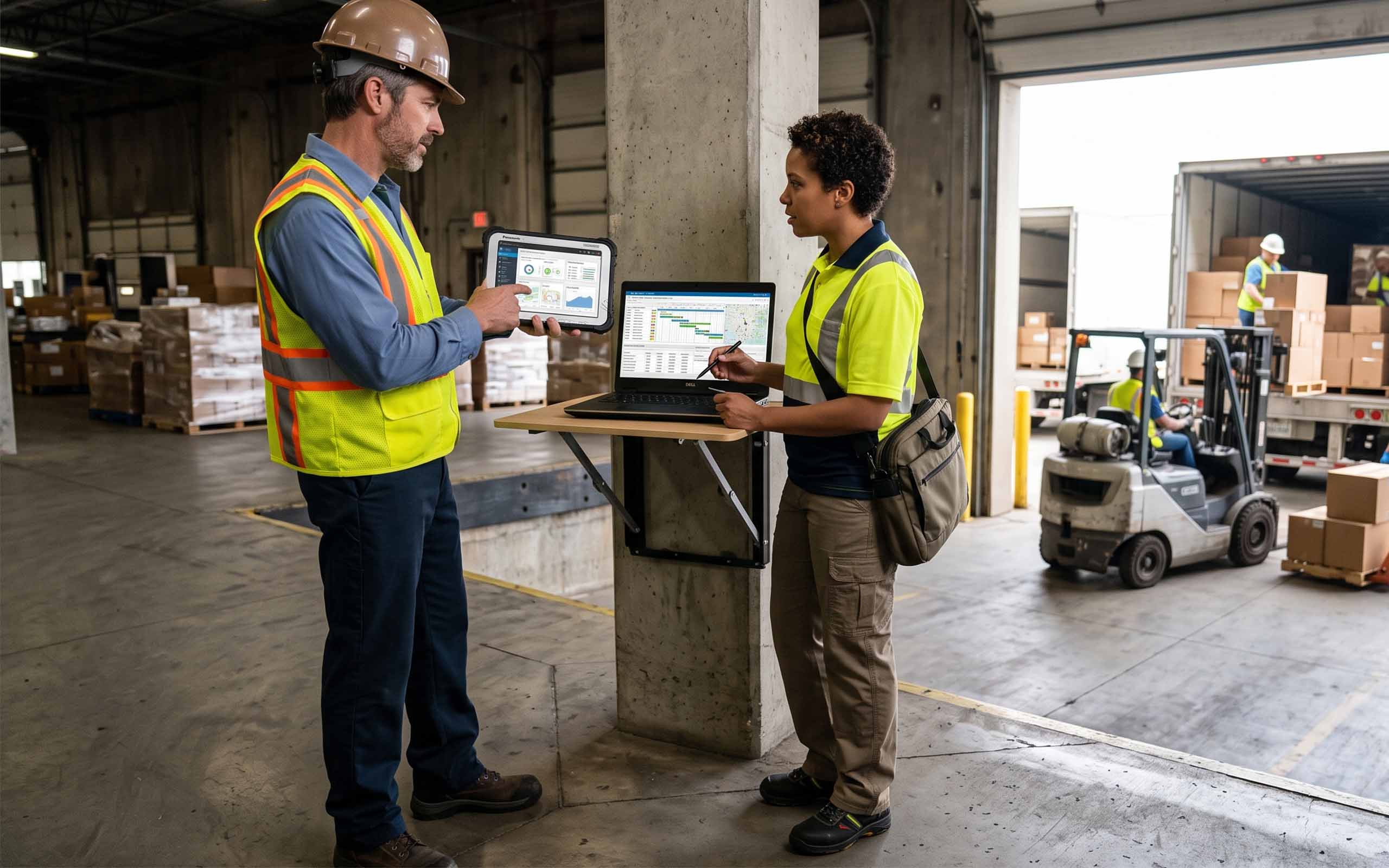
Even at Stage 4, your operation hits a limit set by your partners. A carrier still on email. A supplier who sends spreadsheets. A customer who calls to check status. The most digitally advanced internal operation in the world still depends on the least advanced participant in its network.
The industry's most instructive attempt to solve this produced its most instructive failure. IBM and Maersk launched TradeLens in 2018 to digitize global container shipping. By 2023 it was gone. The technology worked. The problem was that competing carriers refused to share data inside a network controlled by their largest competitor. Trust failed.
The takeaway here is that network effects in a fragmented industry require neutral governance. The model that is working is the opposite of TradeLens.
Open standards developed by neutral bodies let companies share data across the network without handing control to a dominant platform.
- DCSA is doing this for container shipping.
- The Open Logistics Foundation is doing this for logistics data exchange.
- Open eCMR standards are doing this for road transport, helping companies send consignment data across borders without lock-in.
Getting to Stage 4 or Stage 5 requires investing in interoperability as deliberately as internal systems. Your operation's digital ceiling is set by the least advanced participant in your network.
What the Right Sequence Looks Like in Practice
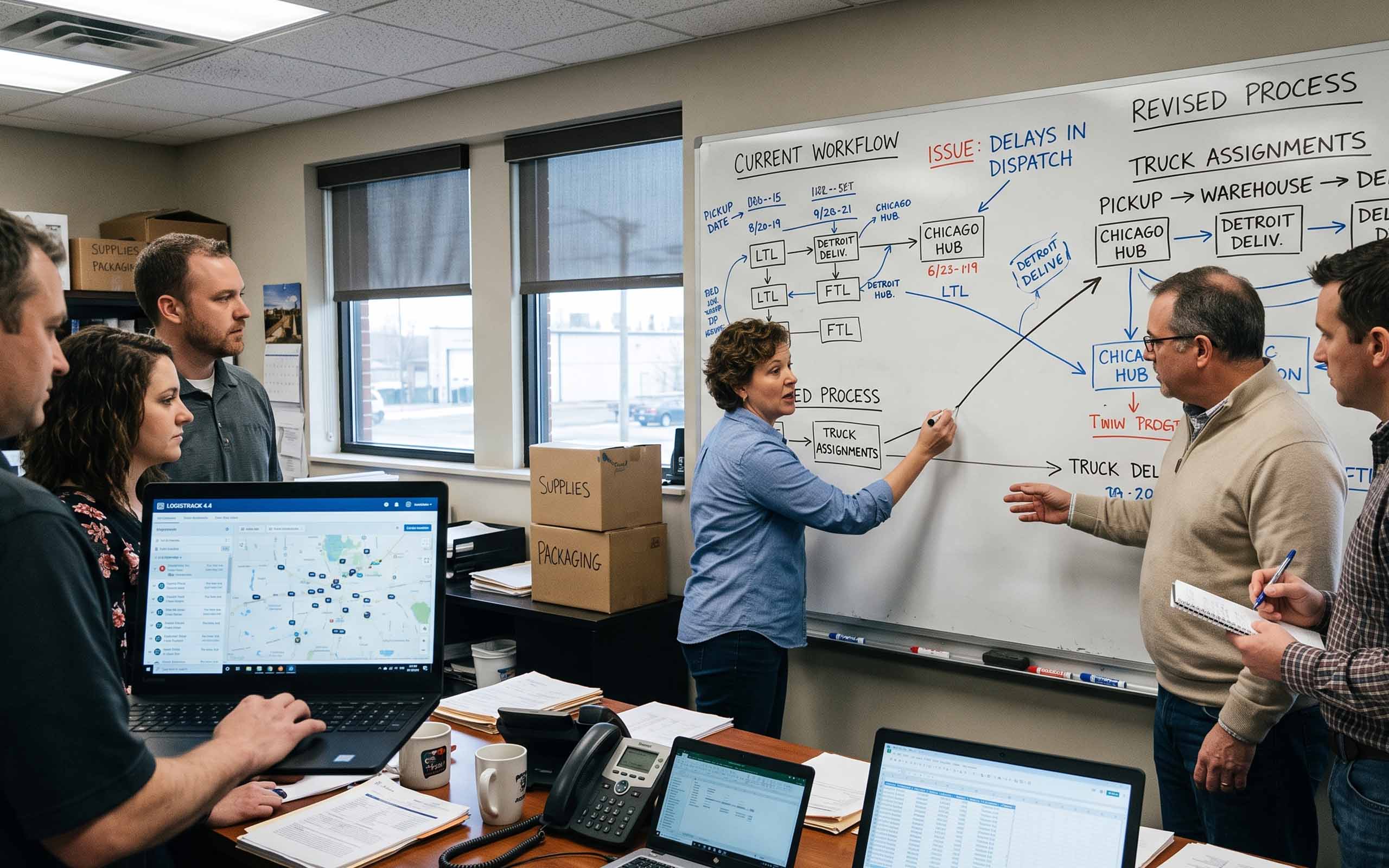
Researchers studying a road freight company in Slovenia (40 employees, serving clients across Austria and Germany) found a firm sitting between Stage 1 and Stage 2. They had basic fleet tracking, some e-invoicing software, and a customer portal. They had a basic TMS but it was only partly used and not connected to anything else.
No ERP. No standardized process documentation. Core workflows ran on manual data entry and the knowledge of a few senior people who had been there a long time.
The researchers' solution was to fix the foundation first:
- Step 1: Standardize processes and document them before any major system investment. No new tools. Just workflows defined and data ownership clarified.
- Step 2: Connect an ERP to the existing fleet tracking. Create one shared internal operating record.
- Step 3: Roll out customer-facing digital services: shipment tracking and digital consignment notes.
This case is useful because it shows a company at the point where most logistics teams actually are. Basic tools in place, no connected operating model, and the instinct to solve that by buying something more advanced.
The right answer was to standardize first, build second, then reach outward.
The Adoption Problem Holding Back Digital Maturity

About 70% of logistics organizations report persistent struggles with long-term digital adoption. The TMS goes live. Dispatchers use it for a few weeks, then go back to spreadsheets because the new system is slower for the tasks they do twenty times a day. The control tower dashboard gets checked by one manager and ignored by everyone else.
Two problems drive this. The first is a skills gap: people don't know how to work with dashboards, exception queues, or data outputs. The second is a trust gap: people don't believe the system is accurate enough to rely on, usually because at some point it wasn't.
Neither one resolves itself once the software is installed.
The organizations that navigate this well treat change management as a parallel effort from day one. They define what success looks like for each role before the system goes live. They find internal champions. They build feedback loops so problems surface before they turn into workarounds. And they measure adoption directly rather than assuming it follows implementation.
A logistics company is not digitally mature because it owns advanced software. It is digitally mature when its people consistently use shared data to make better decisions.
The Sequence Is the Strategy
The leaders who get value from digital investments are not smarter or better funded than those who don't. They did things in the right order. They standardized before they integrated. They built visibility before they built predictions. They earned the right to use each next capability by making the level beneath it solid.
The maturity model makes that sequence visible. It shows where your operation actually sits and what the genuine next step looks like. It is the tool that stops the most expensive mistake in logistics technology: buying advanced tools to solve foundational problems.
You do not become digitally mature by buying the most advanced tool. You become mature by building the foundation that makes advanced tools work.
Neurored TMS & SCM is built to support logistics teams at each of these steps. It connects CRM, freight rates, transport execution, tracking, carrier collaboration, and customer portals in one place, on Salesforce, so every part of the operation works from the same data. Ready to see where your operation sits? Schedule a demo and talk to our team.
Description
Description