
Challenges and Future Trends in Freight Routing
Current Challenges
Freight routing faces several persistent challenges that logistics companies must navigate to maintain efficiency and competitiveness.
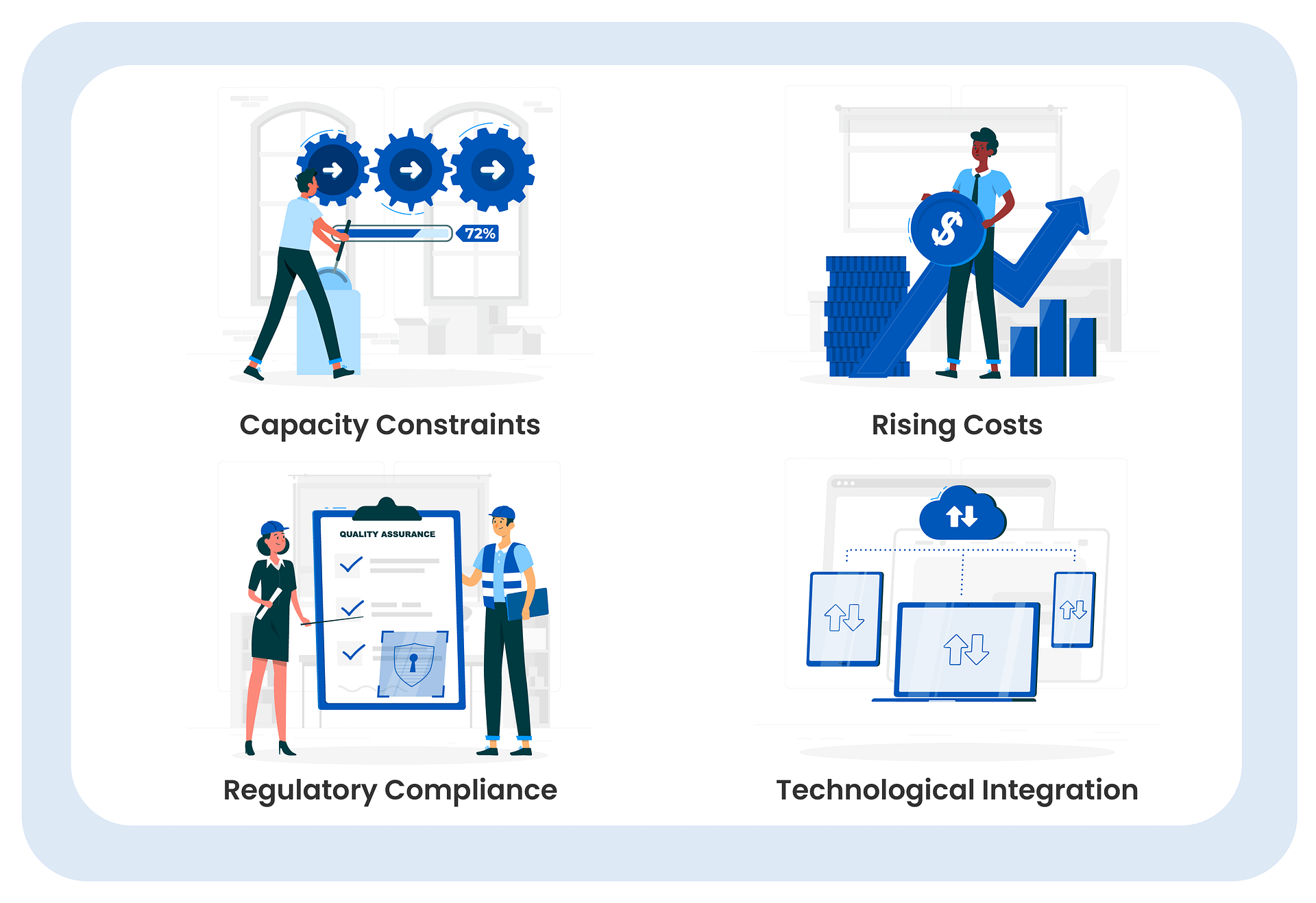
1. Capacity Constraints
Situation:
- Limited availability of transportation resources, such as trucks and drivers, can lead to bottlenecks and delays.
- Seasonal peaks and unpredictable demand fluctuations worsen this issue.
Solution:
- Advanced Planning Tools: Utilize advanced planning software and predictive analytics to forecast demand and allocate resources efficiently. These tools can help manage capacity by anticipating peak periods and adjusting resource allocation accordingly.
- Flexible Freight Contracts: Establish flexible contracts with multiple carriers to ensure capacity during peak periods, facilitated by integrated contract management systems that track and manage carrier agreements.
2. Regulatory Compliance
Situation:
- Navigating different regulations across regions, especially in international logistics, can be complex and time-consuming.
- Compliance with safety, environmental, and labor regulations adds to the burden.
Solution:
- Compliance Management Systems: Implement software solutions that track and manage compliance requirements across different regions, ensuring that your operations adhere to local and international regulations.
- Regular Training Modules: Facilitate regular personnel training on the latest regulations and compliance practices.
3. Rising Costs
Situation:
- Increasing fuel prices, labor costs, and tolls contribute to the rising costs of freight transportation.
- Inefficient routing and empty miles further escalate expenses.
Solution:
- Optimization Tools: Use route optimization software to minimize empty miles and reduce fuel consumption by identifying the most efficient routes.
- Cost Monitoring Systems: Continuously monitor costs with integrated financial management tools that help identify areas for cost-saving measures.
4. Technological Integration
Situation:
- Integrating new technologies with existing systems can be challenging and may require significant investment.
- Ensuring data consistency and real-time visibility across all platforms is crucial.
Solution:
- Modular Systems: Opt for modular technology solutions that can be integrated incrementally, allowing for a scalable approach to technological upgrades.
- Data Integration Platforms: Use platforms that facilitate seamless data integration and provide real-time visibility, ensuring that all systems work together harmoniously.
Future Trends
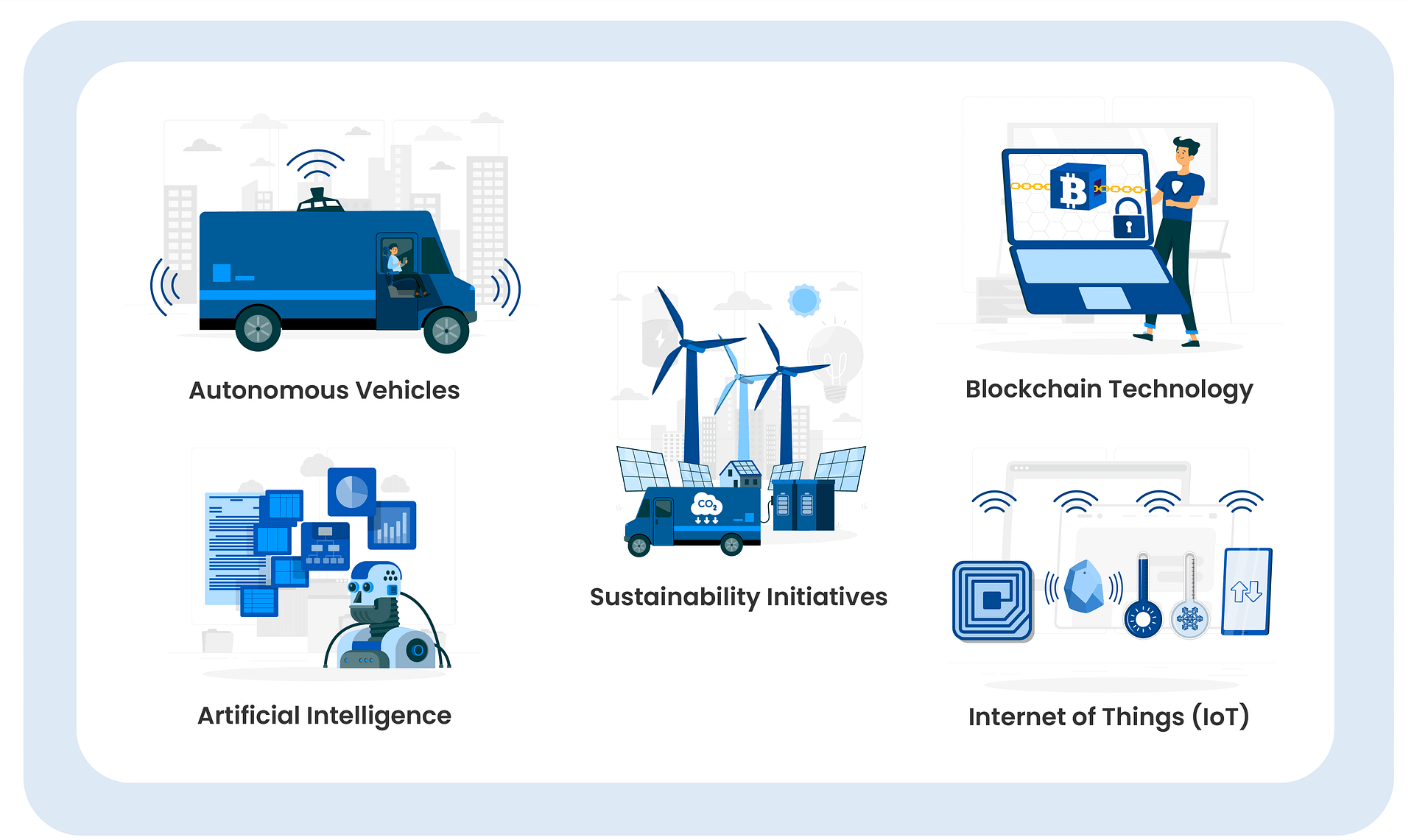
The future of freight routing is being shaped by several innovative trends and emerging technologies. Here are some key trends to watch.
1. Autonomous Vehicles
Autonomous trucks and drones are expected to revolutionize freight transportation by improving efficiency and reducing human error.
Impact:
- Efficiency: Autonomous vehicles can operate continuously without breaks, reducing delivery times. Advanced software tools can help manage and monitor these vehicles, ensuring optimal performance.
- Safety: Advanced sensors and AI reduce the risk of accidents and enhance safety, with software platforms providing real-time monitoring and alerts.
2. Blockchain Technology
Blockchain offers a secure and transparent way to manage and track shipments, ensuring data integrity and reducing fraud.
Impact:
- Transparency: Provides a tamper-proof record of transactions, enhancing trust among stakeholders. Blockchain-integrated software ensures that all transaction data is secure and easily accessible.
- Efficiency: Streamlines documentation and reduces administrative burdens, facilitated by blockchain-enabled management systems.
3. Internet of Things (IoT)
IoT devices provide real-time tracking and monitoring of shipments, offering insights into location, condition, and handling.
Impact:
- Visibility: Enhances real-time visibility of the supply chain, allowing for proactive management. IoT-enabled platforms provide detailed tracking and monitoring data.
- Optimization: IoT data can be used to optimize routes and improve asset utilization through integrated routing and fleet management software.
4. Artificial Intelligence and Machine Learning
AI and machine learning algorithms can analyze vast amounts of data to predict demand, optimize routes, and enhance decision-making.
Impact:
- Predictive Analytics: Improves forecasting accuracy and helps in proactive planning. AI-driven software tools provide advanced analytics and predictive insights.
- Dynamic Routing: Enables real-time route adjustments based on changing conditions, managed through AI-powered routing platforms.
5. Sustainability Initiatives
Growing emphasis on sustainability is driving the adoption of eco-friendly practices and technologies in freight routing.
Impact:
- Green Logistics: Adoption of electric vehicles, alternative fuels, and eco-friendly packaging. Sustainability management tools track and optimize environmental impact.
- Regulatory Compliance: Meeting stringent environmental regulations and improving corporate sustainability profiles, supported by compliance management software.
Conclusion
Freight routing is at a pivotal point, with significant challenges to overcome and exciting opportunities on the horizon. By addressing current challenges with Advanced Freight Routing Software solutions and embracing future trends, logistics companies can stay ahead of the curve, optimize their operations, and achieve sustainable growth.
Stay Tuned for Our Next Post: How to Implement Advanced Freight Routing Systems – Step-by-Step Guide
Schedule your demo today!

Ricardo Medem
Share Article



Let’s Get Started
Schedule a Demo Now