
Build vs. Buy Software: Why Logistics Teams are Choosing Neither
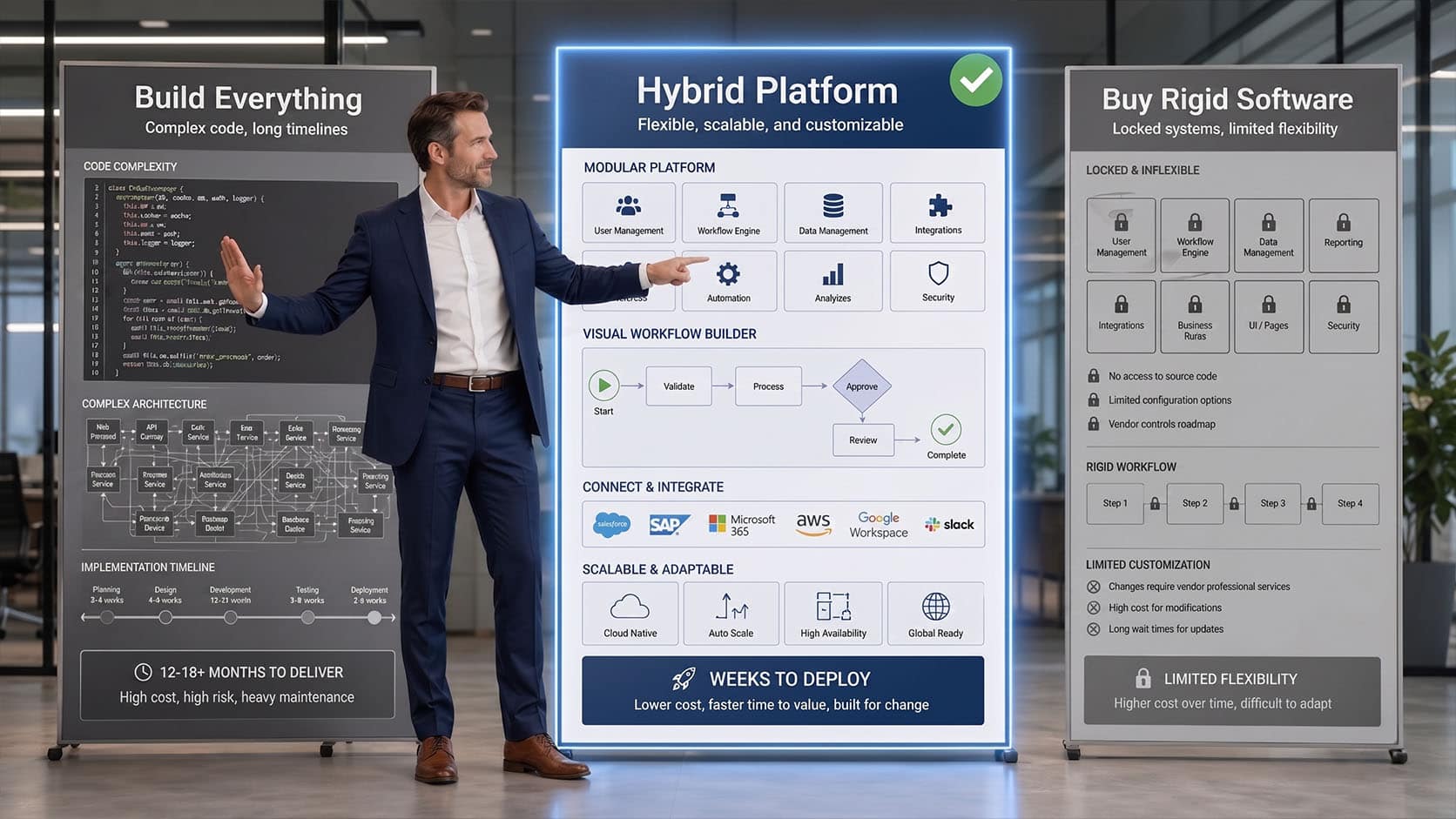
The build vs. buy software question has been the default decision model in logistics technology for decades. And for decades, it has produced expensive systems that disappoint, timelines that stretch, and operations teams who are quietly working around the tools that are supposed to help them.
McKinsey and the University of Oxford studied more than 5,400 large-scale IT projects and found they ran 45% over budget, 7% over time, and delivered 56% less value than predicted on average. Software projects had the highest overrun risk in the dataset.
This article isn't going to help you pick a side in the build vs. buy software debate. The decision itself is obsolete. The logistics industry has long outgrown it. There’s a better model replacing it: the hybrid approach, where speed, control, and flexibility are the new baseline.
Why Build vs. Buy Doesn’t Work for Modern Logistics Software
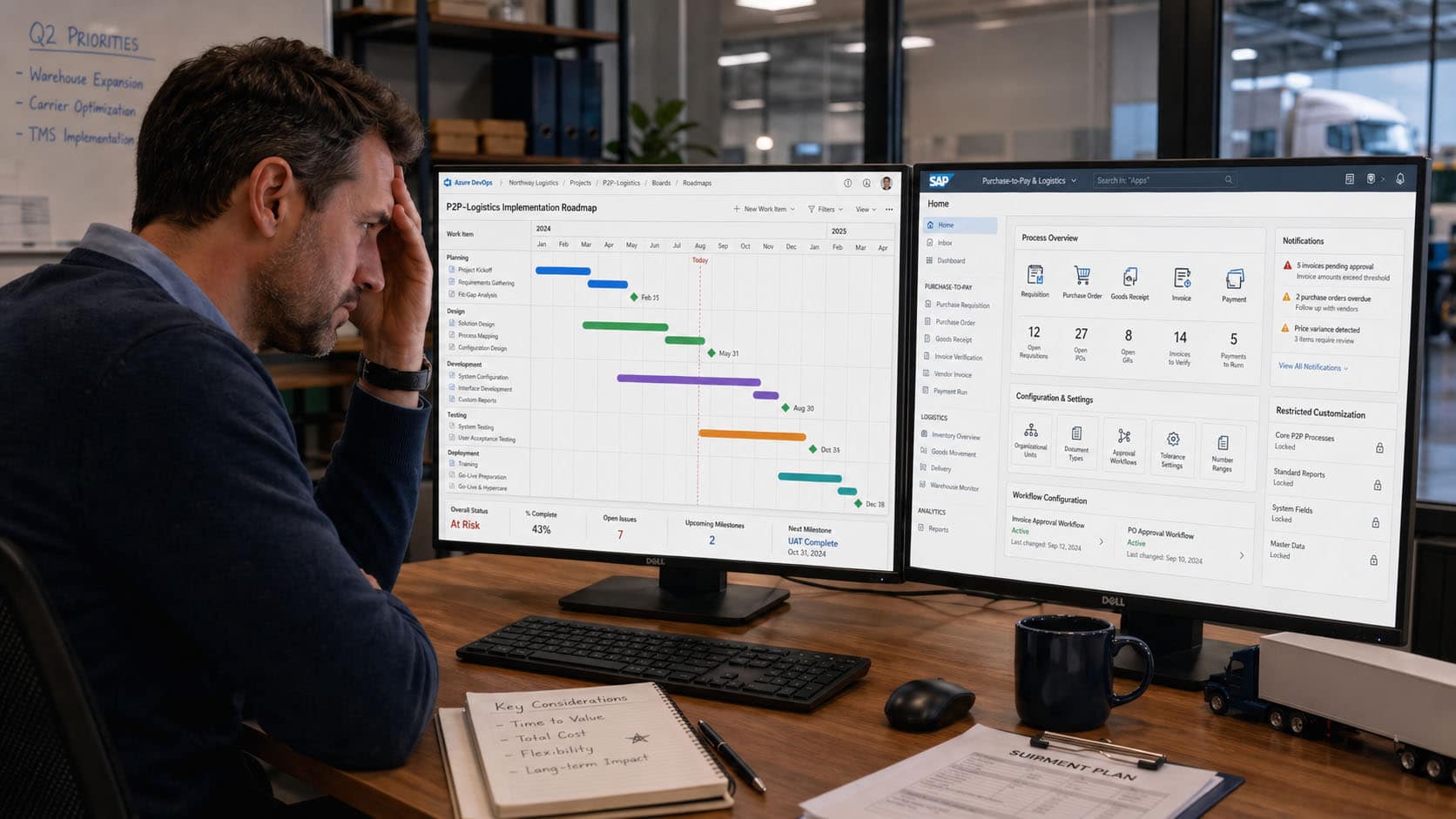
Building means waiting years for a system that ships late and lands wrong. Buying means inheriting a tool built for everyone, which in practice means built for no one.
Here’s why neither of them work.
Why Logistics Teams Choose to Build Software
When a company decides to build its own logistics software, it's usually coming from a legitimate place.
The thinking goes like this:
- Our operation is complex.
- Our processes are differentiated.
- Off-the-shelf software wasn't designed for us.
- We need full control.
- We need competitive differentiation.
- We need a system that fits our workflows.
None of that is naive. It's exactly the right set of requirements. The failure of building logistics software is in what the process actually incurs.
What It Takes to Build a Logistics Software From Scratch
The standard build vs. buy software analysis weighs three things: development costs, business benefits, and execution risks. The honest version of that analysis for building looks like this.
What starts as an 18-month project can become two years, then three. The McKinsey/Oxford research we mentioned at the beginning found that 17% of large IT projects perform so badly they threaten the existence of the company itself, with cost overruns of 200% to 400%.
The longer the project runs, the worse it gets: every additional year adds another 15% to expected cost overruns. Internal teams accumulate technical debt with every sprint.
By the time the system launches, the business it was built for has already changed:
- A new trade lane has opened.
- A major customer has asked for a workflow the system was never designed to support.
- A regulation has shifted the compliance requirements.
Two or three years is long enough for a few black swans to show up, and in logistics, they don’t exactly knock politely.
The result? A system that's technically finished and operationally already behind.
A team that's now responsible for maintaining, scaling and continuously developing a piece of software that isn't their core business. And a growing awareness that the competitive differentiation they built for is now a liability they're managing.
‣ Learn to pick a TMS software aligned with your business goals
Why Logistics Teams Choose to Buy Software
On the other side of the whiteboard, buying looks like the rational corrective:
- Proven capabilities.
- Faster implementation.
- Lower upfront risk.
Someone else has already solved the hard problems, stress-tested the system across multiple clients and built the integrations you'd otherwise spend months developing from scratch.
Speed to market is real. So is the reduced dependency on internal development resources. For many logistics teams, buying feels like the grown-up decision. And it is…on paper. In practice, it turns out to be something completely different.
‣ Find out if off-the-shelf TMS software the right choice for your operations
Why Off-The-Shelf Logistics Software Doesn´t Word in Practice
You decide to buy an off-the-shelf logistics system. Then it meets the operation and causes problems.
It starts with the sales team. The flow doesn't fit how they quote. Then operations flags that a core workflow needs to be adapted. Then IT realizes that the integration with the carrier they use for 40% of their volume isn't standard and will require custom middleware. Then a key customer asks for a reporting format the system doesn't support natively.
Each of these problems has a solution. The solutions are called customizations. And customizations, in a bought system, are expensive, slow and fragile. Gartner predicts that by 2027, more than 70% of recently implemented ERP initiatives will fail to fully meet their original business case goals, with as many as 25% failing catastrophically.
The pattern repeats across enterprise logistics software for the same reason: the gap between what the product can do and what happens on the floor.
Every update the vendor ships risks breaking the custom logic layered on top. Every new requirement goes through a change request process that adds weeks and budget. The system that was supposed to reduce dependency on internal development now has a shadow IT function built around maintaining it.
So as time passes, you still think you bought that system, right? No. You stopped buying a long time ago. Before you realize it, you're customizing, negotiating and working around limitations. What you've ended up with is a stiff system with an expiry date, expensive patches every time you need a small fix and a growing inability to integrate with anything new.
Costs increase. Timelines extend. Frustration builds. And here's the part that matters: none of this is an execution problem. The teams making these decisions aren't incompetent. The vendors selling these systems aren't dishonest. It's a model problem.
The build vs. buy framework itself is broken. And it has been for longer than most people in the industry are comfortable admitting.
How Modern Logistics Has Outgrown the Build vs. Buy Framework
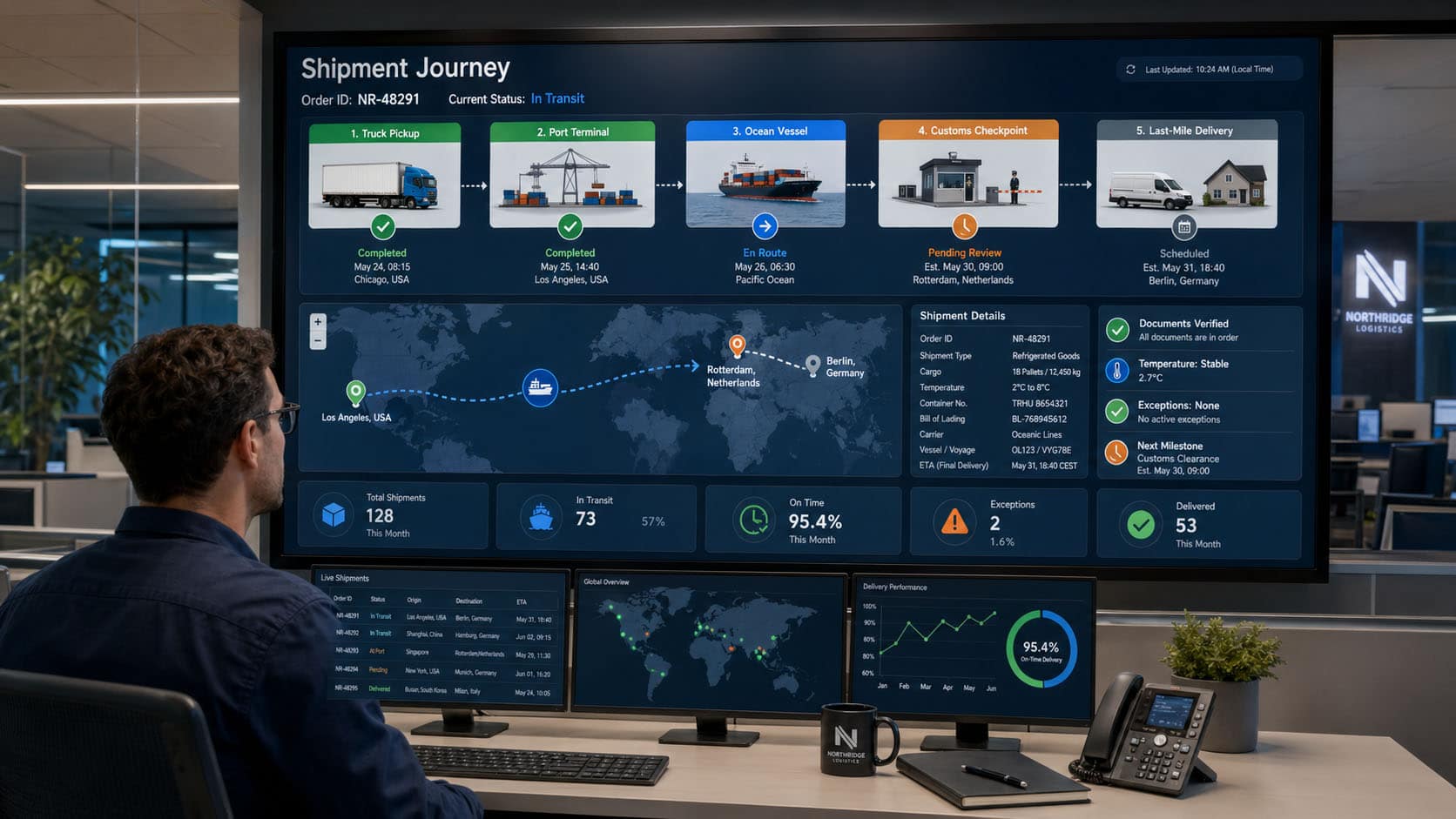
The build vs. buy framework made sense when logistics was relatively linear. A shipment moved from A to B. The systems supporting it needed to track freight movement, manage the documentation and handle the billing.
Complexity was manageable. Partners were few. Data was sparse.
That world doesn't exist anymore. Four forces have converged to make the build vs. buy decision obsolete. And they aren't going away.
Complexity Has Become Too Much for Linear Software
Multi-modal operations, customer-specific workflows and continuous exceptions are now the norm. A shipment today might move by road to a port, transfer to an ocean carrier, clear customs in an intermediate country, hand off to a regional 3PL and finish with last-mile delivery.
Each leg has its own data requirements, its own ways of going wrong, and its own stakeholders to keep informed.
Most software systems were made for linear processes. Linear processes are increasingly rare. McKinsey's 2024 Global Supply Chain Leader Survey found that 90% of companies experienced supply chain challenges that year.
It said that companies now take an average of two weeks to adapt to a supply chain disruption, which is way longer than the typical weekly sales and operations execution cycle.
Technology Must Connect a Much Larger Partner Ecosystem
A typical logistics operation today interacts with dozens of systems. Carriers, freight forwarders, customs brokers, port authorities, customers, e-commerce platforms, ERP systems, warehouse management systems.
That's an ecosystem. And your technology needs to connect that ecosystem in real time, not batch it overnight into a spreadsheet.
Data Hasn’t Made Decisions Easier
The volume of data available to logistics operations has grown exponentially over the last decade. Vessel positions, container events, trucking telemetry, weather patterns, port congestion indices.
So more data means more clarity, right? Not exactly.
McKinsey Global Institute research shows that only 2% of companies have visibility below tier-two suppliers, despite most major disruptions originating deep in the supply chain. In most organizations, data sits in silos, arrives late, or requires manual effort to interpret. The gap between data available and insight actionable is where operational risk lives.
‣ Learn how transportation data analytics can drive better decisions for your operations
Real-Time Visibility Is Now the Minimum Expectation
Five years ago, real-time supply chain visibility was a differentiator. Companies that could tell their customers where a shipment was, in real time, had a competitive edge.
That edge is gone. Real-time visibility is now the minimum expectation.
If your information isn't current, your decisions are already late. McKinsey research finds that supply chain disruptions lasting more than a month now occur every 3.7 years on average, and over a decade can cost a company up to 45% of one full year's profits.
Late decisions in logistics create financial issues: demurrage charges, missed delivery windows, expedite costs or customer penalties.
Logistics Decision-Making Is Evolving With the Industry
The logistics environment has changed dramatically, and technology decision-making is beginning to evolve with it.
The old build vs. buy line on the whiteboard no longer captures what modern logistics teams actually need.
The question is no longer whether to build everything internally or buy a rigid off-the-shelf system. It is what kind of technology model can keep pace with complexity, connect a growing ecosystem, turn data into decisions, and support real-time operations.
So if neither build nor buy works, what must a viable model actually deliver?
‣ Keep up with the evolving industry. Explore 10 best transportation optimization practices for this year.
Solution to the Build vs. Buy Debate: Hybrid Software Model
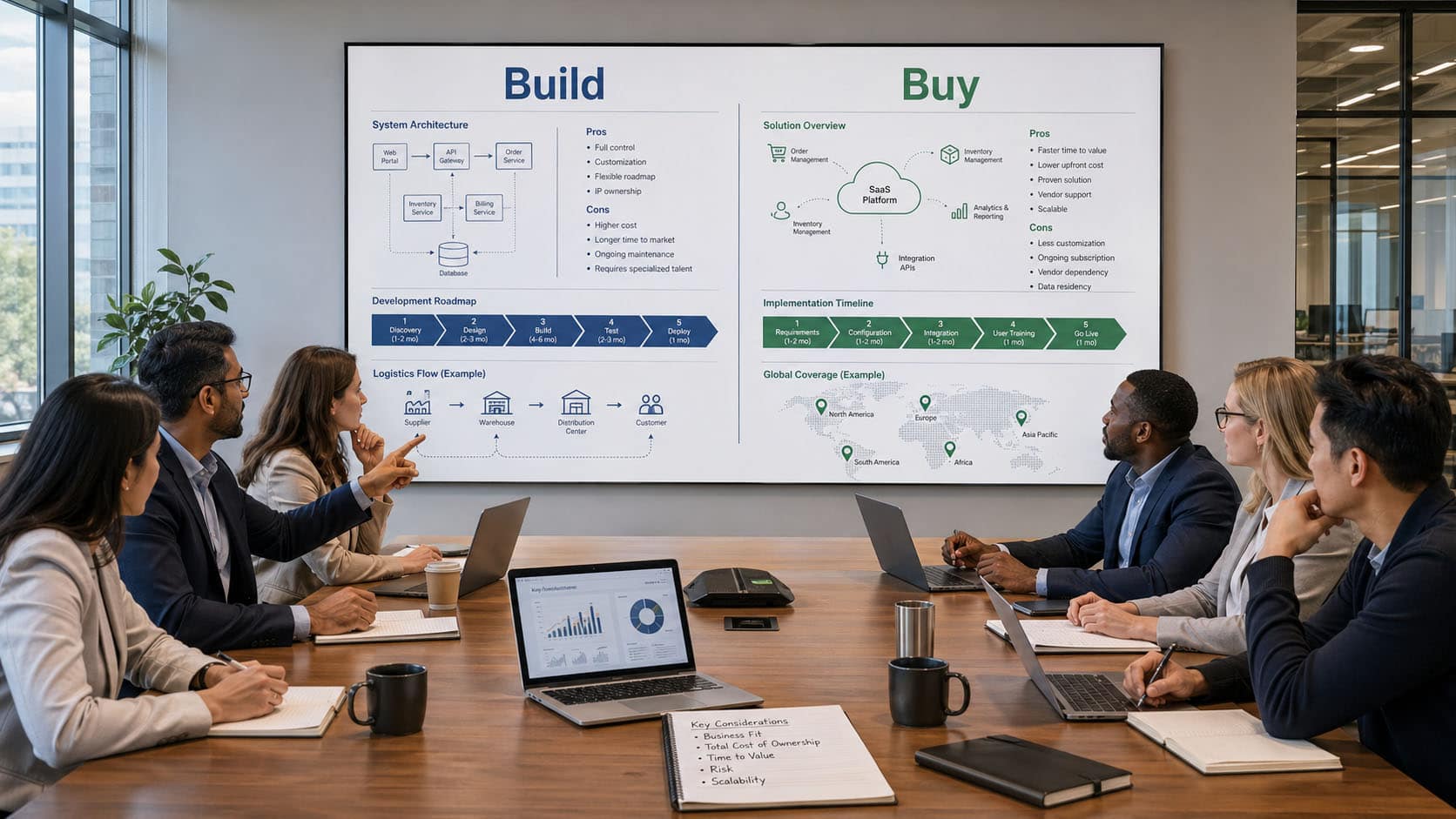
Below we’ll show you how a hybrid model solves the build vs. buy software debate. But before we do that, let's be precise about what this model is not:
- It isn't a compromise.
- It isn't "a bit of build and a bit of buy, averaged together."
- It isn't a polite way of saying you couldn't decide.
Logistics teams that approach this hybrid logistics software model as a middle ground can end up with a system that combines the worst of both worlds. The hybrid model only works if the foundation isn’t a rigid product, but an extensible platform.
What the Hybrid Model Looks Like in Practice
With the hybrid model, you start from a strong, proven foundation. The commodity logic, the standard workflows, the baseline integrations. Already built.
You're not spending 18 months reinventing freight document generation or rebuilding carrier connectivity from scratch.
But you aren't constrained by that foundation either. Where your operation requires custom logic, you configure it. Where your customer requires a unique workflow, you build it on top of the platform without touching the core. Where a new partner needs to be connected, the integration layer handles it natively.
Here's what makes that possible:
- Modular architecture. Capabilities are packaged as modules. You activate, extend, or combine them without rebuilding the system underneath.
- API-first connectivity. Integration isn't a project, it's a feature. Every connection point is designed for it from the start.
- Configurable business logic. Workflows are configured, not coded. Changes that would take months in a traditional system take days.
- Low-code environments. Operations teams adapt processes without waiting for development cycles.
- Native integration layer. The platform connects to your ecosystem by design, not by exception.
Can the Hybrid Model Handle Both Complex and Simple Operations?
Picture a mid-sized freight forwarder managing a growing customer base. Two customers tell the whole story.
The first is a manufacturer shipping standardized products on predictable lanes. Clean execution. Reliable booking. Accurate documentation. On-time confirmation. A monthly cost report. Standard flows, minimal exceptions. Easy to serve.
The second is a global retailer. Their supply chain spans six countries, four transport modes, and dozens of carrier relationships. They need custom exception workflows that trigger specific actions when a container is delayed at a transshipment port. They need a carrier integration that does not exist in any standard library. They need a reporting structure their CFO designed internally that maps to their ERP in a non-standard way. High-value customer. Operationally demanding.
Same forwarder. Same platform. Completely different operational reality.
Why Traditional Models Break Under Customer Complexity
Traditional systems tend to work well for one of these customers, but not both.
For the first customer, the manufacturer, the system can stay standardized. The forwarder can use default workflows, standard reports, basic tracking, and familiar documentation processes. Operations stay efficient because the customer fits the system.
For the second customer, the global retailer, the situation is different. The retailer does not fit neatly into standard workflows. Serving them well means custom workflows, bespoke integrations, non-standard reporting, and repeated technical intervention. Every change adds cost. Every exception creates another workaround. Every workaround makes the system harder to maintain.
The forwarder is left with a difficult choice.
They can keep the platform simple and risk underserving a high-value customer. Or they can customize deeply and create a system that becomes too fragile, expensive, and complex to scale across the rest of the business.
Either way, the model creates a tax. You either leave revenue on the table, or you take on technical debt to capture it.
Why Hybrid Models Scale Across Different Customer Needs
In a hybrid system, the core platform handles the first customer, the manufacturer, out of the box. Standard booking flows. Automated documentation. Fast real-time tracking. Reporting. No customization required. No overhead.
For the second customer, the global retailer, the forwarder builds on top of the same foundation without destabilizing it. This is where the hybrid model earns its keep.
The exception workflow is configured using the platform's business logic tools. The carrier integration is handled through the native API layer. The custom reporting is built as an extension, connected to the core data model, without touching the underlying system. When the platform updates, the extension stays intact.
The core stays stable. Integrations are native. Extensions are built quickly. Changes don't require rebuilding anything foundational.
The forwarder standardizes where standardization creates efficiency. They differentiate where differentiation creates value. They don't pay a tax on either decision.
Start fast. Adapt continuously. Scale without rebuilding.
How Modern Logistics Software Implement the Hybrid Model
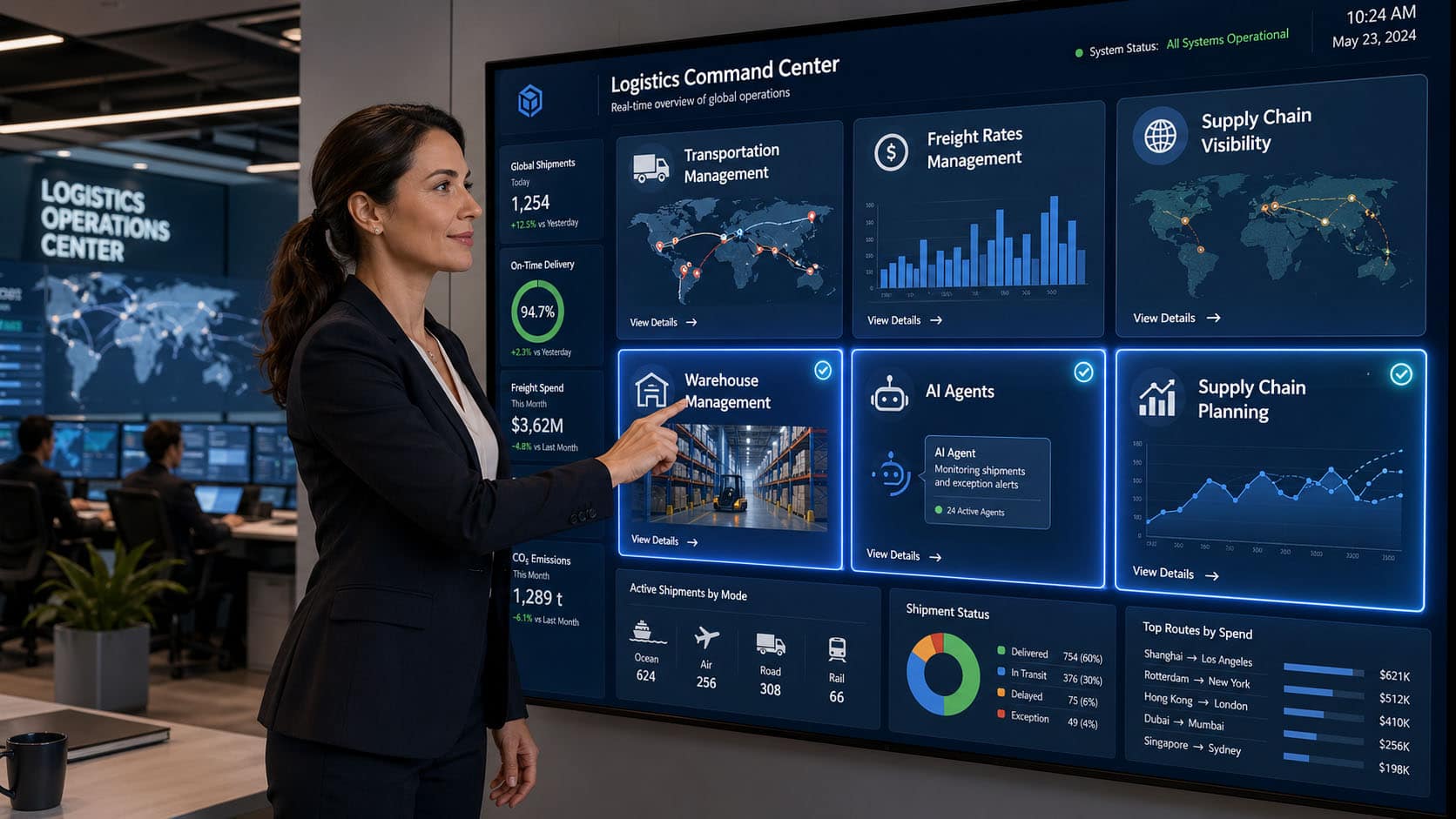
This isn’t a theoretical model. It already exists in systems built around extensibility from the ground up. Neurored TMS & SCM is a hybrid system for logistics and supply chain. It brings together pre-built capabilities, native integration and the flexibility to adapt to each customer.
Here are the core functionalities.
Add New Capabilities Without Rebuilding the Core
Logistics companies can start with the capabilities they need today and extend without rebuilding.
The core modules cover Transportation Management, Freight Rates Management and Supply Chain Visibility. The proven foundation. Additional modules cover Yard and Warehouse Management, AI Agents and Supply Chain Planning. They extend it.
Each module activates on top of the same system. Nothing has to be rebuilt when a new capability is added.
‣ Discover the essential features to look for in a TMS software
Native Integrations Reduce Middleware and Custom Connection Work
The 30+ pre-integrated logistics technology providers, from ocean tracking to air cargo booking to last-mile GPS, aren't third-party add-ons bolted to the side of the system. They're part of the platform's connectivity layer. API-first by design.
New integrations follow the same pattern.
Configurable Workflows Let Operations Teams Adapt Faster
Neurored TMS & SCM is built natively on Salesforce. That gives your team low-code configuration tools to adapt workflows without waiting for development cycles.
The business logic that determines how a shipment exception is handled, how a quote is generated or how a supplier is onboarded is configurable at the business level. Not hardcoded at the engineering level.
‣ Investigate the 10 benefits of a Salesforce-native TMS for your operations
AI Extends the Platform Instead of Replacing It
Neurored TMS & SCM tools like the Quote Agent, AI Payables and NeuroDoc sit on top of the operational foundation and automate the repetitive administrative layer.
You generate quotes in seconds. You match invoices automatically against contracted rates. You extract, store and organize documents without manual handling.
The AI extends what the system can do. It doesn't replace the platform's operational core.The outcome is that the technology stops being a constraint. It becomes an enabler.
‣ Find out how Neurored TMS 4.0 uses AI to improve your workflows
The Build vs. Buy Question Is the Wrong Question
Back to the whiteboard. Build or buy?
It's been the wrong question for years. And it always produced the wrong answer. It frames a complex, dynamic, ecosystem-level problem as a binary choice between two options that both disappoint in predictable ways.
The right question is harder. And more useful. How do you combine speed, flexibility and scalability without compromising any of them?
That's what the hybrid model is built to answer.
A proven foundation you don't have to rebuild. An integration layer that connects your ecosystem natively. A configuration surface that adapts to your customers without accumulating debt. A system that changes when your business changes, instead of holding it back.
This is the model Neurored TMS & SCM was built on. Modular where you need to extend. Native where you need to integrate. Configurable where you need to adapt. Book a demo and we'll show you what it looks like running on your operation.
Schedule your demo today!

Ricardo Medem
Share Article



Let’s Get Started
Schedule a Demo Now