













Chief Executive Officer leading Neurored’s strategy and growth across freight and logistics.

Content Marketing Specialist with expertise in B2B SaaS, SEO, AEO, and technical writing.

Director of Marketing with 10+ years in B2B SaaS demand generation and revenue growth.
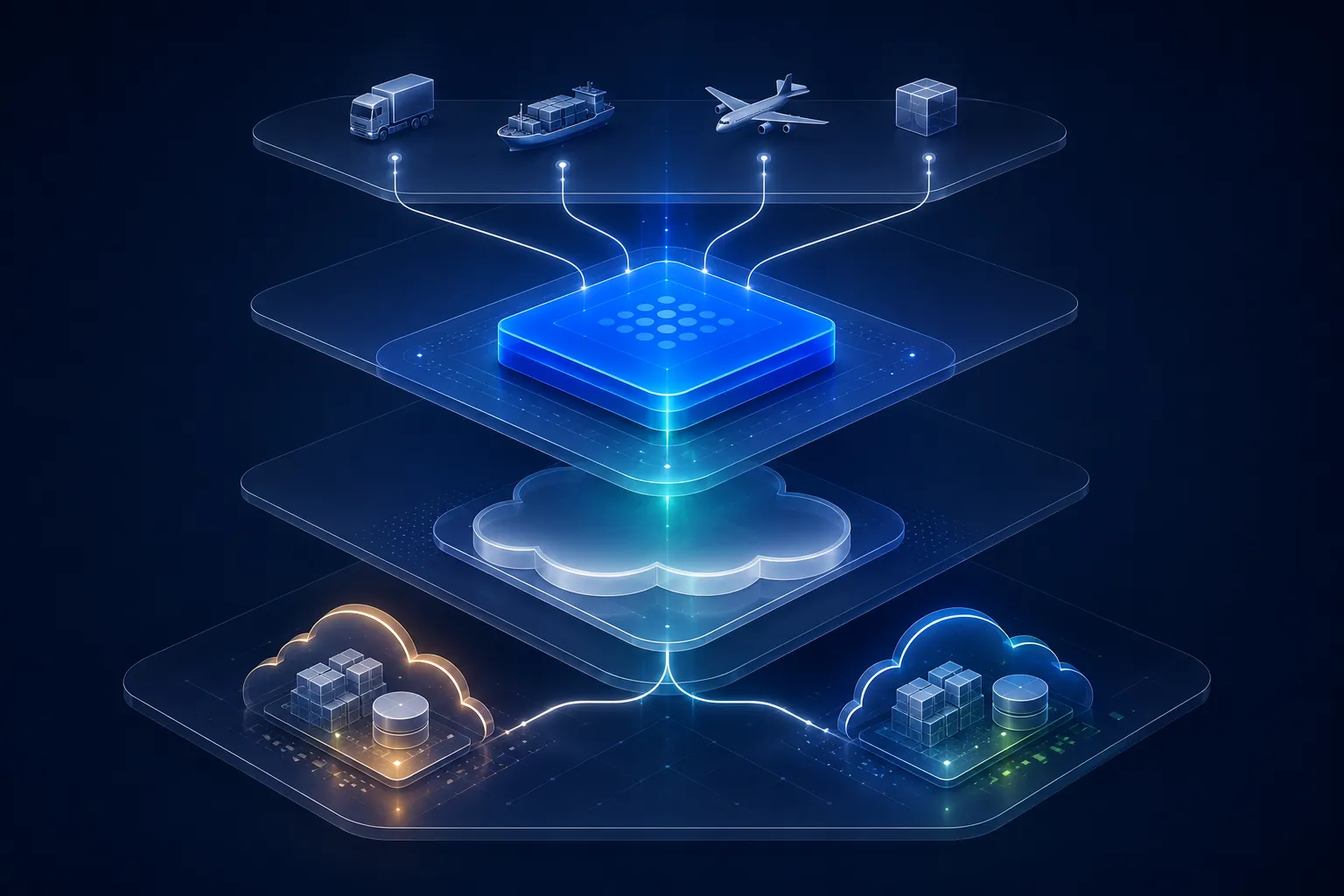
One platform for transport management and supply chain, built on Salesforce.
Book a demoWhat if your ocean arrival estimate moves by two days?
At first, that might look like a tracking problem. Then the questions start. Which delivery is now at risk? Does the onward move need to change? Has anyone told the customer?
Now it’s suddenly an operations problem. A map can show that a container is late. A milestone feed can show a revised ETA. But neither is enough if the team still has to search for the affected shipment, find the documents, chase updates, and work out who needs to act.
That’s the real test: does it help your team respond when something changes?
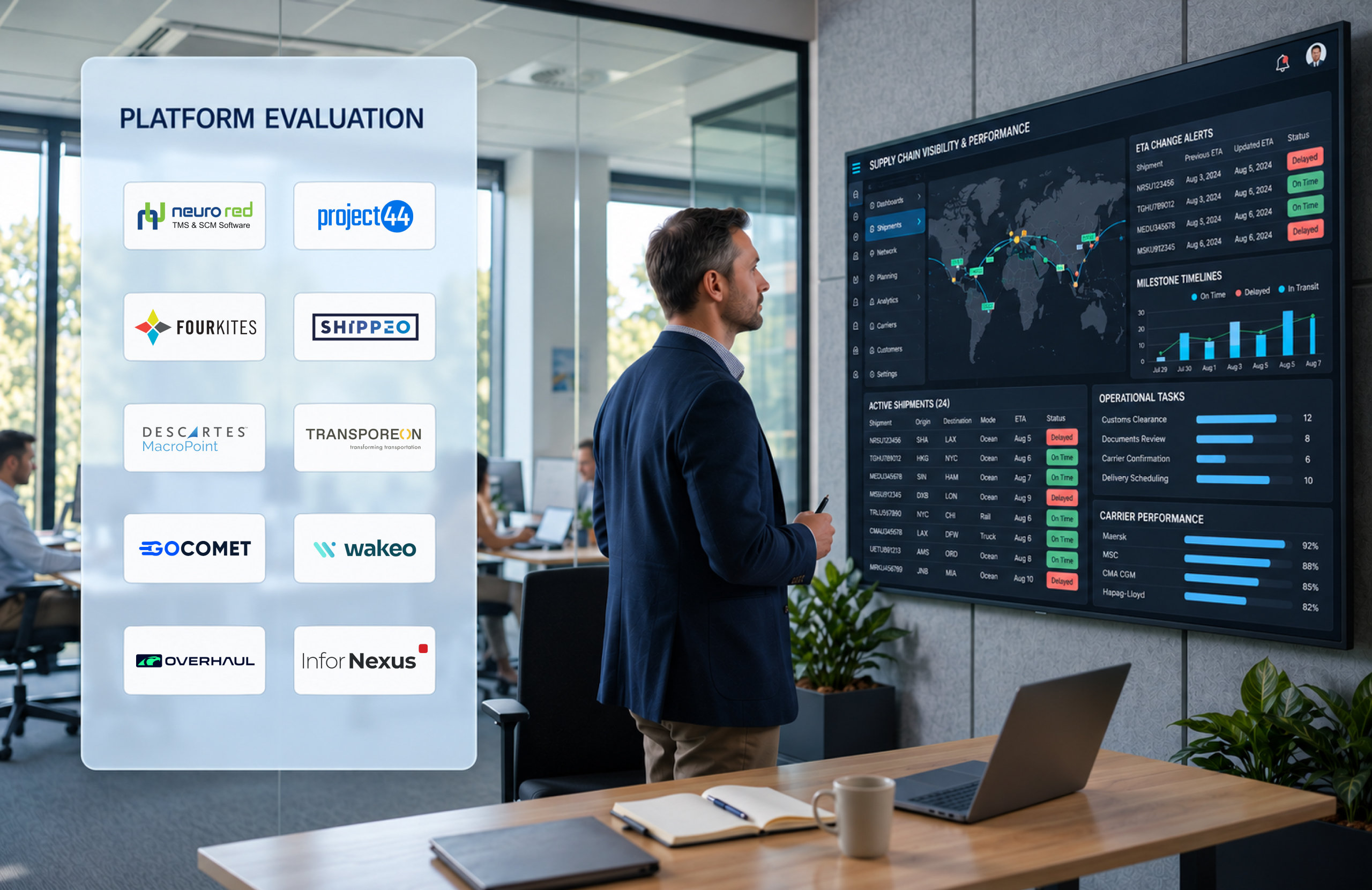
This guide compares 10 of the best supply chain visibility platforms for logistics teams. Some are dedicated visibility layers. Others connect visibility with a broader TMS, control-tower, or supply-chain workflow.
10 Supply Chain Visibility Platforms at a Glance
Not every supply chain visibility software in this comparison approaches visibility the same way. Some focus on tracking freight and predicting arrival times. Others connect shipment updates with transport operations, facility workflows, cargo security, or inventory.
Use the table to identify which approach fits the work your team needs to manage.
The sections below explain each platform’s capabilities, operational fit, and customer feedback.
How We Selected These Vendors

We selected these 10 platforms for logistics teams comparing shipment tracking, predictive ETAs, disruption alerts, and the work that follows a shipment change.
The comparison draws on public product documentation and selected G2 reviews. We looked at each platform’s documented capabilities, connections with other systems, and operational focus. Customer reviews show how people use supply chain visibility tools in practice.
The list includes dedicated transportation visibility platforms alongside broader TMS, SCM, and control-tower products. We explain those differences so you can shortlist platforms that match your operation.
Neurored publishes this guide and includes its own product. The list is a starting point for evaluation, rather than a scoring ranking.
Before choosing, confirm support for your actual carriers, lanes, modes, and systems. Then use the same shipment scenario to assess how each shortlisted platform handles an update, identifies affected work, and helps your team respond.
1. Neurored TMS & SCM

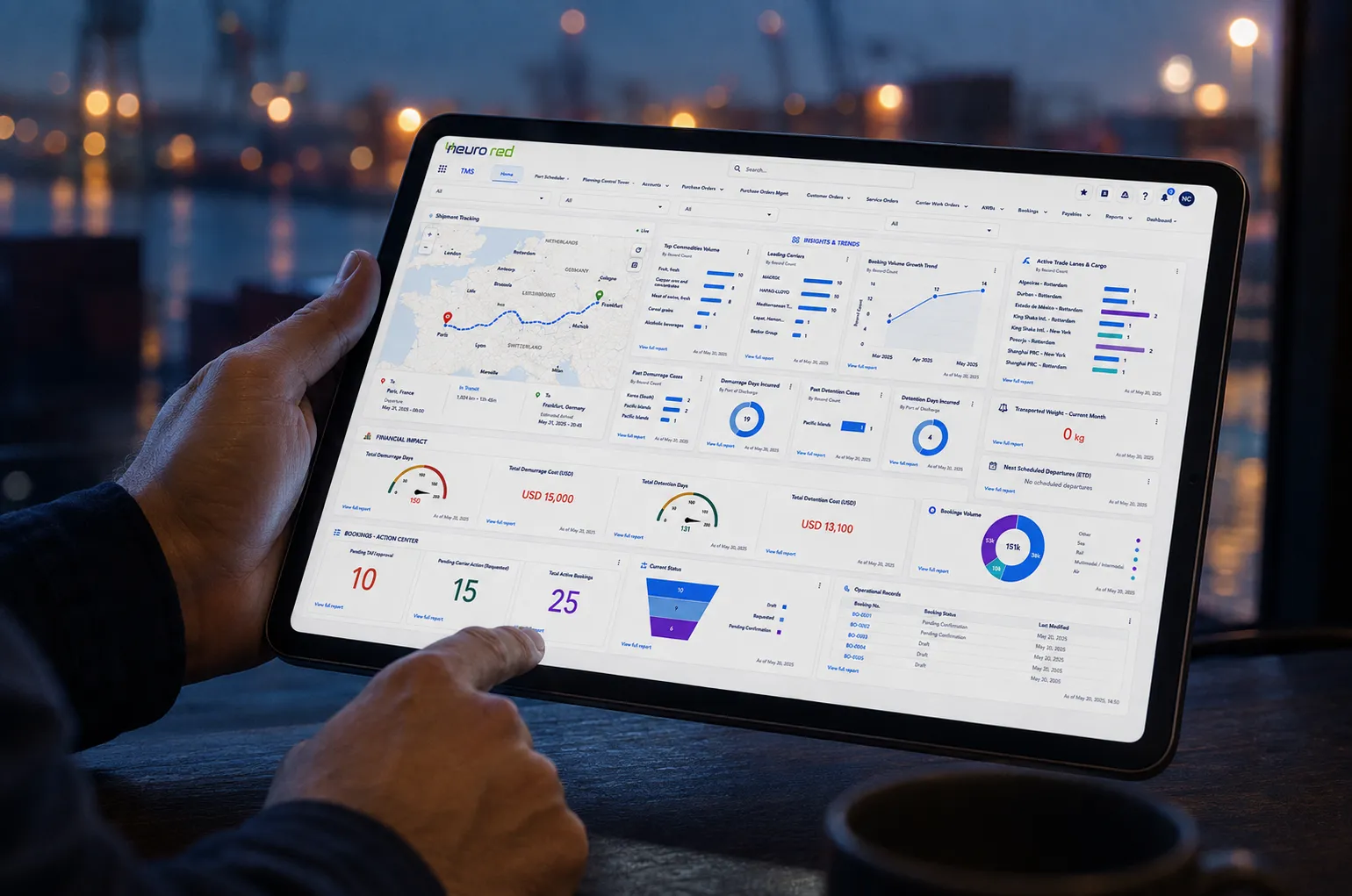
Neurored TMS & SCM is logistics software with visibility tools that cover multimodal transportation across ocean, air, road, and rail.
It’s especially useful in helping you see the work around a shipment.
- The Supply Chain Visibility Software brings shipment events into the operational environment.
- The Supply Chain Control Tower adds broader monitoring and alerting.
Together, they’re designed to help a team spot a change and follow it through.
The transport order is central to that workflow.
It’s a shared record connected to relevant emails, invoices, and logistics fees. So when an ETA changes, the event can stay connected to the documents, customer context, and follow-up work it creates. It’s not just another update on a map.
Neurored TMS & SCM is built natively on Salesforce, which means it uses the same data architecture and security standards as this enterprise platform, although you don’t need an existing Salesforce license to use it.
Key Features:
A supply chain visibility software is only useful when it helps you see the movements, conditions, and exceptions that matter in your operation.
Here are the main areas Neurored can monitor:
- Ocean Vessels: Use vessel-position data to follow ocean movements and flag route deviations or exceptional circumstances.
- Containers: Keep pickup-to-delivery milestones in one view, with alerts for delays and other events that may need corrective action.
- Container Data Sources: Combine tracking information from multiple sources. If one source is not returning data for a reference, the system can seek an alternative source.
- Air Freight: Track air-cargo events and flag deviations during air movements.
- Road Freight: Monitor the status, location, events, delays, route deviations, and geofencing activity for FTL and LTL shipments.
- Rail Freight: Follow rail milestones from origin to destination, including containers moving by rail, through integrations with leading railway carriers.
- Parcels: Connect parcel-carrier tracking data with delivery visibility and collaboration.
- Assets and Inventory: Extend visibility into warehouse and 3PL operations when inventory or asset records affect the shipment workflow.
- Shipment Conditions: Monitor temperature, humidity, and other relevant IoT signals for applicable perishable or fragile goods.
- Transport Emissions: Track measures such as distance and fuel or energy consumption alongside shipment activity.
- The Full Network: Bring ocean, air, road, rail, and parcel information into a multimodal Control Tower for monitoring, alerts, and customer-facing tracking portals.
- The Work Around the Shipment: Keep the transport order connected to related emails, invoices, logistics fees, and operational follow-up.
Is Neurored TMS & SCM the Right Fit for You?
Neurored is a strong fit for teams that need to manage the work created by a shipment change, not just see the change on a dashboard.
When an ETA moves, the update can stay connected to the shared transport order, relevant documents, customer record, and follow-up work in the same Salesforce-native logistics environment. That gives teams a more complete way to manage the consequences of a changed shipment, not just its status.
What Users Say About Neurored TMS & SCM
G2 reviewers describe Neurored as helping teams keep visibility, documentation, and customer follow-up connected.
A mid-market manufacturing reviewer said linking documentation with customer details made it easier to provide support and gave them visibility across supply-chain and customer-service work.
A sales executive highlighted tracking and real-time connection between departments, while a logistics reviewer said they could check tracking daily and share timely status with the final customer.
[cta|Can Your Team Act on a Delay?|See how Neurored connects tracking, documents, and follow-up work.|Book a demo|#contact]
2. project44
project44 is a transportation visibility platform designed to connect information from carriers, forwarders, and facilities across multiple modes.
It also features predictive ETAs across shipment legs and milestones. The key question is what happens after the ETA changes. A visibility layer can collect a lot of useful transportation data. But that data still needs to reach the systems and people running the work.
project44 is worth testing if your team needs a dedicated source of multimodal visibility data across several providers or geographies.
Key Features:
The platform focuses on three connected jobs:
- Multimodal Journey Visibility: Connects carrier, forwarder, and facility information across modes.
- Predictive ETAs: Provides predicted arrival information across shipment legs and milestones.
- Workflow Data Layer: Brings visibility information into connected operational systems and workflows.
Is project44 the Right Fit for You?
Choose project44 if you need a dedicated visibility layer across multiple carriers, forwarders, facilities, and transportation modes. Its focus is connecting that journey data in one place, then adding predictive ETAs across the shipment’s legs and milestones.
What Users Say About project44
The reviewers point to the same practical benefit: fewer people chasing the same shipment update.
An enterprise Supply Chain Projects Lead said live visibility reduced back-and-forth among customers, logistics teams, depots, and carriers. A reviewer in the chemicals industry described overseas-container tracking as part of the daily workflow. And a mid-market software engineer highlighted having one place to investigate delays and answer internal questions.
3. FourKites
FourKites is an AI-powered supply-chain visibility, orchestration, and execution platform. Its public materials connect shipment visibility with wider execution work, including facilities, documents, and yard workflows.
That matters when the delay affects more than the transport leg. A late inbound load can change a delivery appointment, disrupt a receiving plan, or leave a facility team waiting for freight that is not arriving on time.
FourKites is worth evaluating if those downstream workflows are part of your operation, and part of the configuration you’re considering.
Key Features:
FourKites connects shipment visibility with the work that happens around the freight:
- Supply-Chain Visibility: Track shipment activity from movement through arrival.
- Orchestration Context: Connect visibility information with wider execution workflows.
- Facility Workflow Support: Support facility, documentation, and yard-related workflow areas.
Is FourKites the Right Fit for You?
FourKites is for you if you need shipment visibility connected to the work that follows. It links to wider execution workflows, including facility and yard-related processes. That makes it worth considering when a late or changed shipment affects more than its transport status.
What Users Say About FourKites
An enterprise Senior Logistics Specialist said real-time visibility reduced the back-and-forth of customer updates. A mid-market broker assistant pointed to ETA and facility-arrival information for scheduling appointments and warning receivers about possible delays. And a consumer-goods reviewer highlighted ocean-container visibility and predictive ETAs for answering customer and market questions.
4. Shippeo
Shippeo is a real-time, multimodal transportation-visibility platform for tracking shipment status, location, milestones, and predictive ETAs. Its data can come through deep carrier-TMS integrations or Shippeo’s mobile app for drivers. That makes it worth considering for teams that want to identify at-risk deliveries earlier and spend less time chasing late shipments.
Key Features:
Shippeo focuses on three parts of the visibility workflow:
- Live Shipment Status and Location: See current status, location, and milestones.
- Predictive ETA: View a predictive ETA alongside the latest shipment updates.
- Connected Data Collection: Gather visibility data through carrier-TMS integrations and a mobile app for drivers.
Is Shippeo the Right Fit for You?
Shippeo is a strong fit if your team needs reliable shipment updates and predictive ETAs without so much manual follow-up. Its product centers on current status, standardized milestones, and arrival predictions, using data from carrier systems and driver-app connections.
What Users Say About Shippeo
A small-business Logistics Manager said real-time visibility and ETA predictions reduced carrier follow-up. A transportation reviewer used GPS tracking to keep customers informed without constant manual updates. And a customer-service representative highlighted the centralized, multimodal visibility view, including ocean shipments.
5. Descartes MacroPoint
Descartes MacroPoint is a multimodal freight-visibility platform for shippers, brokers, and 3PLs.
Its value looks different for different logistics teams. Brokers may use it to stay connected with carriers and drivers. Logistics providers may use it to share updates with customers. Shippers may use it to spot a late load before it affects a customer commitment.
Key Features:
- Multimodal Freight Visibility: Supports visibility for shippers, brokers, and 3PLs across transportation modes.
- Shipment Status and Predictive Information: Helps users view, analyze, and predict the status of in-transit freight.
Is Descartes MacroPoint the Right Fit for You?
MacroPoint is a natural fit for shippers, brokers, and 3PLs that need a clearer view of in-transit freight across transportation modes. Its focus is simple: see the shipment, anticipate what may happen next, and communicate the status to the people who need the update.
What Users Say About Descartes MacroPoint
G2 reviewers describe MacroPoint as helping teams replace status-chasing with accessible shipment updates.
A mid-market Logistics Coordinator said automated tracking, location updates, and ETAs reduced manual calls and email follow-ups, making it easier to update customers before delays escalate. A small-business reviewer highlighted frequent customer updates and TMS integration, while a mid-market Carrier Optimization & Sourcing Specialist pointed to load-level tracking history and control-tower visibility.
6. Transporeon Visibility
Transporeon Visibility describes its product as an AI-enabled, multimodal visibility solution for shippers. Its documentation says it tracks in-transit freight, generates predictive ETAs, and alerts teams to potential disruptions across road, ocean, rail, air, and intermodal transportation.
Transporeon also offers a helpful definition of the category: real-time transportation visibility combines information from carriers, vehicles, telematics systems, terminals, and other sources. That is a reminder to inspect the data path, not just the dashboard.
For a buyer, the practical question is whether the required carrier and shipper collaboration exists in the actual transport network. Ask which parties contribute events, which can see updates, and which workflow or module governs exception follow-up.
Key Features:
- Multimodal Tracking: Track in-transit shipments across road, ocean, rail, air, and intermodal transportation.
- Disruption Alerts: Receive alerts for delays, milestone changes, and other deviations, with visibility data that can feed execution and TMS workflows.
Is Transporeon Visibility the Right Fit for You?
Transporeon Visibility is for you if your transportation network depends on information from many parties. It brings predictive ETAs and disruption alerts into a multimodal environment where shippers, carriers, telematics systems, and terminals all contribute updates.
What Users Say About Transporeon
Three G2 reviewers describe the same practical benefit: fewer calls to carriers and clearer coordination around the load.
One small-business reviewer said live updates through Time Slot Management reduced calls and requests for direct carrier updates. A Logistics Coordinator highlighted live loading-status information alongside planning for assigned loads. And a logistics reviewer at a 3PL described giving customers a shared place to manage transport work and follow delivery progress.
7. GoComet
GoComet centralizes shipment monitoring across ocean, air, road, and courier freight.
Its Track and Trace product works with common freight identifiers, including master bills of lading, air waybills, and container numbers. It then provides real-time status updates and automated milestone notifications in one operational view.
That is useful for international freight teams moving between modes, ports, airports, and other handoff points. GoComet also describes email, mobile, and in-app notifications, giving teams several ways to share a critical update when it happens.
Key Features:
GoComet brings three useful tracking capabilities together:
- Centralized Multimodal Tracking: Follow ocean, air, road, and courier shipments from a single tracking view.
- Reference-Based Tracking: Track freight with bills of lading, air waybills, and container numbers.
- Automated Milestone Notifications: Receive shipment and critical-milestone notifications by email, mobile, or in-app message.
Is GoComet the Right Fit for You?
GoComet is a natural fit if your team already finds freight using familiar references: a bill of lading, air waybill, or container number. It brings the resulting updates into one tracking view, then sends milestone notifications by email, mobile, or in-app message.
What Users Say About GoComet
The G2 reviewers describe GoComet as a way to spend less time doing it manually. One enterprise reviewer in biotechnology highlighted live vessel location, geofencing, automated event updates, and email notifications.
A logistics reviewer said fast ETA and shipment updates made it easier for multiple teams to coordinate. A logistics manager pointed to automated tracking and stakeholder emails that streamlined daily tracking work.
8. Wakeo
Wakeo provides real-time tracking and predictive ETAs across ocean, air, road, rail, and parcel movements. Its platform also highlights disruption alerts and route-related insights.
That makes it especially relevant for logistics teams managing overseas freight, multimodal connections, and the consequences of a disruption along the way.
Wakeo also features API-based connections with other systems. In other words, the visibility data doesn’t need to stay on a single screen. It can become part of the wider workflow around the shipment.
Key Features:
Wakeo focuses on the moving shipment and the change in plan:
- Multimodal Predictive Tracking: Predictive ETAs across ocean, air, road, rail, and parcel movements.
- Disruption Awareness: Alerts and route-related insights for changes that need attention.
- System Connectivity: API-based connections that bring visibility data into other systems.
Is Wakeo the Right Fit for You?
Multimodal transport creates more handoffs. More handoffs create more chances for the plan to change.
Wakeo combines predictive tracking across ocean, air, road, rail, and parcel freight with disruption alerts and route-related insights. It’s built for teams that need to follow those changes across the journey.
What Users Say About Wakeo
The reviewers describe a familiar goal, and that’s to get the tracking update into the system and conversation where someone can use it.
An enterprise transportation reviewer said Wakeo’s API automated transport-event updates into its TMS, reducing manual tracking and status follow-up.
An enterprise consumer-goods reviewer highlighted real-time ocean tracking and ETA changes appearing in its ERP. And a small-business apparel reviewer said using one platform made it easier to give clients accurate container-arrival updates.
9. Overhaul
Overhaul combines real-time shipment visibility with risk-management workflows.
Not every shipment problem is an ETA problem. Sometimes it is a cargo-theft risk, suspected fraud, a cold-chain issue, or another incident with serious operational consequences. In those cases, knowing where the shipment is matters, but so does identifying the risk and responding before it affects the operation.
Overhaul focuses on keeping shipment data current, surfacing discrepancies, and helping teams respond to risk. Its Shipment Manager also brings shipment data, ETAs, and execution tools into one operational view.
Key Features:
Overhaul is built for the moment when a shipment needs more than a status update.
- Real-Time Shipment Visibility: Track active shipments and assets across the transport lifecycle.
- Risk Detection: Surface discrepancies and prioritize the shipments that need operational attention.
- Response Workflows: Bring shipment data, ETAs, and execution tools into one operational view.
Is Overhaul the Right Fit for You?
Overhaul is a natural fit for teams where shipment risk is part of the job.
If cargo theft, fraud, cold-chain control, route deviations, or other high-consequence incidents are a concern, Overhaul brings visibility and risk-management workflows into the same operating context. Your team can see the shipment, investigate a discrepancy, and manage the response from one place.
What Users Say About Overhaul
The G2 reviewers describe visibility that can lead to a security or operational response.
An enterprise Senior Specialist highlighted a single dashboard combining GPS, cargo-sensor, and vehicle-camera data, with alerts for shipments that deviate from the planned route or schedule.
A small-business Operations Manager pointed to real-time truck-location data for monitoring truckloads. And an enterprise Network Manager cited shipment monitoring and alerts when a problem occurs.
10. Infor Nexus
Infor Nexus looks beyond the shipment.
Its visibility offering spans orders, shipments, inventory, suppliers, ports, and terminals. The company’s Control Center materials describe real-time monitoring, proactive alerts, decision support, and collaboration across roles.
That broader view matters when a delayed shipment affects more than the load itself. An inbound delay can change a purchase order, an inventory position, a supplier relationship, and a customer commitment at the same time.
Key Features:
With Infor Nexus, the shipment is part of a bigger picture.
- Multi-Enterprise Visibility: Follow orders, shipments, inventory, suppliers, ports, terminals, and logistics partners in one environment.
- Multimodal Transportation Tracking: Monitor ocean, air, rail, truck, and parcel movements on the same platform.
- Control-Tower Alerts and Decision Support: Use control-tower monitoring, proactive alerts, predictive information, and shared visibility across roles.
Is Infor Nexus the Right Fit for You?
Infor Nexus is built for operations where the shipment is only one part of the decision.
If a late load affects inventory, purchase orders, suppliers, ports, terminals, and customer commitments at the same time, a broader network view can be more useful than a tracking tool alone. Its Control Center brings monitoring, alerts, and decision support into that wider supply-chain context.
What Users Say About Infor Nexus
The reviewers describe visibility that reaches beyond transport status.
An enterprise Transition Specialist highlighted GPS map views that show clients where bottlenecks are, alongside detailed tracking of transactional events.
An enterprise Supply Chain Manager described following goods movement and location while managing pack, plan, scan, and ship work. And a mid-market accounting reviewer cited the ability to manage inventory and information connected to global trade.
How to Evaluate Supply Chain Visibility Software

Feature lists will get you to a shortlist. They won’t get you to a decision.
Every platform has tracking. Every platform has alerts. Every platform has integrations.
But a feature list does not tell you what happens when an ocean ETA moves, a document is missing, or a delivery commitment is suddenly at risk.
So start with one shipment that creates real work for your team. Then use that same shipment to see how each platform handles the information, the exception, the handoff, and the next action.
Start With a Shipment That Can Go Wrong
Choose a representative shipment with several handoffs. An ocean import is a good example: documents, customs activity, onward trucking, and a customer delivery commitment.
Use an anonymized real shipment if possible. If you use a hypothetical example, label it clearly.
The goal is not to watch a perfect shipment move from origin to destination. That does not tell you much. You want to see what happens when the shipment gets complicated.
What happens when the arrival changes? When a document is missing? When the final delivery is at risk? That’s when visibility becomes operational.
Check Your Actual Coverage, Not the Size of Their Network
A vendor may describe a huge carrier network. That is helpful, but it does not answer the question that matters:
Does it cover your carriers, lanes, ports, identifiers, and handoffs?
Ask each vendor to show the modes, regions, carrier sources, shipment references, and partners your operation depends on. A broad network claim does not confirm support for the carrier, port, telematics or electronic logging device (ELD) provider, or identifier that creates the most work for your team.
Then write down the conditions. Does the connection require a particular module? Carrier participation? Customer configuration? An integration project? Those details often matter more than the biggest number on the marketing page.
Follow One Event Back to Its Source
Pick one shipment event and follow the trail.
Where did the update come from? When did it happen? When did the platform receive it? Can the user see whether it is a confirmed event or a predictive ETA?
This is basic operational clarity.
Before your team changes a delivery plan or updates a customer, it should understand the evidence behind the change. It should also be able to investigate a missing, late, or conflicting update without leaving the workflow.
[post|Where Does Freight Tracking Data Come From?|Compare the tracking technologies behind shipment updates, why shipments run late, and who to contact when they do.|https://cdn.prod.website-files.com/699ee1f3535208d5a990b4ca/6ada027afa3643caa1dce7f5_Cover_How%20to%20Master%20Freight%20Shipment%20Tracking.jpg|Read the freight tracking guide|https://www.neurored.com/blog/mastering-freight-shipment-tracking/]
Give Every Exception an Owner
Now introduce a problem.
The ocean ETA moves. The onward delivery is at risk.
Can a user quickly find the affected shipment, transport order, purchase order, or delivery commitment? Can the team see who owns the next action? Can it record what happened?
The best visibility tools help people move from this:
Something changed.
To this:
This person needs to do this next.
The details will differ between platforms. But your scenario should show where the workflow is configured, where a handoff is still manual, and where important context gets lost.
Map the Systems and People That Need the Same Context
Shipment visibility rarely lives in one system.
List the records and systems that need to exchange information: transport orders, purchase orders, delivery commitments, documents, customer records, ERP, TMS, WMS, CRM, and carrier data.
Then ask three simple questions:
- What information moves?
- Which direction does it move?
- Who maintains the connection?
Do the same for people.
Customers, carriers, agents, and internal operations teams may all need a different view of the same shipment. Check who can see the update, who receives a notification, and who can access the relevant documents.
A shared shipment update is only useful if the people who need it can actually use it.
[post|Why Do Ocean Export Handoffs Break Between Systems?|See where disconnected records slow export work and how connected workflows help teams manage the next step.|https://cdn.prod.website-files.com/699ee1f3535208d5a990b4ca/6acf988b956c398f110ac605_Cover_Ocean%20Ebookings%20Salesforce.jpg|Explore the workflow guide|https://www.neurored.com/blog/ocean-ebooking-salesforce/]
Run the Same Scenario Across the Shortlist
Use the same shipment and success criteria for every platform on the shortlist. Record what worked, what required configuration, what remained manual, and what’s still unverified.
Here is a simple scorecard:
The goal is to find the supply chain visibility software that helps your team understand what changed, see what it affects, and decide what to do next.
Connect Shipment Updates With Operational Follow-Up
An ETA change is where the work begins.
Someone needs to find the affected shipment. Check the documents. Update the customer. Change the onward plan. Make sure nothing else falls through the gap.
That is when supply chain visibility becomes valuable: when the update gives the right person enough context to act before the shipment becomes a customer problem.
If your team needs shipment events, documents, communications, and follow-up work to stay connected, Neurored TMS & SCM is built for exactly that. Its visibility and Control Tower capabilities work alongside a shared transport order that holds the related operational context.
See how Neurored supports your shipment visibility workflow. Talk through the modes, handoffs, and exception workflows your team manages every day.
[cta|See What a Delay Changes|See how Neurored connects the shipment, documents, and next action in one place.|Book a demo|#contact]
FAQs
What is supply chain visibility software?
Supply chain visibility software gives logistics teams a usable view of what is happening to their freight. Depending on the platform, that may include a shipment’s location, status, events, estimated arrival time, alerts, and the operational context around it. The value is in understanding what each update means and what needs to happen next.
How does visibility software differ from a TMS or a control tower?
The labels overlap.
A dedicated visibility platform often focuses on collecting shipment data from carriers and connected systems. A transportation management system or control tower may connect that visibility to booking, transport execution, documents, delivery commitments, and other operational work.
So look past the category name. The important question is where the shipment update goes after it arrives.
Can supply chain visibility software connect to an existing TMS or ERP?
Often, yes. Many providers describe integrations with enterprise systems. But an integration page is a starting point, not the full answer. The important details are the records exchanged, the direction of the data, the timing of updates, the implementation work involved, and who owns the connection once it is live.
Description
Description