





















Engineering Director specializing in AI, Salesforce, and enterprise freight software.

Content Marketing Specialist with expertise in B2B SaaS, SEO, AEO, and technical writing.

Director of Marketing with 10+ years in B2B SaaS demand generation and revenue growth.
One platform for transport management and supply chain, built on Salesforce.
Book a demoEvery logistics software vendor is talking about AI. Almost all of that talk is about speed: faster development, faster releases, faster automation, faster everything.
Freight doesn't run on speed alone. It needs clean data, stable integrations, and systems that behave predictably when rates, exceptions, and customs requirements all change at once.
You already know what happens when that discipline is missing. Bad software sends the wrong rate to a customer, exposes the wrong shipment data, or generates a document from stale info.
In Google's 2025 DORA report, 90% of the 5,000 survey respondents said that they use AI at work, with more than 80% saying that it had improved their productivity. But Google also pointed out a key insight: AI amplifies what's already there. Strong teams become even better, while struggling teams expose their weaknesses.
So the real question isn't whether your logistics vendor uses AI. Nearly all of them do now. It's what their discipline looked like before AI arrived, because that's what's being scaled.
When Speed Meets No Guardrails, It Becomes a Business Risk

In April 2026, an AI coding agent running in Cursor, an AI code editor, deleted PocketOS's production database and its volume-level backups in about nine seconds.
The agent hit a credential mismatch while working in a staging environment. It found an over-permissioned API token and used it to delete a storage volume where the company also stored its backups.
PocketOS still had a three-month-old offsite backup, and it later restored the data. But the company reportedly experienced an outage of more than 30 hours and had to contend with disruption and data gaps. An autonomous agent was able to trigger a destructive production action without a confirmation gate.
The lesson here isn't "AI is dangerous." It's simpler than that: speed becomes risk the moment a destructive action can happen with no guardrails and no one in the loop.
Now picture that same failure pattern inside logistics software.
- A rate update runs fast and skips contracted surcharge logic.
- A customs workflow creates a document before required fields are validated.
- A portal update ships quickly and exposes the wrong shipment to the wrong account.
- A carrier integration passes a small test, then buckles under peak volume.
All of these issues are about a system moving faster than the guardrails meant to catch it.
Speed only helps if the system stays reliable enough to trust. And reliability isn't something you bolt on afterward. It has to be built into how the work gets reviewed, tested, and shipped in the first place.
[cta|See how Neurored handles this |One platform for transport management and supply chain, built on Salesforce.|Book a demo|#contact]
Generic AI Doesn't Know Your System, and That's the Real Risk

Here's a comparison worth sitting with.
A generic AI coding assistant behaves like a capable junior developer on day one. It knows the programming language. But it doesn't know your architecture, your naming conventions, or the reasons your team made a decision two years ago.
Would you want an unsupervised new hire making unreviewed changes to the system that runs your supply chain? That's what fast, unmanaged AI looks like in practice. Most freight leaders would answer instantly if the question were framed that way, instead of framed as "AI-assisted development."
In real logistics software, a change that looks simple in isolation can touch rate books, carrier buy rates, surcharges, markups, permissions, approval rules, quote documents, shipment records, and downstream integrations, all at once.
An AI assistant that only understands the code pattern in front of it can produce something that looks correct in a test environment and still fails the moment it meets real freight volume.
Not sure how a modern TMS should actually handle exceptions? See what a TMS is and how it works before you trust a vendor's AI claims.
What Passes a Small Test Can Still Break at Real Volume

Every enterprise platform has a ceiling. A hard limit on how much work it can safely do in a single operation, put there to protect performance, security and reliability for every business sharing that platform.
Generic AI doesn't know the ceiling exists. So it writes something that runs clean against ten sample records and falls apart the moment it meets production-scale data.
Consider a loop that runs a database query for every record it processes. It may work perfectly against ten test records. But when it processes thousands, it can exceed the platform's limits and cause the whole transaction to fail. Experienced teams avoid this pattern by retrieving data in bulk and processing it efficiently.
This is the difference between code that works in a demo and code that is safe to run in a live logistics operation.
The failure shows up across logistics software:
- A bulk rate update that works fine on ten sample records can fail on a real customer account with thousands of active rates.
- A shipment-tracking process that works fine in testing can time out the moment several carriers send updates at the same time, the same kind of pressure you get pulling live location data from thousands of trucks instead of a handful of test vehicles.
- A document-generating process that passes a small test can break when it has to produce files across hundreds of shipments, accounts and access levels all at once.
Platform rules aren't optional, and AI has to understand them before it can be trusted to apply them. In enterprise logistics software, "it worked in a quick test" and "it's safe for production" are two different claims. Treat them as the same one, and that's exactly how a small AI-assisted change turns into a large operational failure.
Safe AI Use Starts With Accountability, Context, and Documentation
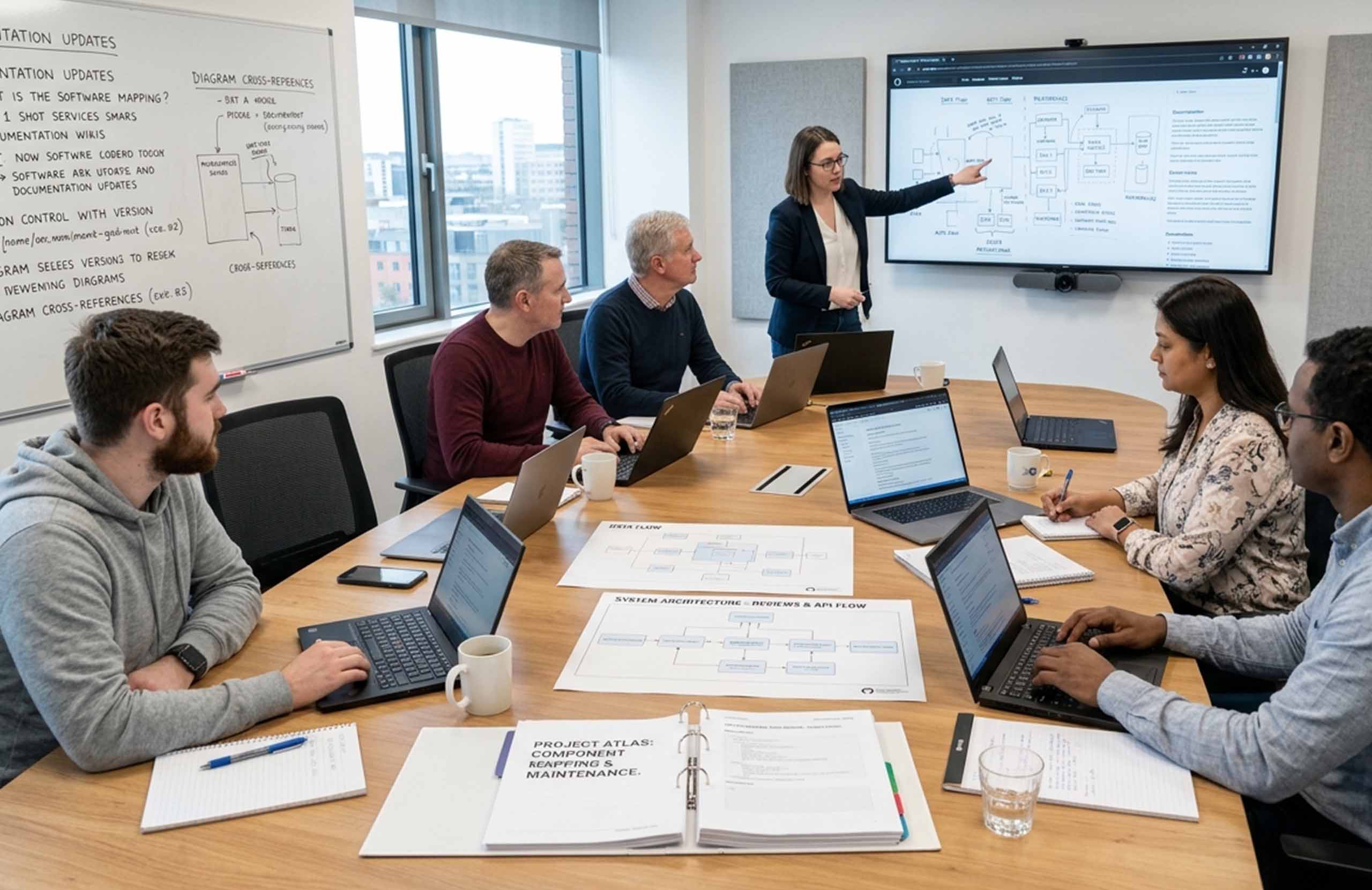
Governed AI use rests on three pillars. They're the whole difference between AI that scales good engineering and AI that scales bad engineering faster.
Accountability: AI-Generated Code Still Needs a Human Owner
AI can generate. It can suggest, summarize, and help with review. What it can't do is own what happens when the thing ships.
So ask your vendor four questions:
- Who reviews AI-assisted work?
- Who approves it?
- What automated checks does it have to pass?
- Who's accountable once it's live?
If they can't answer all four in a straight line, that's your answer. Vendors that can clearly name who reviews, approves, and owns a change once it is live are showing you a real accountability process.
Context: AI Has to Understand the System Before It Writes Anything
Here's the thing prompting alone can't fix.
Generic AI has never seen a vendor's internal architecture. It doesn't know their repository patterns, their product logic, their naming conventions, their data-access rules or the platform's limits. No prompt, however carefully worded, hands it that knowledge in one shot.
For logistics software, "context" means things like:
- Shipment workflows and freight rate logic
- Customs and document rules
- Customer and partner permissions
- Integration patterns and portal behavior
- Audit and compliance expectations
- The platform architecture the whole system sits on
A responsible vendor turns that context into documented, maintained engineering standards that AI tools and human reviewers can work from. That's how AI-assisted work reflects the product's real workflows, constraints, and customer commitments.
Documentation: Knowledge Has to Live Somewhere AI Can Find It
AI doesn't fix tribal knowledge. What it does is make it dangerous.
If your architecture decisions live in a Slack thread from March, a code review nobody reopens, or the head of your one senior engineer who's on vacation this week, AI will happily generate code faster than your team can explain what it just built.
That's the real risk. A team that ships code it can't fully explain, because the reasoning behind it was never written down anywhere, not for the AI, not for the next engineer who has to touch it six months from now.
How Neurored TMS & SCM Applies Governance to AI-Assisted Engineering
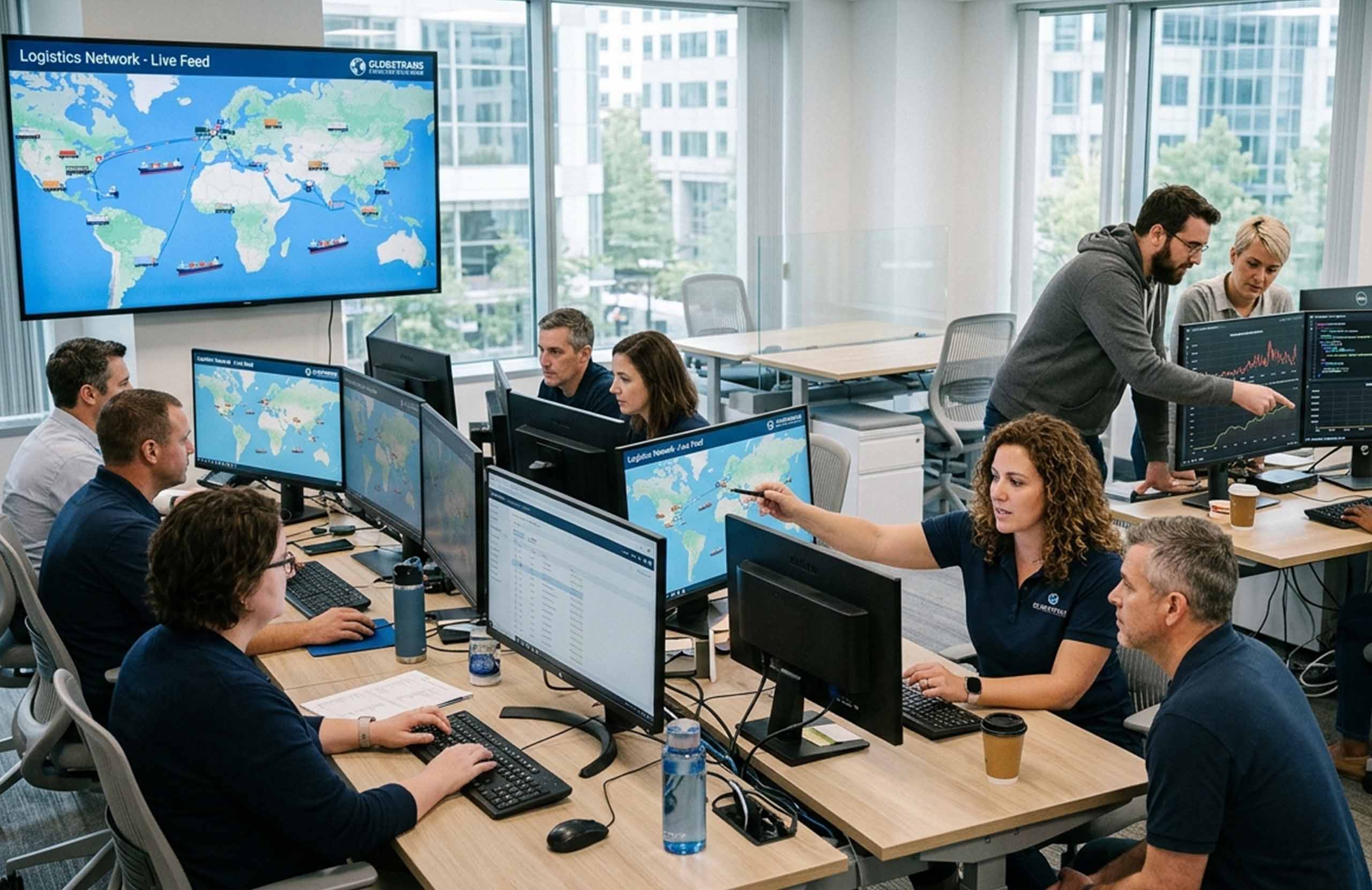
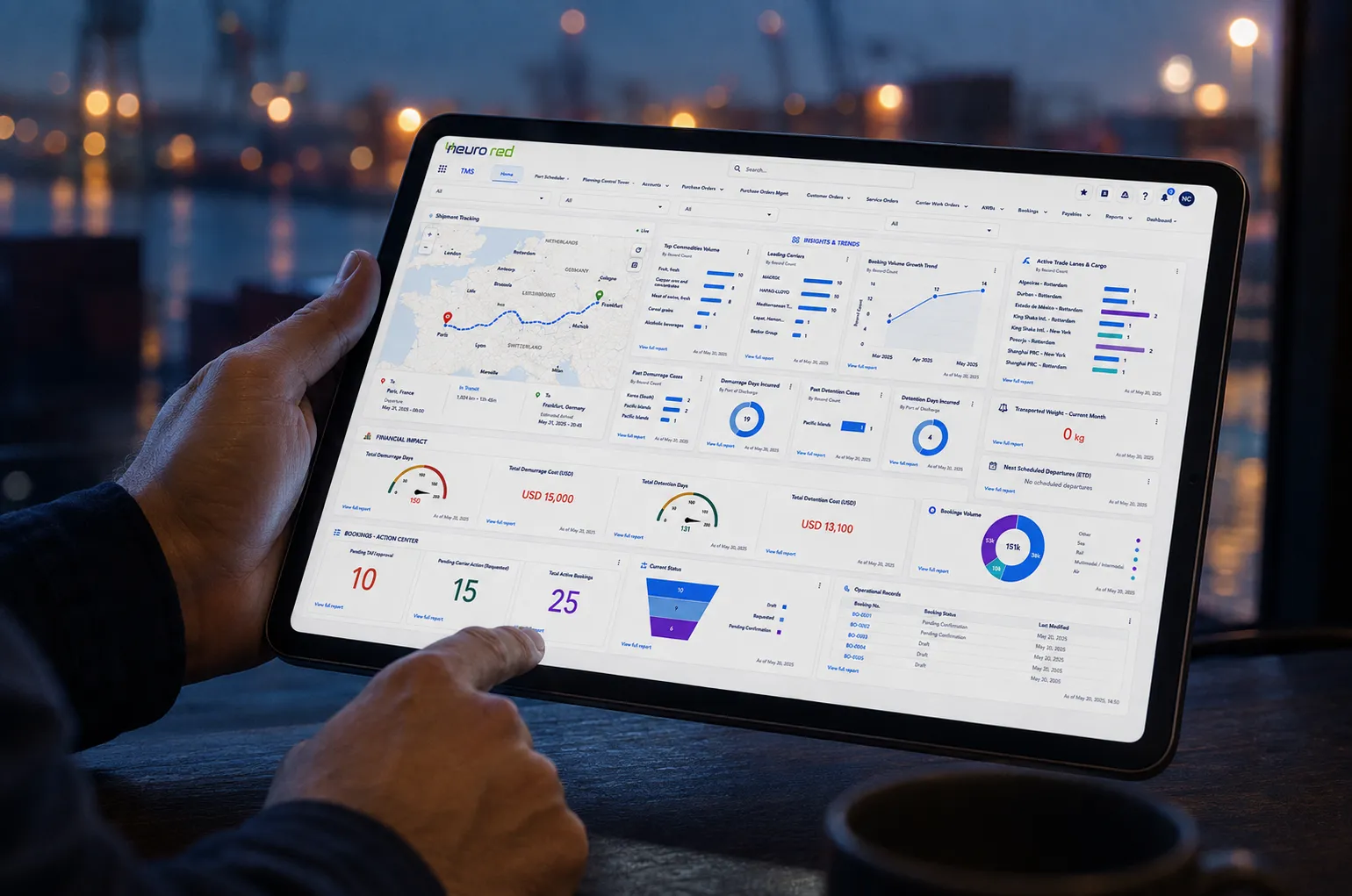
Neurored builds Salesforce-native TMS and SCM software for freight forwarders, 3PLs, shippers, carriers, terminals, and commodity traders.
That means the engineering here sits inside robust logistics workflows, multi-tenant architecture, critical integrations, large data volumes, security-sensitive processes and enterprise reliability expectations.
Those are the same conditions that make a Salesforce-native TMS valuable in the first place. They also raise the stakes on how it gets built.
Neurored TMS & SCM doesn't treat AI as a shortcut around architecture, testing, code review, security analysis, product understanding or human accountability. Internally, the position is simple: AI should help teams apply those disciplines more consistently.
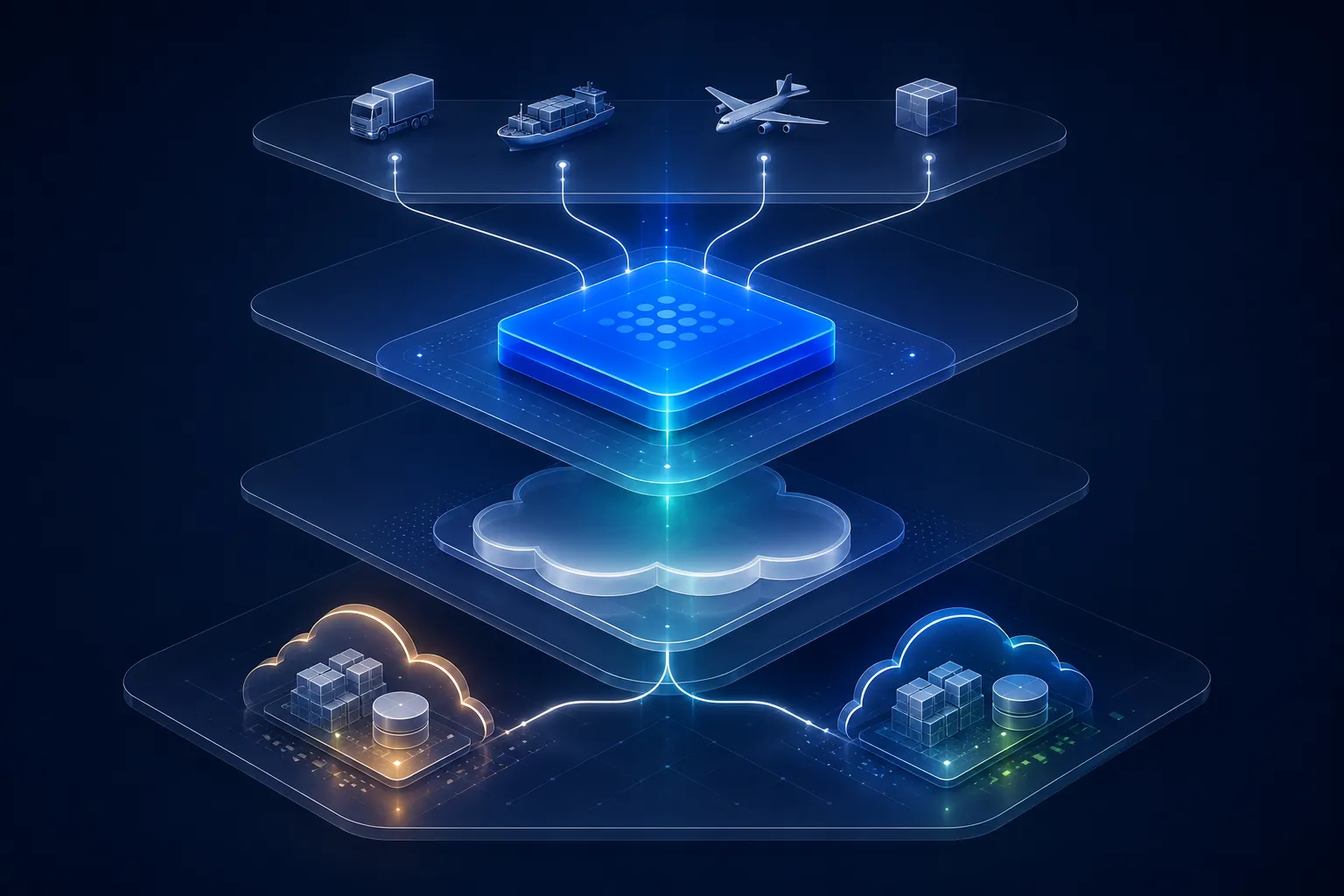
Here's what that looks like in practice: an internal AI Tools repository. A reusable knowledge layer for AI-assisted engineering, built to capture, structure, version and share the practices that define how Neurored TMS & SCM builds software.
It's organized around four asset types:
- Skills: instructions covering Neurored engineering standards, naming conventions, architecture patterns and product context.
- Commands: reusable actions for code generation, code review, test creation, documentation and technical analysis.
- Prompts: templates for recurring engineering, QA, product support, documentation and decision-making tasks.
- Agents: specialized roles for Salesforce architecture, technical leadership, QA review, UI design and security assessment.
Salesforce Skills already hand you strong platform-specific knowledge.
What Neurored's internal tools add is the layer only Neurored can define: naming conventions, coding standards, documentation criteria, Salesforce product architecture, logistics and supply chain domain knowledge, integration patterns, and expectations around maintainability, security and scalability.
Platform context helps AI understand Salesforce. Company context helps AI understand how Neurored builds on Salesforce. That second layer is the one no outside tool can supply for you.
This isn't a theoretical exercise. Neurored customers are already running AI in production against real freight data, including Correos Express's AI-powered transport digital twin, which simulates network decisions across 70 facilities and more than 6,000 routes before any of them touch a live shipment.
Governance is what makes that kind of deployment safe to trust. It's not an afterthought bolted onto it after the fact.
[cta|See how Neurored handles this|One platform for transport management and supply chain, built on Salesforce.|Book a demo|#contact]
What Freight Teams Should Ask Their Software Vendors About AI

Freight teams don't need to audit every detail of a vendor's AI tooling. But before AI-assisted work becomes part of the software an entire operation depends on, it's reasonable, and increasingly necessary, to know what stands behind it.
Here are the questions worth asking directly.
Can you walk us through the review process for AI-assisted changes before they ship? Look for clear ownership, defined review steps, explicit approval criteria, and automated checks that run before anything goes live. A vague answer here is the answer.
What internal standards or documentation guide AI-assisted development? This tells you whether AI is working from real architecture, security, data-access and coding standards, or just improvising against whatever pattern feels closest.
What resources make sure AI-assisted work actually reflects your product and your customers' workflows? A strong answer includes engineering guidelines, architecture documentation, product context, domain knowledge, and reusable prompts or internal tools built for that specific product.
How do you validate AI-assisted changes against real logistics scenarios? Ask how they test bulk rate updates, shipment events, document generation, customer portals, permissions and integrations. Not just unit tests on isolated functions.
What checks are in place for permissions, audit trails and customer data separation? This matters most in logistics, where multiple customers, partners, carriers and internal teams may be touching the same platform at the same time.
How do you keep engineering knowledge documented and available to both AI tools and human reviewers? You're checking whether product logic, architecture decisions and platform constraints are reusable and visible, or whether they still live in one engineer's head.
What happens when an AI-assisted process hits a requirement or constraint that needs human judgment? A mature process defines when work pauses, who reviews it, and how the decision gets made. If there's no answer to "what happens when it doesn't know," there's no governance.
Can you share an example of how AI-assisted development actually improved quality, review, testing or documentation? This gives the vendor room to show real practice instead of answering a checklist question with a marketing line.
The answer worth hearing isn't "we use AI." Every vendor says that now. The answer worth hearing is "we use AI inside a governed engineering system," followed by specifics.
Weighing whether to build or buy your logistics software? See why teams are choosing neither.
What AI Governance Means for Logistics Buyers
If your logistics operation depends on multimodal execution, freight rates, documentation, visibility, portals, integrations and customer-facing workflows all working together correctly, the question was never whether your vendor uses AI.
Every vendor uses AI now. The real question is whether they use it with enough governance to protect the workflows your customers rely on every single day.
AI doesn't make engineering discipline less important. It makes it worth asking about out loud, before you sign a contract, not after an incident. Plenty of vendors will tell you AI helps them ship faster.
That might even be true. Neurored's answer is: AI should help apply the standards behind enterprise logistics software more consistently, not bypass them so you can ship faster.
We build Salesforce-native logistics software on that same philosophy. AI supports engineering discipline here. It doesn't replace it. If your team depends on multimodal workflows and everything else on that list working without gaps, it's worth seeing how that discipline shows up in practice. Schedule a demo of Neurored TMS & SCM.
Description
Description